This page was translated automatically using artificial intelligence (DeepL). The German version is binding. More information about automatic translation
Facts and figures
Social Work
As your current professional activity forms part of the degree programme, the Social Work degree programme at Mittweida has the feasibility of being completed alongside your full-time job. Psychological, sociological, legal and educational aspects are woven throughout the programme.
Through these, you will expand your practical expertise with academic knowledge, further your personal development and broaden your horizons. In doing so, you will also gain state recognition as a social worker upon completion of your Bachelor’s degree.
Studying Social Work in Mittweida whilst working: What to expect
An overview of the course content
Age and life circumstances, social policy, law and organisation, society and participation, and the Social Work profession are the core components of the degree programme. In Mittweida, you’ll apply theory to real-life situations during your studies by critically reflecting on your own professional practice as part of the course and adapting it in light of new insights gained from lectures and seminars.
You will usually spend one day a week at the university, plus two block weeks per semester. This structure allows you to continue working in your profession whilst systematically working towards your Bachelor’s degree.
Fundamentals of the Stages of Life
Law I
Fundamentals of Society and Participation
Workshop
Fundamentals of the Stages of Life
Fundamentals of Society and Participation
Introduction to Social Work
Practical Reflection I
Characteristics of the different stages of life
Social Differentiation – Inequality and Justice
Introduction to Social Work
Reflection on Practice I
Social Policy and the Social Economy
Fundamentals of Professional Practice
Practical Reflection I
Project module
Law II
Fundamentals of Professional Practice
Practical Reflection I
Project Module
Coping with Life Situations
Social Management and Law III
Controversies – Participation – Shaping
Fields of Practice and Professionalisation in Social Work
Reflection on Practice II
Coping with Life Situations
Social Management and Law III
Controversies – Participation – Shaping
Reflection on Practice II
Bachelor's thesis

Social Work in Mittweida


In summary – Social Work in Mittweida

Extra occupational degree programme in Social Work

(180 Credits)








Once you have completed your Bachelor’s degree, you will have a broad-based background in Social Work and, at the same time, be state-registered as a social worker. This means you will be perfectly prepared for a wide range of work settings. You’ll work in an educational capacity in care homes or day centres; in further education at adult education centres or within youth organisations; in a creative and developmental role in educational centres or socio-cultural institutions; providing support in the rehabilitation of patients and people with disabilities; in care homes for the elderly or in outreach social work, in a planning capacity within social, youth or elderly care services, and in an organisational and administrative role within government departments, associations or the management of institutions. Or: You can gain the qualifications needed for more senior roles with a Master’s in Social Work. One thing is certain: the combination of professional experience, academic study and reflection on practical work will make you a highly sought-after specialist in a field that is growing in the face of demographic change.
Application and Admission
Social Work in Mittweida is a degree programme with restricted admission. However, there’s no need to ask about the numerus clausus (NC). In Mittweida, we train enthusiastic social workers. That’s why we focus on selecting these individuals carefully.
However, enthusiasm for Social Work cannot be gauged by school grades alone. That is why motivation and prior experience play a major role in our selection process.
Applicants must hold a general university entrance qualification, a university of applied sciences entrance qualification, a subject-specific university entrance qualification or an equivalent recognised qualification. Applicants who have completed vocational training and have at least three years’ professional experience may also enrol following a consultation and a successful entrance examination. For the extra occupational programme, the following are also required: at least three years’ professional experience in the social sector, or a state-recognised qualification as a childcare worker, a therapeutic care worker, special needs teacher or another qualification at a comparable level in the social sector, together with one year’s practical professional experience in the social sector.
Language skills:
Anyone who did not obtain their university entrance qualification at a German-speaking institution must provide evidence of German language proficiency at level C1 of the Common European Framework of Reference for Languages. Proof may be provided, for example, by passing the ‘German as a Foreign Language’ (TestDaF) test at the Mittweida University of Applied Sciences’ preparatory college with an average score of TDN 3 in all four sections, or by presenting an equivalent certificate.
The application period for the summer semester begins on 15 October and ends on 15 January.
- Register on hochschulstart.de from 19 October. Select the Social Work degree programme at Mittweida University of Applied Sciences. You will receive an applicant ID (BID) and an authentication number (BAN). Make a note of them or save them!
- Now go to the university’s application portal. Register here too by entering the BID and BAN from hochschulstart.de and filling in the missing details. The portals are now linked and you can complete your application on the university’s application portal. To do this, upload all the required documents, including your employer’s confirmation, and provide all the necessary details.
- Your application will go through the selection process to determine whether you are admitted. The application deadline is 15 January. If you are selected, you will then receive notification that you can enrol.
Following the application deadline on 15 January, the selection process for the Social Work degree programme will take place; this is not based solely on the grade of your university entrance qualification. We allocate places in three ways:
- The HSMW allocates 60 per cent of places on the Social Work programme through a selection process involving all applicants. In this selection process, it is not only your final grade that counts, but also your prior experience. You will receive bonus points towards your university entrance qualification average for individual marks in advanced-level A-levels in social sciences, your technical college training in the social or healthcare sector, or vocational training. If you have already gained practical experience working in the social sector, this will also be viewed favourably.
- 20 per cent of places are allocated on the basis of the number of waiting semesters. Waiting semesters are determined from the CV you submit and describe the period between leaving school and the start of your degree programme, minus any time you may have already spent studying. Applicants with the longest waiting period are offered a place, which enables those with professional experience in particular to pursue further education.
- 20 per cent of places are allocated based on the HZB mark. In most cases, this is the (specialised) A-level certificate. Think of it this way: applications are ranked in a list according to their average mark. Applicants with the highest A-level averages are offered a place. The mark of the last applicant to be admitted then becomes the entry requirement for the following year.
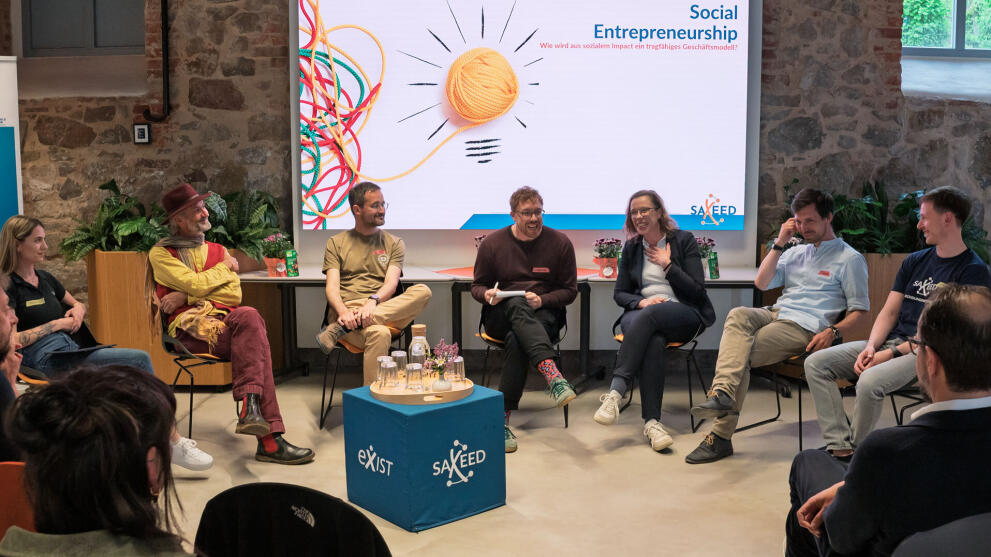
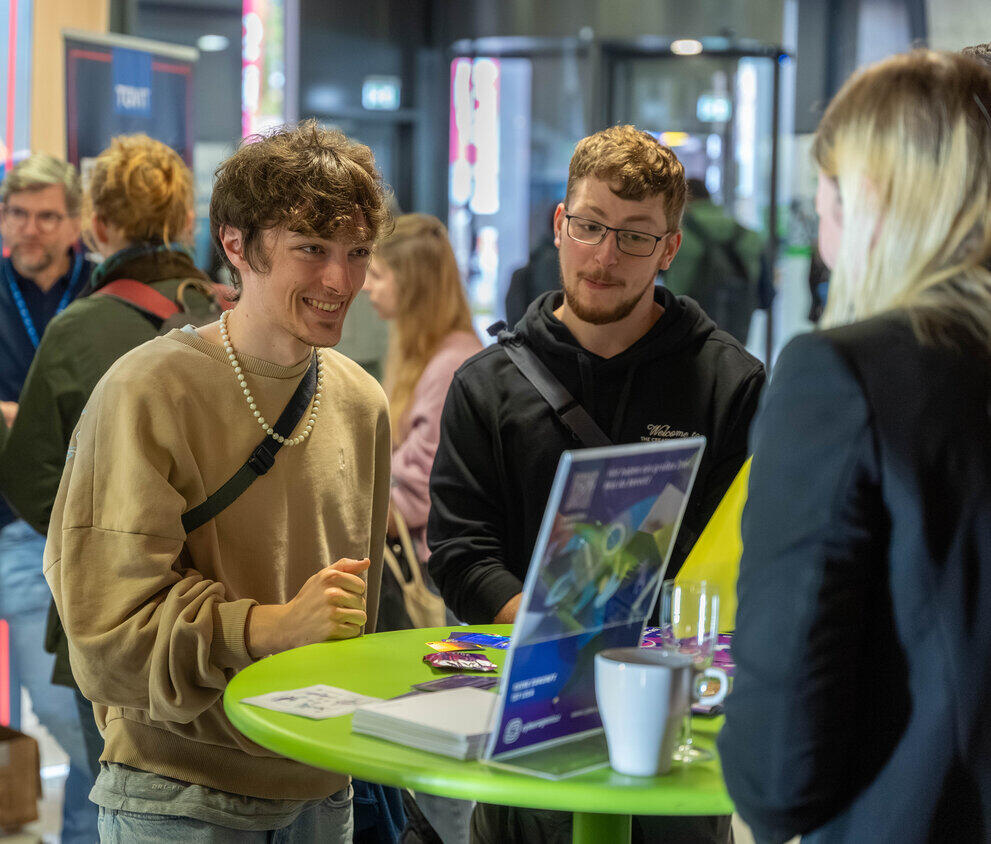
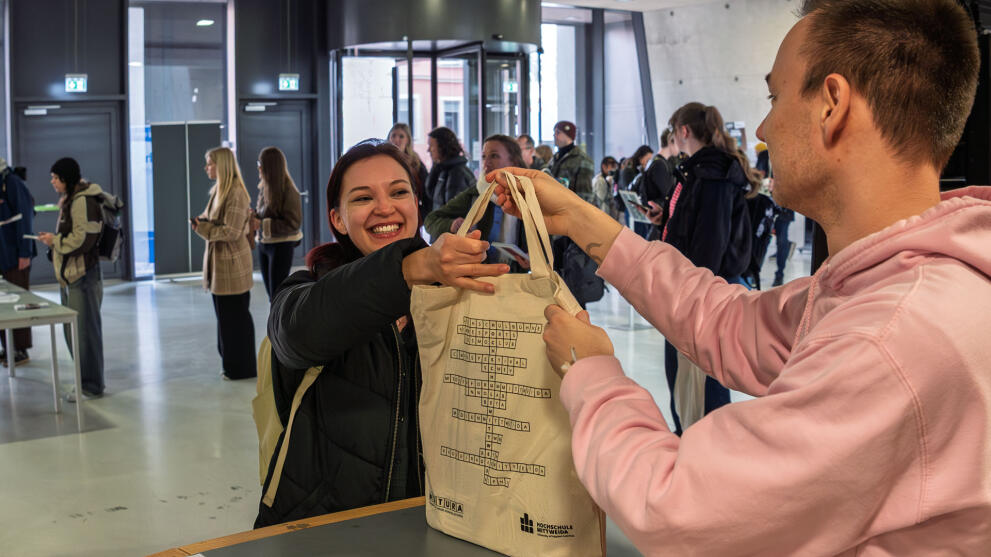
Because you’ll be studying here alongside like-minded people who also work in the social sector – you’ll bring professional experience to the table and receive academic support in return. Small groups, personalised support and a university with a clear focus on practical and reflective skills make all the difference. And: The extra occupational degree programme fits in with your life — not the other way round. Tutorials support you with subject-specific questions, the SAXEED start-up network guides you through your own projects, and the Social Support Centre helps you balance your studies and personal life, for example if you’re looking after a child or caring for a relative. On campus, you can look forward to two major music festivals a year, an active esports team and a strong sense of community. Mittweida is different from what you might expect. See for yourself at the Open Campus Day (Studieninformationstag) or the Night of Sciences (Nacht der Wissenschaften)!


Related degree programmes


Frequently Asked Questions
Absolutely, because at least three years’ work experience in the social sector or vocational training in a specific profession, combined with one year’s work experience in the social sector, are in fact prerequisites for admission. The course is specifically designed to provide an academic foundation for your practical experience and to open up new perspectives on your usual working environment.
No, for the extra occupational option, you must currently be employed in the social sector, as reflecting on your day-to-day work is a key component of the teaching approach. If you are not currently working in this sector, the standard full-time programme would be a more suitable choice for you.
There are no school-style holidays during your degree. Instead, there are lecture-free periods. During these, you can study, write assignments, undertake work placements – and treat yourself to a bit of a break now and then.
In the 2026/2027 winter term, in addition to public holidays, the following periods are lecture- and exam-free:
- 21 December to 3 January,
- from 22 February. Exception: The Faculty of Social Sciences begins its lecture-free period on 29 February.
In the 2027 summer term, with lectures starting on 22 March, the dates are:
- 25 March to 2 April,
- 7 May,
- 17 May,
- from 2 August. The Faculty of Social Sciences will also hold an examination week from 23 to 27 August.
Yes, the degree programme in Mittweida is broadly based and covers a wide range of professional fields, which may also include alternative approaches such as play-based practice or working in forest and nature-based nurseries. Through various modules, you’ll have the opportunity to look beyond the confines of traditional settings and learn about innovative concepts in social support.
Attendance times are fixed and usually consist of one set study day per week and two block weeks per semester. As your employer is made aware of this model in advance and confirms this to us, the model offers a high degree of planning certainty, but leaves little scope for spontaneous changes within the academic weeks.
Through the ‘workshop’ approach and guided case studies, your own experiences and current challenges from your everyday working life are directly incorporated into the teaching. The content is therefore less abstract and serves specifically to enhance your professional competence and expertise in day-to-day practice.
The extra occupational programme lasts eight semesters, which is slightly longer than the full-time programme, and is specifically designed to closely integrate theory and practice whilst you continue to work in your profession. A key difference lies in the entry requirements, as for the extra occupational option you must already have several years’ professional experience in the social sector and be currently in employment.