This page was translated automatically using artificial intelligence (DeepL). The German version is binding. More information about automatic translation
Facts and figures
Social Work: counselling, leadership, management, digitalisation
Whilst you’re already working in social work, you’ll broaden your skills through extra occupational part-time study, gaining academically grounded knowledge and practical skills. With one fixed study day per week, supplemented by two block weeks per semester, your daily routine remains predictable and your working life stable. In this way, your job becomes part of your learning and your studies become part of your personal development.
With your Master’s degree, you’ll be ready to take on responsibility, reflect independently on your own leadership style and shape social change in a targeted manner. The part-time format of the Master’s programme, with its specialisations in counselling, leadership, management and digitalisation, is tailored precisely to working professionals.
Introduction to the Master’s degree programme in Social Work
An overview of the course content
On the Master’s programme, you will build and develop your social, methodological and digital expertise – step by step. During the short on-campus and online modules, you’ll work on topics such as organisational development, quality and human resources management, community governance, and the theory and practice of counselling processes for interacting with clients and staff.
The focus on digitalisation sets the Master’s in Social Work at Mittweida apart from many other degree programmes. It explores the changes in communication, professional competence, workflows and identity development among both staff and clients. This is because, in order to shape social work successfully in the future, skills are required that demand a deep engagement with the implications of digital and societal transformation.
Counselling, Guidance and Management I:
- Counselling I: Counselling Theory, Counselling Practice
- Management I: Social Economy and Organisation
- Management I: Governance in Local Communities, Local Social Policy
Digitalisation in Social Work I: Fundamentals of Digitalisation
Advising, Leading, Managing II:
- Counselling II: Counselling
- Management II: Financial and Human Resources; Leadership and Management in Social Service Organisations
- Management II: Social Work in the Community
Continuation of Digitalisation in Social Work I: Digitalisation in Discourse
Continuation of Counselling, Guidance and Management II:
- Consulting II: The Practice of Consulting
- Management II: Quality Management and Impact
- Steering II: Social Planning
Digitalisation in Social Work II: Data Protection; Law and Organisation
Practical Project I: Introduction to Empirical Social Research; Strategic, Organisational and Human Resources Development; Project Planning
Social Work in Discourse: Theories and the Social Work Profession; Social Change and Social Inequality in the Context of the Realities of a Society Shaped by Migration
Practical Project II: Introduction to data analysis; project implementation
Practical specialisations, e.g. employment law for managers, professional teams
Social Work in Discourse: Reflection on Practice
Continuation of Practical Project II: Social Work and Research; project evaluation
Master's thesis
Social Work in Mittweida

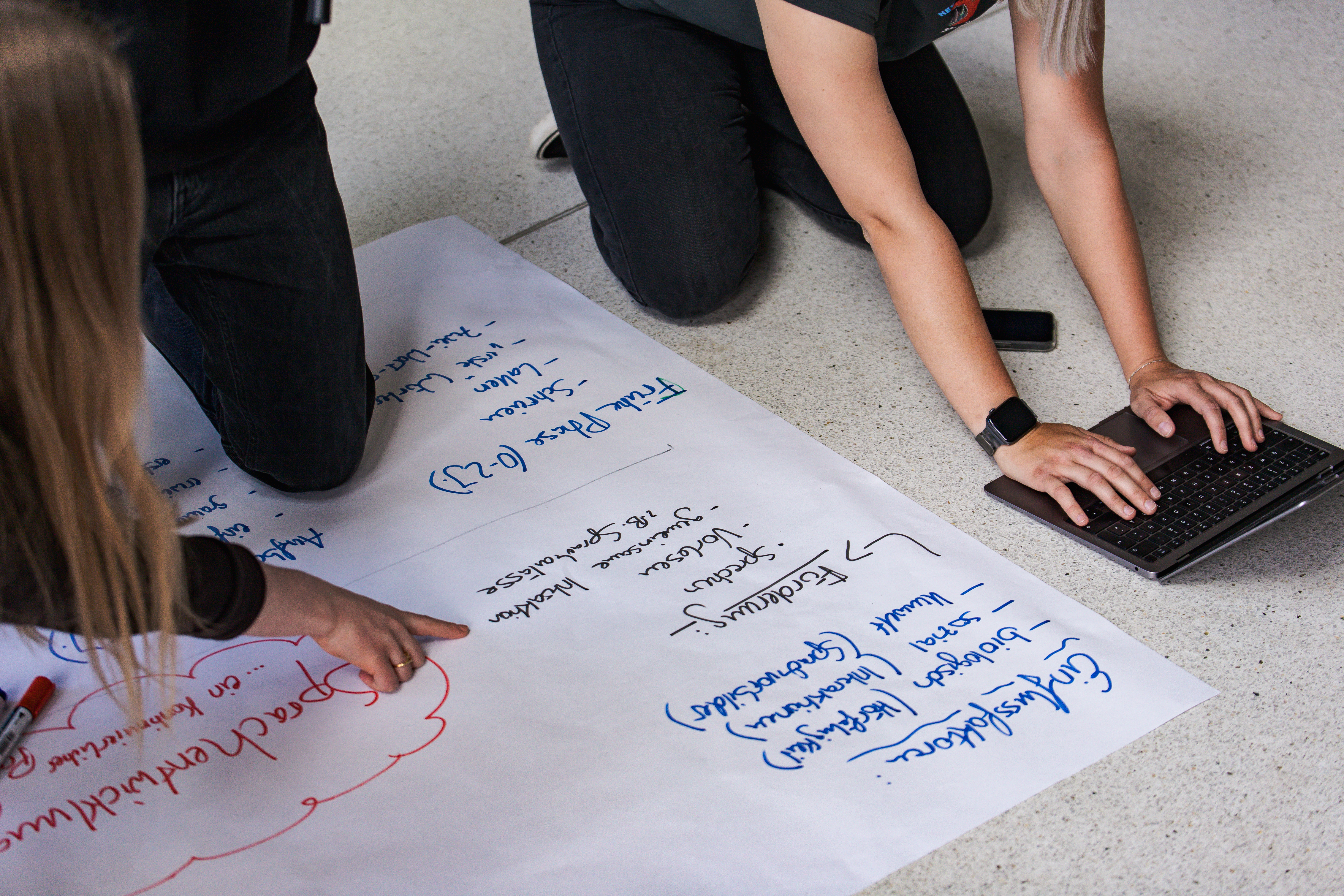

In summary – Social Work in Mittweida

Extra occupational degree programme in Social Work

(120 Credits)







Once you have graduated, you will be ready to take on leadership and management roles: whether in social service organisations, advice centres, local authority institutions or as a manager within the community. With an academic Master’s degree, you will be qualified not only for strategic roles, but also for academic work and admission to a PhD programme.
Application and Admission
Applicants must hold a first professional university degree (Bachelor’s) in Social Work. Graduates of social science disciplines related to Social Work (e.g. educational sciences) may be admitted following a placement of at least one year in a Social Work organisation, completed after their degree, and subject to assessment by the admissions committee.
Language skills:
Applicants who did not obtain their university entrance qualification at a German-speaking institution must demonstrate German language proficiency at level C1 of the Common European Framework of Reference for Languages. This can be demonstrated, for example, by taking the ‘German as a Foreign Language’ (TestDaF) test at the Preparatory College of Mittweida University of Applied Sciences, achieving an average of TDN 3 in all four sections, or by providing an equivalent certificate.
The application period for the winter semester begins on 15 April and ends on 15 July. You can register at hs-mittweida.de/bewerben. Once you have submitted all your documents, you can enrol. Once you have enrolled, your place at Mittweida is secured. For international applicants, the application deadline is 15 May, to allow sufficient time to apply for a visa.
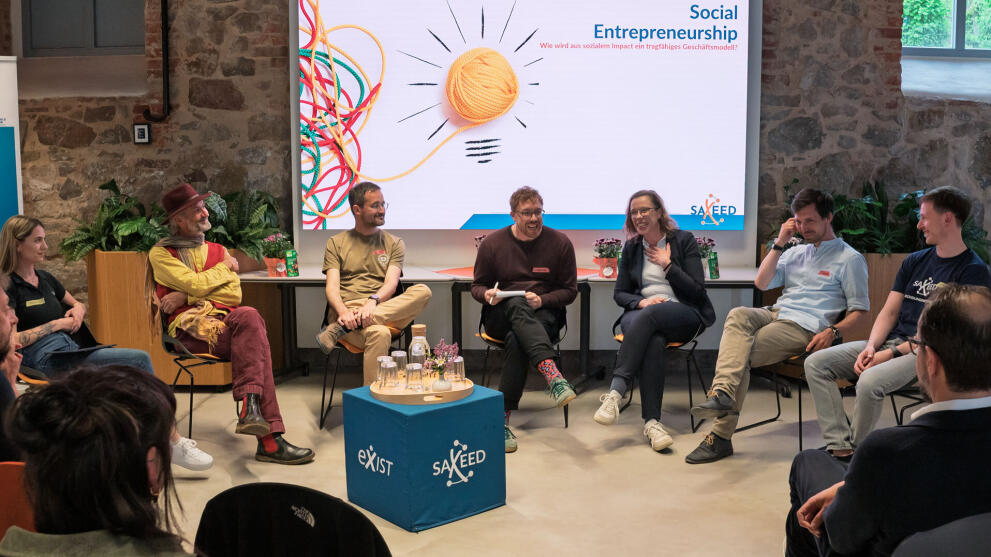
In Mittweida, you’ll find a degree programme that fits in with your professional practice – flexible, high-quality and well-connected. Mittweida University of Applied Sciences offers small groups, a direct link to professional practice and an environment that takes change and responsibility seriously. Tutorials are on hand to help with academic queries, the SAXEED start-up network supports you with your own projects, and the Student Welfare Service helps you balance your studies with your personal life, for example if you’re looking after a child or caring for a relative. On campus, you can look forward to two major music festivals a year, an active esports team and a strong sense of community. Mittweida is different from what you might expect. Come and see for yourself at the Open Campus Day (Studieninformationstag) or the Night of Sciences (Nacht der Wissenschaften)!


Related degree programmes


Frequently Asked Questions
Absolutely. Many extra occupational students use the Master’s programme to reflect academically on their own long-standing professional practice and to learn new, innovative methods for working directly with clients. It serves as a means of professional development, enabling them to act as valued experts in their field.
Yes. As you can often draw directly on your current professional experience for project work and case studies whilst studying for an extra occupational Master’s degree, you will automatically specialise in your specific field of work (e.g. child and youth welfare, addiction counselling or care for the elderly) and underpin this with academic research.
For extra occupational study, commuting is entirely feasible and the norm. As the contact hours are highly condensed, you do not need to live locally. Thanks to the block of sessions, it is very easy to plan your journey to Mittweida in advance and fit it in with your work or family life.
The on-campus sessions (block weeks and fixed weekdays) are set by the university well in advance so that you can coordinate them with your employer or family – so you don’t have complete freedom to plan them yourself. The flexibility lies in the self-study periods between these phases, which you can organise entirely as you wish.
There are no school-style holidays during your degree. Instead, there are lecture-free periods. During these, you can study, write assignments, undertake work placements – and treat yourself to a bit of a break now and then.
In the 2026/2027 winter term, in addition to public holidays, the following periods are lecture- and exam-free:
- 21 December to 3 January,
- from 22 February. Exception: The Faculty of Social Sciences begins its lecture-free period on 29 February.
In the 2027 summer term, with lectures starting on 22 March, the dates are:
- 25 March to 2 April,
- 7 May,
- 17 May,
- from 2 August. The Faculty of Social Sciences will also hold an examination week from 23 to 27 August.
The Master’s degree is the perfect next step, particularly in its extra occupational format, if you’re already working in the field and find that you’re reaching your theoretical limits, or if you’re aiming for the next step in your career (e.g. concept development, facility management, a higher salary bracket) without having to give up your job entirely.
The extra occupational programme also incorporates administrative, legal and organisational management content, as advanced Social Work always takes place within institutions. As students usually work in the field at the same time, the link to real-world Social Work is particularly strong and dynamic thanks to the direct exchange that takes place in the seminars.
The extra occupational degree programme lasts six semesters and is aimed at people who are already in employment, providing care for family members, or who wish to study on a more flexible basis for other reasons. The decision depends primarily on your personal circumstances: if you need to work full-time alongside your studies or organise your daily life flexibly, the extra occupational degree programme is the right choice for you.