This page was translated automatically using artificial intelligence (DeepL). The German version is binding. More information about automatic translation

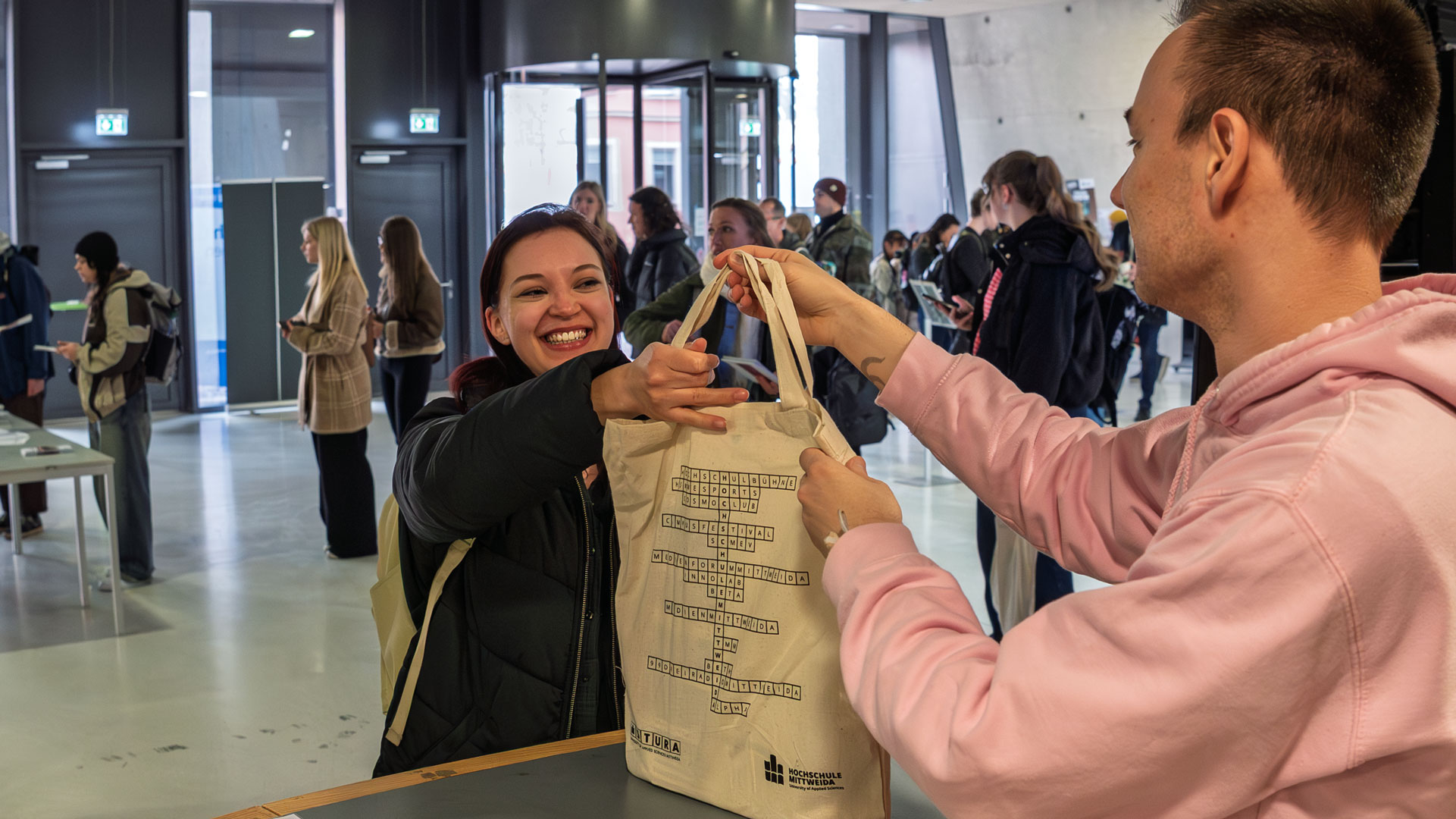
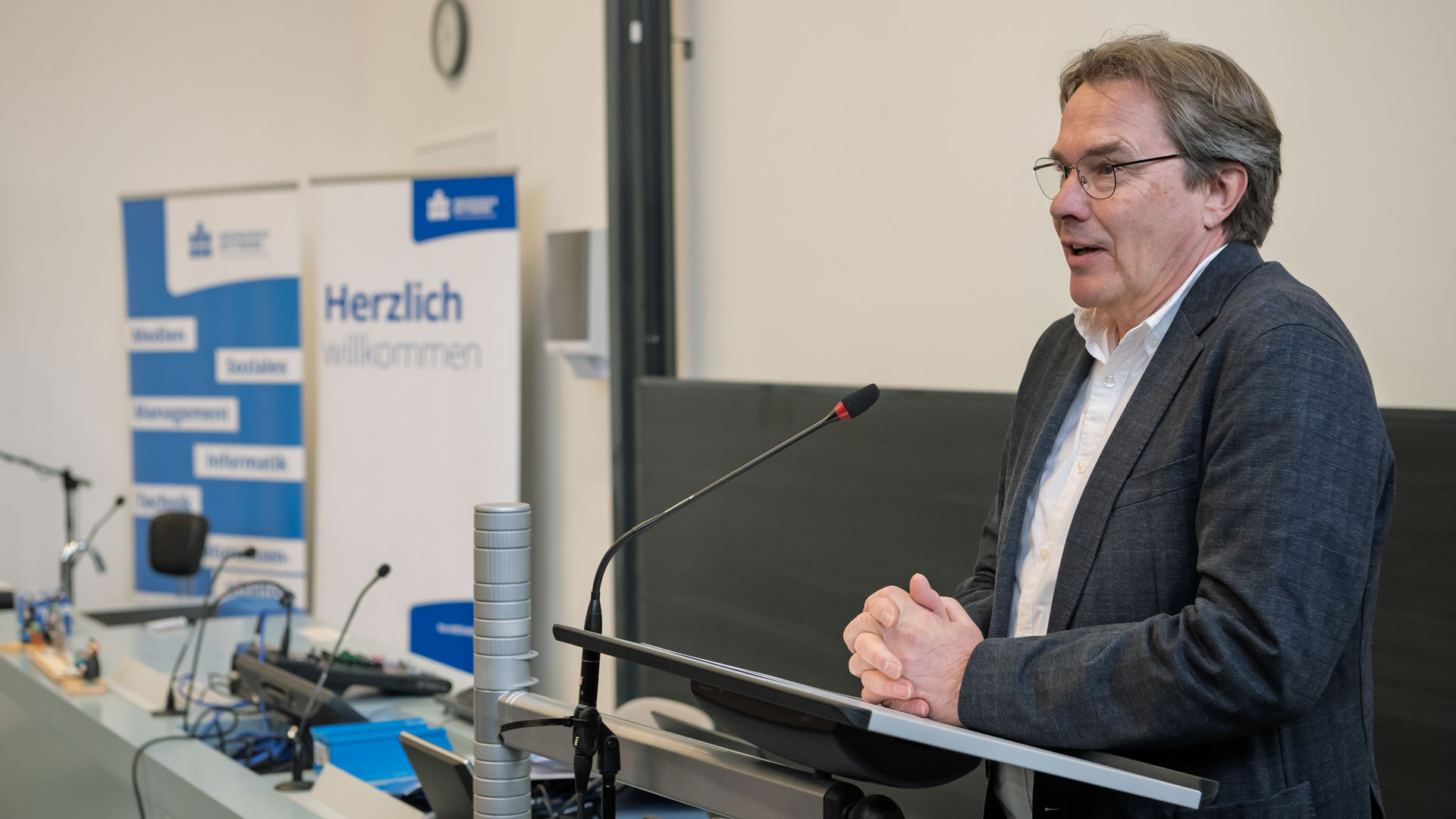
For many new faces on the Mittweida University of Applied Sciences (HSMW) campus, yesterday morning in the Ludwig-Hilmer-Bau was particularly exciting: Rector Professor Volker Tolkmitt symbolically enrolled 225 ‘fresers’ at the matriculation ceremony.
Vice-Chancellor Volker Tolkmitt to the new students:
Before we send you on your way again in a few semesters with an academic qualification, we want to support you – support you on a journey through life that will shape you.
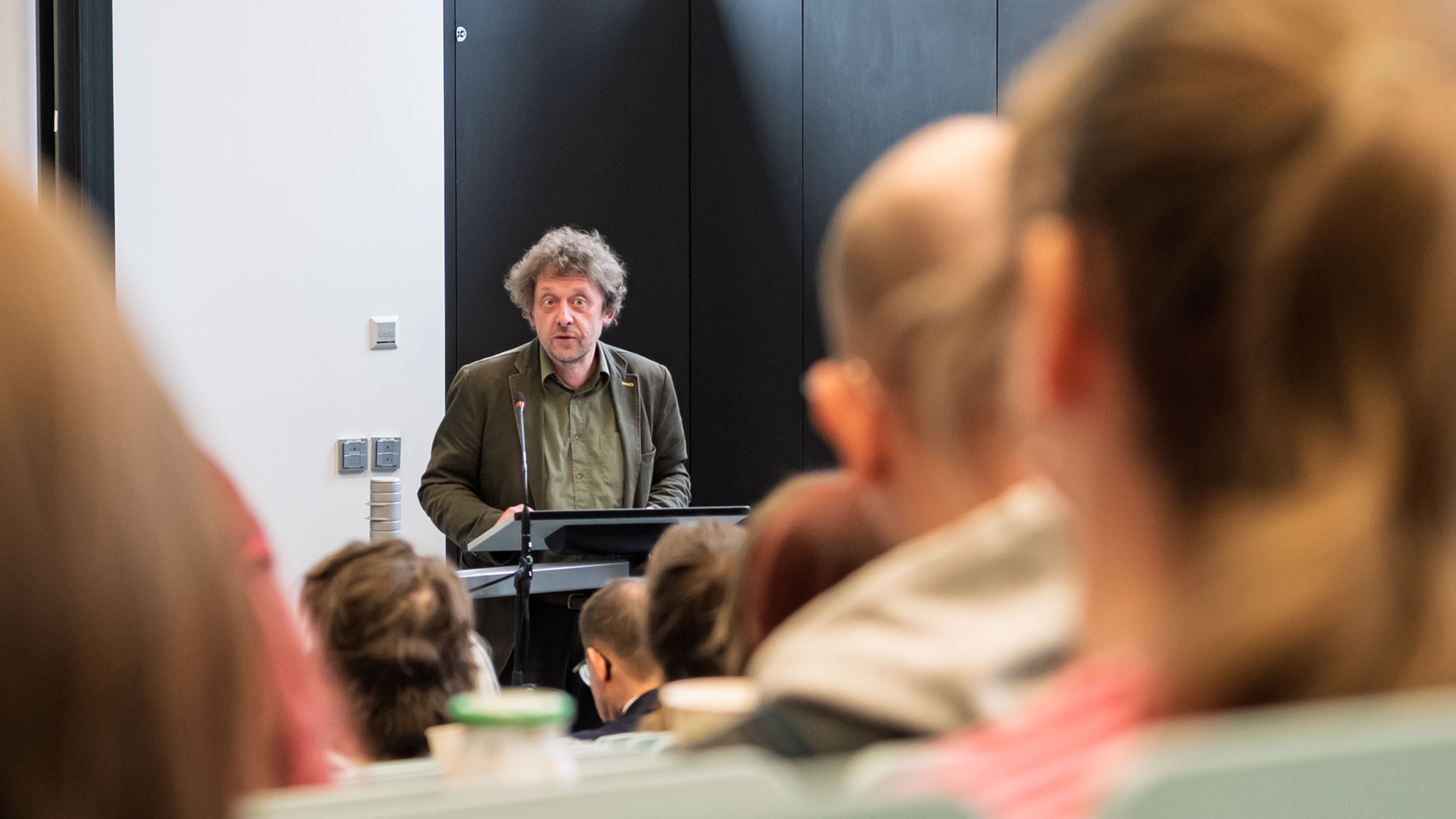
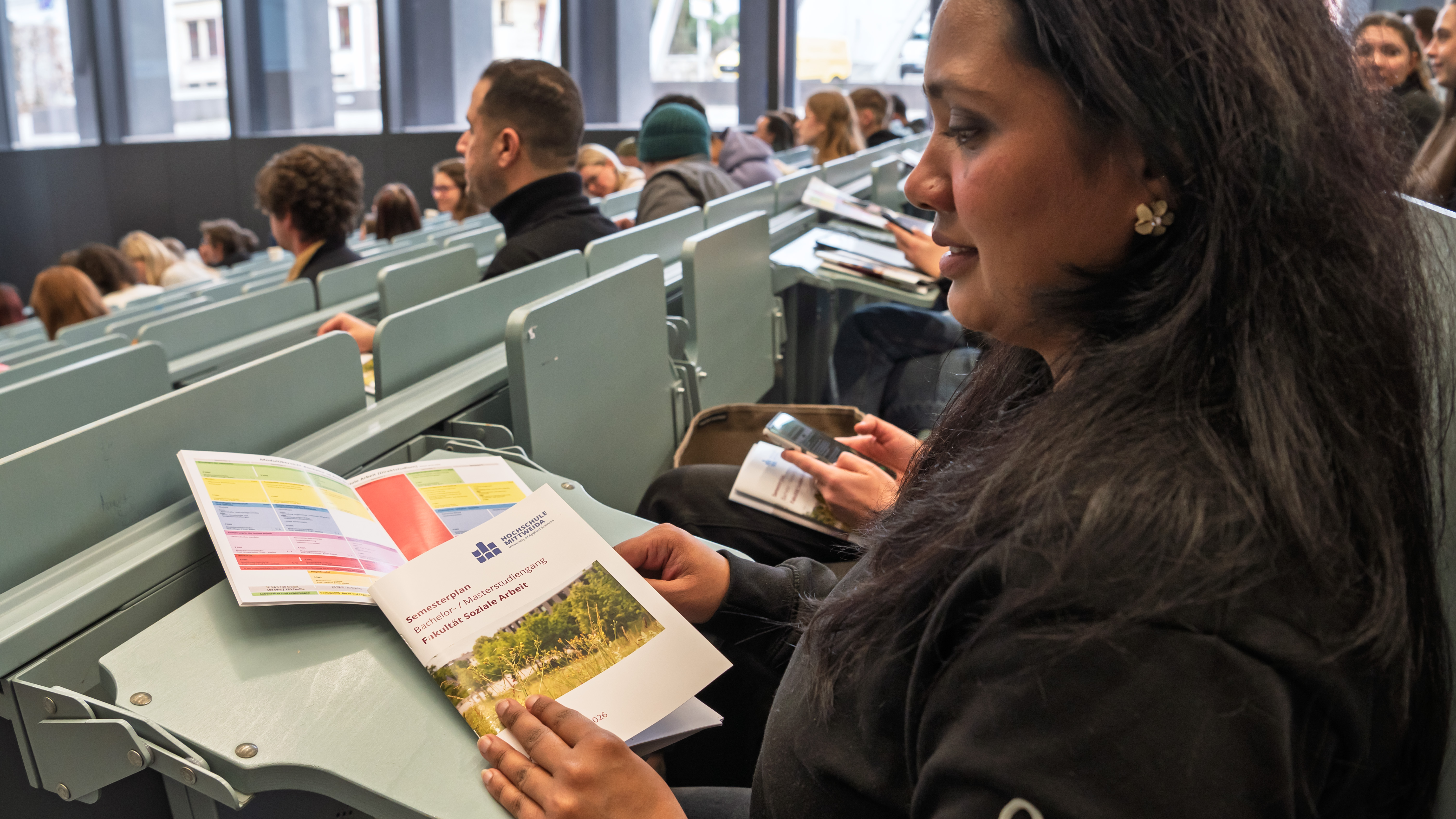
Among them were 102 students who are starting their Bachelor’s degree in Social Work, either full-time or with extra occupational studies. They were a prominent feature of the enrolment ceremony in the Ludwig-Hilmer-Bau. Professor Stephan Beetz, Dean of the Faculty of Social Sciences, also addressed them specifically in his lecture ‘What does it mean to study Social Work?’. But much of what he shared with ‘his’ students applies to all members of the HSMW’s new academic generation:
We need people who reflect and think critically, who are prepared to be honest with themselves and others in their thinking, and to be true to themselves. We need people who can tolerate ambiguity. We do not find clarity in black-and-white thinking, in right and wrong, in polarising categories and fixed definitions – only in weighing up the pros and cons, in discussion.
Practising tolerance does not mean failing to take a stand: that would be disastrous. We need people who take a stand. We need people who want to bring about change – in themselves and in the world – who recognise that things do not always go according to their own ideas, but who nevertheless put forward their ideas.
Dean Professor Stephan Beetz
Facts and figures
Around 61 per cent of all first-year students are women, with Social Work standing out in this regard: 86 per cent of full-time students and 76 per cent of extra occupational students on the Social Work programme are women. The oldest first-year student this summer term, however, is a man who, at the age of 55, is embarking on an extra occupational degree in Social Work.
With the first-year students of the summer term, 5,557 students are enrolled at Mittweida University of Applied Sciences. As expected, this figure and the number of new enrolments are lower than in the winter term: As of the official cut-off date of 1 November 2025, Mittweida University of Applied Sciences (HSMW) had 6,350 students. However, over the course of the winter semester, many students successfully completed their studies, and the university only accepts new enrolments for a few degree programmes in the summer semester.
Incoming students: Studying in Mittweida – well prepared
Around 80 international students from 29 countries have come to Mittweida to study. Among them are 24 who have spent the past few months preparing for their degree courses at the university’s preparatory college. There, prospective international students take a course to prepare for the so-called ‘Feststellungsprüfung’ (entry examination) and sit this exam after one academic year. This exam is the equivalent of the German Abitur; therefore, in addition to German as a foreign language, the curriculum includes subjects such as mathematics, physics, chemistry, English, social studies, history, geography, economics, business studies, computer science and technical drawing. At the end of the course, the students receive their official university entrance qualification. The majority of them then go on to study at the HSMW.
Women: Promoting academic careers
Through these scholarships, the HSMW specifically supports the academic careers of early-career female researchers and promotes their representation in academia.
This year, for the first time, the matriculation ceremony also served as the setting for the awarding of PhD scholarships to two young female researchers at HSMW. Only women were eligible to apply for the scholarships. Over the next three years, Josephine Meitzner will receive funding for her Biophotonics research into DNAzymes at the Mittweida University of Applied Sciences Laser Institute (LHM). These are highly precise, catalytically active DNA sequences. Researching their application and effects is important for medical diagnostics. Mirjam Werner, a sociologist specialising in technology, is conducting research at the Faculty of Social Sciences into the perception and management of technostress when using self-tracking technologies in sport. Her research aims to contribute to a better understanding of when digital self-monitoring is beneficial and under what conditions it can trigger pressure, feelings of guilt or overwhelming stress.