This page was translated automatically using artificial intelligence (DeepL). The German version is binding. More information about automatic translation
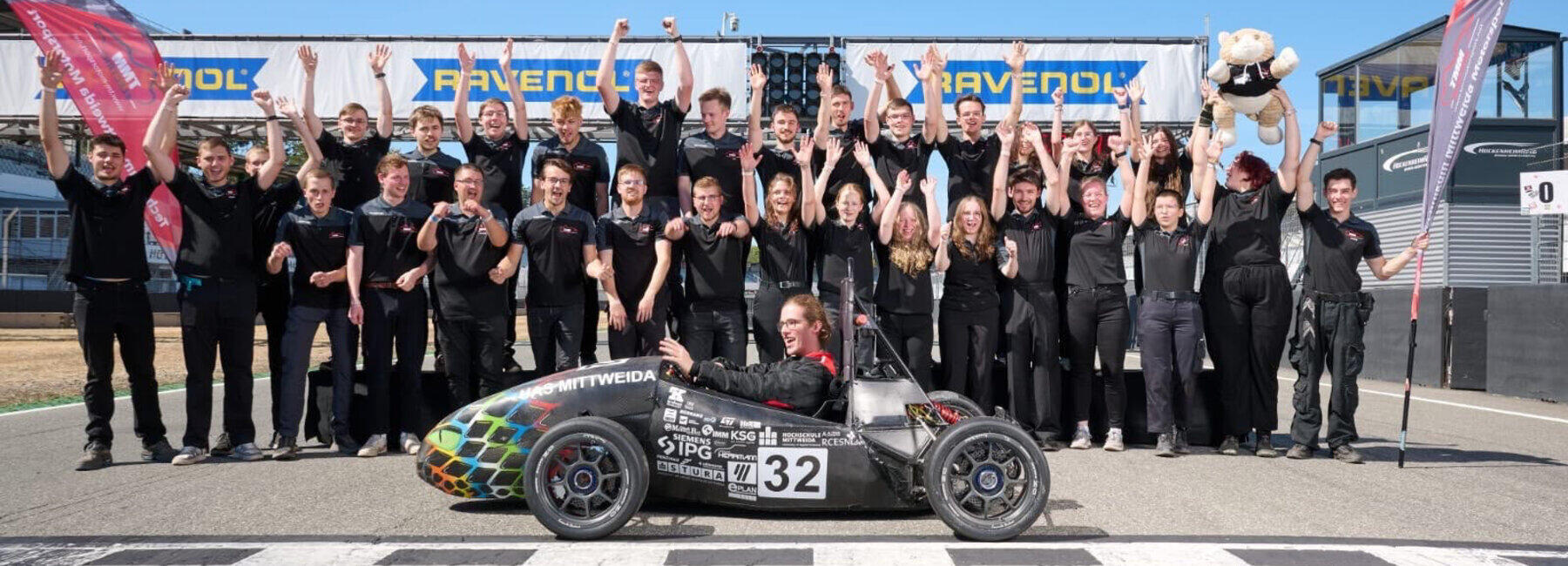
The Formula Student team Technikum Mittweida Motorsport (TMM) is looking back on the most successful year in its history whilst also laying the groundwork for the next generation of its racing car. From today, the students are raising funds for a new electric vehicle on the Startnext platform. The initial target: 5,000 euros. The campaign also marks the launch of crowdfunding at Mittweida University of Applied Sciences (HSMW). Unlike traditional sponsorship, ‘crowdfunding’ offers a low-threshold way to support projects.
The next challenge: a new racing car
Once the season is over, the next one is already on the horizon, and there’s no time to rest. The lessons learnt from the 2026 races have already been incorporated into the next car: an electric racing car with twin-motor rear-wheel drive. The project will take two years: initially, the focus will be on the concept, construction and design, followed by the build during the subsequent season. One of the biggest changes is the switch from 13-inch to 10-inch tyres, which the team must fine-tune structurally.
This involves more than just vehicle development. Students from various disciplines combine their knowledge of engineering, electrical engineering and vehicle software with project management, finance and public relations. They make technical decisions and take on responsibility. In this way, theoretical knowledge is transformed into practical experience. However, behind every racing car lie not only ideas and countless hours in the workshop, but also materials, components and manufacturing resources that need to be paid for. This is precisely where crowdfunding comes in.
Crowdfunding: 5,000 euros as the first milestone
The campaign aims to raise 5,000 euros for materials, components and manufacturing facilities, and will initially run until 24 March 2027.
The sum may sound small, but it is a first milestone.
Hendrik Seidlitz, commercial director at TMM
Seidlitz emphasises: “This initial support is important, even though we are still a long way from fully funding the new racing car.” If the target is reached, further, specifically defined funding targets may follow. Anyone can support the campaign with a contribution of their choosing. Sharing the campaign within your own network also helps the team.
Pilot project for the university
In future, HSMW intends to support university projects through crowdfunding in order to boost funding, visibility and reach. The university’s communications department supports the teams by providing advice and handling communications. Victoria Hartwig is responsible for overseeing the crowdfunding initiatives at HSMW:
TMM is the ideal starting point.
Hartwig explains: “The project has a tried-and-tested organisational structure and experience with sponsorship – and they need start-up capital over the coming months. As the first project on the university’s central crowdfunding page on Startnext, the campaign also serves as a pilot. The experience we gain here will form the basis for extending the scheme to other university projects.”
The platform is also a good fit for the HSMW: Startnext co-founder Tino Kressner is an HSMW alumnus and has provided intensive support with the preparations over the past few months. This shows how connections to the university beyond one’s studies can open up new opportunities.
A look back: The most successful season in the team’s history
At the start of June, the ‘Golden Serpent’ kicked off the 2026 season at the rollout. The tenth racing car in TMM’s history featured a number of innovations, ranging from the powertrain and battery management to the optimised vehicle architecture. The team of around one hundred members spent months developing and testing the car. At the Sachsenring and over the course of more than 20 test days, they covered over 400 kilometres, during which the chassis, software and energy system were fine-tuned under real-world conditions.
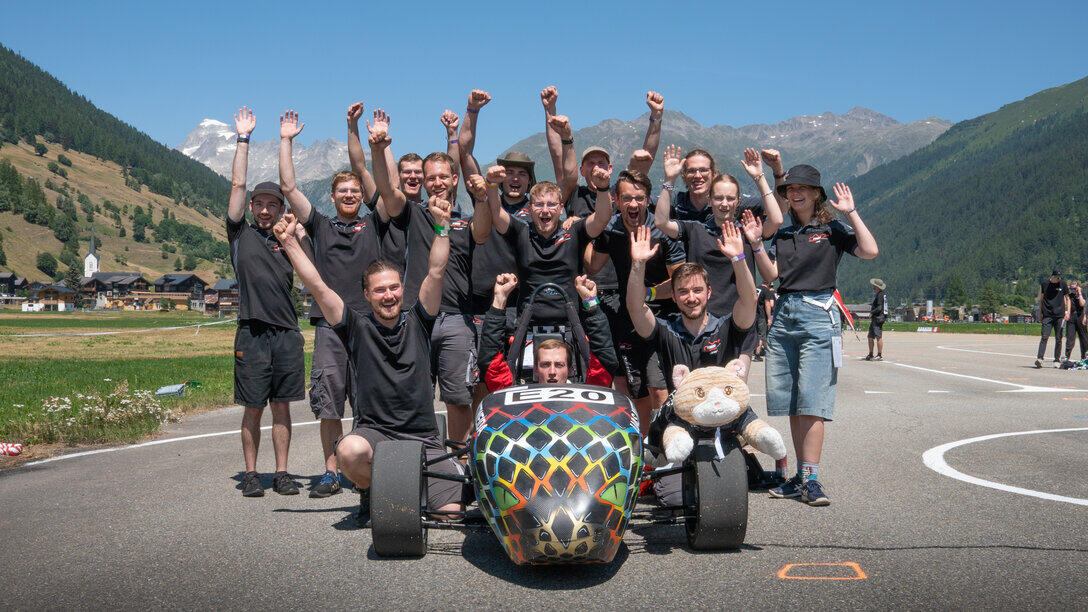
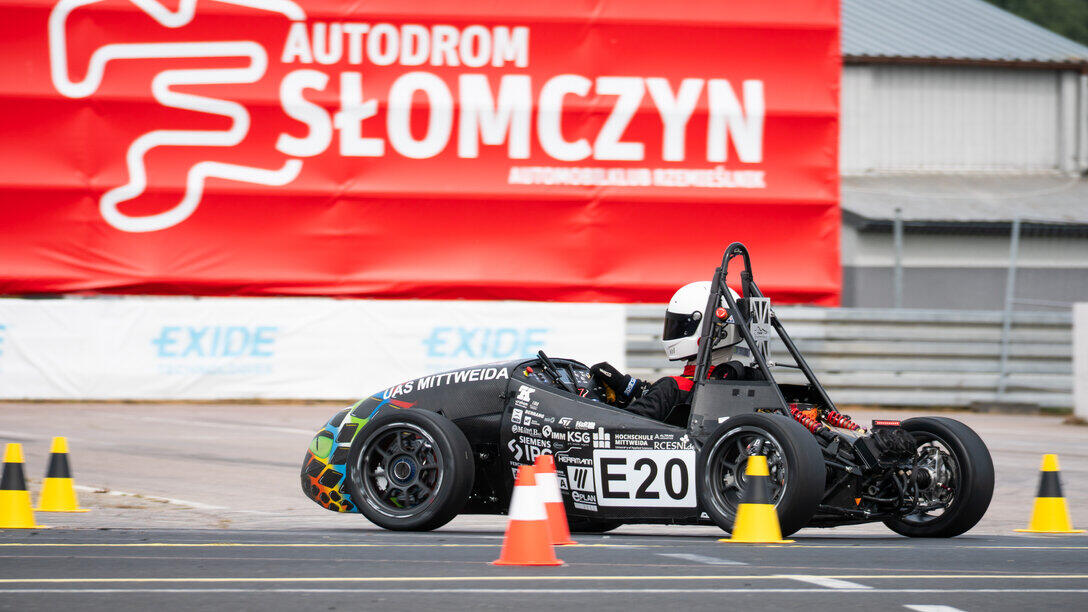
It paid off. At the first race, Formula Student Switzerland in July, TMM finished 3rd in the Efficiency category and 8th out of 21 teams in the overall standings. At Formula Student Germany (FSG) at the Hockenheimring, the team passed the mechanical inspection in just 38 minutes and the electrical inspection in 44 minutes. In the end, they finished 34th out of around 80 teams, making them the best team from the new federal states. TMM competed in the dynamic disciplines of the FSG for the first time in over ten years and was one of only 28 teams to reach the finish line of the 22-kilometre endurance race. Finally, in Poland, the Golden Serpent came second in the Efficiency category and ninth in the overall EV standings.
The strength of the concept was particularly evident in the autocross: the Golden Serpent races without any aerodynamic package whatsoever, yet still managed to leave many aerodynamically optimised vehicles behind, clocking 92.093 seconds at the Hockenheimring.