This page was translated automatically using artificial intelligence (DeepL). The German version is binding. More information about automatic translation
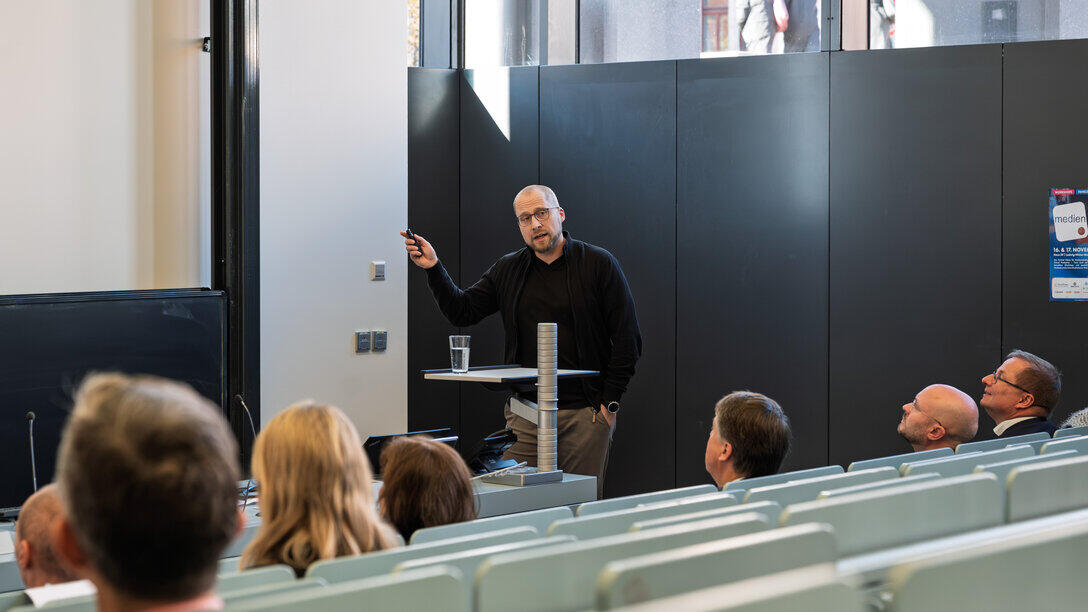
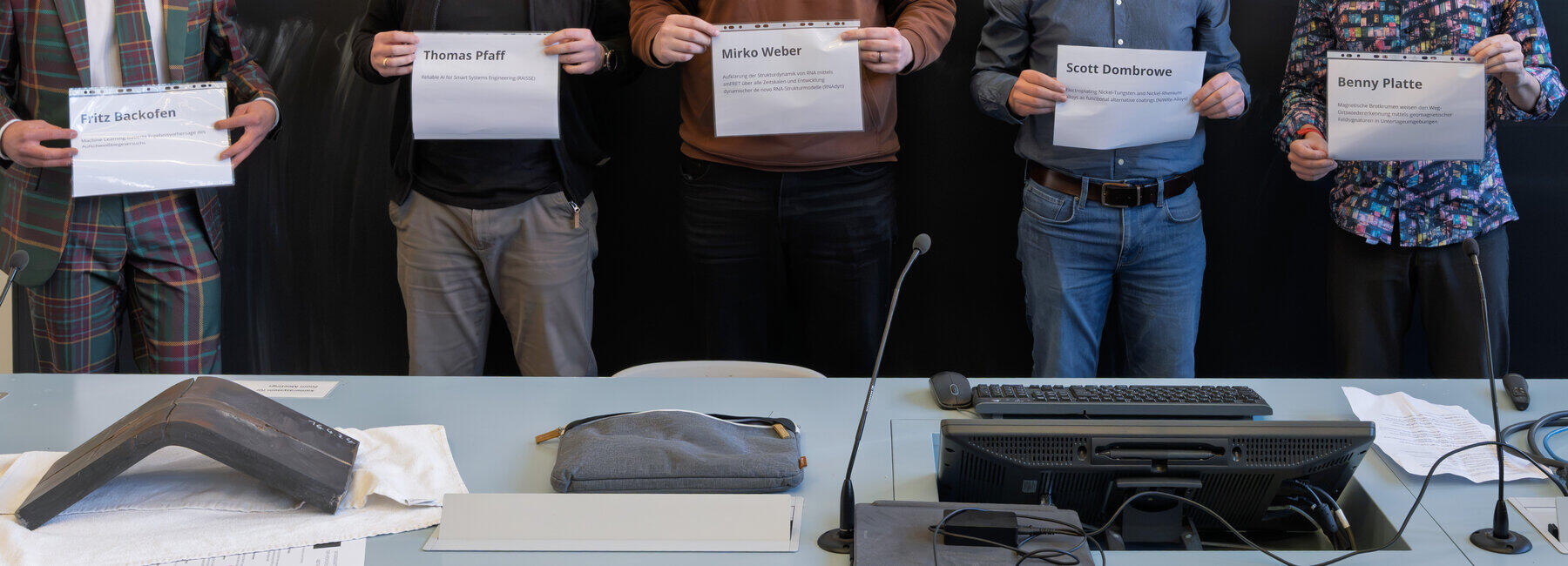
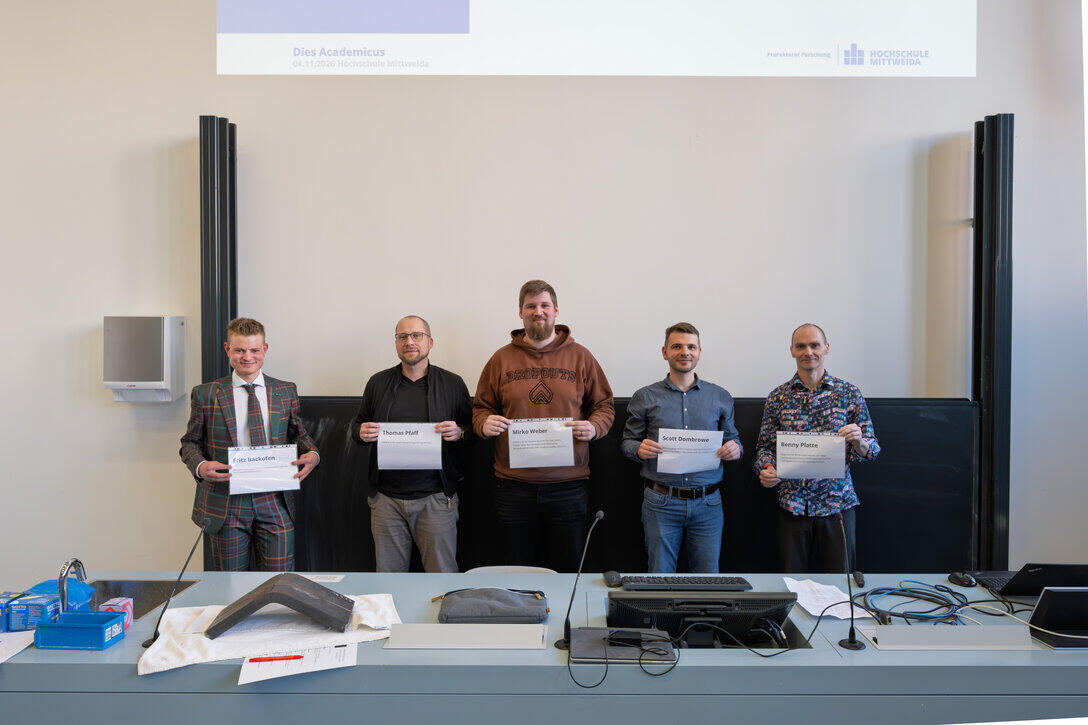
Hands-on science, sharing in the excitement and having a say: As part of the ‘dies academicus’ on 4 November, the Science Prize was once again awarded at Mittweida University of Applied Sciences. Right at the start of the event, the five candidates presented their research projects in short, accessible pitches. The award ceremony, presided over by the Vice-Rector for Research, Professor Uwe Mahn, brought the day to a festive close.
The Science Prize recognises outstanding research achievements at Mittweida University of Applied Sciences (HSMW) whilst also building a bridge between the academic world and the general public. This is because it is not solely academic colleagues who decide the rankings: the assessment takes place in two stages. First, a jury comprising representatives from the faculties assesses the written submissions. The researchers then present their projects in a short talk. The audience decides on the outcome of this oral part by voting for their favourites on the spot.
Listening to the mountain’s path
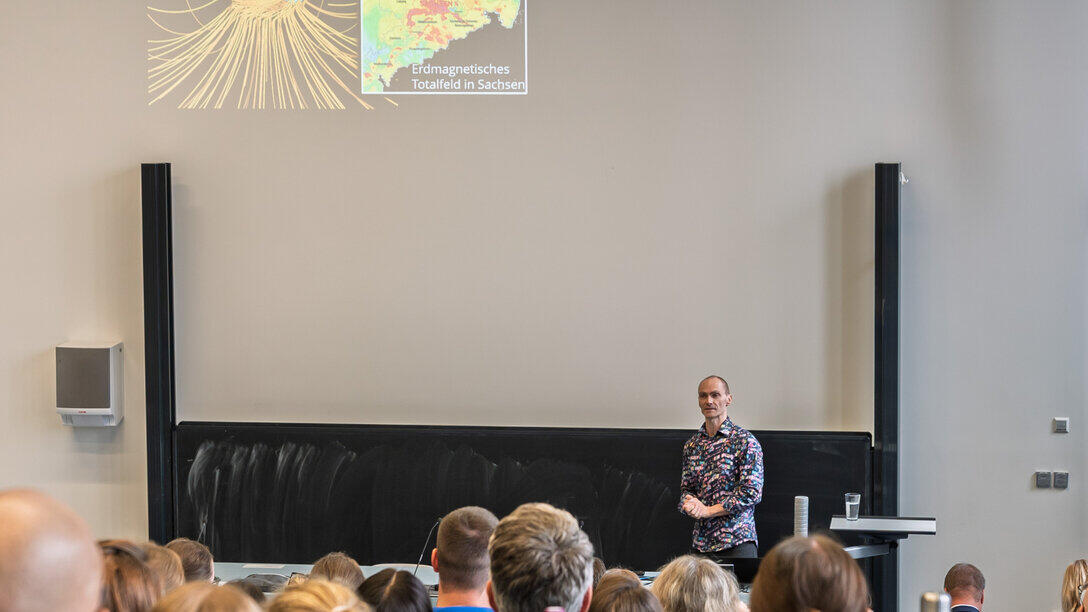
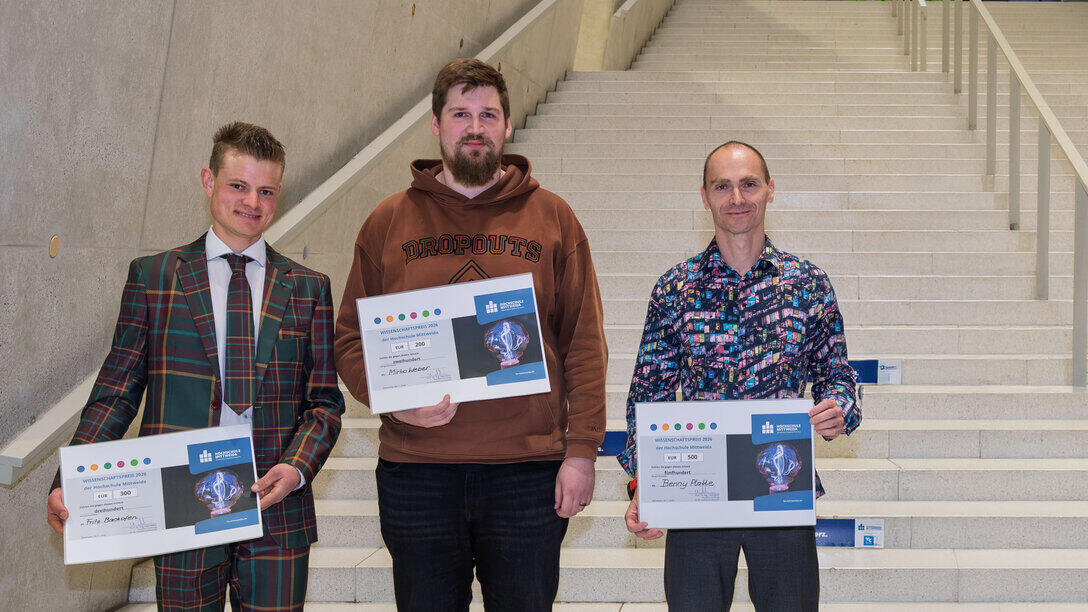
First place went to Benny Platte for his project ‘Magnetic breadcrumbs show the way’. The method is used to locate positions within underground systems.
What sounds simple at first is actually extremely challenging: in caves, tunnels and old mines, there is no infrastructure for positioning – GPS signals cannot penetrate rock, and mobile phone signals do not reach such depths. Anyone who gets lost there can quickly find themselves in mortal danger.
The solution lies in the Earth’s magnetic field: this permeates the entire planet. Its field lines are disrupted and thus distorted by ore veins, rock strata and cavities. An ordinary smartphone records these distortions whilst walking as a location-specific ‘magnetic melody’, which neural networks with memory can use to recognise the location. In a field test, a network trained in 2023 correctly determined positions even three years later.
The disturbance of the magnetic field thus becomes the actual signal; drawing an analogy with the fairy tale of Hansel and Gretel, Benny Platte calls this ‘breadcrumbs made of geomagnetic vector patterns that nobody picks away’.
With this potentially life-saving method for mine rescue teams, mine safety and visitor mines, Benny Platte won over both the jury and the audience.
AI examines the microstructure of steel
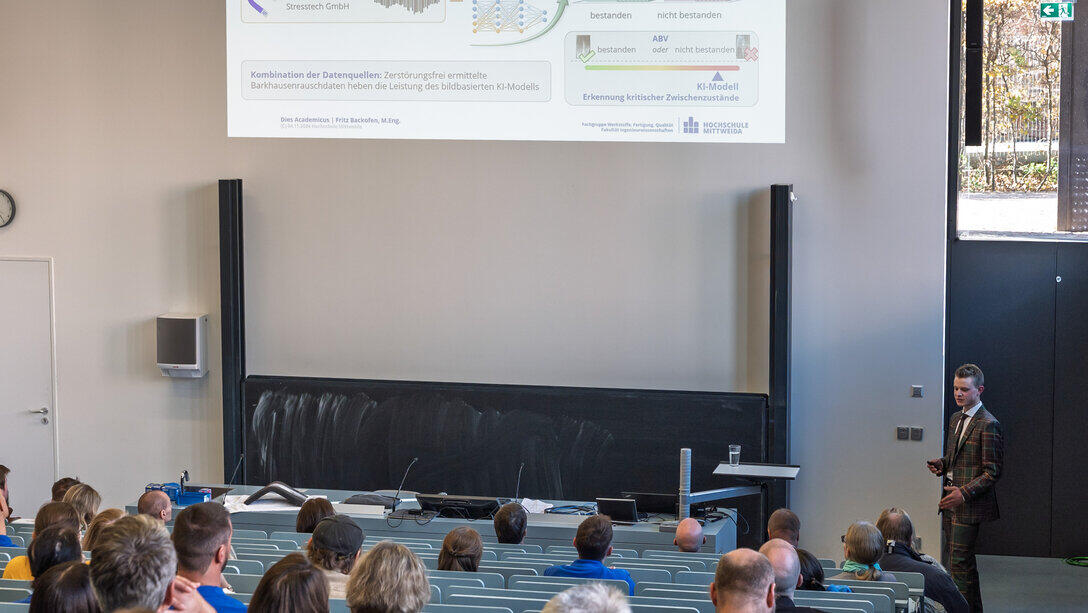
Fritz Backofen took second place with his research into predicting the safety properties of structural steels.
Whilst this may sound rather dry at first, it relates to highly relevant applications, such as in railway bridge construction or other safety-critical structures. Using artificial intelligence, Backofen analyses material data and microscopic images of steel microstructures. The aim is to predict at an early stage whether a material will pass demanding stress tests.
Particularly impressive: the AI methods developed can evaluate microstructural features in seconds, whereas manual analysis of these features often used to take days. This could make material testing not only faster, but also more objective and efficient.
RNA structures in motion
Third place went to Mirko Weber, who specialises in one of the most important classes of molecules in living organisms: ribonucleic acid, or RNA for short.
RNA is by no means a rigid structure. It folds, changes shape and moves individual regions relative to one another. It is precisely these movements that Mirko Weber aims to visualise. To do so, he uses Förster resonance energy transfer (FRET) and combines modern single-molecule measurements with computer-aided structure prediction.
The result will be dynamic 3D models showing how RNA molecules actually function and change. These findings could help us to better understand biological processes in the future and enable new applications in Biotechnology, the pharmaceutical industry and medicine.
From the laboratory to practical application: new coatings for industry and medical technology
Through the “NiWRe-Alloys” research project, Scott Dombrowe demonstrated how innovative materials research can solve specific challenges in industry and medical technology. Together with five other partners from three European countries, novel nickel-tungsten and nickel-rhenium alloys were developed, which are intended to serve as environmentally friendly alternatives to established coatings.
Whilst conventional hard chrome or gold coatings are often based on expensive, critical or environmentally harmful materials, the newly developed coatings do not require toxic electrolytes. At the same time, they offer outstanding properties for wear and corrosion protection, as well as acting as high-performance X-ray absorbers in medical technology. With the successful construction of a demonstrator, the project has already taken an important step towards practical application.
AI that explains its decisions
Thomas Pfaff is exploring a question that is becoming increasingly important in light of the rapid boom in AI: How can artificial intelligence and technical applications be reliably integrated? Using the RAISSE methodology, he is developing robust and transparent AI systems specifically for industrial applications and small and medium-sized enterprises.
The focus is on so-called white-box models, whose decisions are transparent and mathematically verifiable. Unlike many modern AI systems, they not only deliver results but also enable an understanding of how these results are arrived at. Among other things, Pfaff’s approach helps to optimise sensor technology and hardware in a targeted manner, reduce computational effort, and transfer intelligent models from laboratory or simulation environments to cost-effective systems in real-world applications. This research thus makes an important contribution to the development of trustworthy and practical AI solutions in mechanical and plant engineering, as well as in many other technical fields.