This page was translated automatically using artificial intelligence (DeepL). The German version is binding. More information about automatic translation
Facts and figures

Cybercrime/Cybersecurity
In Mittweida, you’ll study at the intersection of high-tech investigation and law. Here, you’ll not only learn how to secure systems, but also how to present yourself effectively as an expert witness in court. Whilst other programmes focus solely on IT security, Mittweida consistently combines computer science with criminalistic thinking.
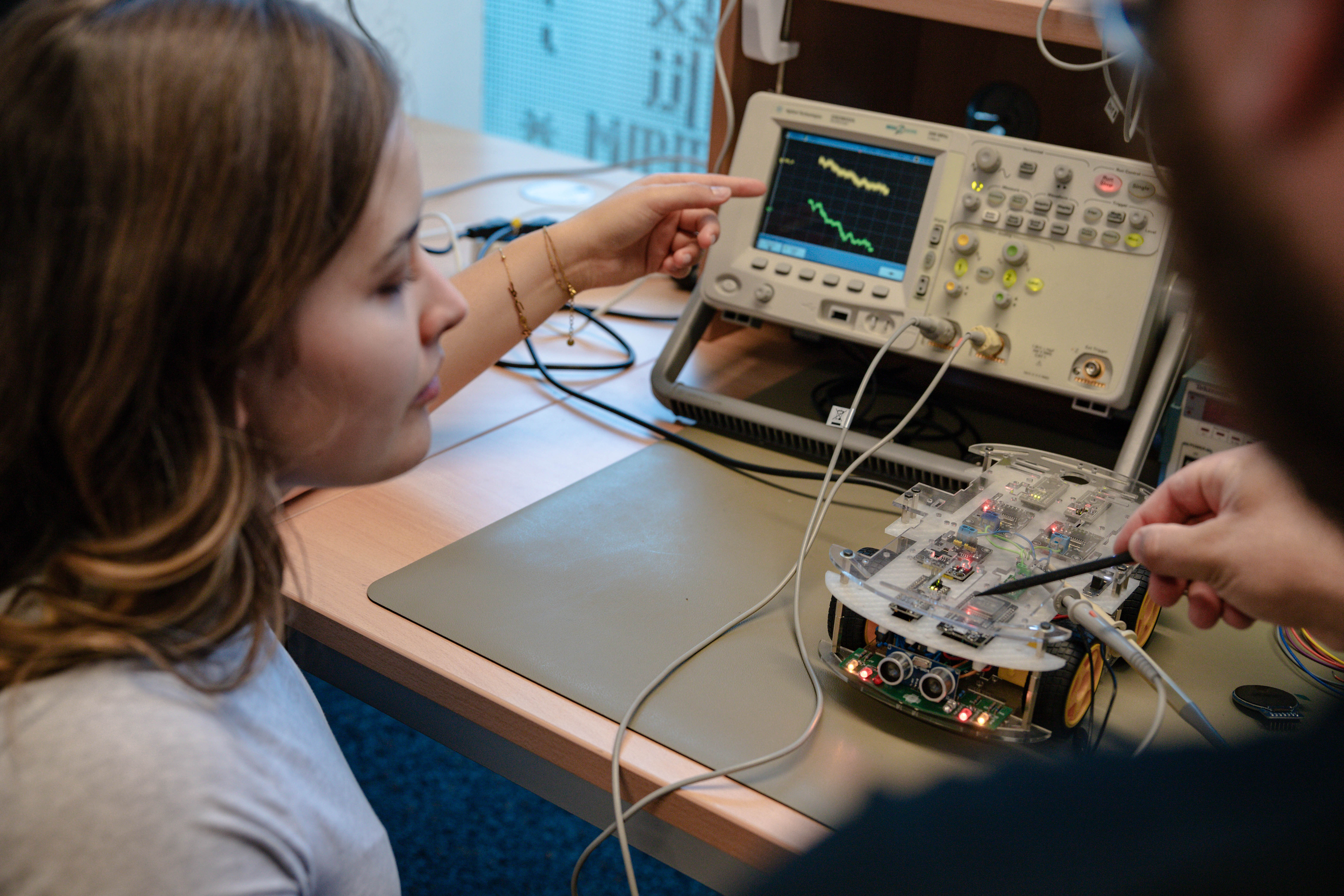
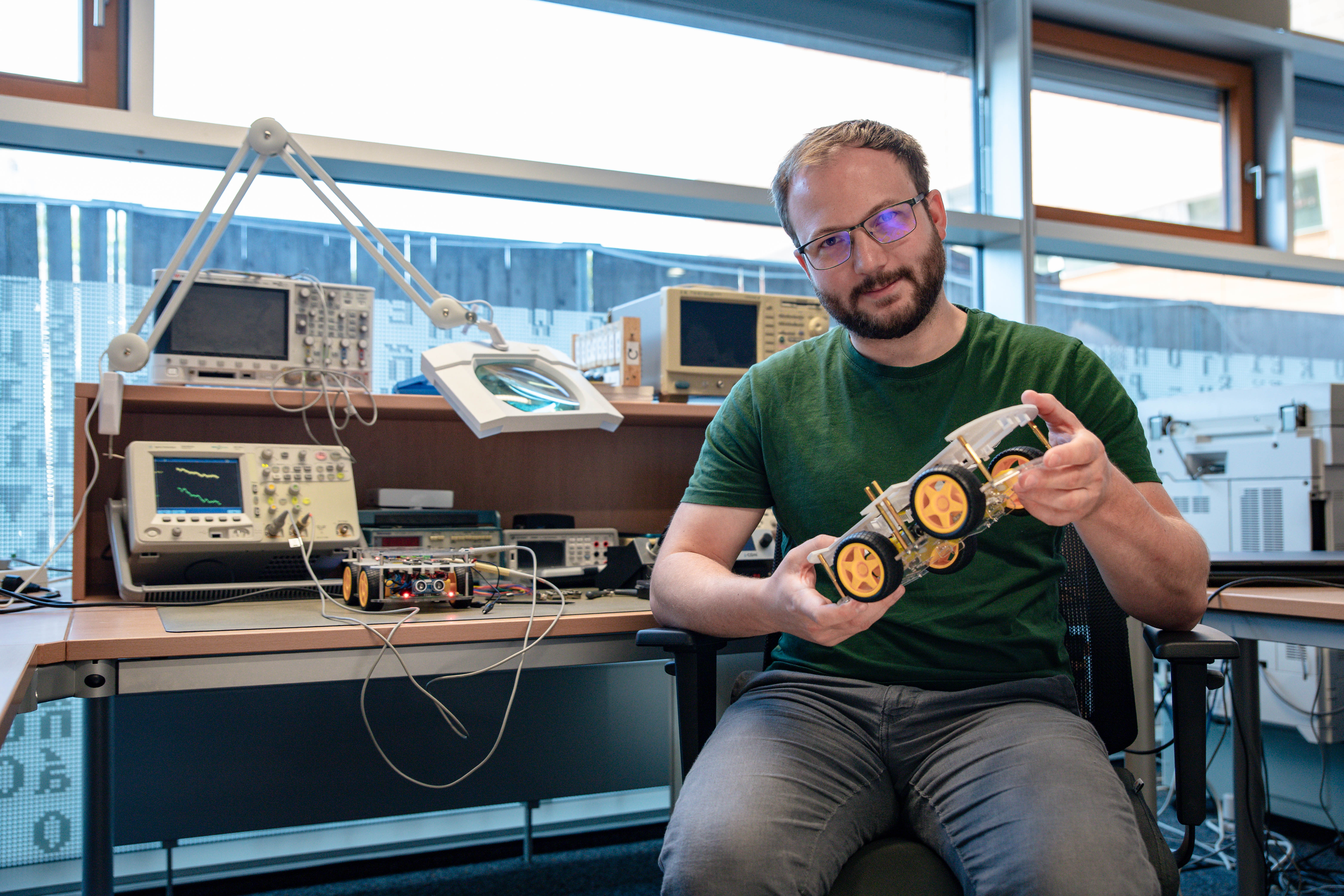
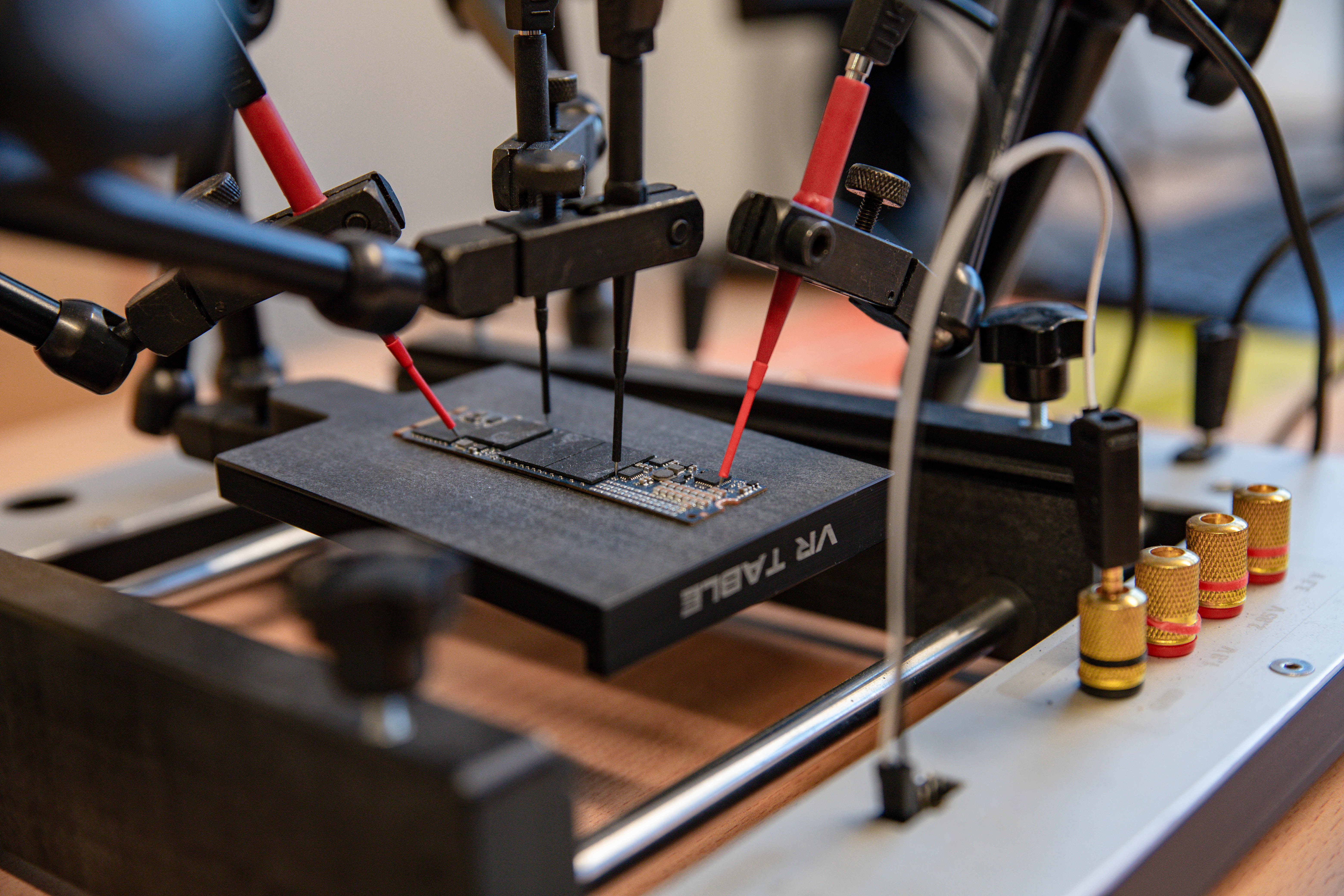
You’ll benefit from the many years of experience of our forensic teams, who reconstruct real crime scenes and support investigative authorities worldwide. This close connection to forensic practice prepares you for operations where every bit counts as evidence.
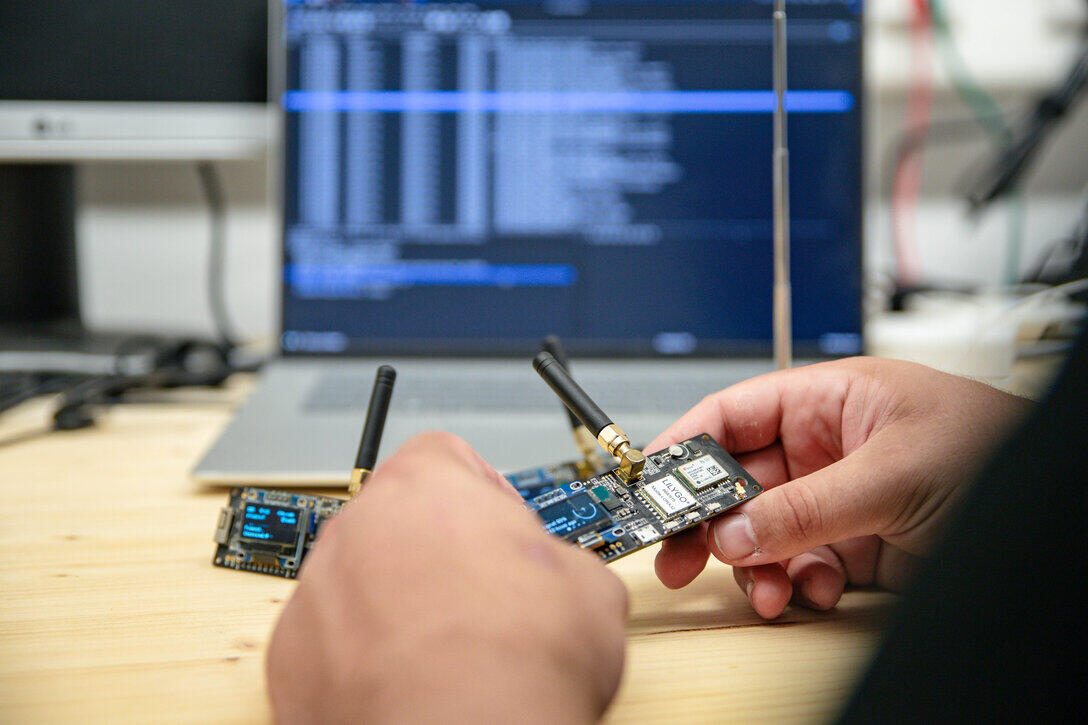
An overview of the course content
The modular structure of the Master’s in Cybercrime/Cybersecurity programme takes you deep into the toolkits of modern investigators. You’ll start with mobile forensics, database programming and intelligent video analysis, whilst specialising in optional modules such as cryptography or the Internet of Things.
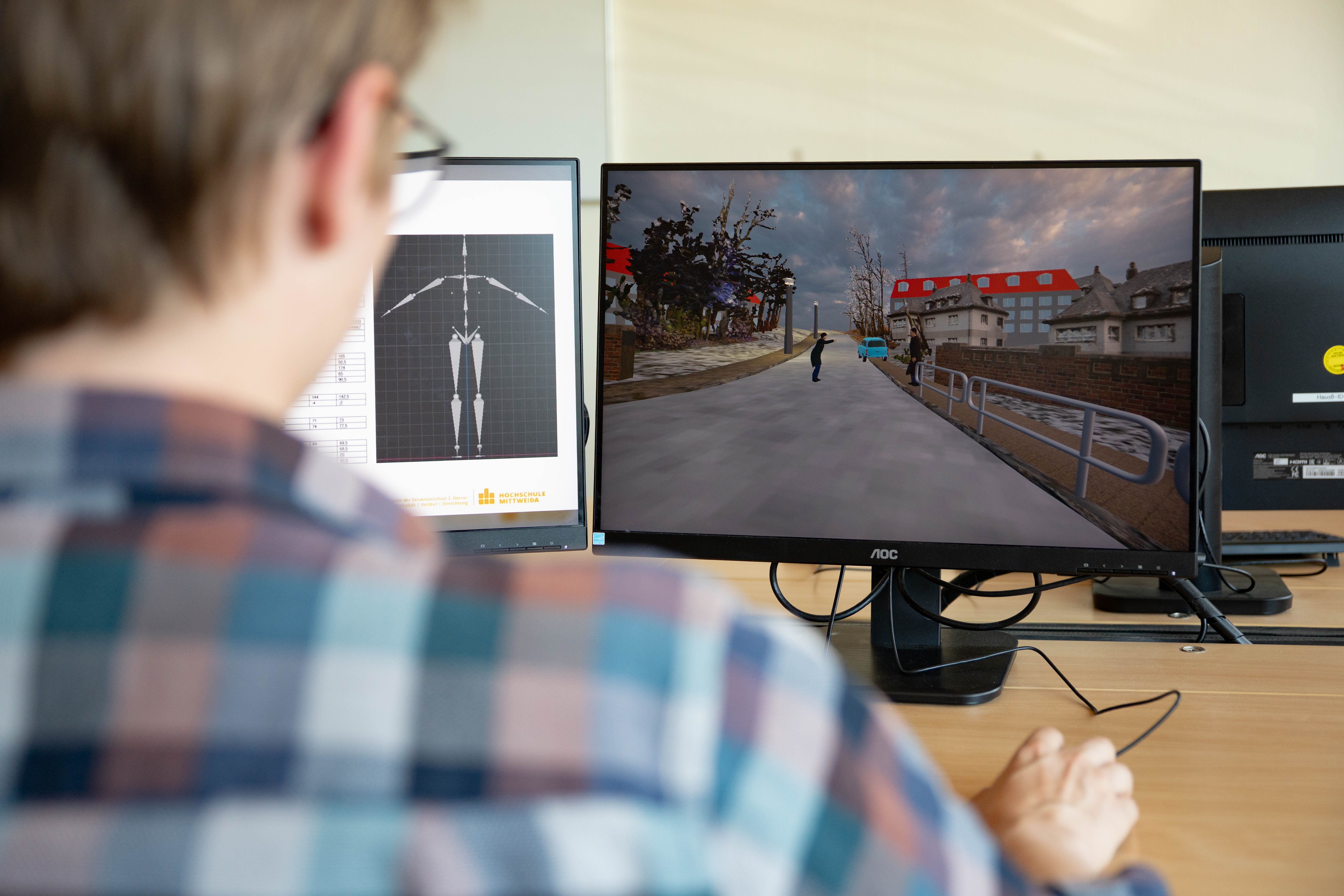
As your studies progress, you’ll master techniques such as reverse engineering, AI-based analysis and OSINT to track digital traces on the web or on social media. Things get particularly hands-on when analysing vehicle data in car forensics or working on predictive policing. In complex work placements, you’ll apply your forensic methods directly before writing your Master’s thesis in the fourth semester.
Cybercrime I
Fundamentals of Mobile Telecommunications Forensics
Database Programming
Intelligent Video Analysis
Compulsory electives (2 out of 3):
- Internet of Things
- Stochastic Models
- Foundations of Modern Cryptography
Cybercrime II
The expert witness in court
Software Placement
Data Compression
Compulsory electives (2 out of 3):
- Geoforensics and Reverse Engineering
- Artificial Intelligence – Theory and Foundations
- Cryptanalysis
Social Engineering and OSINT
Complex Practical Course in Forensic Methods
Design of Secure Systems
Data Networks/Cloud Forensics
Compulsory electives (2 out of 3):
- Car Forensics
- Predictive Policing/Unreported Crime
- Digital Assets and Goods
Master's thesis


Cybercrime/Cybersecurity in Mittweida
In summary – Cybercrime/Cybersecurity in Mittweida

Full-time Master’s programme at the intersection of IT security and digital forensics

(120 Credits)





Once you’ve graduated, you’ll be the solution to the massive shortage of skilled workers in digital law enforcement and IT security. You’ll work as a cybercrime investigator for organisations such as the BKA or the state criminal investigation offices, as a security auditor for international corporations, or as an incident responder at specialist security firms. Roles such as forensic expert reviewer, penetration tester or cloud forensics specialist are also among the fields in which you could work.
Application and Admission
Applicants must hold a first professional degree from a relevant degree programme, such as Applied Computer Science or Digital Forensics, comprising 180 ECTS credits (Bachelor’s degree). When applying, applicants must confirm via a self-declaration form that they possess the required mathematical knowledge; this knowledge will be assessed by means of a test in the first semester. Admission is conditional until the test is passed; failure to pass will result in de-registration.
Language skills:
Applicants who have not obtained their university entrance qualification through the German Abitur, including a basic English course with an average mark of 2, must demonstrate English language proficiency at level C1 of the Common European Framework of Reference for Languages. Proof may be provided, for example, by a TOEFL test (iBT or iBT Home Edition) with a score of at least 76 points, the Duolingo English Test with a score of at least 110 points, or an equivalent certificate.
The application period for the winter semester begins on 15 April and ends on 15 July. You can register at hs-mittweida.de/bewerben. Once you have submitted all your documents, you can enrol. Once you have enrolled, your place at Mittweida is secured. For international applicants, the application deadline is 15 May, to allow sufficient time to apply for a visa.
Excellent study conditions, modern facilities and some of the most affordable rent prices in Germany for a university town mean you can focus fully on your studies. Tutorials are on hand to help with subject-specific queries, the SAXEED start-up network guides you on your journey towards developing your own business idea, and the Social Support Service provides assistance with specific life situations, such as childcare or caring for relatives. The campus also has plenty to offer: two music festivals a year, an active esports team and a vibrant student community. International students, for example, are closely connected through the Cosmopolitan Club.


Related degree programmes


Frequently Asked Questions
The Bachelor’s degree provides a broad, interdisciplinary foundation (including natural sciences, criminology and law). The Master’s degree, on the other hand, focuses entirely on the intricacies of the digital world: you’ll delve deeply into advanced cryptography, network security, information security management and the fight against highly organised cybercrime.
As the Master’s programme places great emphasis on team projects and work in the specialist digital forensics laboratories, living close to campus is a major advantage. Anyone wishing to commute should be prepared for intensive on-campus days, which focus on practical laboratory work.
There are no school-style holidays during your degree. Instead, there are lecture-free periods. During these, you can study, write assignments, undertake work placements – and treat yourself to a bit of a break now and then.
In the 2026/2027 winter term, in addition to public holidays, the following periods are lecture- and exam-free:
- 21 December to 3 January,
- from 22 February. Exception: The Faculty of Social Sciences begins its lecture-free period on 29 February.
In the 2027 summer term, with lectures starting on 22 March, the dates are:
- 25 March to 2 April,
- 7 May,
- 17 May,
- from 2 August. The Faculty of Social Sciences will also hold an examination week from 23 to 27 August.
Yes, the course is highly practical. Real, anonymised cyber-attacks, malware incidents and IT security risks are regularly analysed in detail in order to develop defence strategies and forensic investigation methods.
If you want not only to understand complex cyber-attacks but also to defend against them strategically, manage security architectures or work in senior roles within investigative authorities (such as the BKA or LKA), this Master’s programme is the right choice. It provides you with the specific qualifications needed for leadership roles in the IT security sector.
You’ll have a great deal of freedom to specialise further in either technical IT security (defence/security architectures) or the investigative, tactical and legal aspects (IT Forensics/Cybercrime) through project modules, research work and the topic of your Master’s thesis.
The similarity is striking. You’ll be working with the same professional software and tools that are used in the business world and by public authorities. Through simulated cyber-attacks (penetration testing) and incident response scenarios, you’ll be prepared for real-life emergencies.