This page was translated automatically using artificial intelligence (DeepL). The German version is binding. More information about automatic translation
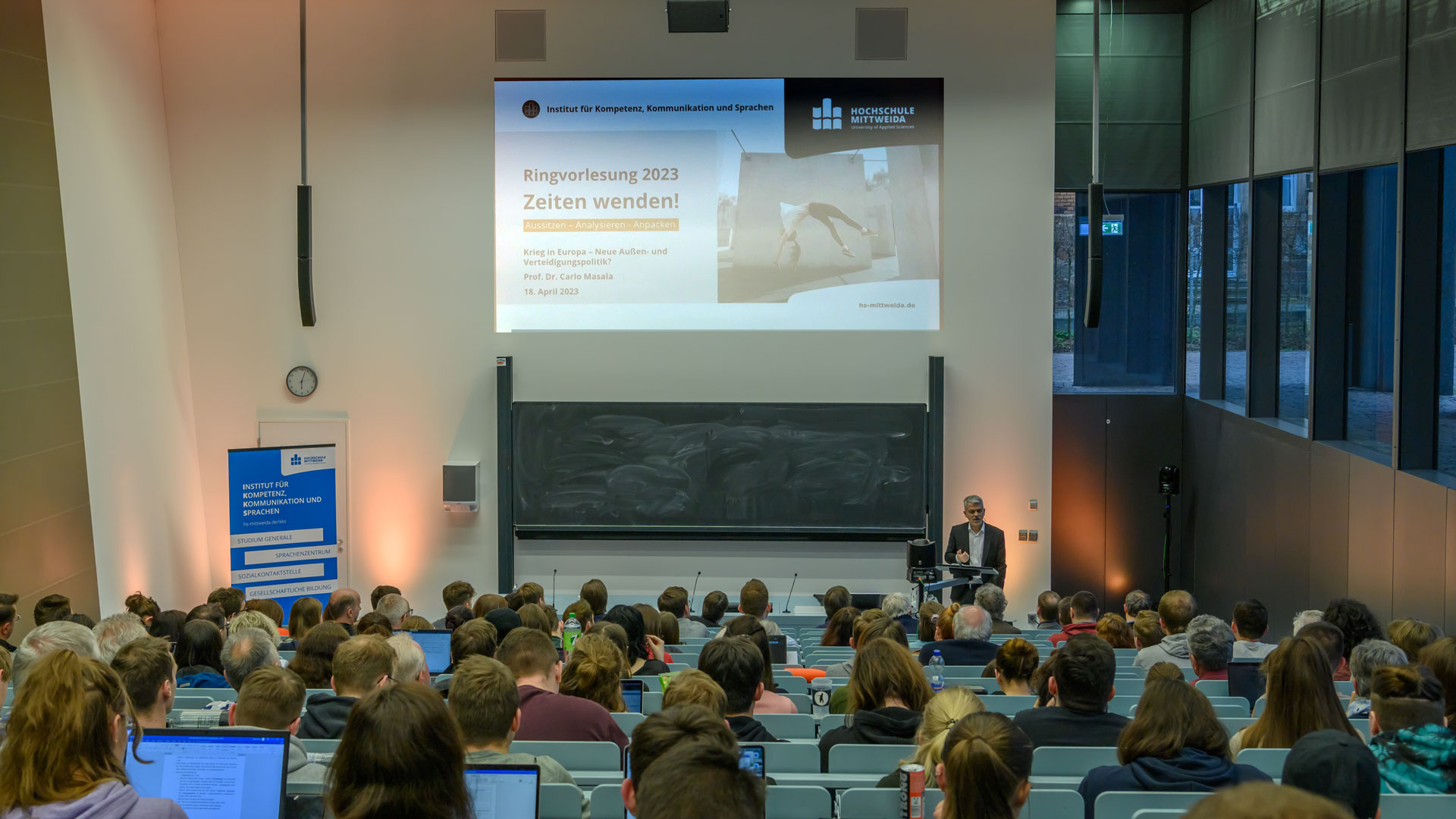
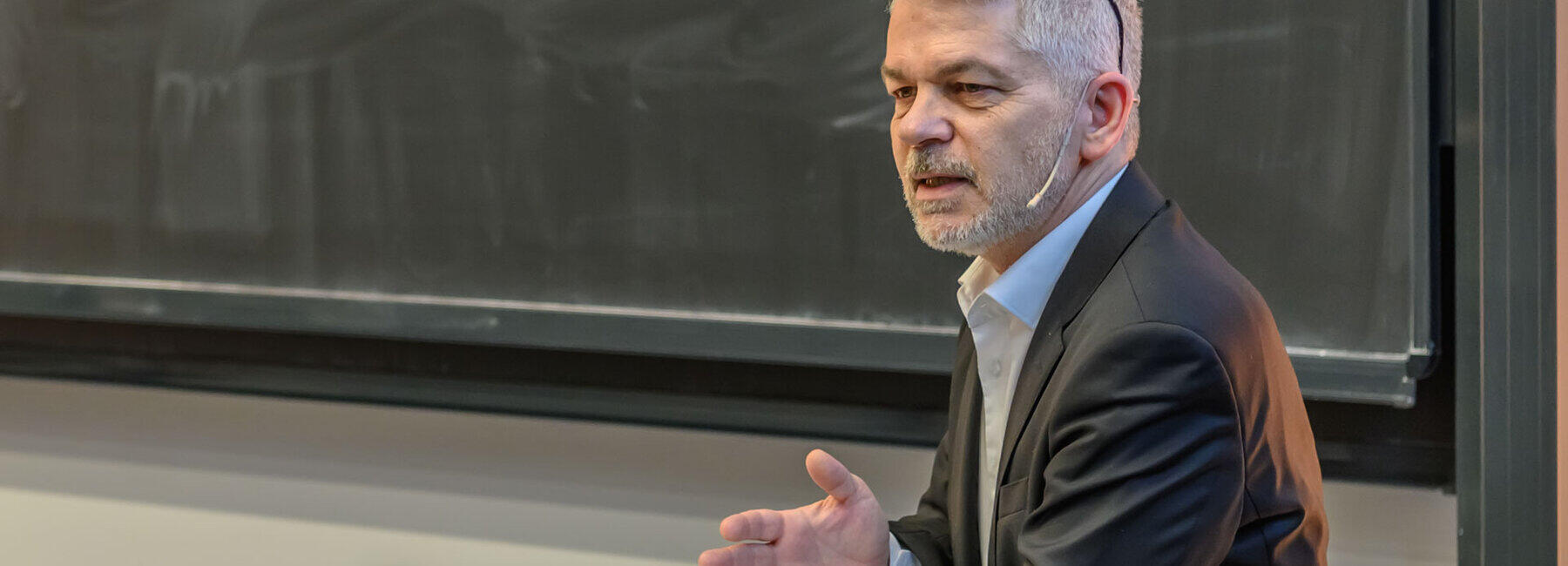
The lecture series at Mittweida University of Applied Sciences, together with its audience and organisers, looks back on an engaging and insightful lecture delivered on 18 April by Dr Carlo Masala, Professor of International Politics at the University of the German Armed Forces, author of numerous publications and a prominent media expert. Under the heading ‘War in Europe – A New Foreign and Defence Policy?’, he took the audience in Mittweida on a journey to analyse the momentous consequences of Russia’s invasion of Ukraine, particularly with regard to foreign and defence policy.
To come straight to the point: according to Masala, there has been no ‘turning point’ in defence and security policy to date. This applies – though not exclusively – to Germany, whose Chancellor, in his famous speech, never directly referred to a ‘turning point’ for German security and defence policy. After an initial burst of momentum, the country is now once again muddling through without a functioning strategy. Rather, the turning point is taking place all around us.
A turning point in the war in Ukraine. What makes this war so unique?
All NATO member states are operating in the ‘fog of war’. Everything is dynamic and, in this respect, entirely unprecedented. It is the first war of aggression since the Second World War – and one involving a new kind of nuclear threat. Europe’s largest country by land area, with its neo-imperial agenda, is invading the second-largest. This war marks the end of a European security policy, painstakingly built up since 1975, based on secure borders between sovereign states; it also has global repercussions and is leading to the destabilisation of other regions not involved in the conflict.
In this respect, this war is a turning point.

A paradigm shift in the fog of war
“There has been no blueprint for this situation to date.” However, according to Masala, none of the NATO governments involved had made any major mistakes. “They’ve all managed it relatively well.” The arms deliveries, particularly the tank deliveries, did indeed mark a paradigm shift.
In diplomacy, Germany differs from the US. Whilst in the US ‘all options are on the table’ as a means of exerting pressure and are thus part of diplomacy, Germany regards the deployment of armed forces as a last resort, in the sense of an extreme measure to be taken only after diplomacy has failed. Militarily, moreover, Russia can only be countered with well-trained armed forces and modern systems, as the West cannot match the sheer volume of personnel and equipment that Moscow can mobilise – provided that no resistance to such mobilisation arises within Russia itself.
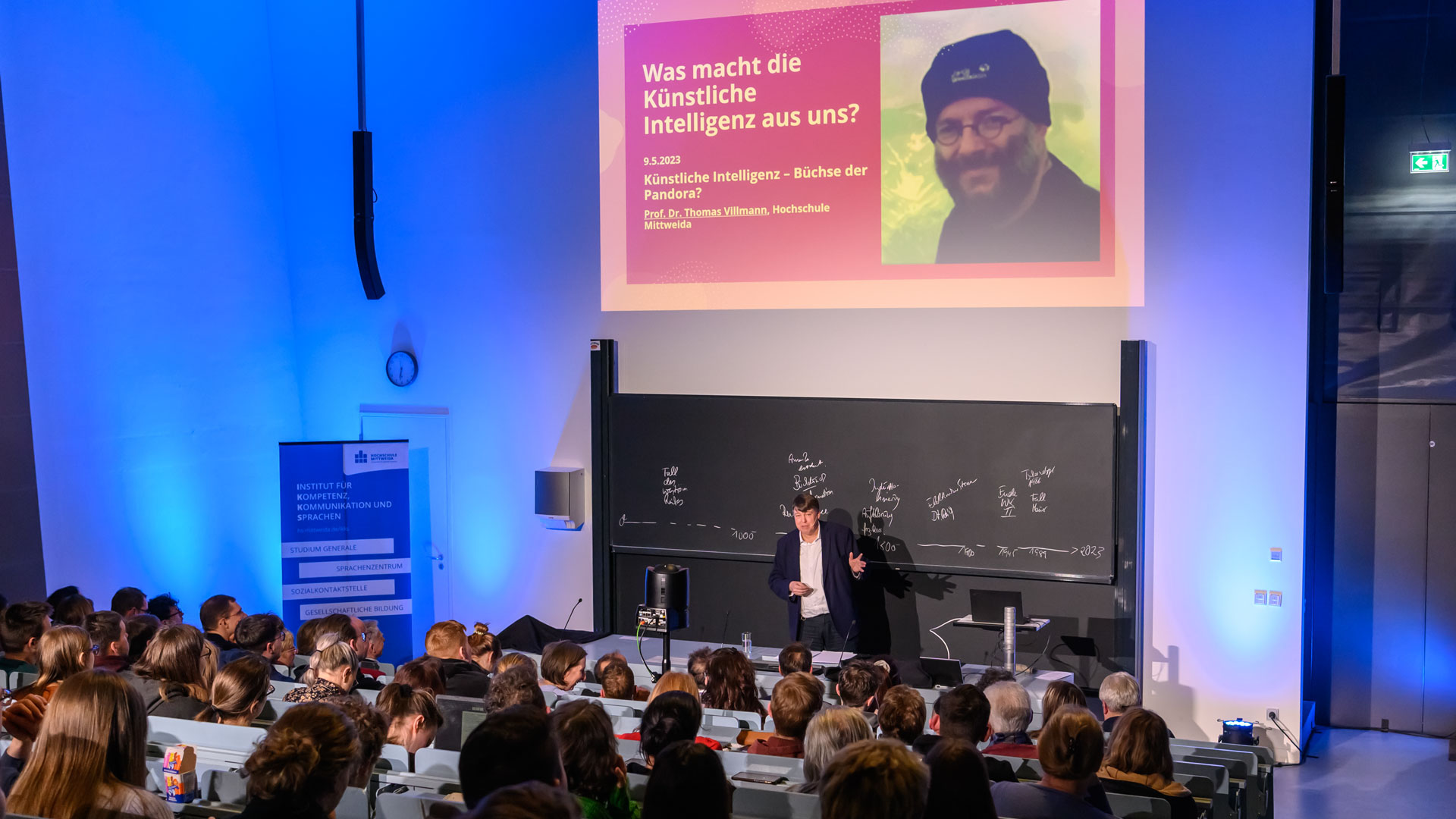
9 May: Artificial Intelligence – Pandora’s box?
It is not just – and certainly not exclusively – the ChatGPT chatbot that epitomises the rapid development of artificial intelligence (AI). AI has long been permeating and transforming social life, influencing political processes and revolutionising decision-making strategies. Medical diagnostics, autonomous transport systems and predictive models, as well as – not least – shopping recommendations in online retail, are all examples of AI applications.
Thomas Villmann, a mathematics professor at Mittweida University, is an expert in AI and also advises the Free State of Saxony on its AI strategy. In his lecture on 9 May, he will provide fascinating insights into the principles and possibilities of AI – whilst also highlighting its limitations as well as the ethical, social, educational and legal conflicts it raises.
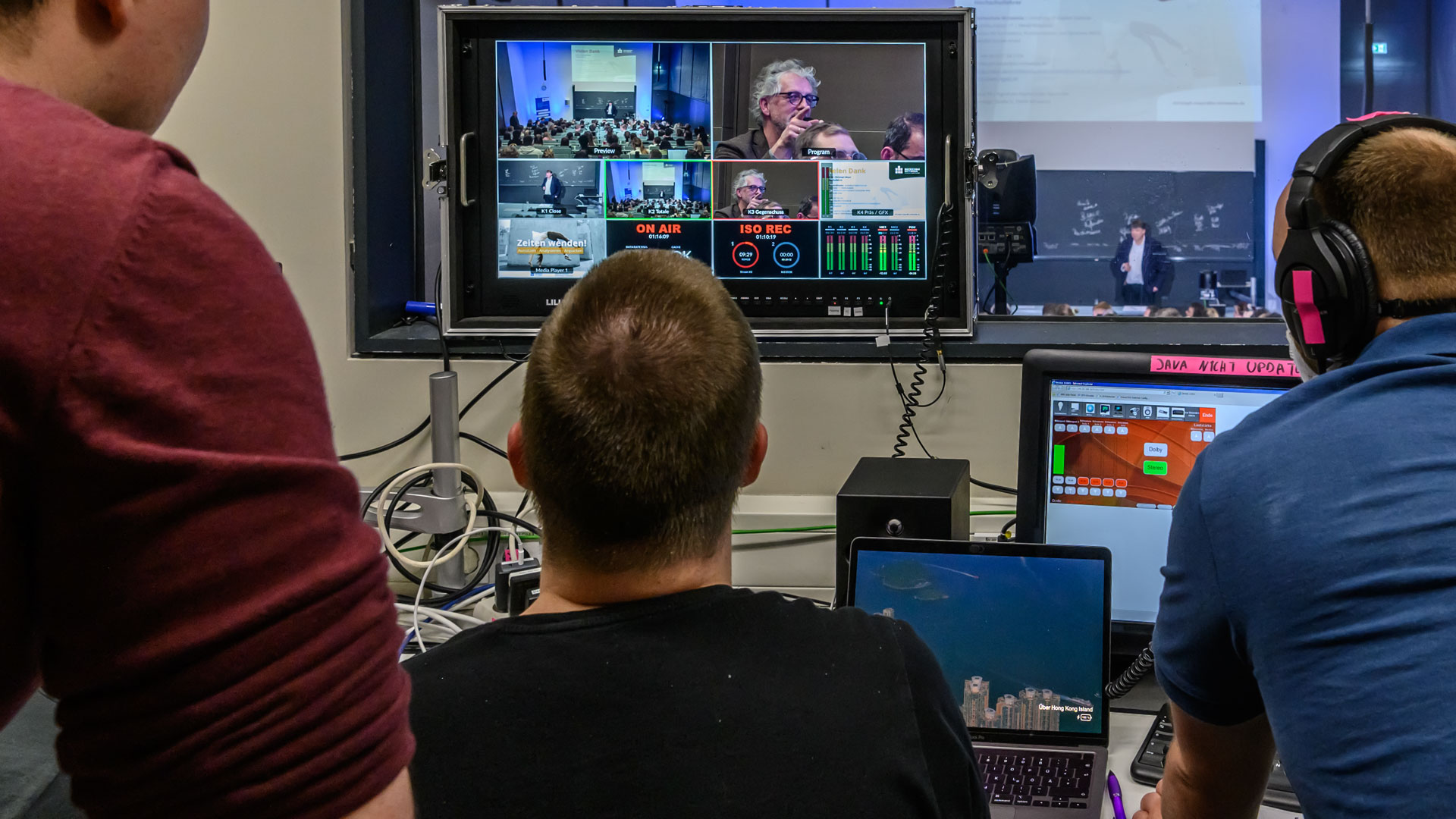
Exceptionally, the lecture will not take place every 14 days, but – due to the May Bank Holiday – will not be held until Tuesday 9 May 2023, from 5.30 pm to 7.00 pm at the Centre for Media and Social Work at Mittweida University of Applied Sciences, Bahnhofstraße 15.
Members of the public are warmly invited to attend and be inspired.
Full details of the lectures and speakers in the public lecture series can be found at: www.hs-mittweida.de/ringvorlesung
The first two lectures are now also available to watch on Mittweida University of Applied Sciences’ YouTube channel.