This page was translated automatically using artificial intelligence (DeepL). The German version is binding. More information about automatic translation
Bespoke bicycle frames, metal components on a cubic-metre scale and the latest research trends in additive manufacturing: At the 13th Central German Forum ‘3D Printing in Practice’ on 1 October 2026 in Jena, researchers from Mittweida University of Applied Sciences will present their latest developments. Specialist presentations, an exhibition and networking opportunities make this free event a must-attend for anyone keen to find out where additive manufacturing technologies are heading in the future.
Pedals, Powder, Perspectives: Rethinking Bicycle Design
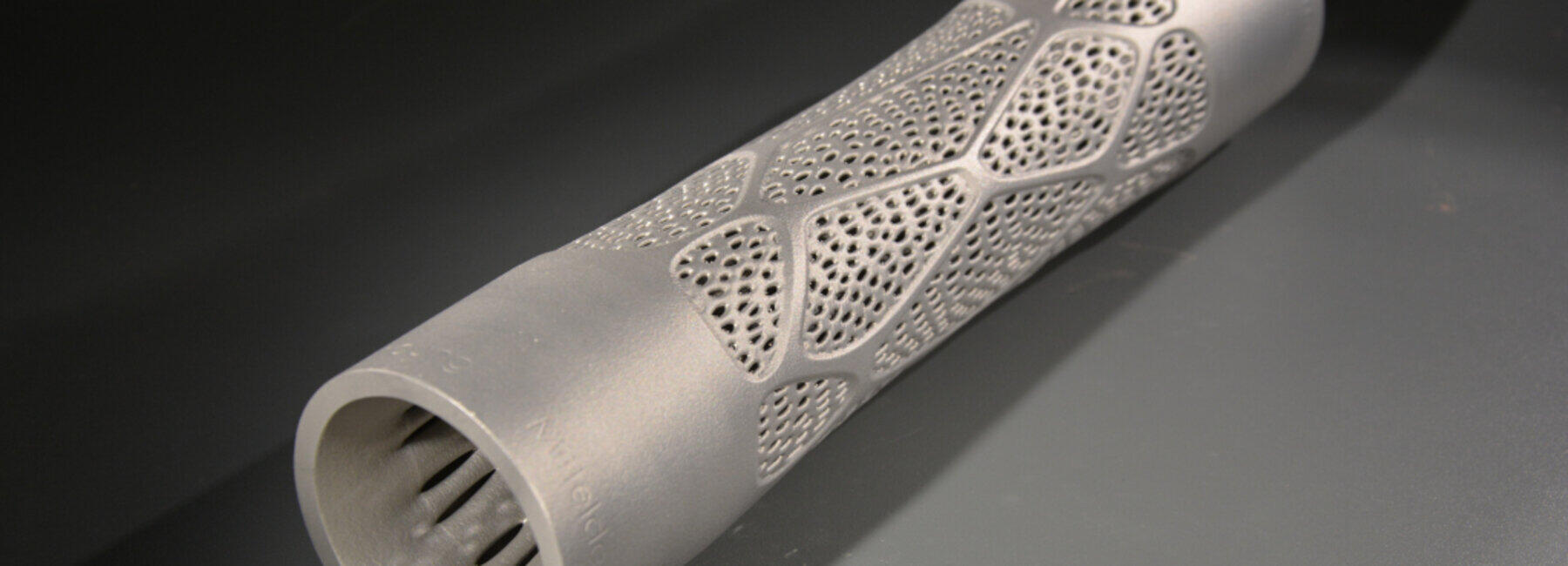
Dr Hagen Bankwitz, from the Intelligent Machine Systems Chair, presents an innovative concept for bespoke bicycle frames in his technical lecture ‘From Node to Frame: A Novel Bicycle Frame Concept Based on Additive Thermoplastic Structures’. Modern 3D printing processes are combined with high-strength fibre reinforcements. The frame’s connection nodes are additively manufactured and specifically reinforced, whilst the frame tubes are made from particularly lightweight, unidirectional fibre-reinforced materials. This allows the frame to be reinforced precisely where forces are applied, whilst at the same time being tailored to the individual requirements and preferences of the user. The presentation highlights the potential of this approach for lighter, more resource-efficient and, in future, more highly customised bicycle frames.
In the accompanying exhibition, visitors can see the bicycle that has been developed, as well as other 3D-printed exhibits, up close.
Components on a grand scale? LPBF-XXL makes it possible
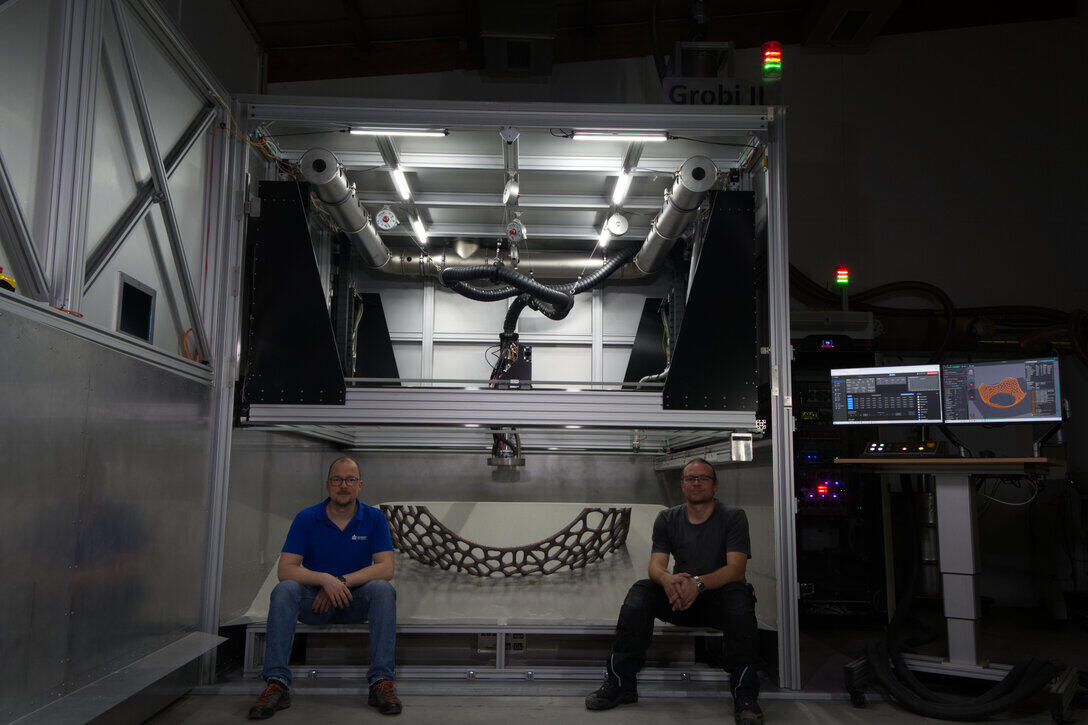
Andreas Kotsch from the Laser Institute at Mittweida University of Applied Sciences will demonstrate in his talk ‘LPBF-XXL – The solution for metal components on a cubic metre scale’ how modern laser powder bed technologies enable the production of large-format metal components. Laser Powder Bed Fusion (LPBF) is a 3D printing process in which complex components are produced from metal powder using a laser beam. The large-scale LPBF-XXL process can produce components on the order of cubic metres within a short build time. Unlike casting and machining processes, LPBF allows for integrated solutions such as cooling channels or lightweight structures. Potential applications include tool and mould making, façade elements and structural frameworks.
In addition, Professor Jörg Matthes will once again be taking part in the forum as the moderator of a specialist session.
Four sessions, 16 presentations, plenty of ideas
Alongside two high-profile keynote speeches, participants can look forward to a total of 16 specialist presentations across four sessions:
- Biogenic materials and bionic structures in application-oriented 3D Printing
- Additive manufacturing on an XXL scale
- Material and process design for functional AM components
- Process reliability and functionalisation for additive series production
For the first time, a makerspace competition will also be held, in which students and start-up teams will present their ideas, receive awards, and a people’s choice prize will be awarded.
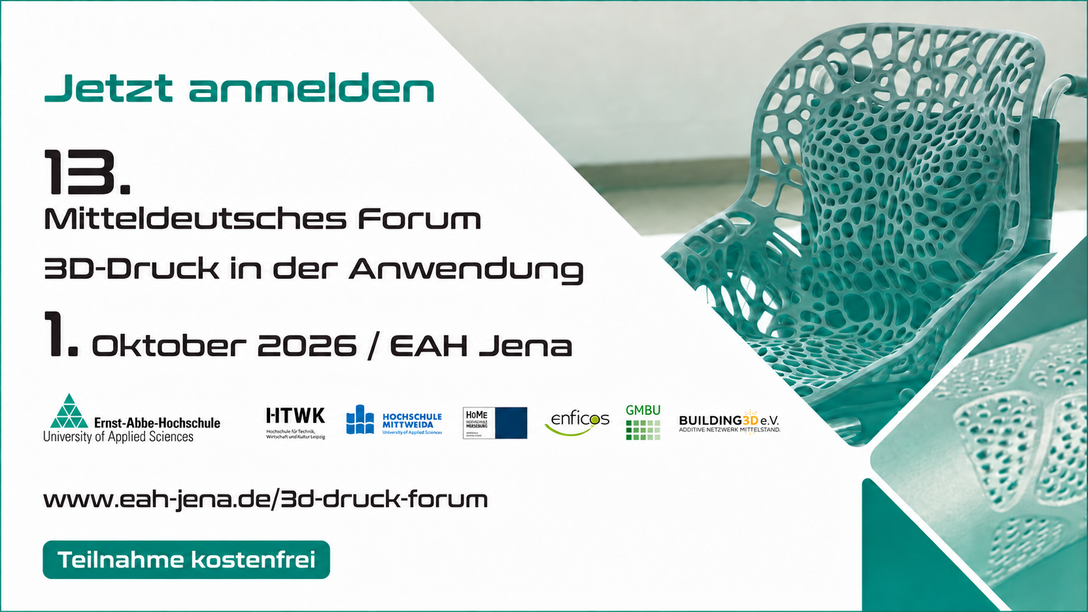
Intrigued? Attendance at the forum is free of charge. Find out more and register now at:
https://www.eah-jena.de/3d-druck-forum/
About the ‘3D Printing in Practice’ Forum
The Central German Forum on ‘3D Printing in Practice’ has established itself as a key platform for exchange between academia, industry and the professional world. Every year, experts, researchers, companies, students and those interested in technology come together to discuss the latest developments, innovative applications and new trends in additive manufacturing. The focus is on practical specialist presentations, the transfer of knowledge between stakeholders and networking within the industry. The accompanying exhibition also offers the opportunity to experience the latest technologies, components and research findings first-hand. The event is held annually, alternating between the university campuses in Jena, Mittweida, Leipzig and Merseburg.