This page was translated automatically using artificial intelligence (DeepL). The German version is binding. More information about automatic translation
Outstanding research by Markus Olbrich
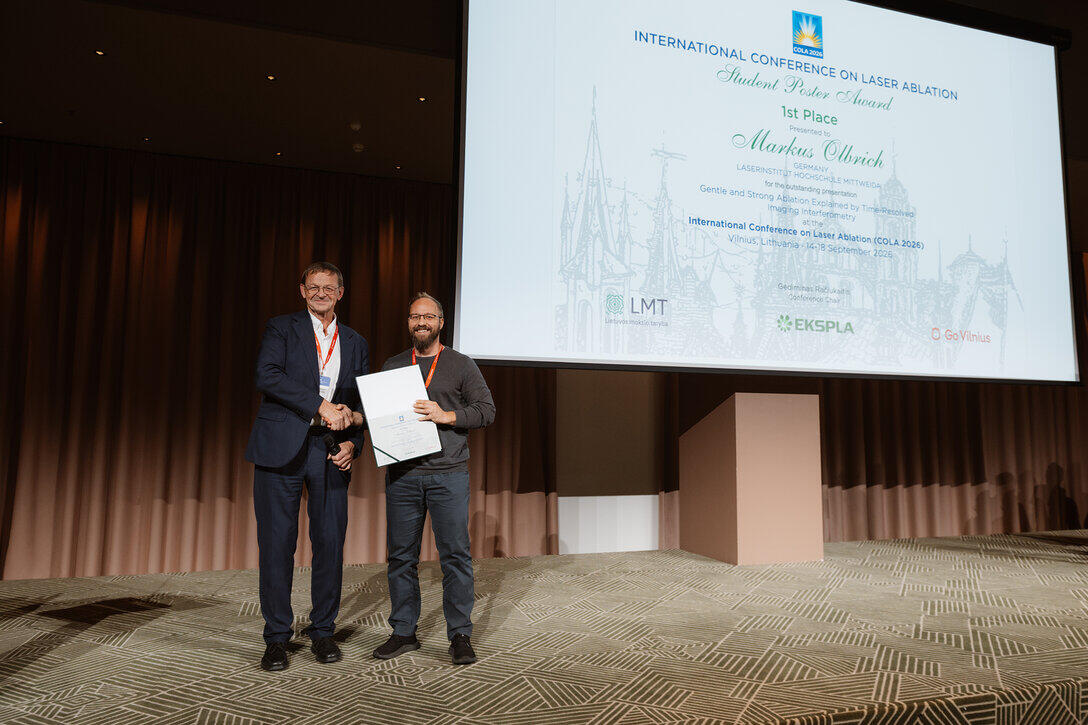
PhD student Markus Olbrich achieved a particular success. In his presentation, he shared new insights into what happens when GHz double pulses are applied to thin gold films and how certain effects influence the efficiency of material removal.
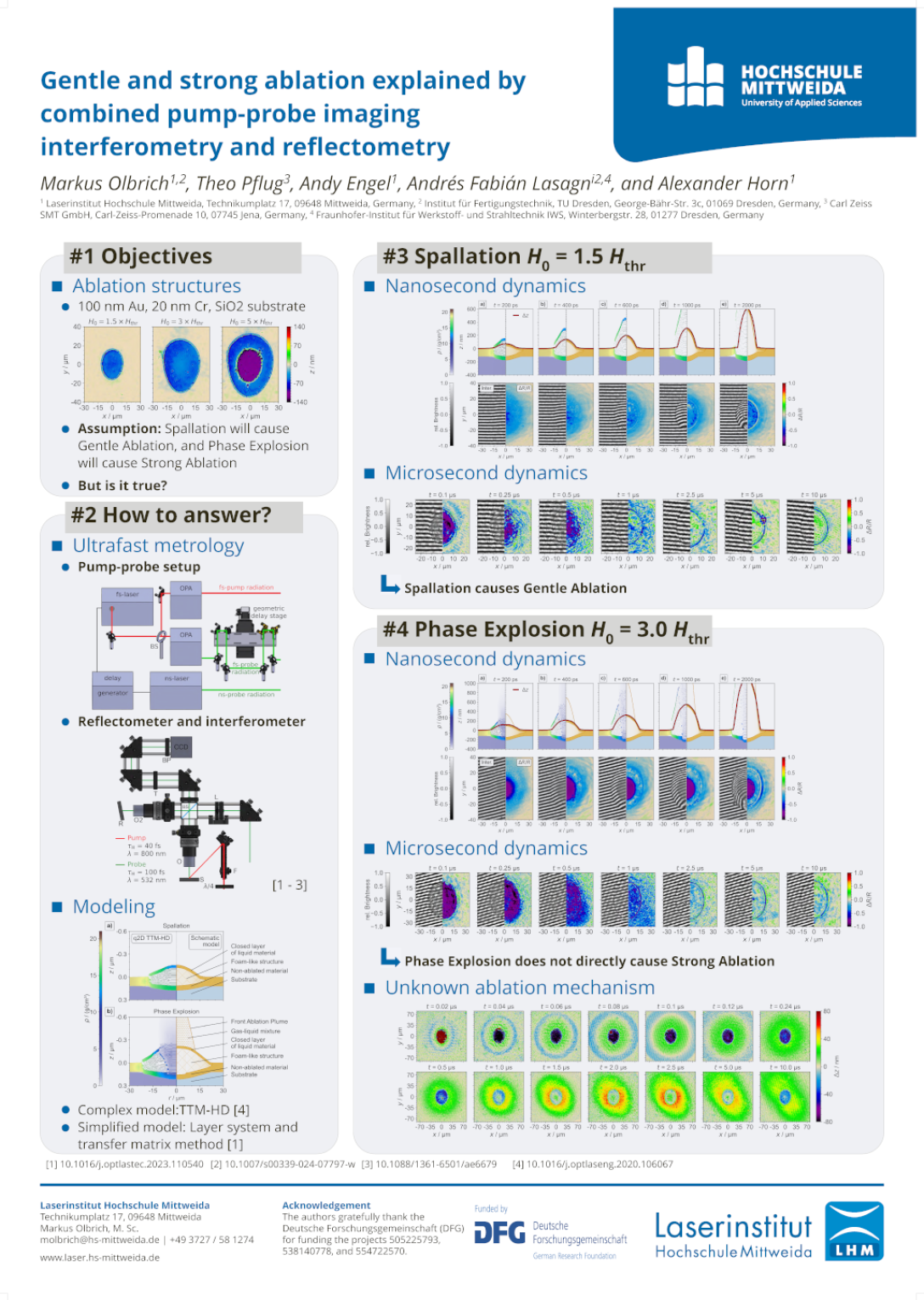
He also presented a poster that uses time-resolved imaging interferometry to visualise different ablation mechanisms. His work impressed not only the academic community but also the jury: as a result, he was awarded first place in the ‘Best Student Poster Award’.
This is a significant accolade in a field of international participants and a fine testament to the high quality of research carried out at Mittweida.
Silicon under the laser
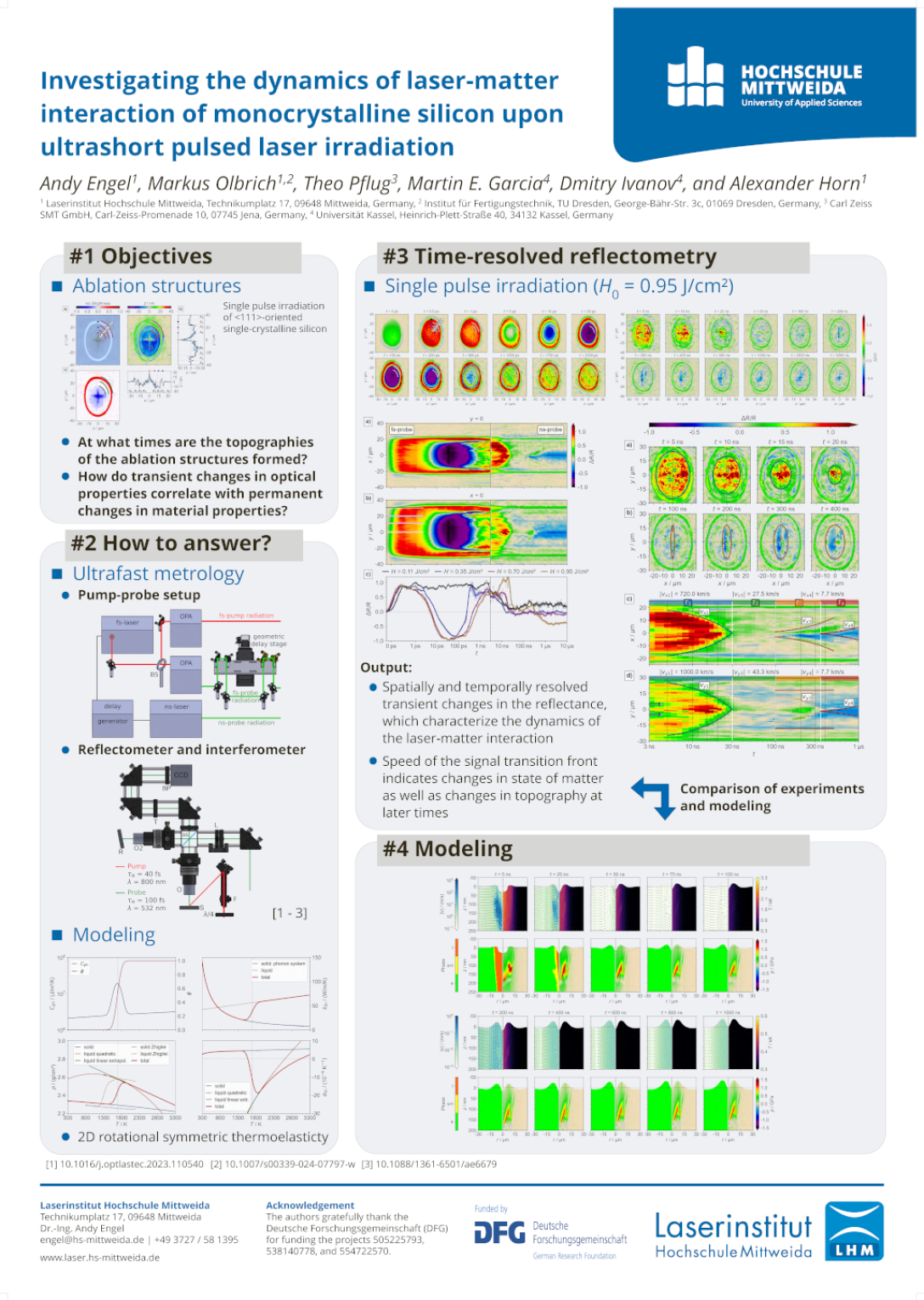
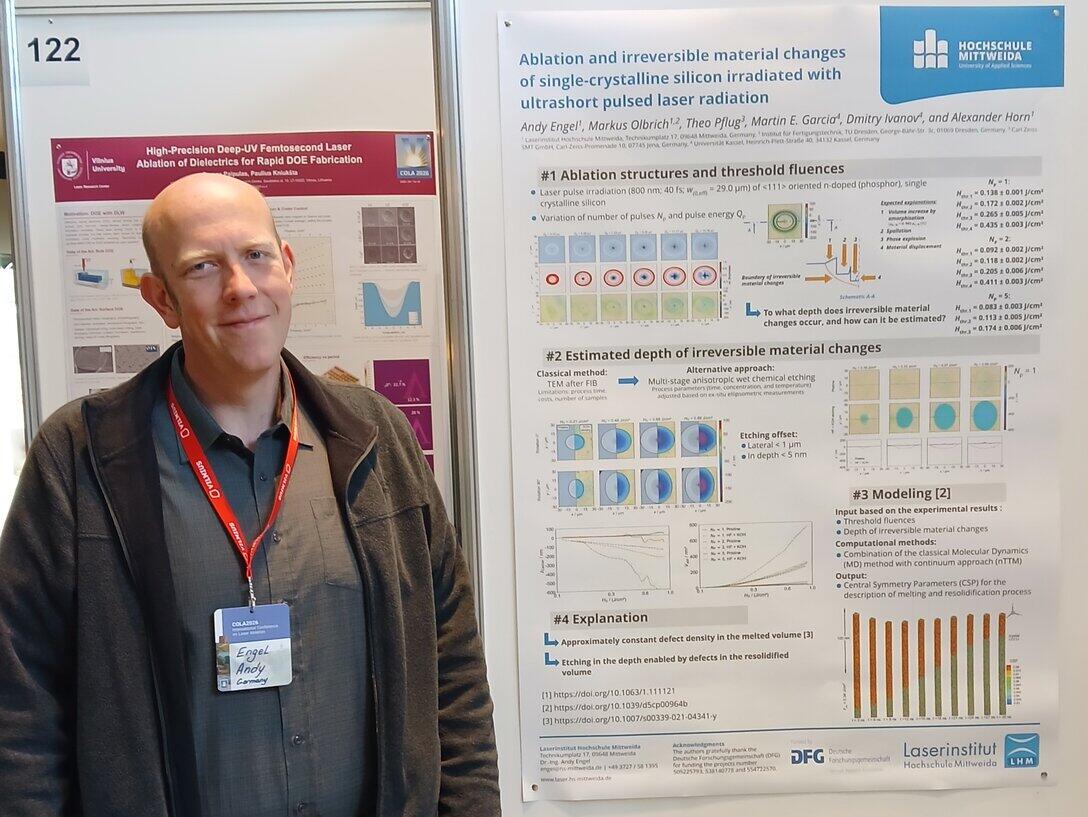
Dr Andy Engel presented two posters on the interaction of ultrashort-pulsed laser radiation with single-crystal silicon. One focused on the permanent changes caused by laser processing in the material, whilst the other examined the processes that take place in the very first moments after a laser pulse strikes the material.
“We’re not just interested in the end result that’s visible. We want to understand the processes taking place in the material immediately after irradiation and how the observed changes arise from them,”
explains Andy Engel.
The two papers provide important insights for applications in semiconductor and microsystems technology and contribute to a better understanding of the complex processes involved in laser processing.
Greater efficiency through clever surfaces
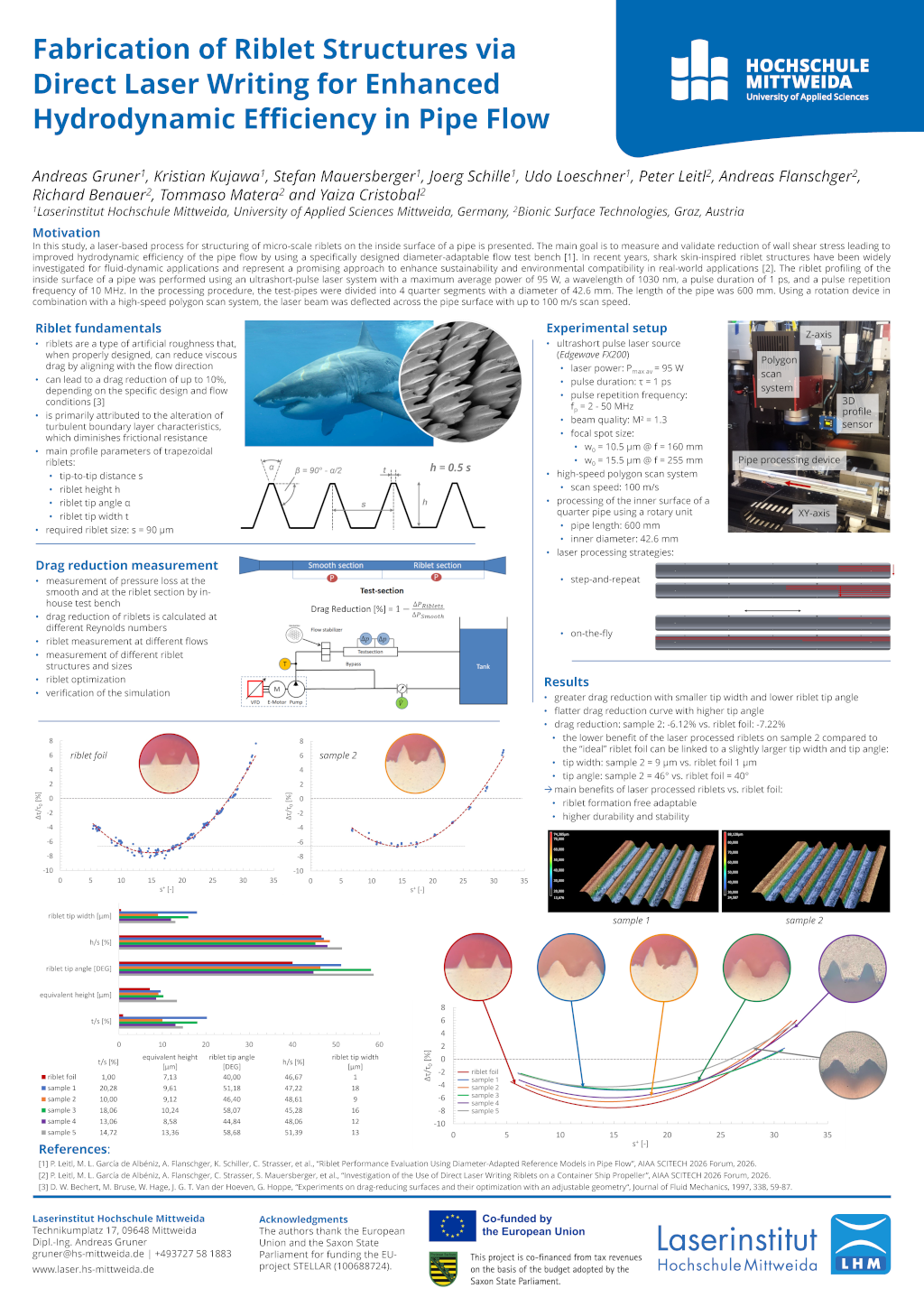
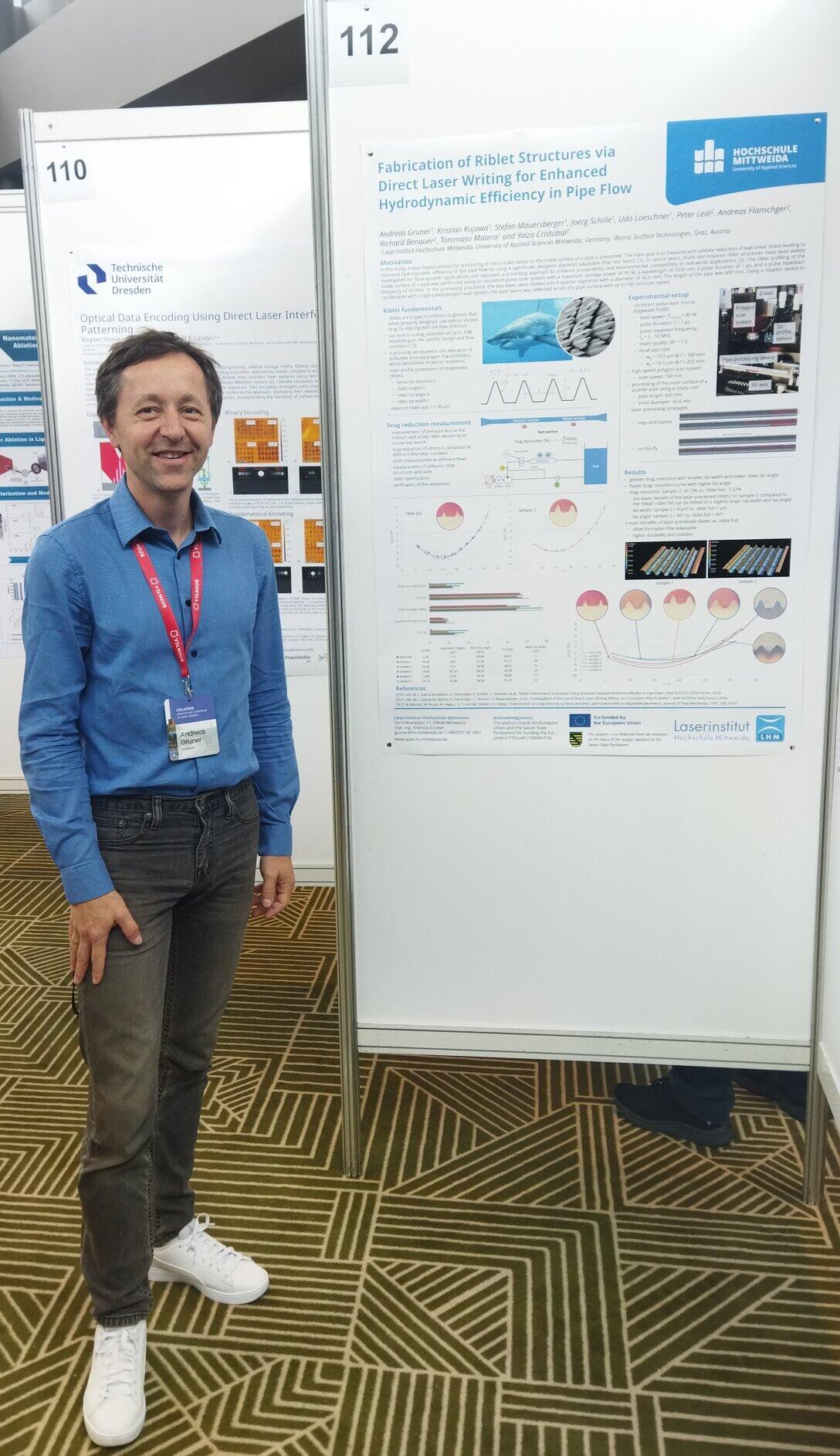
Andreas Gruner demonstrated exactly how research can contribute to more sustainable technologies with his poster on so-called riblet structures. These are fine, aerodynamic grooves that can reduce the drag on surfaces.
Using a direct laser writing process, the team succeeded in producing such structures with high precision and achieving efficiency gains close to the theoretical maximum. The results impressively demonstrate the potential that laser-based surface structures offer for energy-efficient technical systems.
New ideas and international networking
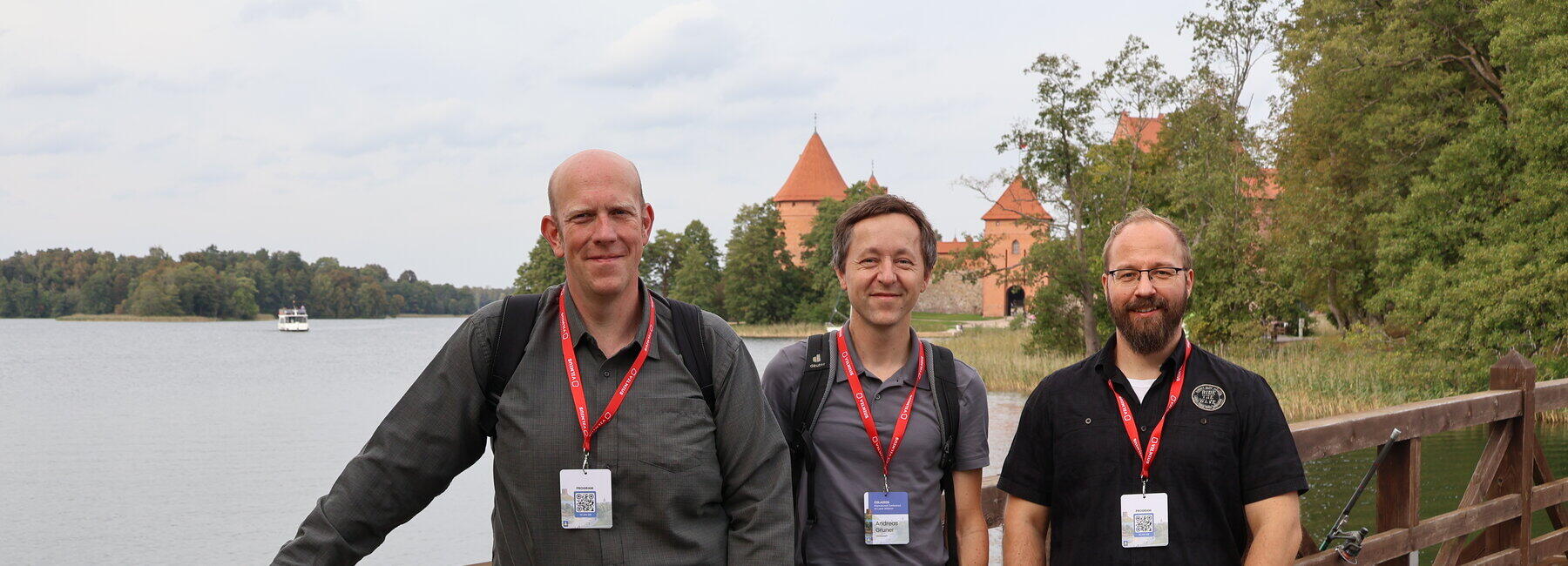
In addition to their own presentations, the Mittweida researchers made extensive use of the conference to engage in professional exchange. Discussions with international experts provided new perspectives on the modelling and simulation of laser processes. At the same time, numerous contacts were established with renowned research institutions and potential project partners.
The exchange with manufacturers of scientific infrastructure also provided valuable insights into new technical developments for future research work.