This page was translated automatically using artificial intelligence (DeepL). The German version is binding. More information about automatic translation
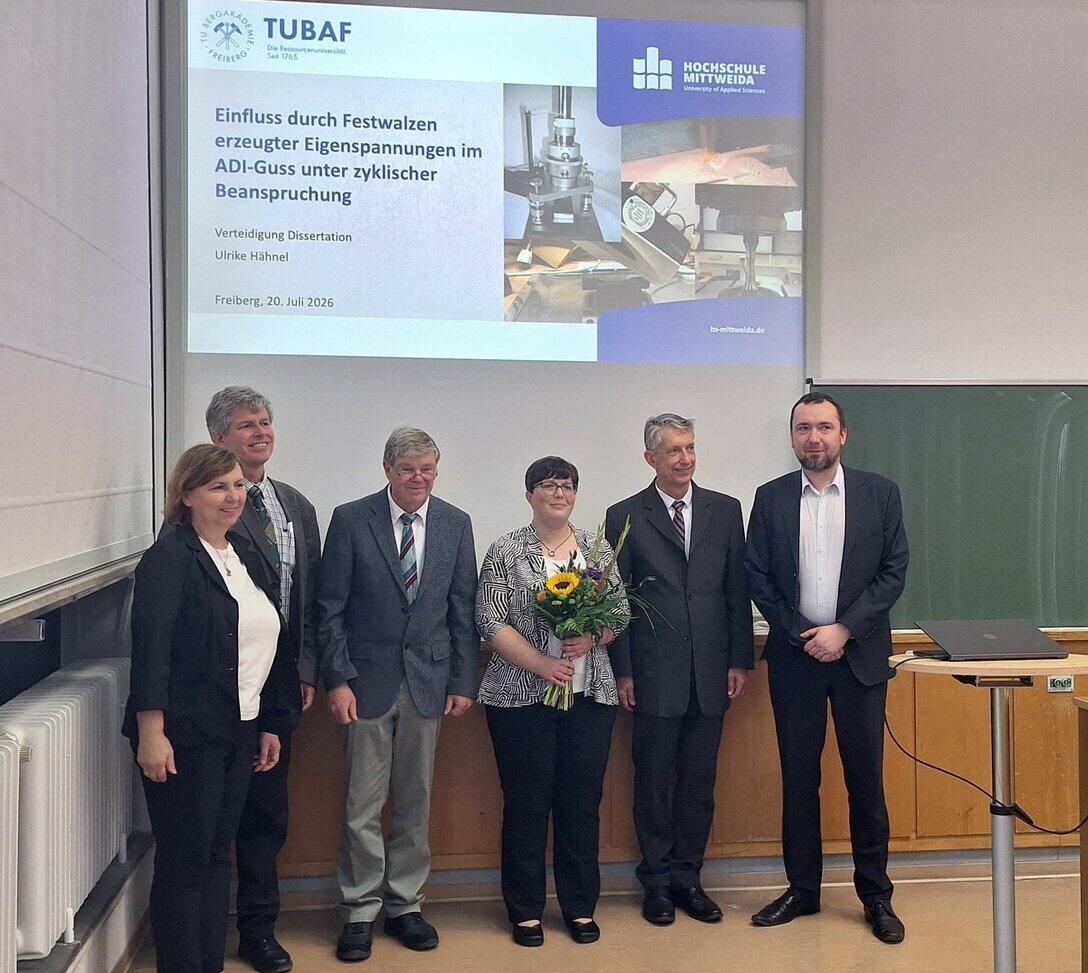
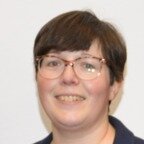
Whilst many were already looking forward to the summer holidays and the final exams of the term were being sat on the HSMW campus, a very special moment took place on 20 July 2026, just a few kilometres away. In the Metallurgy Lecture Theatre at TU Bergakademie Freiberg, the spotlight was on a woman who had been working towards this moment for over a decade: Ulrike Hähnel.
With a confident demeanour and a cool head despite the tropical heat, the long-standing research assistant at the Faculty of Engineering Sciences stood before the examination board and successfully defended her doctoral thesis on the topic ‘The influence of residual stresses generated by solid-state rolling in ADI castings under cyclic loading’. Behind this title lie not only years of research and countless experiments, but also an impressive scientific perseverance.
Her efforts were rewarded. The expert reviewers, Prof. Dr.-Ing. habil. Horst Biermann from the Institute of Materials Science at the TU Bergakademie Freiberg and Prof. Dr.-Ing. Peter Hübner, who is still known to many at Mittweida University of Applied Sciences from his long-standing teaching career, awarded the thesis the distinction ‘magna cum laude’. This signifies a scientific achievement deserving of special recognition and corresponds to a grade of 1.0.
The path to this success began back in 2015 with a PhD scholarship. In the years that followed, Ulrike Hähnel explored her research topic in depth through numerous externally funded projects, whilst at the same time expanding her expertise in various areas of materials and manufacturing technology. Step by step, this developed into a doctoral thesis. In her thesis, Ulrike Hähnel investigated the influence of surface hardening through cold rolling in ADI cast iron on its fatigue properties. ADI, a high-strength yet ductile cast iron material, is considered particularly suitable for demanding technical applications.
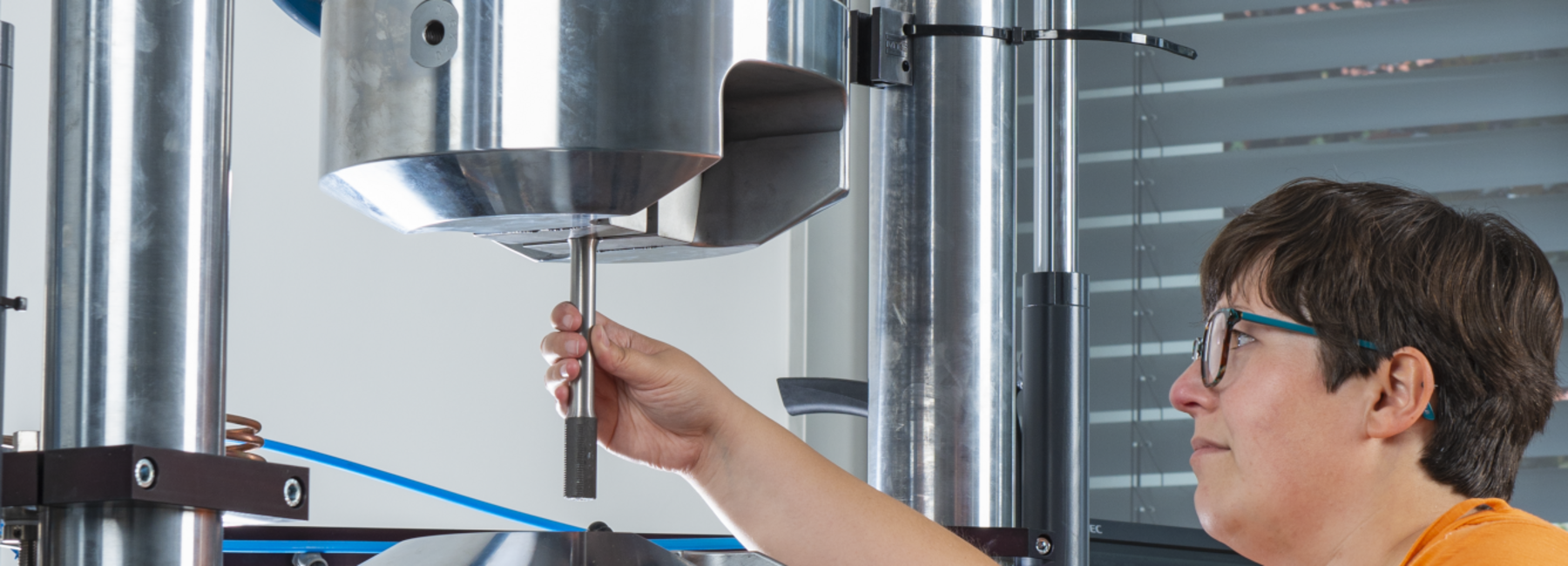
For her investigations, she employed various methods for measuring residual stress. Among other things, she collaborated with Professor Dr. rer. nat. Eckehard Müller from Bochum University of Applied Sciences, who carried out X-ray measurements using the cosα method. At the same time, she succeeded in establishing the so-called borehole method at the HSMW and making it usable for her research work.
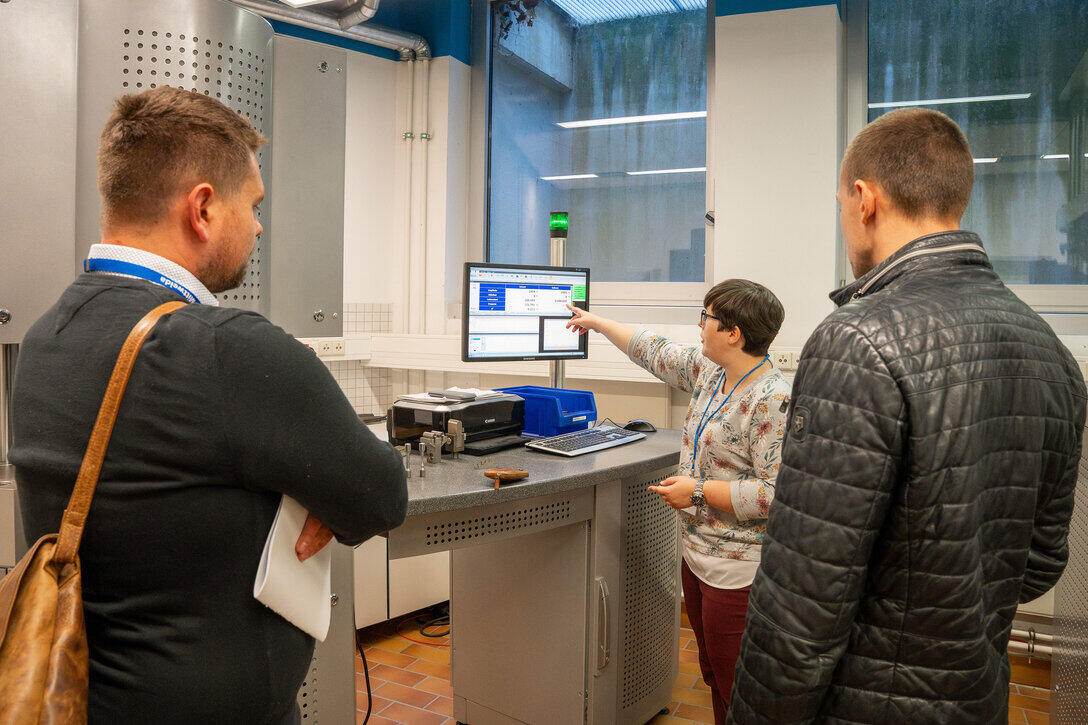
With the successful completion of her PhD, a chapter in Ulrike Hähnel’s life has come to an end. However, she will remain with the HSMW. Since 2024, she has been supporting the Materials – Manufacturing – Quality specialist group as a permanent member of staff, contributing her expertise particularly in the fields of metallography, fatigue testing and fracture mechanics.