This page was translated automatically using artificial intelligence (DeepL). The German version is binding. More information about automatic translation
Topics/Research and Teaching Profile
Modular grids are isolated grids that can be operated independently of the transmission grid operated by energy suppliers and grid operators. In the transmission grid, maintaining the nominal frequency of 50 Hz is essential. The modular grid is decoupled from the transmission grid via a DC link and two inverters; this allows its frequency to be varied, whilst still enabling energy to be exchanged bidirectionally with the transmission grid. Furthermore, the inverters can be used to configure grid-supporting functions within the transmission grid, such as phase-shifting operation to raise or lower the voltage, and the active suppression of harmful harmonics is possible. These modular networks can be utilised for the energy transition and e-mobility, not least because the same grid quality requirements do not apply within these isolated networks.
In order to demonstrate the advantages of e-mobility with wheel-selective drives, a drive test bench was developed to test driving modes during operation and under real-world conditions.
The town of Mittweida provided us with a petrol-powered lawn tractor, which we converted to electric power in order to develop driving modes that would enable safe driving even on rough terrain. As a result, three different levels of torque vectoring were developed, implemented by students and put into operation.
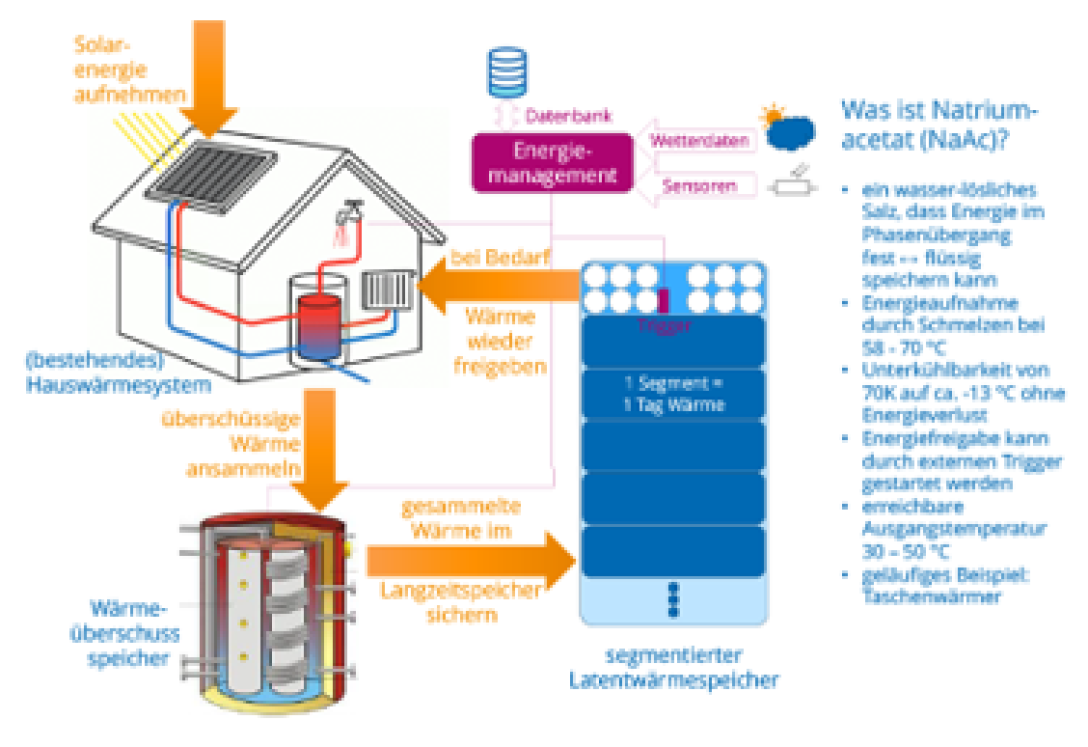
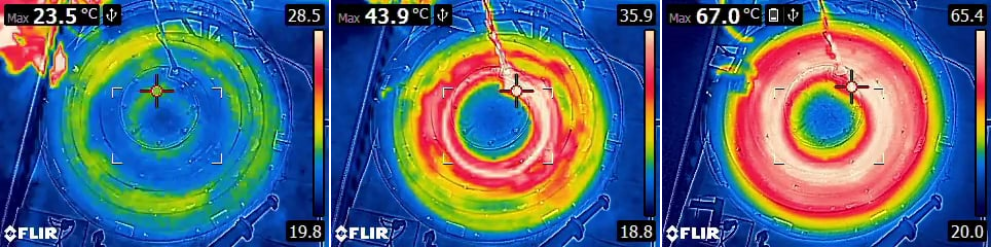
The energy transition calls for the minimisation of CO₂ emissions, which, in the private sector, means reducing the use of fossil fuels. The sun provides a surplus of energy many times over, depending on the season. If this energy could be stored without loss for several months, it could be used to heat homes during the winter months. To this end, a latent heat storage system is currently being developed as part of the ‘Solartrigger’ project, funded by the EU and the State of Saxony, which can absorb the sun’s energy in summer and release it again at the touch of a button.