This page was translated automatically using artificial intelligence (DeepL). The German version is binding. More information about automatic translation
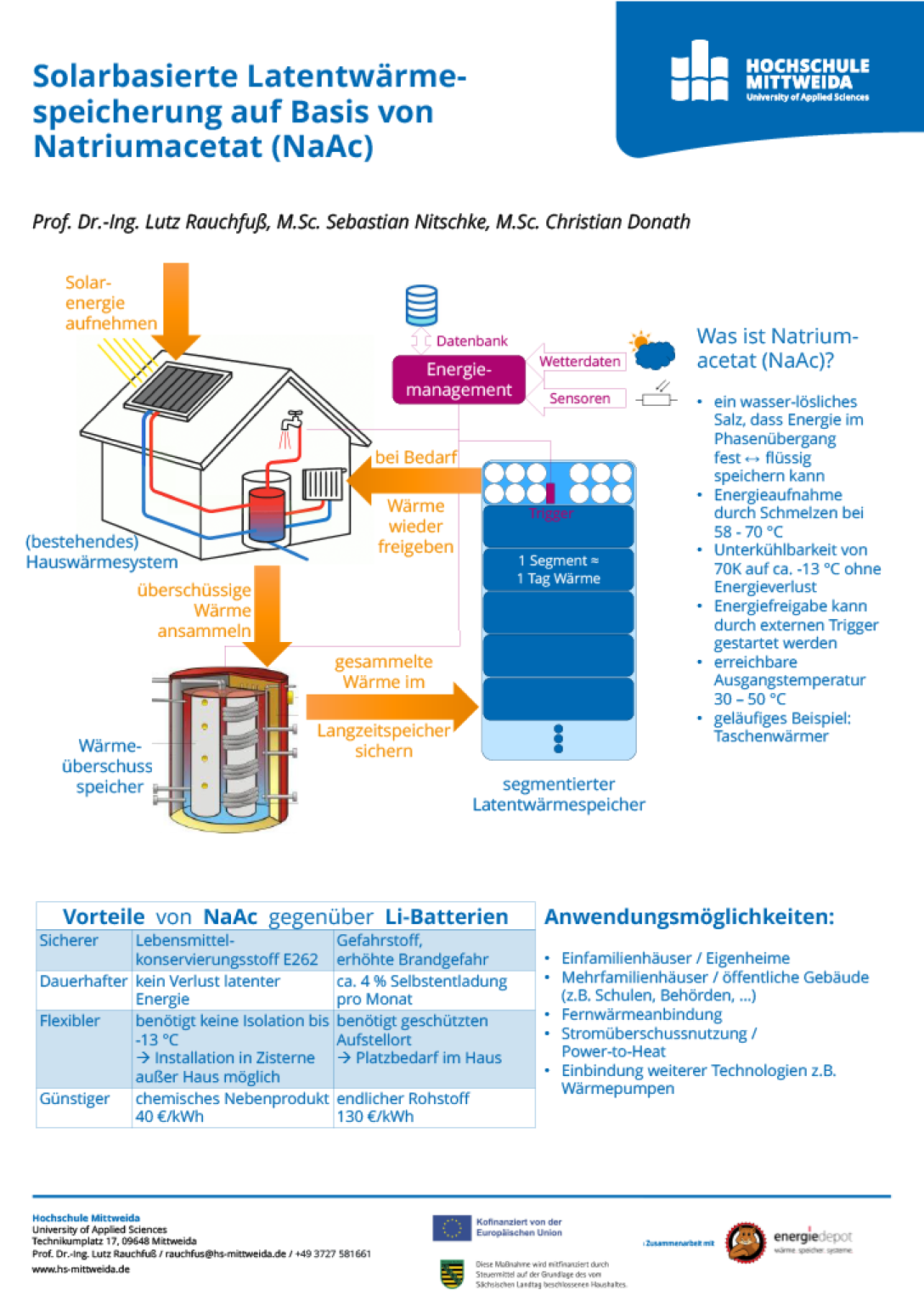
The aim of the project is to develop a storage extension for existing heating systems, enabling surplus solar energy to be stored as latent heat without any losses for long periods (longer than one month).
The energy requirements of conventionally heated residential buildings are divided between heating and electricity. Whilst electricity consumption remains constant almost all year round, heating consumption increases tenfold in winter. Existing fossil-fuel heating systems are often combined with solar thermal systems and a hot-water storage tank to store as much solar energy as possible. Hot-water storage tanks with energy efficiency class A lose 5–6 per cent of their energy per day, meaning that long-term storage for more than a week is not achievable. If this continuous energy loss is to be prevented, other storage media must be used. Sodium acetate storage systems are a suitable option, as they allow a great deal of energy to be stored during the phase transition. Sodium acetate can be supercooled, meaning that the energy stored during the phase transition is not lost even in the supercooled melt and is only released when required. This would enable energy management systems to draw on a reliable long-term storage solution. As a result, the year-round use of solar energy is within reach.
Project duration: 29 October 2024 to 31 December 2027