Prof. Dr. rer. nat. Iris Herrmann-Geppert

The Chair of Applied Chemistry focuses on the analysis, understanding and targeted application of chemical processes. Its main areas of focus are analytics, catalysis, environmental chemistry and the investigation of material properties and molecular interactions. In teaching and research, fundamental scientific principles are combined with application-oriented questions in order to develop sustainable solutions to challenges in industry, the environment and Biotechnology.

This page was translated automatically using artificial intelligence (DeepL). The German version is binding. More information about automatic translation
Faculty Applied Computer Sciences and Biosciences

Chair in Applied Chemistry

Prof. Dr. rer. nat. habil. Röbbe Wünschiers
FakultƤt Angewandte Computer- und Biowissenschaften
Presence

Treffen nur nach Vereinbarung; bitte kontaktieren Sie mich per Email
Visitor address
Am Schwanenteich 4b
09648 Mittweida
6-130
Postal address
Mittweida University
FakultƤt Angewandte Computer- und Biowissenschaften
Technikumplatz 17
09648 Mittweida

Areas of teaching

Passion, knowledge, teamwork

Our team

Dipl.-Ing. (FH) Marcus Vieweg
Lehrkraft für besondere Aufgaben
Dr. rer. nat. Rayko Ehnert
Laboringenieur
Dipl. Chemiker Manfred Decker
Externer Dozent

Research

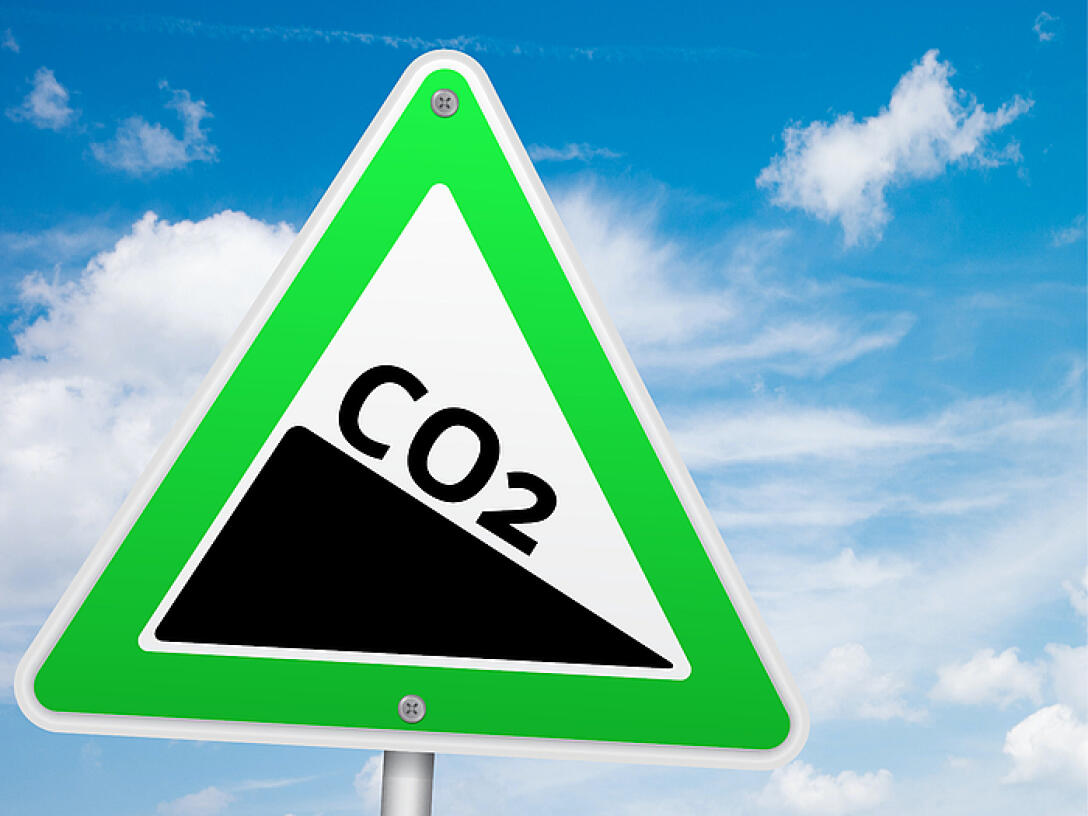
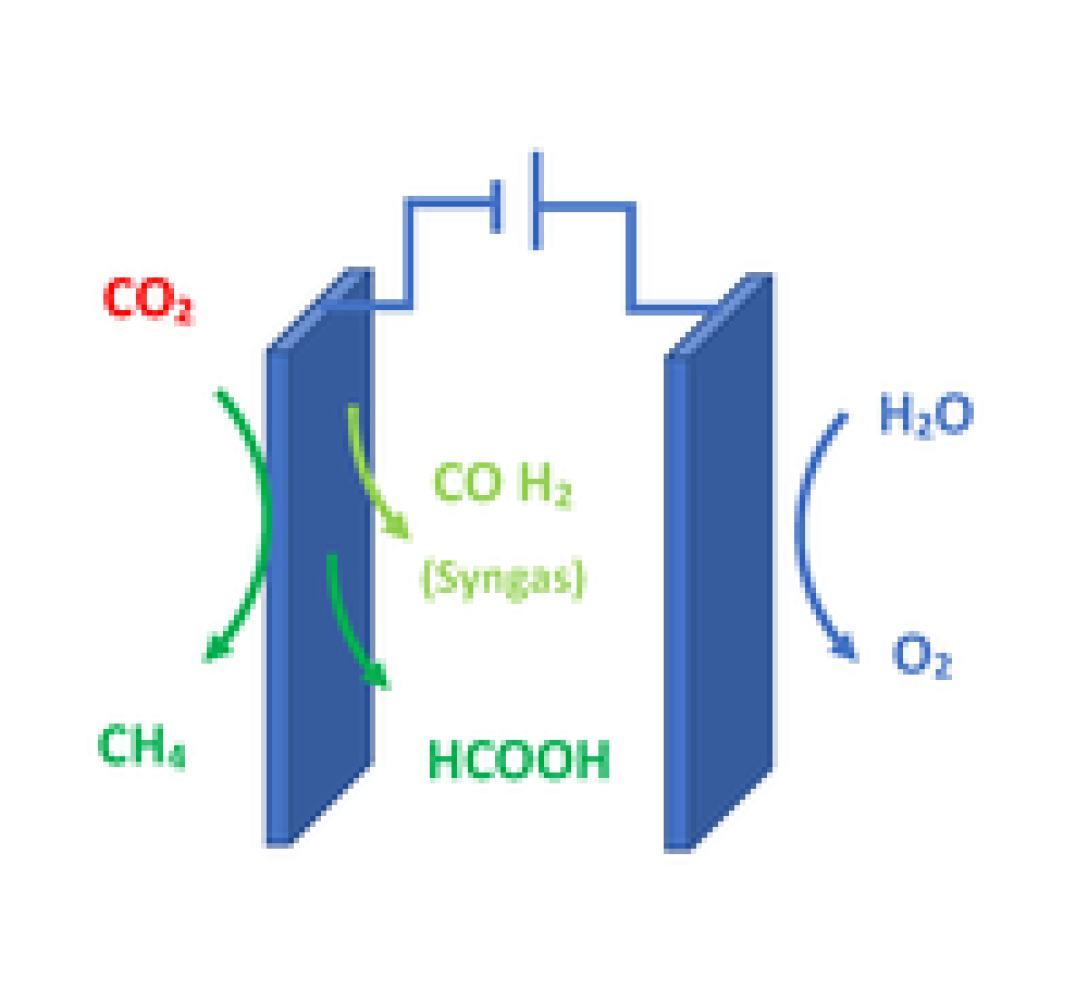
Reducing climate-damaging COā‚‚ in the atmosphere is one of the greatest global challenges. Converting COā‚‚ emissions from industrial processes into platform chemicals can make a significant contribution to this. As part of the HSMW’s SMWK innovation project, the Chair of Applied Chemistry, in collaboration with the Helmholtz-Zentrum Berlin (HZB) and the Technical University of Darmstadt (TU Darmstadt), has succeeded in testing electrochemical COā‚‚ reduction (COā‚‚RR) using an efficient catalyst material. COā‚‚RR represents a potential and more efficient alternative to existing chemical processes.

In contrast to the already commercially established electrolysis of water to produce hydrogen, the co-electrolysis of COā‚‚ and Hā‚‚O (COā‚‚RR) to produce industrially usable products (e.g. CO, HCOOH, HCHO, CHā‚ƒOH, Cā‚‚Hā‚„) presents a major scientific and technical challenge in the field of catalyst development and process control. In contrast to the relatively simple reaction mechanism of hydrogen evolution (HER), COā‚‚RR involves numerous electrons and protons and proceeds via cascading reaction steps. This complexity results in, in some cases, high electrical overpotentials for these reactions and a broad spectrum of product mixtures.

Alongside inorganic (metallic) and molecular catalysts, which are currently the subject of intensive international research, functionalised carbon materials represent a new, promising and particularly cost-effective class of catalysts. This class is characterised by a highly conductive carbon matrix in which nitrogen and/or metal ions are chemically integrated in variable compositions.

Initial results of this research have been published in the prestigious journal ACS Catalysis (Impact Factor 12.35). Link
Research projects and publications

Untersuchungen zur Abtrennung von Silber aus konzentrierten, verbrauchten salpetersauren Beizen

  • Term: 2022/11/21 – 2023/03/15
  • Financed by: Ingenieurbüro Dr. Rayko Ehnert
  • Project managers: Iris Herrmann-Geppert
  • Project partners: Ingenieurbüro Dr. Ehnert
2125 Iris Herrmann-Geppert

Demonstrator für die anwendungsorientierte Entwicklung der Vorwärtsosmose- Technologie (VOsmIonX)

  • Term: 2018/02/01 – 2019/08/31
  • Financed by: Bundesministerium für Wirtschaft und Energie
  • Funding code: ZF4198206AB7
  • Project managers: Iris Herrmann-Geppert
  • Project partners: MionTec GmbH
1894 Iris Herrmann-Geppert

Innovationsvorhaben zur ProfilschƤrfung 2020, AP1: Elektrochemische Brennstofferzeugung an biomimetischen Katalysatoren

  • Term: 2018/01/16 – 2020/12/31
  • Financed by: SƤchsisches Staatsministerium für Wissenschaft, Kultur und Tourismus
  • Project managers: Iris Herrmann-Geppert
2303 Iris Herrmann-Geppert
H. Kothe, M. Apfelstädt, M. Plekat, J. Gründel, F. Müller, L. Fischer, F. Helmer, M. Heinzig, A. Kühn, M. Vodel, I. Herrmann-Geppert, C. Roschke, M. Ritter

Serious Games as an Educational Strategy in Chemistry Classes: Case Study of a Mobile Application for learning Chemistry in School

21204 konferenzpaper
S. Paul, Y. Kao, L. Ni, R. Ehnert, I. Herrmann-Geppert, R. van de Krol, R. Stark, W. Jaegermann, U. Kramm, P. Bogdanoff

Influence of the Metal Center in M–N–C Catalysts on the CO2 Reduction Reaction on Gas Diffusion Electrodes

Appeared in: ACS Catalysis 11 (2021), P. 5850 – 5864
19663 journalartikel
Y. Kao, S. Paul, I. Herrmann-Geppert, U. Kramm, P. Bogdanoff

(Invited) Electroreduction of CO2 (CO2RR) on Pyrolysed Transition Metal Porphyrins

Appeared in: ECS Meeting Abstracts MA2020-01 (2020), P. 2795 – 2795
16258 sammelbandbeitrag
Y. Treekamol, M. Schieda, I. Herrmann-Geppert, T. Klassen

Optimized photoactive coatings prepared with functionalized TiO2

Appeared in: International Journal of Hydrogen Energy 44 (2019), P. 31800 – 31807
14317 journalartikel
N. Dropka, I. Buchovska, I. Herrmann-Geppert, D. Klimm, F. Kiessling, U. Degenhardt

Towards graphite-free hot zone for directional solidification of silicon
Appeared in: Journal of Crystal Growth 492 (2018), P. 18 – 23
18636 journalartikel
What is the HSMW?

Find out more

Mittweida University of Applied Sciences is a boundless testing ground aimed at driving business and society forward. How? Through academically trained specialists and straightforward collaboration, which enables regional businesses to benefit directly from our findings – or to gain new insights through joint research projects that can be put into practice straight away. We enable students to test their limits by developing their own skills and exploring new horizons.

6.350
Students
590
dedicated staff
100
Partner universities worldwide
161
Years at HSMW
Find out more