This page was translated automatically using artificial intelligence (DeepL). The German version is binding. More information about automatic translation
Facts and figures
Mechanical Engineering
Maximum security for your career start: the Degree Apprenticeship/Dual Study Program in Mechanical Engineering, which incorporates vocational training, combines a Bachelor’s degree, state-recognised vocational training and practical work experience.
Two partners are on hand to support you: Siemens Energy Compressors in Leipzig will train you as an industrial mechanic (IHK). Alternatively, BildungsWerkstatt Chemnitz offers you access to medium-sized companies in the region and the IHK qualification as an industrial or machining mechanic, as well as training as a technical product designer, toolmaker or electronics technician for automation technology.
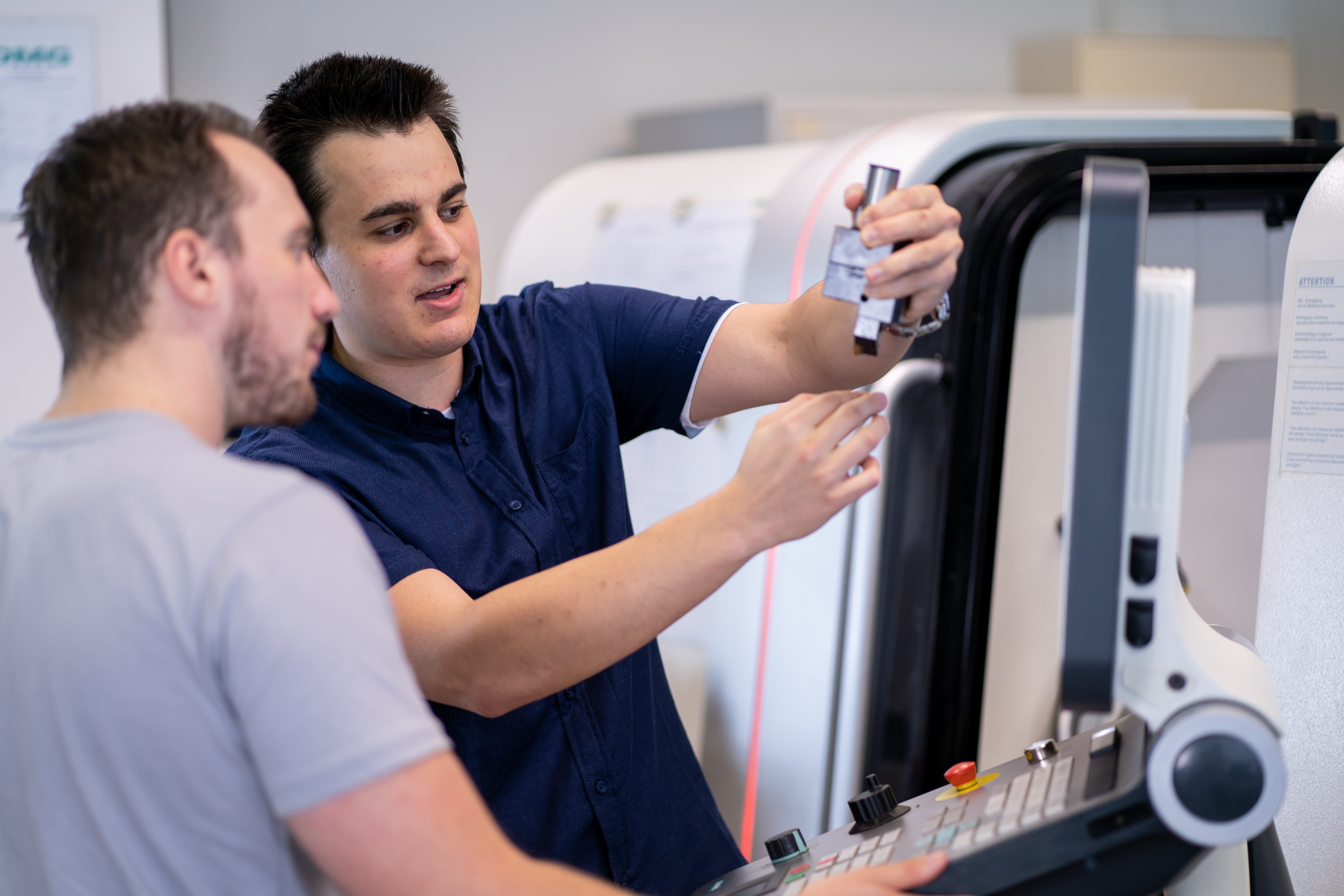
In both cases, you’ll learn industrial practices right where machines are used and manufactured.
How the Degree Apprenticeship/Dual Study Programme works at Mittweida University of Applied Sciences
An overview of the course content
State-recognised vocational training is firmly integrated into the Bachelor’s degree in Mechanical Engineering as part of the Degree Apprenticeship/Dual Study Program. The first two semesters lay the foundations in design, manufacturing, materials science and mechanics. This is followed by a one-year phase during which you work at a company and deepen your professional qualifications through bespoke training – at Siemens’ Chemnitz Training Centre or at regional companies via the BildungsWerkstatt Chemnitz.
You will then return to the university and specialise your knowledge in one of four areas: Digital product development, Resource-efficient Manufacturing Technology, Laser and surface technology, or Vehicle Development for Sustainable Mobility. What they all have in common is their close link to real-world development and industrial projects. You decide which specialisation to choose in consultation with your training company. After all, the company pays you to study. In return, you gain additional practical experience, as you spend not only your second year of study but also all lecture-free periods at the company.
Machine Elements II
CAD Techniques
Measurement Technology/Manufacturing Measurement Technology
Electrical Engineering
Business Management
transversal skills
Collaborative Development Project
Propulsion Technology
Technical Thermodynamics/Fluid Mechanics
Automation Technology
Fundamentals of Production Operations
2 specialisation modules:
In the specialisation in Digital product development:
- Assembly Design
- Mechanism Analysis
In the Laser and surface technology specialisation:
- Testing methods for coatings and surfaces
- Fundamentals of Surface Technology
In the specialisation in Resource-efficient Manufacturing Technology:
- Welding and Joining Technology
- Cutting Technology
In the specialisation ‘Vehicle Development for Sustainable Mobility’:
- Fundamentals of Micromobility
- Electrical Components
Collaborative Development Project
Hydraulics/Pneumatics
CNC programming
Manufacturing Process Design
Plastics Technology
2 specialisation modules:
In the ‘Digital product development’ specialisation:
- Machine dynamics
- Engineering Design
In the Laser and surface technology specialisation:
- Coating Techniques
- Laser Processing
In the Resource-efficient Manufacturing Technology specialisation:
- Resource-efficient processing methods
- Forming Technology
In the specialisation ‘Vehicle Development for Sustainable Mobility’:
- Micromobiles
- Machine dynamics
Cooperative Development Project
Work placement and Bachelor’s thesis
: Independent academic and practical work within a company, culminating in an independent academic thesis
. Duration: 20 weeks
Fundamentals of Design with Introductory Practical Course
Fundamentals of Manufacturing Technology with Introductory Practical Course
Fundamentals of Information Technology with Introductory Practical Course
Fundamentals of Materials Science with Introductory Practical Course
Engineering Mechanics I
Mathematics
Machine Elements I
Engineering Materials
General Chemistry
Fundamentals of Physics
Engineering Mechanics II
Mathematics – Analysis
In-company training and bespoke in-house courses at the Siemens Training Centre in Chemnitz or at the BildungsWerkstatt Chemnitz
In-company training and bespoke in-house courses at the Siemens Training Centre in Chemnitz or at the BildungsWerkstatt Chemnitz
Mechanical Engineering in Mittweida
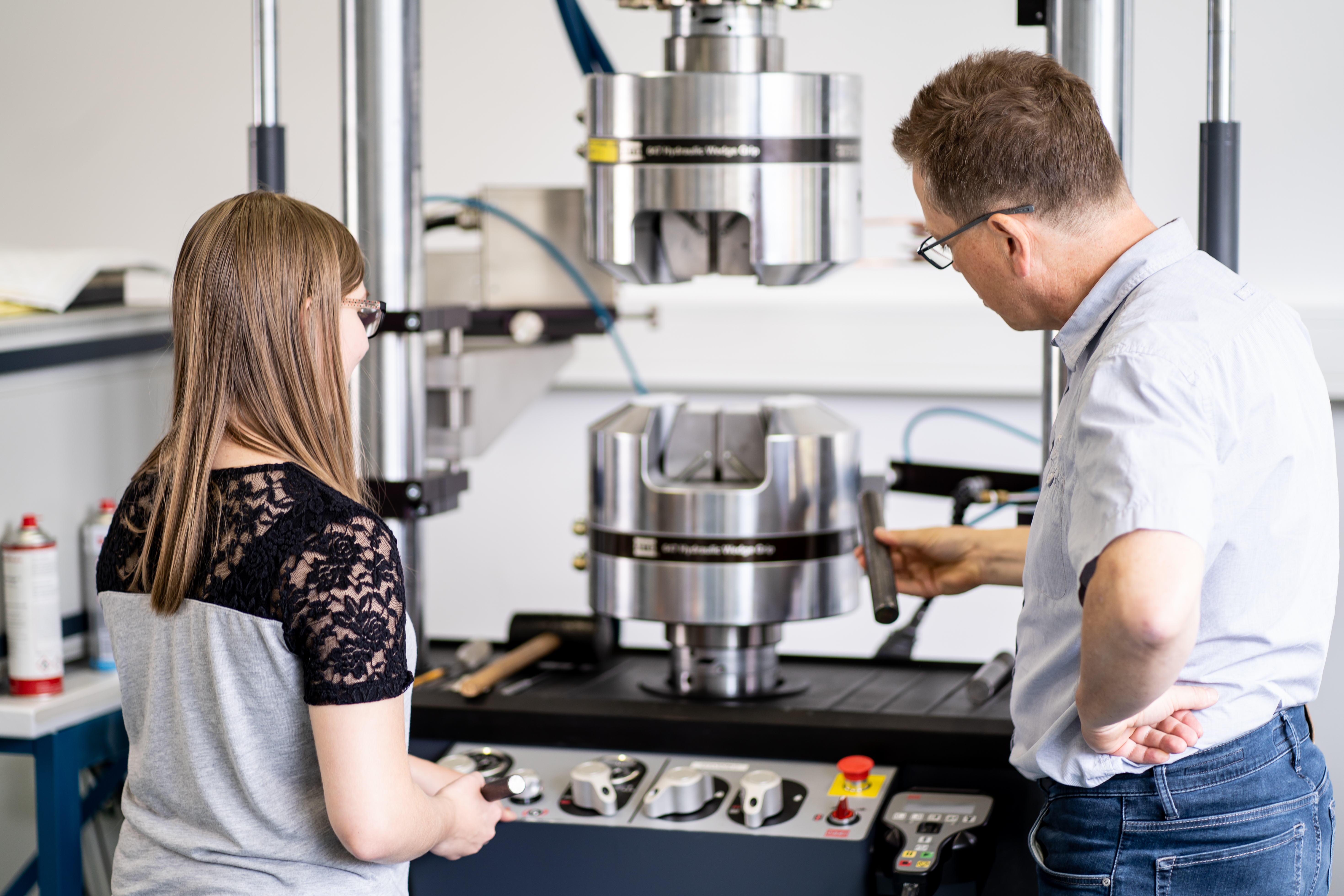
In summary – Degree Apprenticeship/Dual Study Program in Mechanical Engineering in Mittweida

Degree Apprenticeship/Dual Study Program in Mechanical Engineering with recognised vocational training

(180 Credits)








Most graduates of the Degree Apprenticeship/Dual Study Program in Mechanical Engineering at Mittweida University of Applied Sciences go on to work directly for the company where they completed their training after graduating. In these roles, they take on tasks such as those of a design engineer, development engineer, manufacturing engineer, specialist in surface and process engineering, or an engineer working on production-related development projects.
Application and Admission
To enrol on or continue with the degree programme, you will need the general university entrance qualification, the Fachhochschulreife, a subject-specific university entrance qualification or an equivalent recognised qualification. Those who have completed vocational training and have at least three years’ professional experience in their chosen field may also commence their studies following a counselling session and a successful entrance examination.
Language skills:
Anyone who did not obtain their qualification for university entry at a German-speaking institution must also provide evidence of sufficient German language skills. The required language level is C1 according to the Common European Framework of Reference for Languages (CEFR).
Proof of this can be provided, for example, by passing the ‘German as a Foreign Language’ (TestDaF) at the preparatory college of Mittweida University of Applied Sciences – with an average score of TDN 3 in the areas of reading comprehension, listening comprehension, written expression and oral expression – or by means of an equivalent certificate.
Applications are made online directly to Siemens or via BildungsWerkstatt Chemnitz. Once you have submitted your online application, your documents will be reviewed. If you have received an invitation to an interview and attend it, you will receive re-registration from Siemens within 14 days as to whether they will accept you as a dual-study student. You will then enter your details into the Mittweida University of Applied Sciences application portal.
Excellent study conditions, modern facilities and affordable rent allow you to focus fully on your studies. Tutorials are on hand to help with academic queries, the SAXEED start-up network guides you through the process of developing your own business idea, and the Social Support Service offers assistance with specific life situations, such as childcare or caring for relatives. The campus also has plenty to offer: two music festivals a year, an active esports team and a vibrant student community. Discover just how diverse life in Mittweida is – at the Open Campus Day (Studieninformationstag) or the Night of Sciences (Night of Sciences).
Related degree programmes
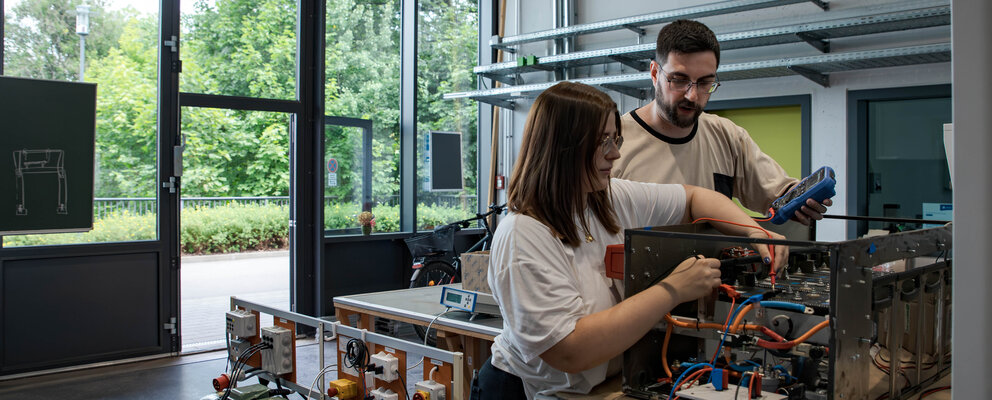
Electrical Engineering – Automation (Degree Apprenticeship/Dual Study Program) (B.Eng.)
in partnership with Siemens and BildungsWerkstatt Chemnitz
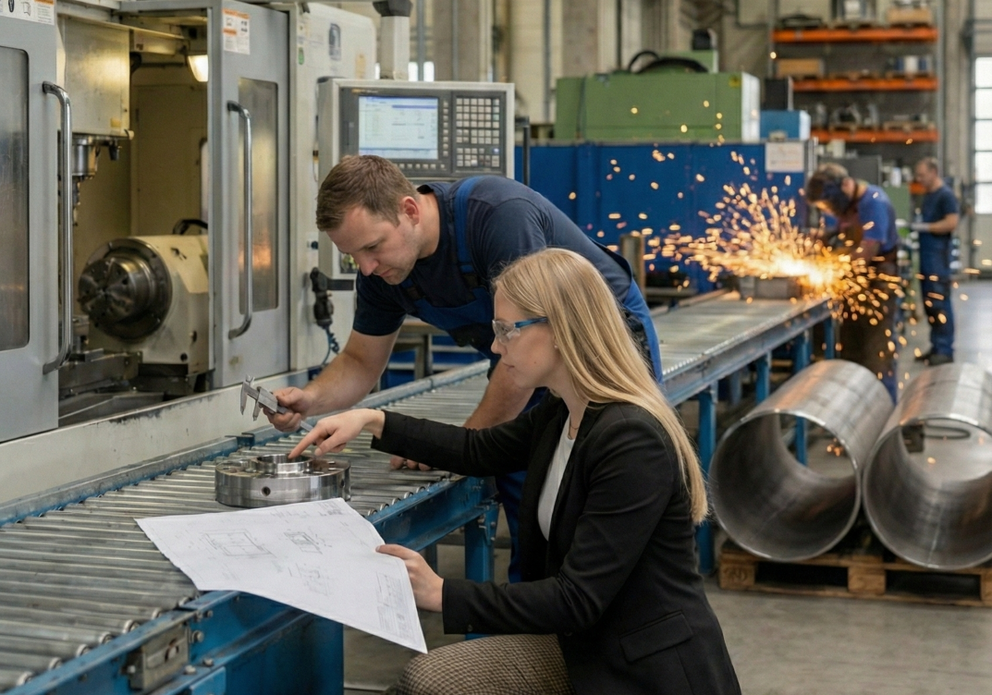
Degree Apprenticeship/Dual Study Program in Business Engineering (B.Eng.)
in partnership with Siemens

Applied Computer Science (Degree Apprenticeship/Dual Study Program) (B.Sc.)
in partnership with Siemens
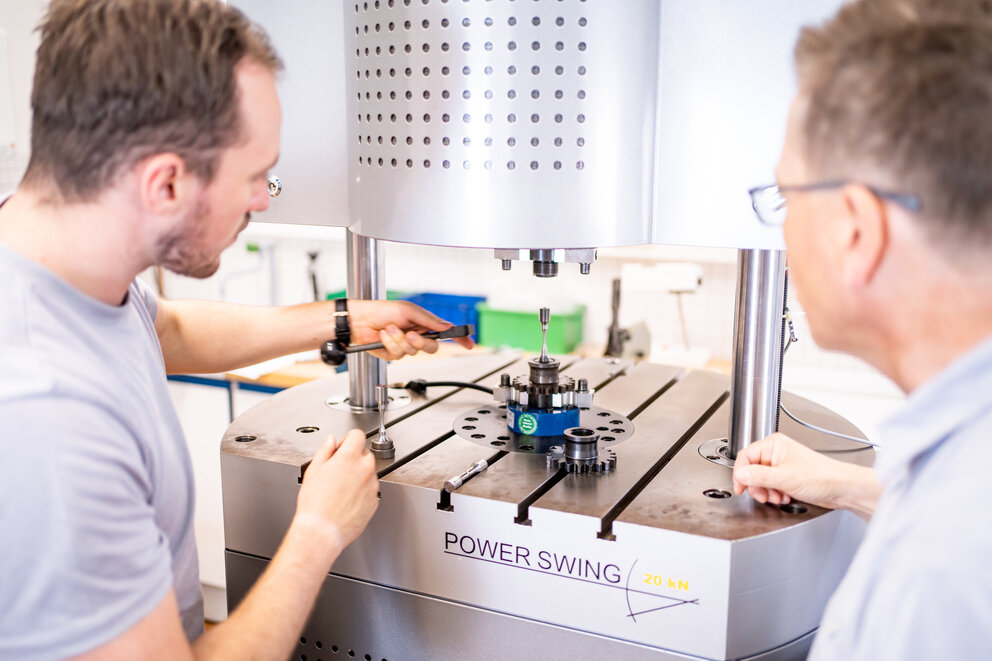
Mechanical Engineering (B.Eng.)
Frequently Asked Questions
Yes! During the Degree Apprenticeship/Dual Study Program, you’ll choose one of four exciting specialisations: Digital product development, Laser and surface technology, Resource-efficient Manufacturing Technology, or Vehicle Development for Sustainable Mobility.
Yes, if you already have a company in mind (e.g. from a previous work placement), you can suggest it. BildungsWerkstatt will then help to establish this company as an official work placement partner with the university.
No, the modules are set out in the study programme. There are fixed rotations between the university and the company, such as an intensive training year in the second year of study and fixed work placements in the fourth year.
There are no school-style holidays during your degree. Instead, there are lecture-free periods. During these, you can study, write assignments, undertake work placements – and treat yourself to a bit of a break now and then.
In the 2026/2027 winter term, in addition to public holidays, the following periods are lecture- and exam-free:
- 21 December to 3 January,
- from 22 February. Exception: The Faculty of Social Sciences begins its lecture-free period on 29 February.
In the 2027 summer term, with lectures starting on 22 March, the dates are:
- 25 March to 2 April,
- 7 May,
- 17 May,
- from 2 August. The Faculty of Social Sciences will also hold an examination week from 23 to 27 August.
Yes, BildungsWerkstatt Chemnitz can help you with that. Simply send your application there, and they’ll put you in touch with suitable partner companies in the region.
The key difference is the integrated IHK vocational training (e.g. as an industrial mechanic or technical product designer), which you undertake as part of the Degree Apprenticeship/Dual Study Program alongside your bachelor’s degree. The Degree Apprenticeship/Dual Study Program lasts four years and you will be paid by the company throughout. The standard full-time degree programme lasts three years and is purely academic, based at the university.