This page was translated automatically using artificial intelligence (DeepL). The German version is binding. More information about automatic translation
Facts and figures
Live Production
When it comes to live productions, there are no second chances. That’s exactly what the Live Production specialisation in the Media Technology degree programme prepares you for. You’ll learn to plan complex set-ups, coordinate workflows and make the right decisions under time pressure. In doing so, you’ll develop the confidence to see productions through to a successful conclusion, even in critical situations.
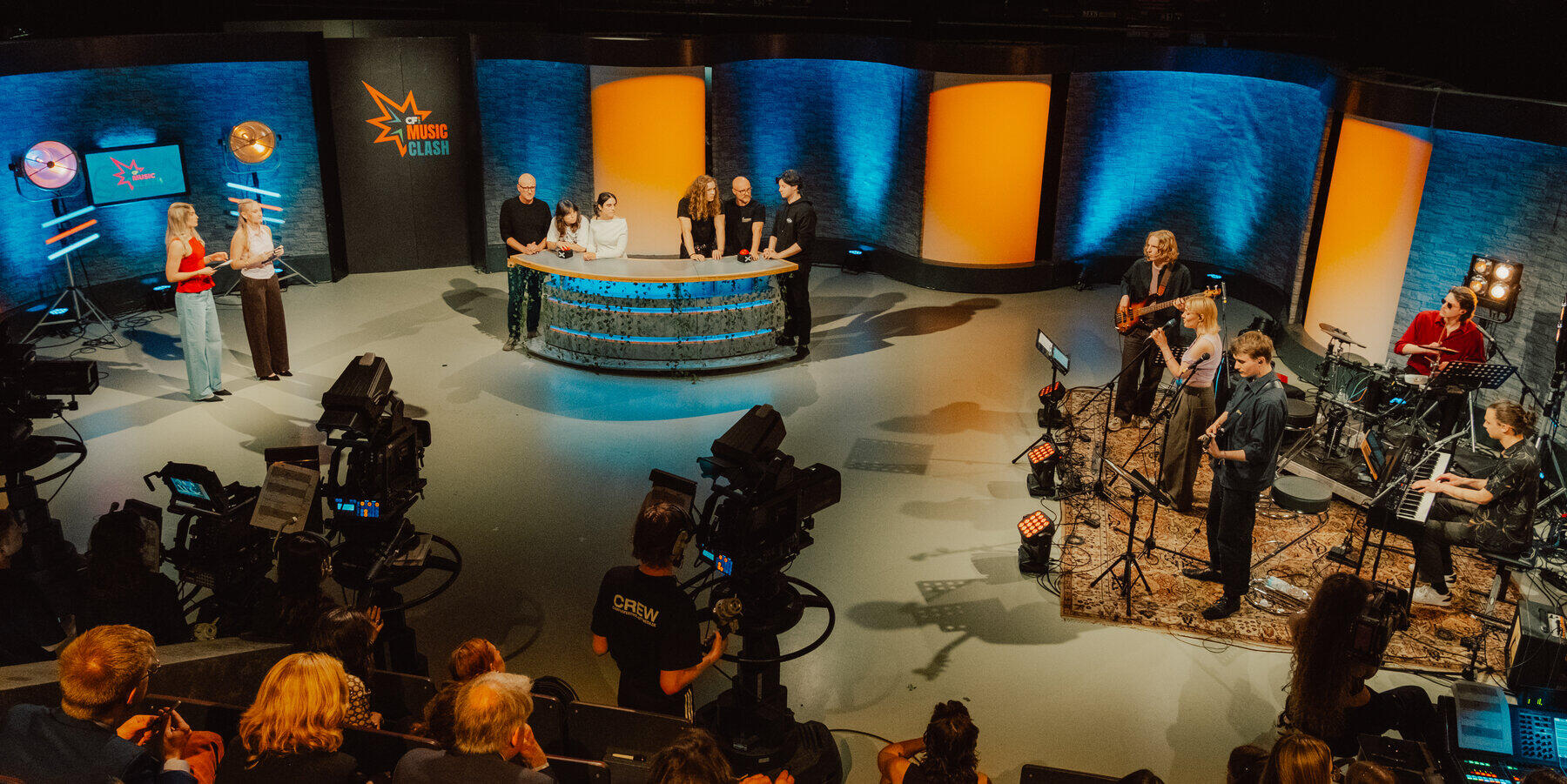
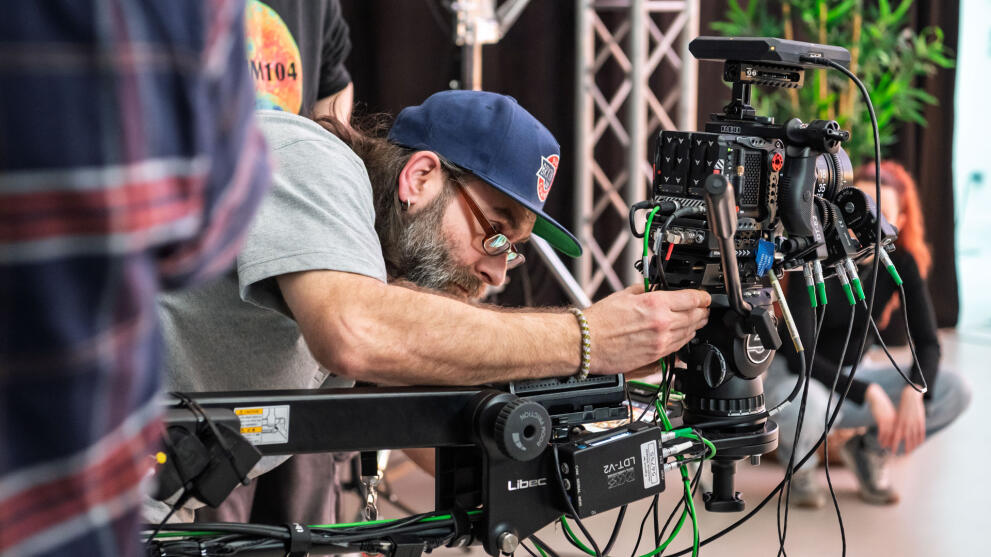
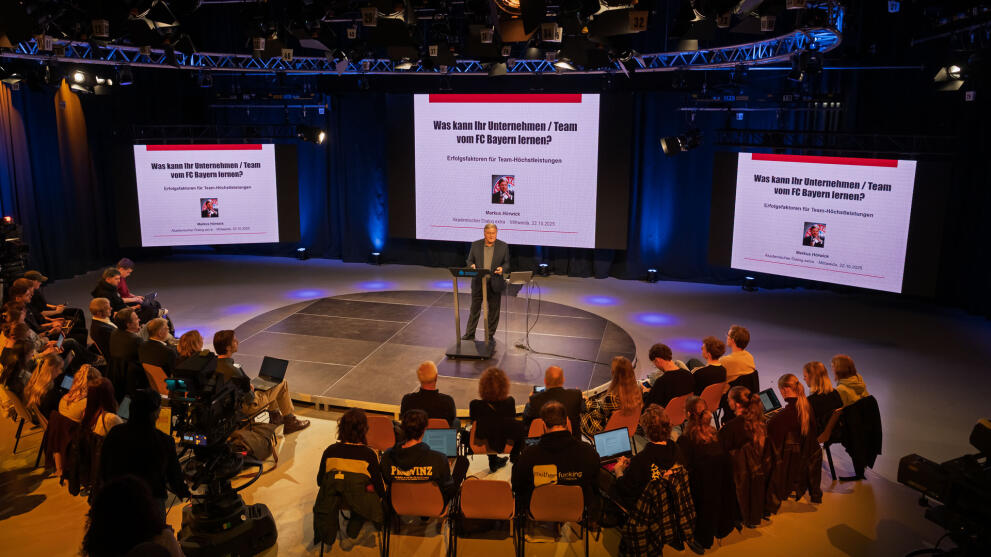
The key difference at Mittweida is the consistent focus on practical experience. You’ll work in a TV studio with a professional production team and be involved in real-life productions such as the Midnight Show. Rather than just practising, you’ll take responsibility for workflows, technical aspects and timing. It is precisely this experience that makes you immediately employable when you start your career.
What the Media Technology degree programme in Mittweida is all about
An overview of the course content
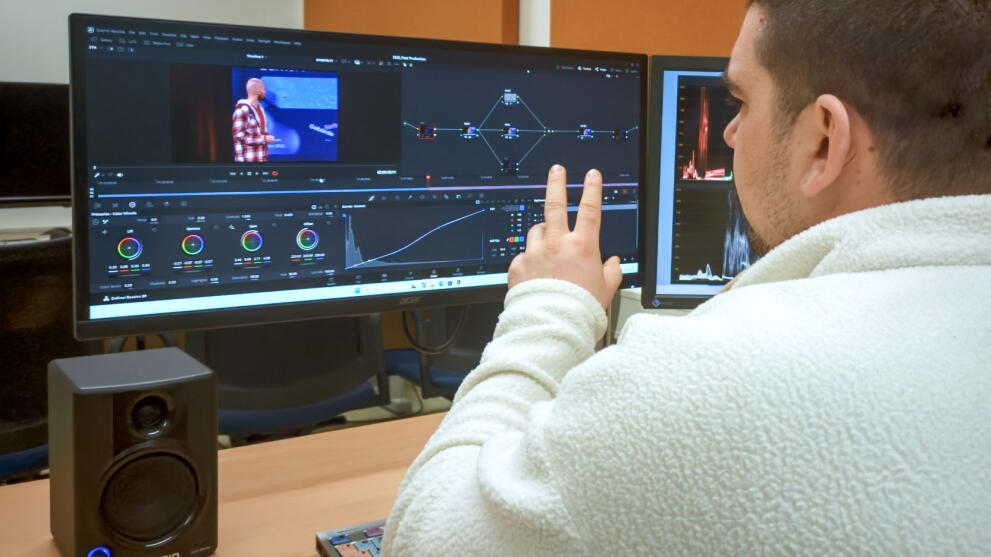
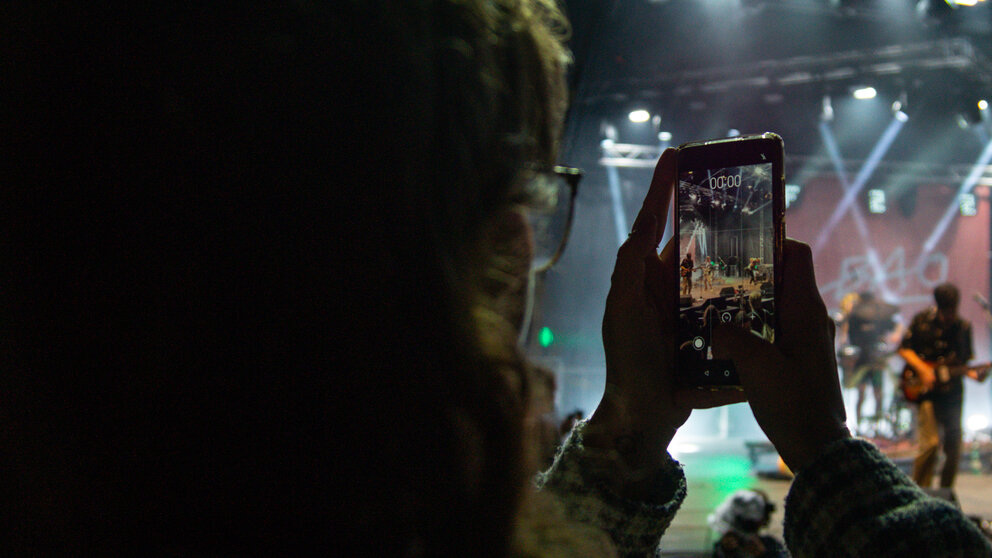
On the Media Technology degree programme at Mittweida, the focus is on practical experience right from the start. You’ll work with state-of-the-art studio equipment and learn camera work, video and audio mixing, lighting design and directing. In modules such as Media Production Technology and AV Design, you’ll build the technical foundations for complex live productions. You’ll learn not only how to operate systems, but also how to plan them yourself. You’ll work in real production environments: in the TV studio and at live events on campus. You’ll film, take charge of camera direction or plan the entire technical setup. In this way, you’ll develop into an expert in the conception and execution of live productions. You’ll learn how to route signals, set up redundant networks and ensure productions run smoothly – whether in the studio or out on the festival site.
Media Production Technology I
Media Markets
Fundamentals of Media Informatics
Fundamentals of Design
Music
Introduction to Academic Writing
Media Production Technology II
Fundamentals of AV Design
Dramaturgy and Narration
Graphics and Animation
Specialised Applications in Web Development
Media Business Management
Event Technology
Project and Event Management
Lighting Design
Motion graphics
Specialisation modules:
- Studio Technology I
- Audio Technology
Media Technologies
Media Technology Event I
Network and Streaming Technology
Academic Publishing
Specialisation modules:
- Post-production
- Media Production I
Start-up Management
Media Technology for Events II
Application Development
Interdisciplinary Learning
Specialisation modules:
- Studio Technology II
- Media Production II
Practical module (12 weeks)
Bachelor’s thesis (12 weeks)
Media Technology in Mittweida

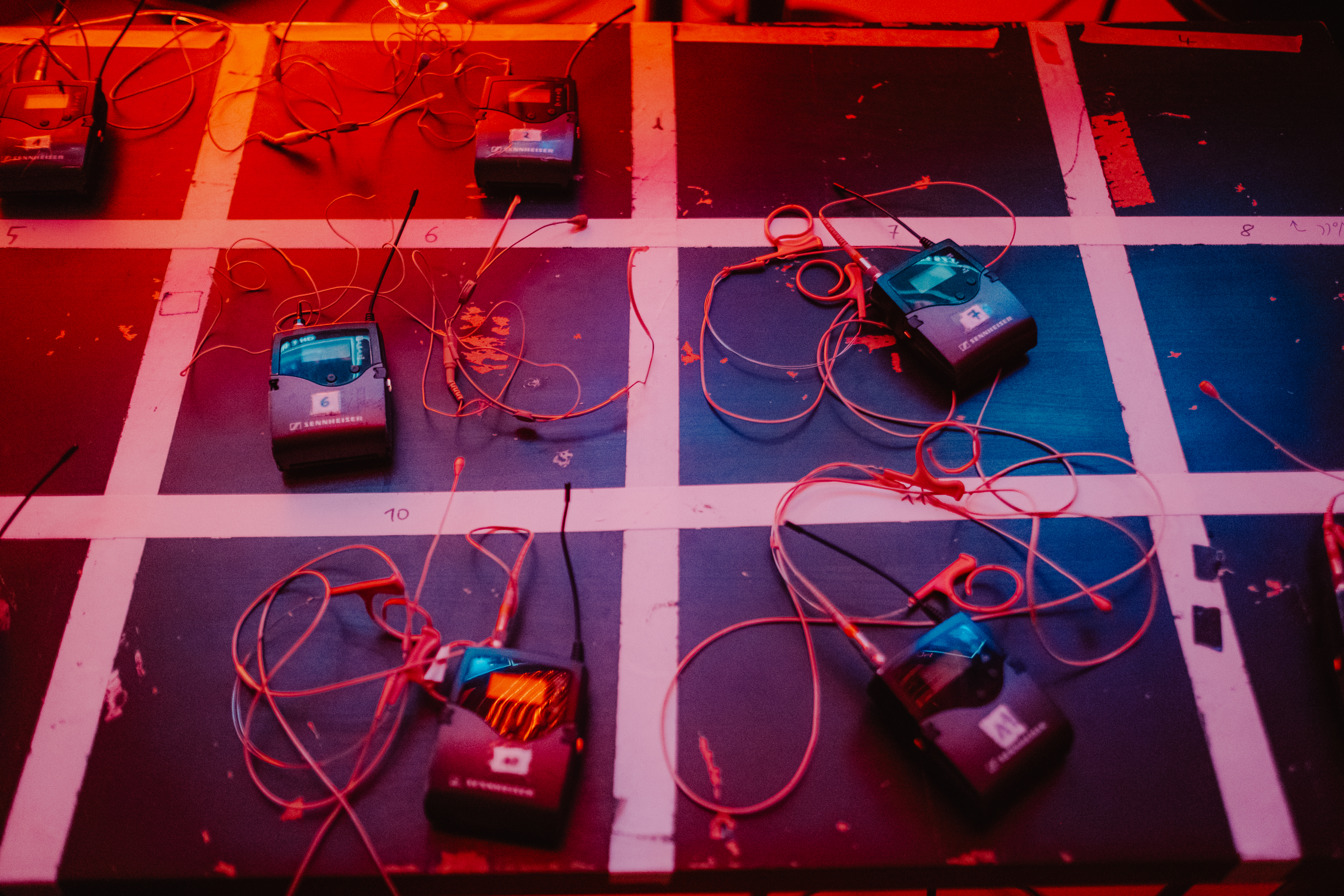


In summary – Live Production in Mittweida

Specialisation within the full-time Bachelor’s degree programme in Media Technology

(180 Credits)








Once you’ve completed your Bachelor’s degree in Media Technology, you’ll be ideally prepared for TV and event productions at television broadcasters, streaming services and technical service providers. You can work as a technical director, broadcast engineer, systems engineer, lighting or sound engineer, or event technician. Positions in production planning and management are also open to you. Alternatively, you can further deepen your knowledge by undertaking a Master’s degree in Media Management and Technology at Mittweida University of Applied Sciences.
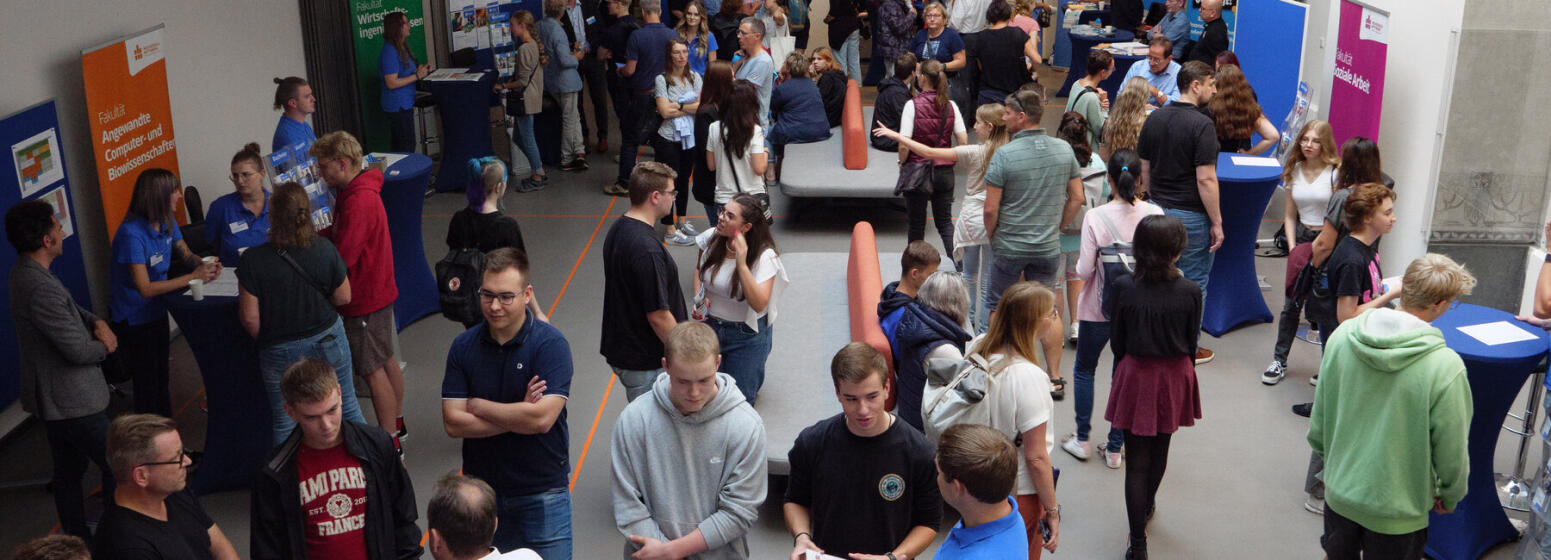
Application and Admission
Applicants must hold a general university entrance qualification, a university of applied sciences entrance qualification, a subject-specific university entrance qualification or an equivalent recognised qualification. Applicants who have completed vocational training and have at least three years’ professional experience may also be admitted following a consultation and a successful entrance examination.
Language skills:
Anyone who did not obtain their university entrance qualification at a German-speaking institution must demonstrate German language proficiency at level C1 of the Common European Framework of Reference for Languages. Proof of this can be provided, for example, by passing the ‘German as a Foreign Language’ (TestDaF) test at the Mittweida University Preparatory College with an average score of TDN 3 in all four sections, or by presenting an equivalent certificate.
The application period for the winter semester begins on 15 April and ends on 15 July. You can register online via the HSMW application portal. Once you have submitted all your documents, you can enrol. Once you have enrolled, your place at Mittweida is secured. For international applicants, the application deadline is 15 May, to allow sufficient time to apply for a visa.
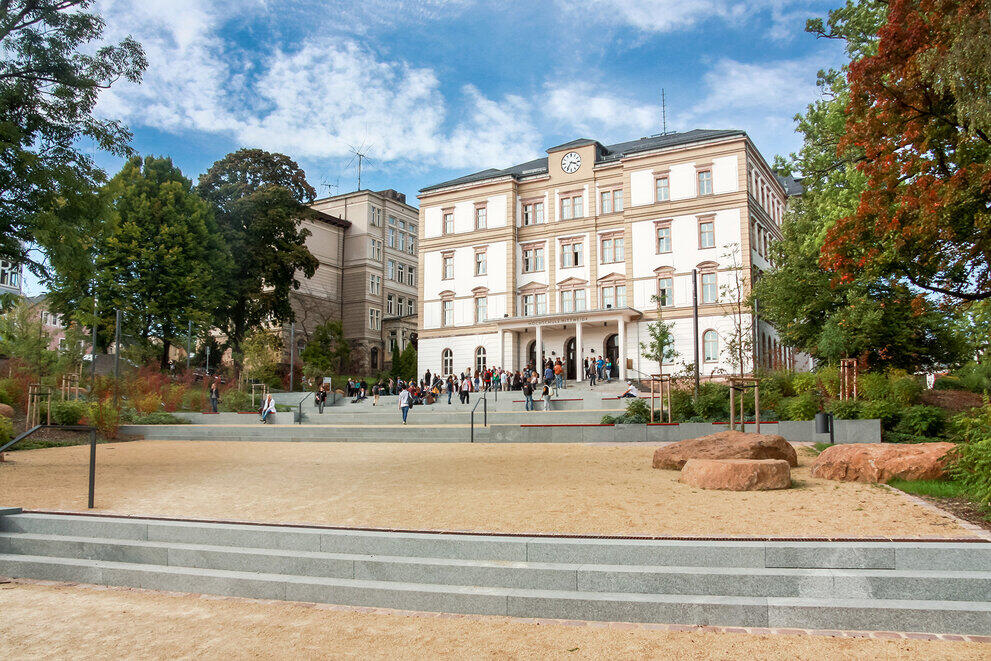
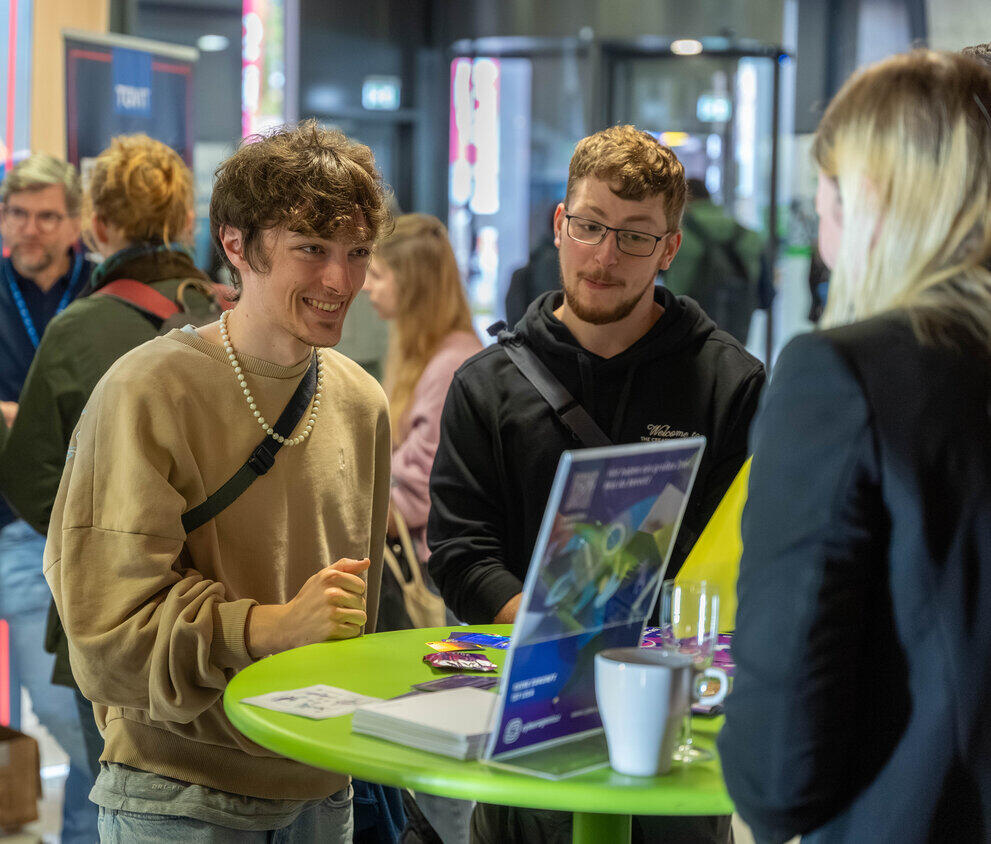
We’ve got you covered! Excellent study conditions, modern facilities and affordable rent allow you to focus fully on your studies. Tutorials are on hand to help with academic queries, the SAXEED start-up network supports you on your journey to developing your own business idea, and the Social Support Service offers assistance with specific life situations, such as childcare or caring for relatives. The campus also has plenty to offer: two music festivals a year, an active esports team and a vibrant student community. Discover just how diverse life in Mittweida is – at the Open Day or the Night of Science.
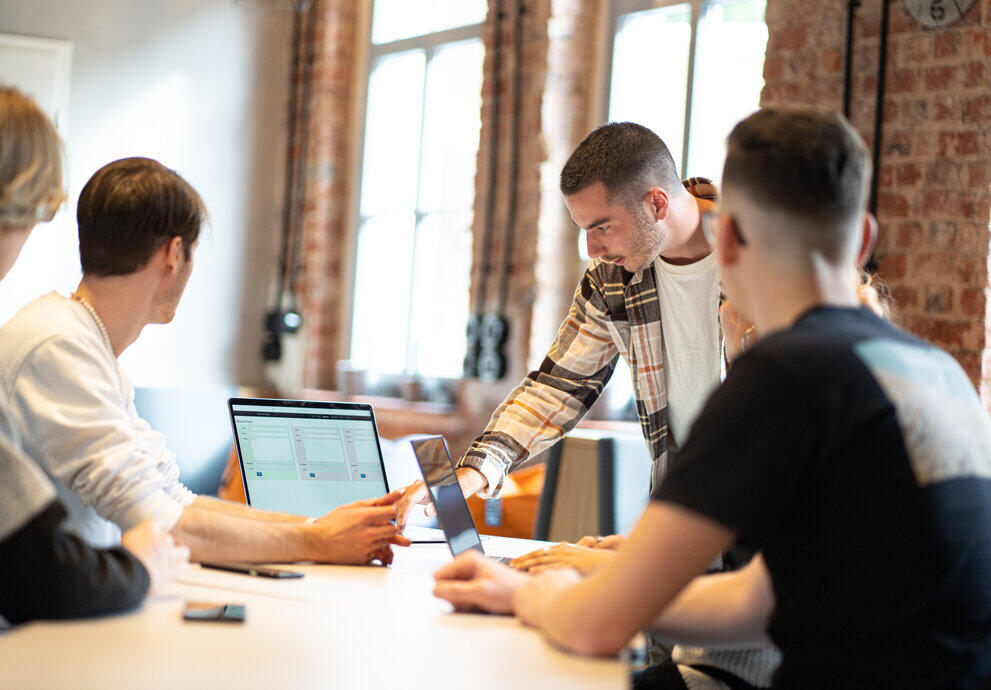
Related degree programmes

Frequently Asked Questions
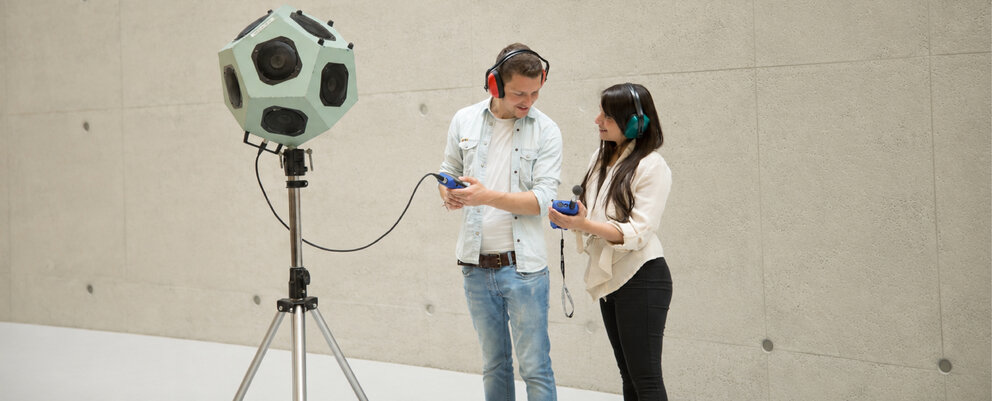
Not at all. Ideally, you should bring your own laptop for day-to-day work, taking notes in lectures or carrying out research. Beyond that, however, you absolutely do not need to buy any expensive specialist equipment. That’s one of the great advantages of studying at Mittweida University of Applied Sciences: the university provides all the equipment you need. Through our in-house equipment hire service, you’ll have free access to everything you need for your projects – from high-end microphones to professional camcorders.
No, you don’t need to be an expert to start with. We’ll teach you everything from scratch. What you should bring with you, though, is a certain affinity for technology and a sense of curiosity: you should be keen to understand how things work and how to use technology.
There are no school-style holidays during your degree. Instead, there are lecture-free periods. During these, you can study, write assignments, undertake work placements – and treat yourself to a bit of a break now and then.
In the 2026/2027 winter term, in addition to public holidays, the following periods are lecture- and exam-free:
- 21 December to 3 January,
- from 22 February. Exception: The Faculty of Social Sciences begins its lecture-free period on 29 February.
In the 2027 summer term, with lectures starting on 22 March, the dates are:
- 25 March to 2 April,
- 7 May,
- 17 May,
- from 2 August. The Faculty of Social Sciences will also hold an examination week from 23 to 27 August.
Whilst Media Management focuses on conception and planning, Media Technology concentrates on the technical execution and implementation of projects and productions. Audio and Acoustical Engineering is a purely engineering degree with a strong emphasis on mathematics and physics. Media Technology, on the other hand, is more application-oriented and focuses on the practical technical implementation in everyday media work.
In Mittweida, the focus is on ‘doing’: whilst in big cities you often find yourself queuing to use the equipment, Mittweida offers outstanding access to equipment and state-of-the-art studios. Thanks to the close-knit community on campus, you can try your hand at interdisciplinary projects (e.g. TV productions, events). Here, you don’t just learn the theory; you’ll be right at the director’s desk or the lighting console.
That’s brilliant! We place great importance on ensuring that you don’t learn using outdated technology. The course content is consistently designed with the industry in mind. Our technical equipment – from cameras to mixing desks – is always up to the latest industry standards, so that once you’ve completed your studies, you can step straight into a professional career without needing to adjust.