This page was translated automatically using artificial intelligence (DeepL). The German version is binding. More information about automatic translation
Facts and figures
Digital Journalism
In Mittweida, you’ll combine your studies with real-world journalistic practice. You’ll combine journalistic skills with Media Management knowledge of markets and design. In the process, you’ll learn how an idea is turned into a media product. With Digital Journalism, you’ll gain specialist knowledge in interactive reporting, data visualisation and 360-degree formats. This will help you build your profile as a next-generation journalist.
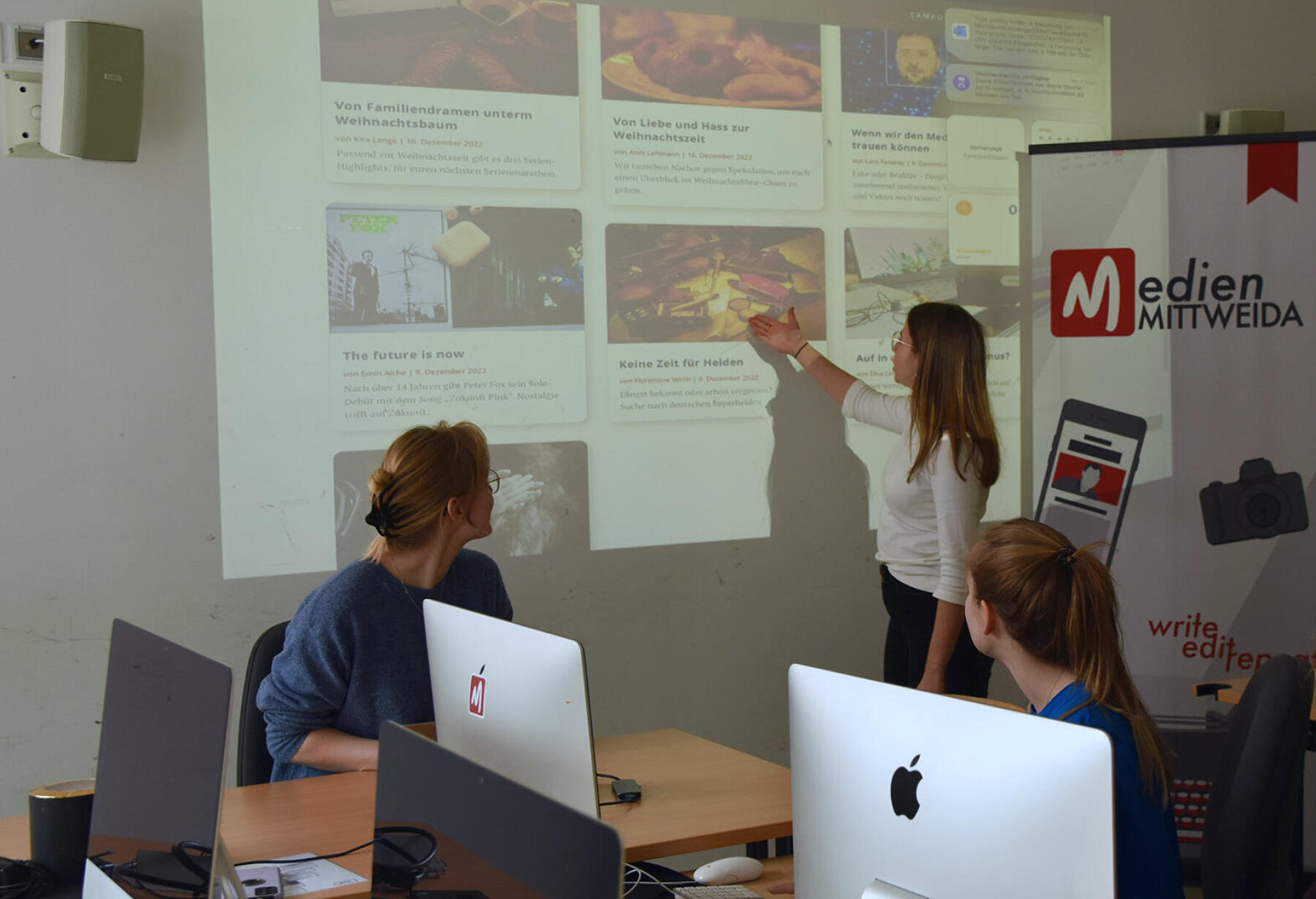
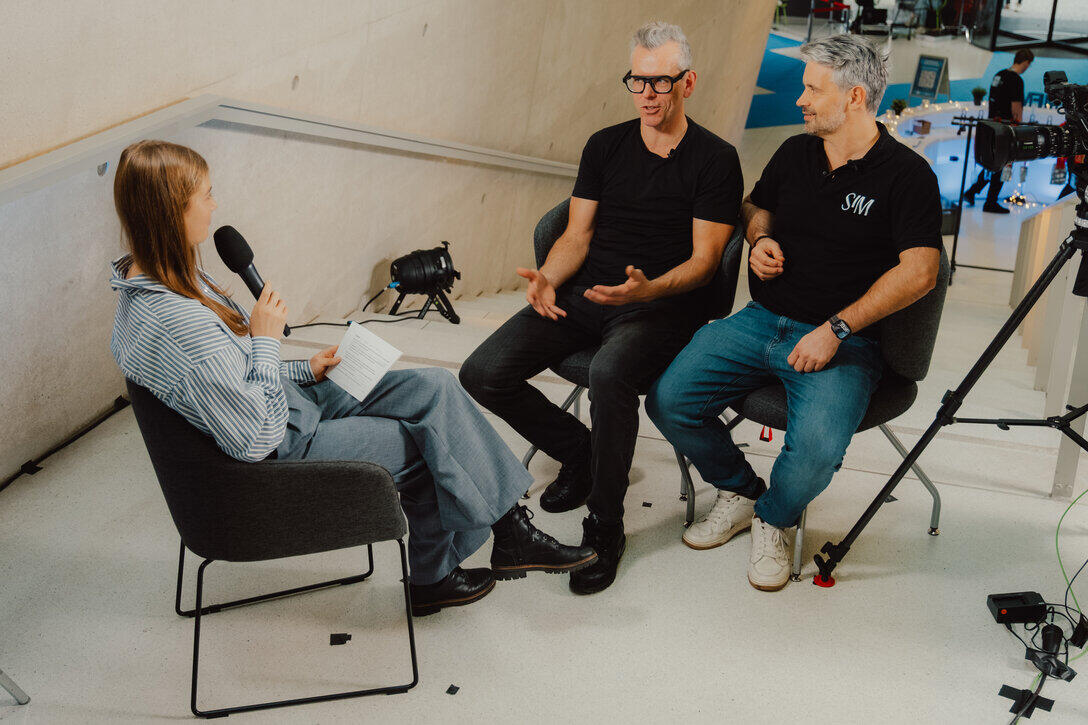
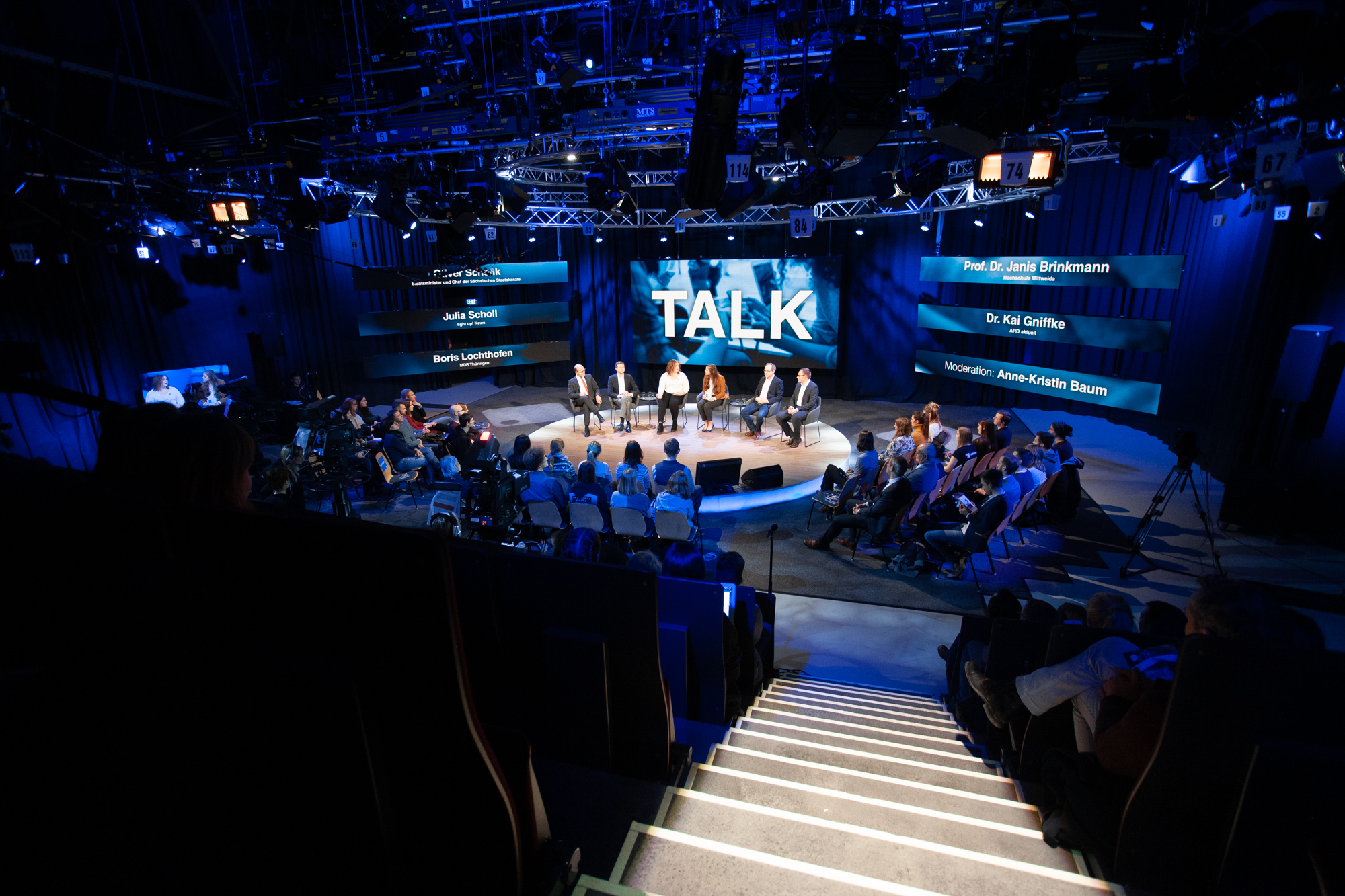
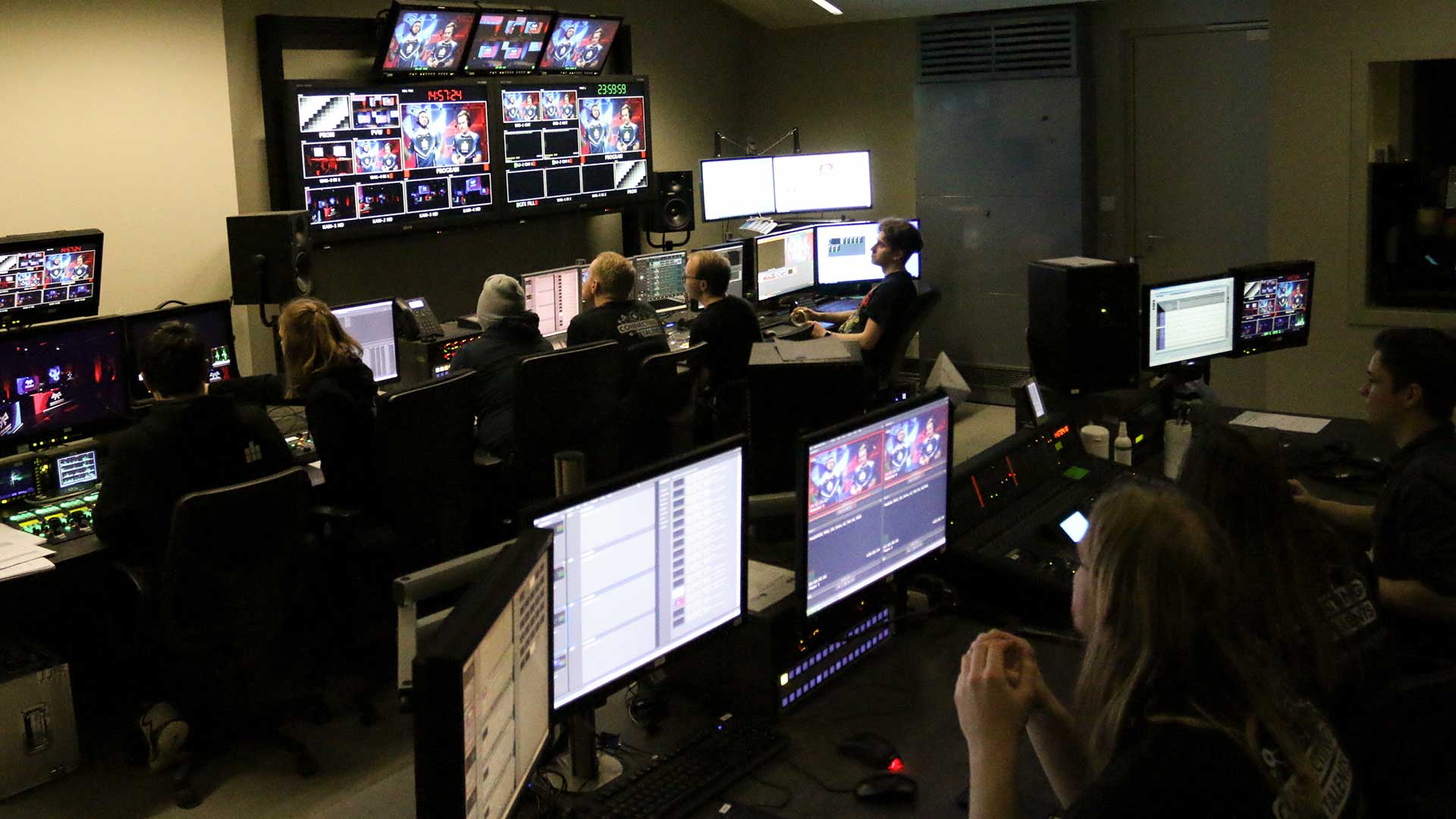
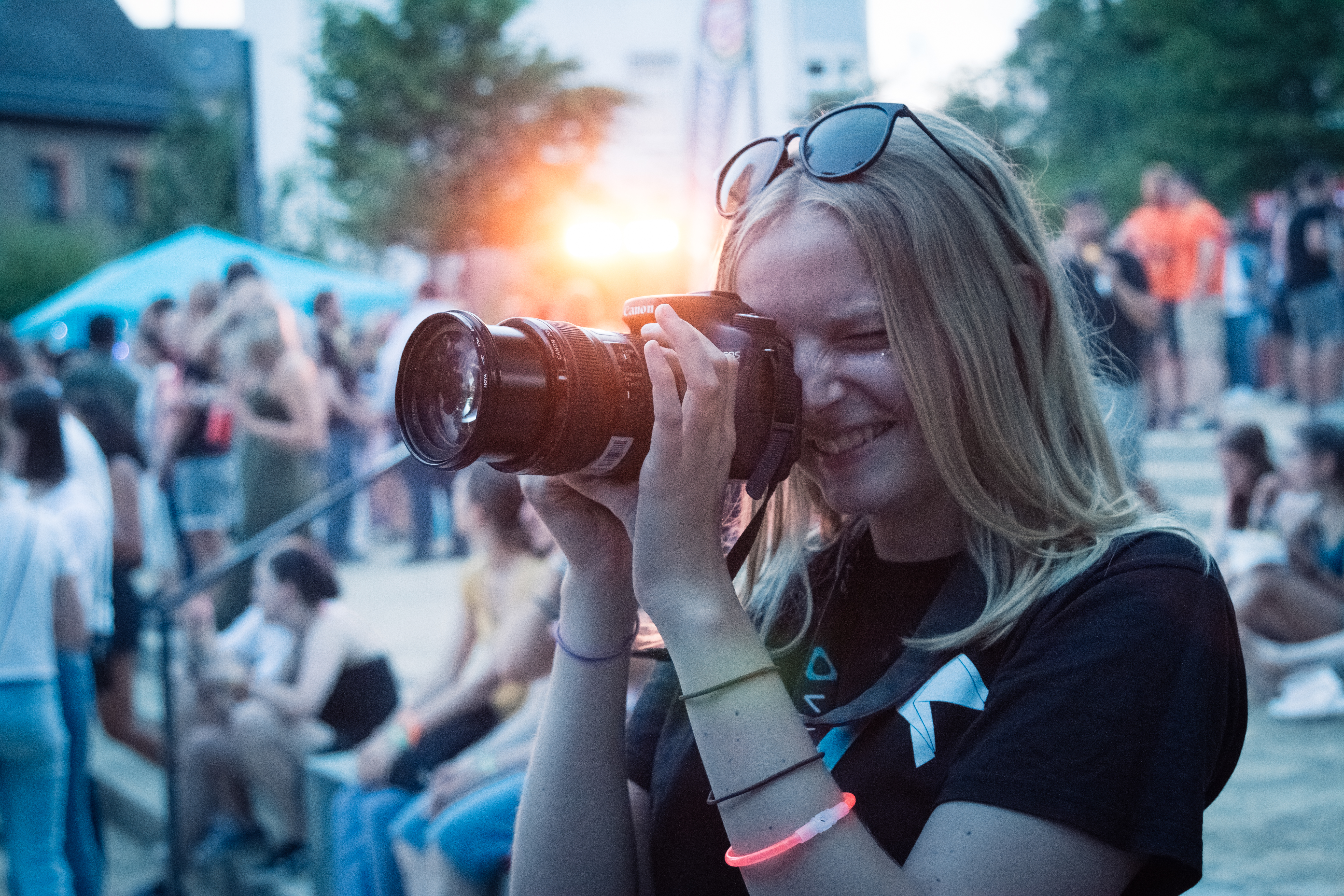
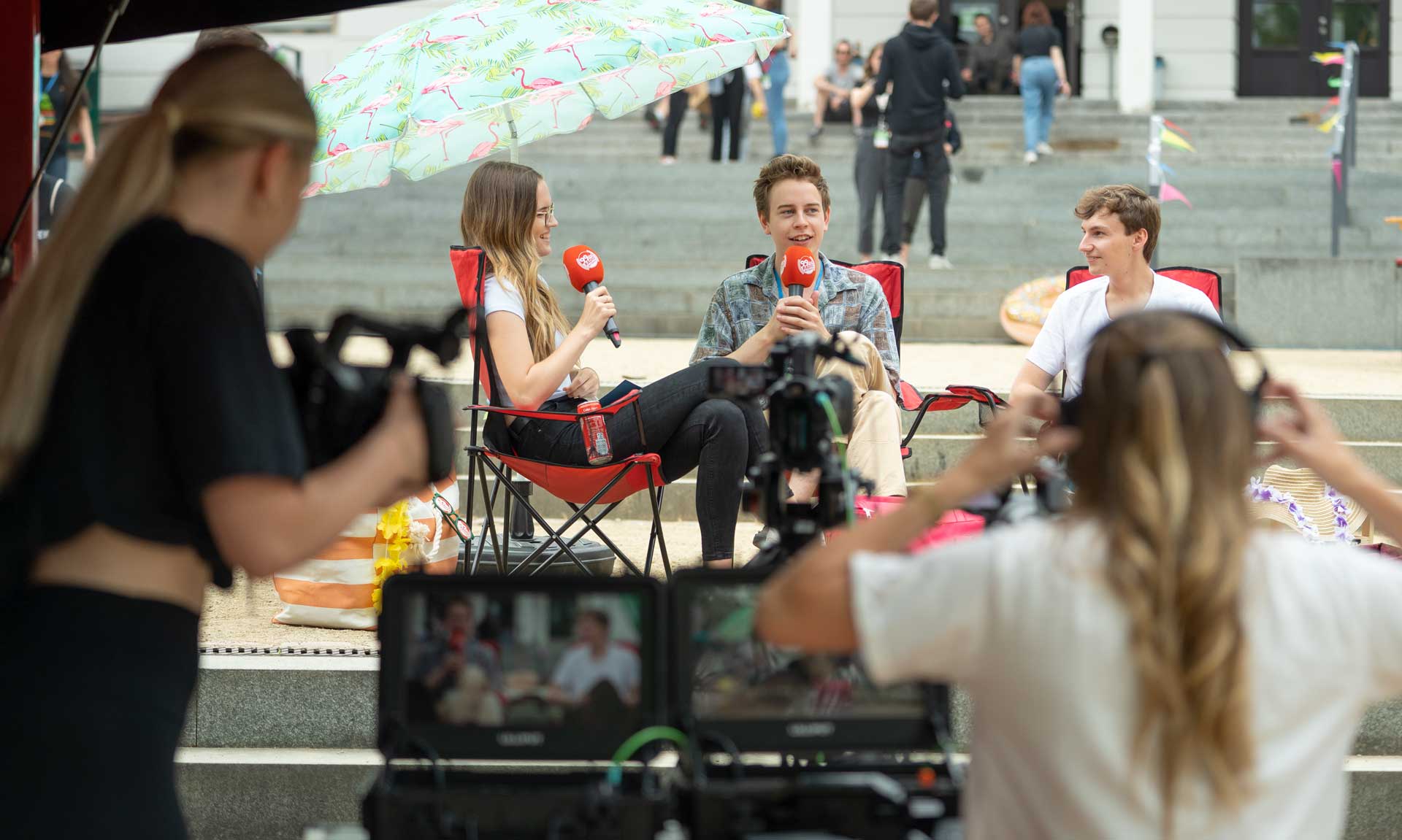
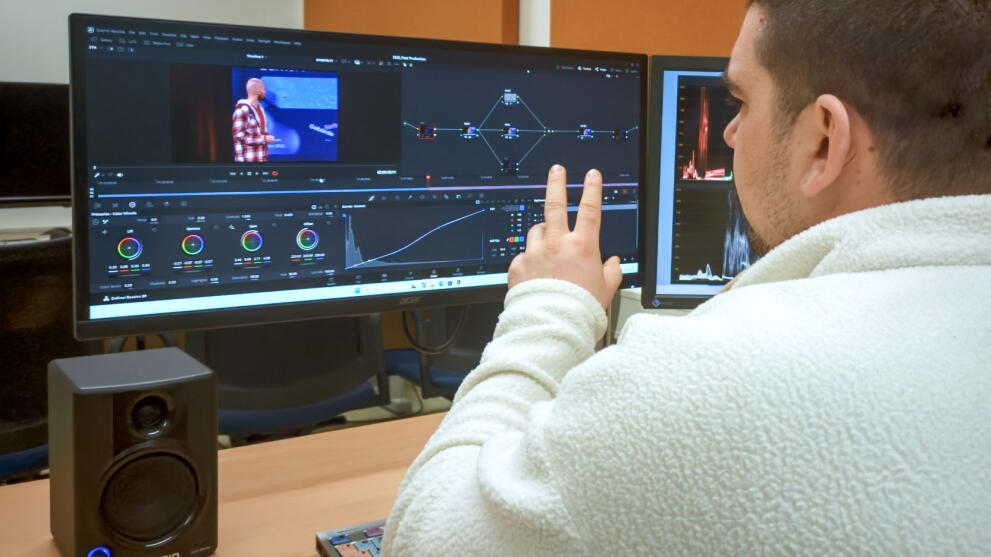
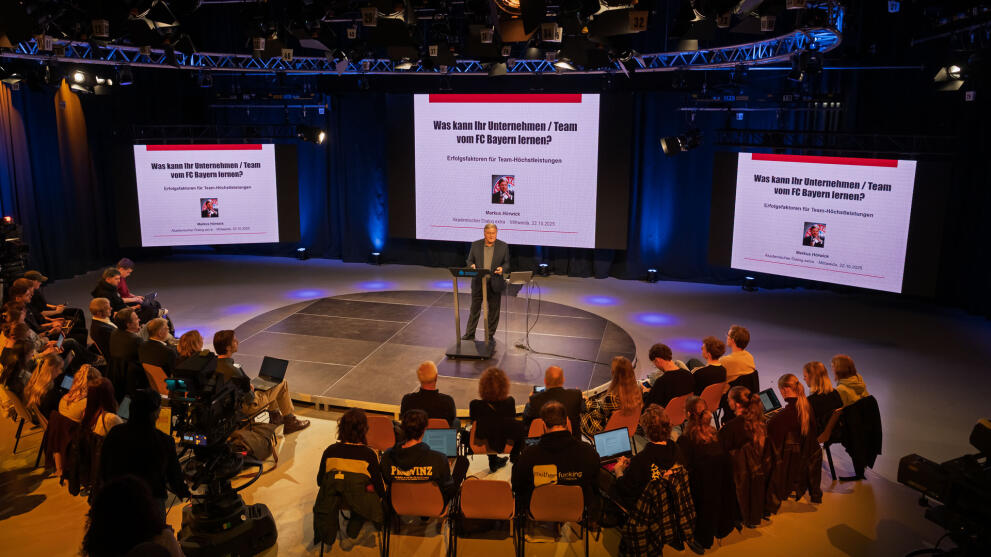
Germany’s most modern academic media centre offers you everything you need – from TV cameras to a podcast studio. Whether at medienMITTWEIDA or 99drei Radio Mittweida: here, you’ll learn journalism by doing it. This means you can try out new things and even make mistakes that professional newsrooms could hardly afford to make.
An overview of the course content
Each semester on the Media Management programme offers a mix of business, creative and technical expertise. You’ll study and produce content at Germany’s most modern academic media centre.
With your specialisation in Digital Journalism, you’ll start to refine your individual profile from the third semester onwards. You’ll continue to take joint modules with students from other specialisations, such as Media Production for Audio, Video and Text, or Market Research and Media Law. At the same time, you’ll engage intensively with the theory and practice of modern journalism.
This combination offers you a distinct advantage: when you start your career as a journalist, you’ll already have a clear understanding of how your organisation works. This will enable you to quickly make a recommendation for more senior roles, such as a position on the editorial board.
Media markets
Journalism I
Fundamentals of Media Informatics
Fundamentals of Design
Media Production Technology
Introduction to Academic Writing
Media Business Management
Journalism II
Fundamentals of AV Design
Dramaturgy and Narration
Project Management
Introduction to Media and Communication Studies
Media Production: Video
Audio Media Production
Text Media Production
Event Management
Specialisation modules:
- Journalism Practice
- Technology and Innovation in Journalism
Media Practice I (Elective: Events, Editorial, Radio, Agency)
Media Law
Market Research
Academic Publishing
Specialisation modules:
- Investigative Journalism
- Data Journalism
Media Practice II (Elective: Events, Editorial, Radio, Agency)
Interdisciplinary Learning
Media Technology
Start-up Management
Specialisation modules:
- Journalism Studies
- Immersive Journalism
Practical project (12 weeks)
Bachelor’s thesis (12 weeks)

Media Management in Mittweida


In summary – Digital Journalism in Mittweida

Specialisation within the full-time Bachelor’s degree programme in Media Management

(180 Credits)







Once you’ve completed your Bachelor’s degree in Media Management, specialising in Digital Journalism, a wide range of career opportunities will be open to you: you can work as an editor, presenter, content creator, data journalist or multimedia producer – in media organisations, communications departments or as a freelance journalist. You’ll also have the option to progress to the Master’s programme in Media Management and Technology.
Application and Admission
Admission to the Media Management programme in Mittweida is subject to quotas. However, you don’t need to ask about the Numerus Clausus (NC).
In Mittweida, we train people who are passionate about media. That’s why we focus on selecting these individuals carefully.
However, enthusiasm for media cannot be gauged from school grades. That is why motivation and prior experience play a major role in our selection process.
Applicants must hold a general university entrance qualification, a university of applied sciences entrance qualification, a subject-specific university entrance qualification or an equivalent recognised qualification. Applicants who have completed vocational training and have at least three years’ professional experience may also be admitted following a consultation and a successful entrance examination.
Language skills:
Anyone who did not obtain their university entrance qualification at a German-speaking institution must demonstrate German language proficiency at level C1 of the Common European Framework of Reference for Languages. Proof of this can be provided, for example, by passing the ‘German as a Foreign Language’ (TestDaF) test at the Mittweida University of Applied Sciences Preparatory College with an average score of TDN 3 in all four sections, or by presenting an equivalent certificate.
Following the application deadline on 15 July, the selection process for the Media Management degree programme will take place; this is not based solely on the grade of your university entrance qualification. We allocate places in three ways:
- The HSMW allocates 80 per cent of the places on the Media Management programme through a selection process involving all applicants. Here, your individual prior experience in the media sector and a personal statement are taken into account, with the HZB contributing a smaller proportion. This prior experience may consist of vocational training, work placements or voluntary work. In your letter of motivation, you should explain why one of the limited places should be awarded to you. In no more than one A4 page, you can explain what motivates you, which talents and qualities set you apart, where you want to go, and why Mittweida is your choice for this.
- 10 per cent of places are allocated based on the number of waiting semesters. Waiting semesters are determined from the CV you submit and describe the period between leaving school and the start of your degree, minus any time you may have already spent studying. Applicants with the longest waiting period are offered a place, which enables those with professional experience in particular to pursue further education.
- 10 per cent of places are allocated based on the HZB mark. In most cases, this is the (vocational) A-level certificate. Think of it this way: applications are ranked in a list according to their average mark. Applicants with the highest A-level averages are offered a place. The mark of the last applicant to be admitted then becomes the entry requirement for the following year.
The application period for the winter semester begins on 15 April and ends on 15 July. For international applicants, the application deadline is 15 May, to allow sufficient time to apply for a visa.
- Register on hochschulstart.de from 15 April. Select the Media Management degree programme at Mittweida University of Applied Sciences. You will receive an applicant ID (BID) and an authentication number (BAN). Make a note of them or save them!
- Now go to the university’s application portal. Register here too by entering the BID and BAN from hochschulstart.de and filling in the missing details. The portals are now linked and you can complete your application on the university’s application portal. To do this, upload all the required documents, such as your personal statement, as PDF files and provide all the necessary details.
- Your application will go through the selection process to determine whether you are admitted. The application deadline is 15 July. If you are selected, you will receive notification at the end of July that you can enrol.
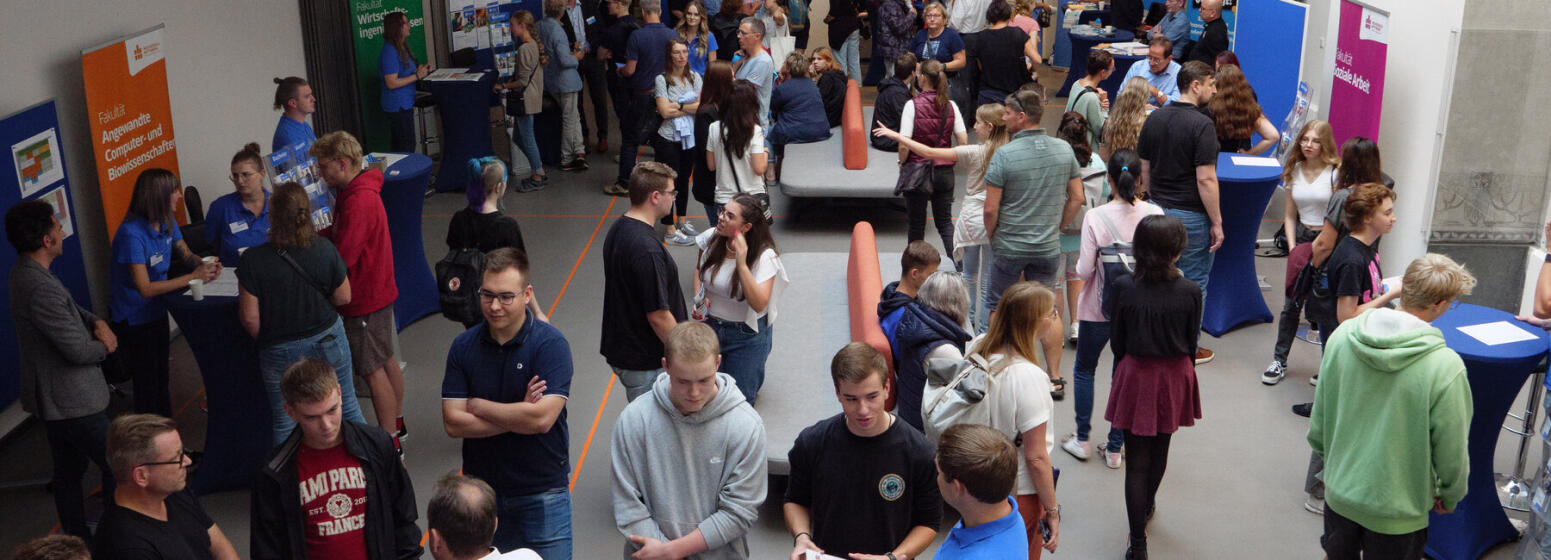
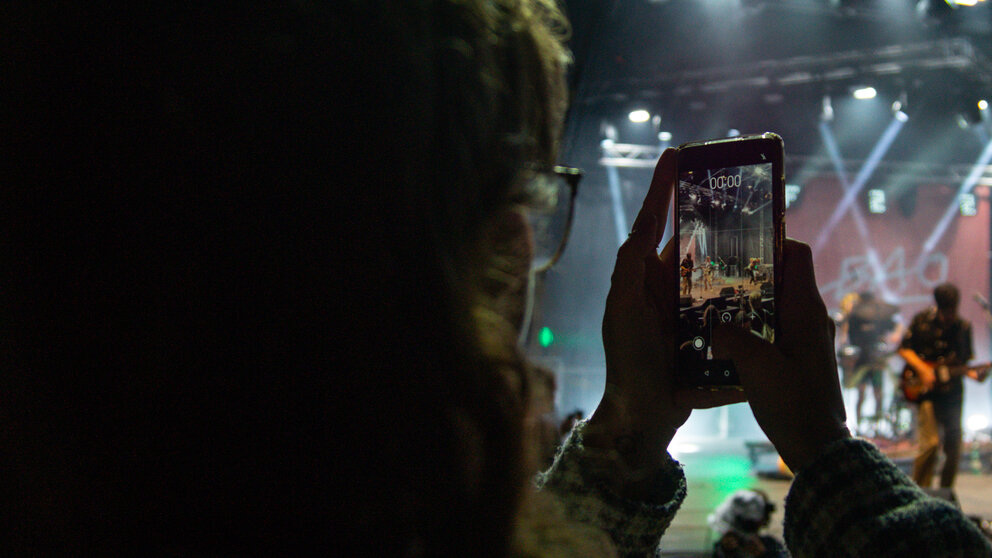
We’ve got you covered! Excellent study conditions, modern facilities and affordable rent allow you to focus fully on your studies. Tutorials are on hand to help with academic queries, the SAXEED start-up network guides you on your journey to developing your own business idea, and the Social Support Centre offers assistance with specific life situations, such as childcare or caring for relatives. The campus also has plenty to offer: two music festivals a year, an active esports team and a vibrant student community. Discover just how diverse life in Mittweida is – at the Open Campus Day (Studieninformationstag) or the Night of Sciences (Nacht der Wissenschaften).
Related degree programmes


Frequently Asked Questions
In short: no. You don’t need to be a pro behind the camera or at the editing desk to get started with us. We start with the basics. During your degree, you’ll learn everything – from the initial concept to the finished product – that you’ll need for your future career. Just bring your passion with you; we’ll teach you the craft.
You’ll choose your specialisation halfway through the second semester. To ensure you’re not left in the dark, whilst there’s no one-to-one guidance, there is a detailed presentation of the specialisation options. During these sessions, the professors and lecturers will explain in detail exactly what content and career paths you can expect from each specialisation, so that you can make the choice that best suits your goals.
Absolutely! The media practice modules and the insights into the various specialisations will give you a broad foundation. What’s more, Mittweida thrives on its student projects (such as the Campus Festival, the university theatre or 99drei Radio). Here, you can try your hand at completely new areas, make contacts and discover where your true passion lies.
There are no school-style holidays during your degree. Instead, there are lecture-free periods. During these, you can study, write assignments, undertake work placements – and treat yourself to a bit of a break now and then.
In the 2026/2027 winter term, in addition to public holidays, the following periods are lecture- and exam-free:
- 21 December to 3 January,
- from 22 February. Exception: The Faculty of Social Sciences begins its lecture-free period on 29 February.
In the 2027 summer term, with lectures starting on 22 March, the dates are:
- 25 March to 2 April,
- 7 May,
- 17 May,
- from 2 August. The Faculty of Social Sciences will also hold an examination week from 23 to 27 August.
Studying at Mittweida University of Applied Sciences is challenging, but we encourage you to take the initiative! The curriculum is structured in such a way that you can easily balance your studies with your own projects. Many students even make direct use of the university’s facilities to bring their own creative ideas to life. Your studies will benefit from your projects, and vice versa.
In Mittweida, you’re not just a number – you’re part of a team. The two biggest advantages are:
- Top-of-the-range facilities: Our technical equipment (studios, editing suites, equipment hire) is of professional standard and often more accessible than at overcrowded, mass-market universities in big cities.
- Project focus: In Mittweida, ‘doing’ is a top priority. The short lines of communication and close-knit network open up project opportunities that you’d be hard-pressed to find in an anonymous big city. Here, you can try your hand at things and take on real responsibility.