This page was translated automatically using artificial intelligence (DeepL). The German version is binding. More information about automatic translation
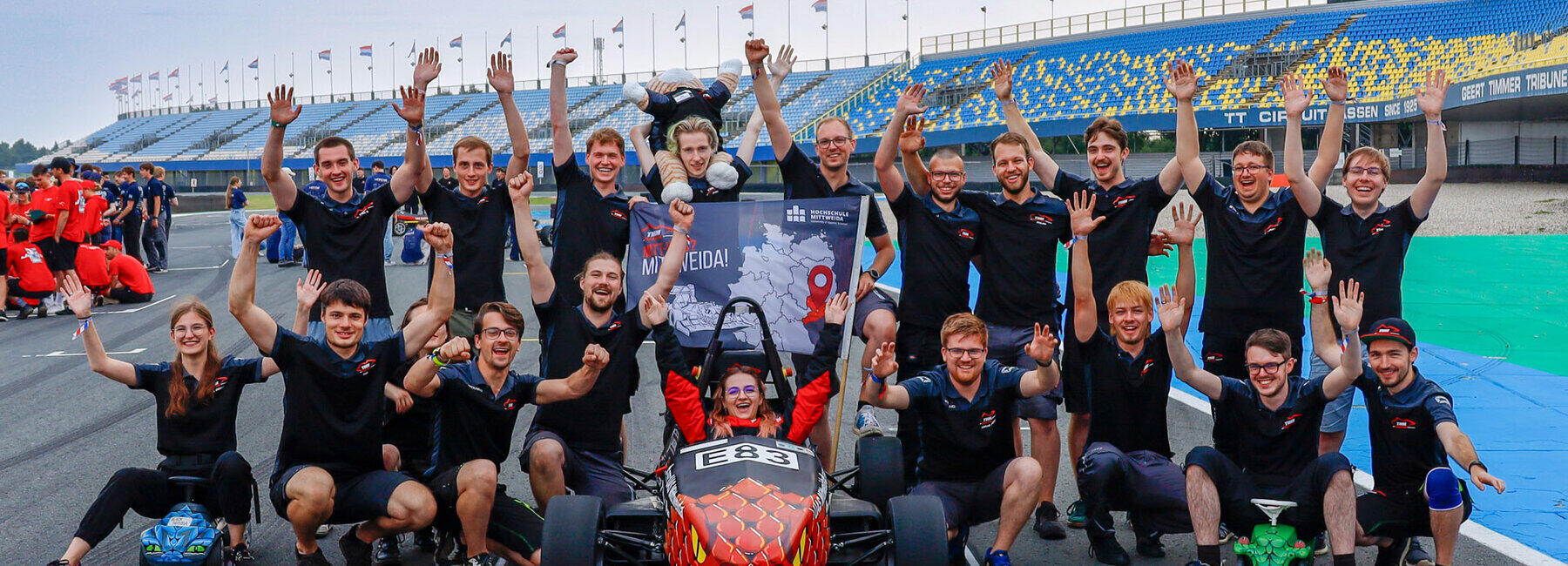
For ‘Red Viper’ and the team behind the Mittweida University of Applied Sciences (HSMW) racing car, it has been a proverbially long and, at times, bumpy journey. But following the 2025 Formula Student racing season, the hundred or so students at Technikum Mittweida Motorsport (TMM) can look back with satisfaction on the successes of the red-and-black electric racing car.
Ahead of their first race on 12 July at Formula Student Netherlands (FSN) at the renowned TT Circuit Assen, there were months of preparation involving numerous test drives and the resulting fine-tuning – for example, of the chassis – as well as the optimisation of the battery management software, which plays a crucial role in an electric vehicle. Testing took place, amongst other venues, at the Sachsenring in the disciplines that are also crucial at the race event. It is not simply the team with the fastest car that secures a top place in a Formula Student competition. Static disciplines, such as the presentations of the Engineering Design Report and the business plan to a jury, are also crucial.


Endurance and efficiency pay off not only for the team; the car must also prove itself in the 22-kilometre ‘Endurance’ race and the ‘Efficiency’ event. At Assen, Red Viper finished eighth and second respectively – despite initial problems with water ingress into the battery. In the overall standings, the team from Mittweida finished 18th out of 44 international entrants.
After the race is before the race
The run-up to Formula Student France, which took place from 26 to 31 August near Lyon, was filled with further test days at the Sachsenring and in nearby Rochlitz. Focusing on the dynamic disciplines there, testing various set-ups and further refining the car’s set-up paid off: in France, Red Viper passed the technical inspections for mechanical, electrical and battery systems, as well as the tilt and brake tests, with flying colours at the first attempt. Only the rain test required a second attempt. The team then put their car through its paces in all the dynamic disciplines, including autocross – a mix of tight bends, slaloms and short straights (8th place) – and the skidpad, a figure-of-eight circuit (6th place). Combined with its strong performance in the static disciplines, TMM achieved an impressive 12th place in the EV (Electric Vehicle) category out of 23 participating teams.


Ben Sander (26), TMM’s Technical Team Leader for the 2024/25 season and a student of Physical Engineering, is more than satisfied: “Our aim before the start of the season was to finish higher than 20th in the endurance standings. We’ve far exceeded that.”
One highlight, aside from the gruelling technical challenges, was the Red Viper being unofficially named the ‘most beautiful car’ of the event.
After the season is before the season
To mark the end of the season on 29 October, Red Viper completed a few more public laps at the Laser Institute at Mittweida University of Applied Sciences. Prior to this, the team management looked back on the season in Studio B and outlined their goals for the future. A small exhibition of components and tools accompanied the presentations and provided an opportunity for technical discussions.

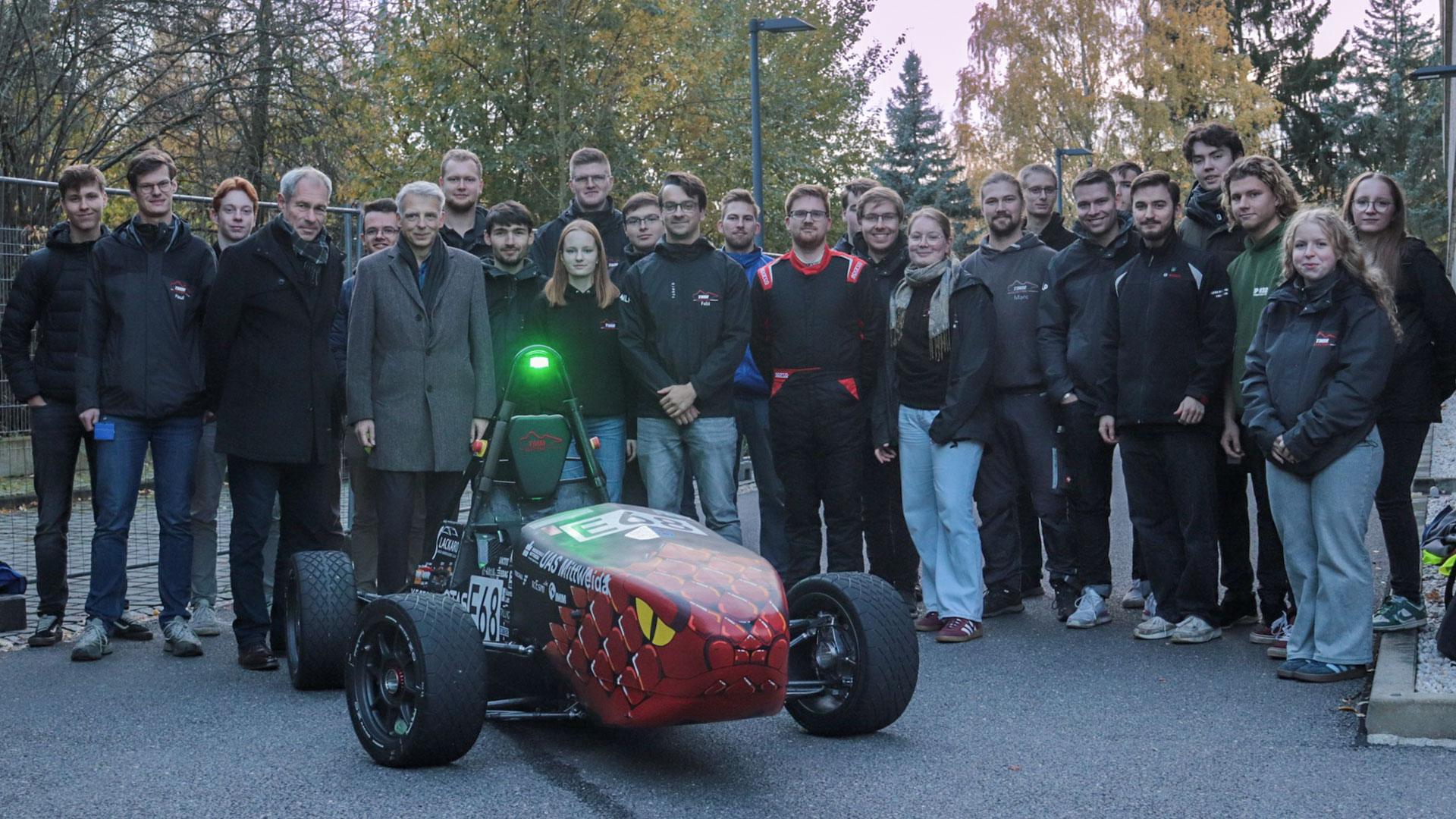

Preparations for the 2026 season have already begun. Whilst TMM was able to recruit new team members from the first-year students at the start of the winter semester and a new team management was elected, Red Viper is permitted to continue driving for internal testing. “The car still has potential, which we will be fine-tuning over the coming months so that we can benefit from it when developing the new car for the 2026 racing season,” says Annalena Seifert, who has been deputy commercial director since October and is also responsible for marketing at TMM. The 20-year-old is in her third semester studying Media Technology and, like her fellow students on the team, is actively involved with TMM alongside her studies. She also emphasises: “Without the commitment of the university and external partners, we wouldn’t be able to continue developing the car or take part in racing events. I am very grateful for their support.”
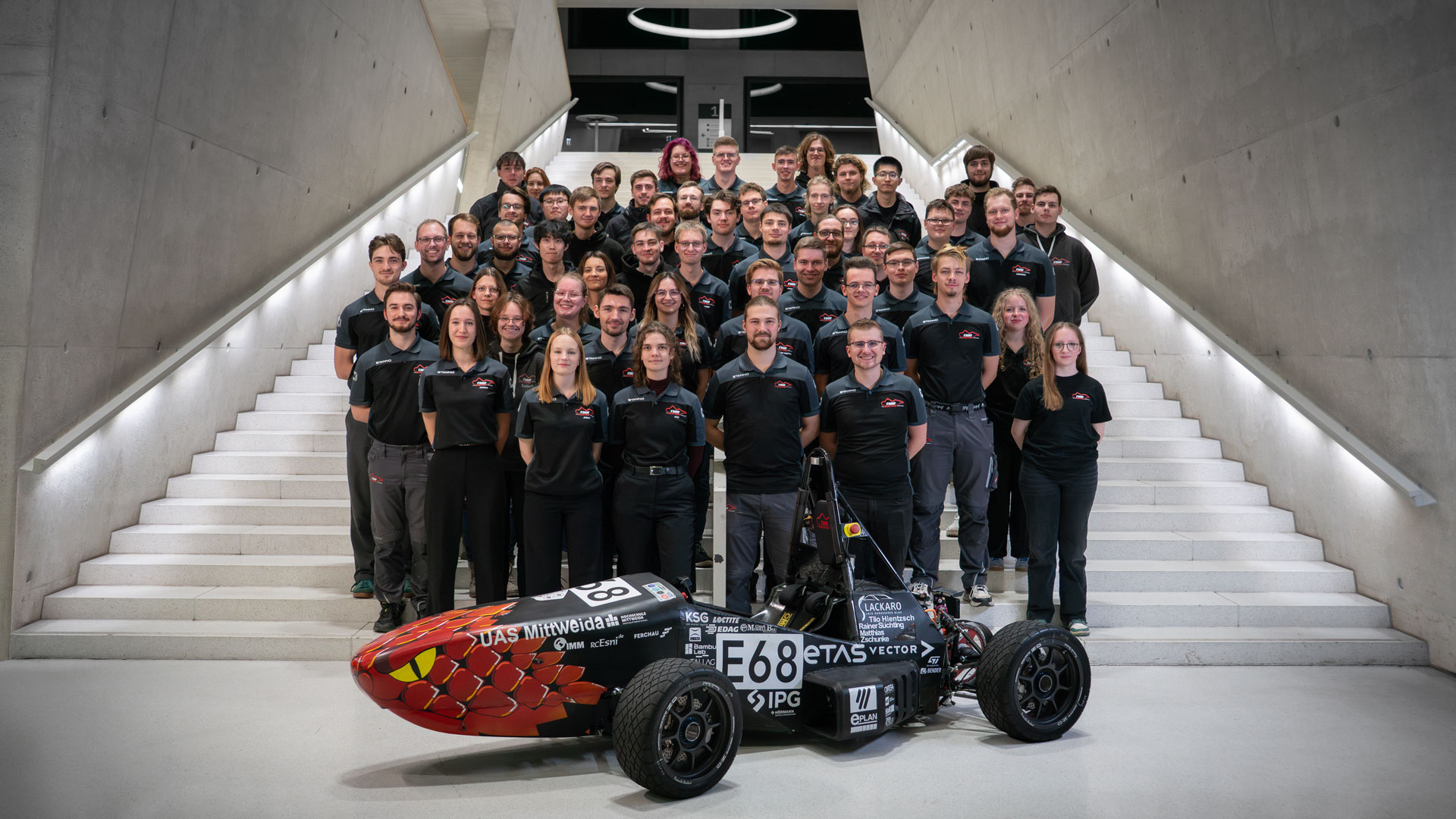
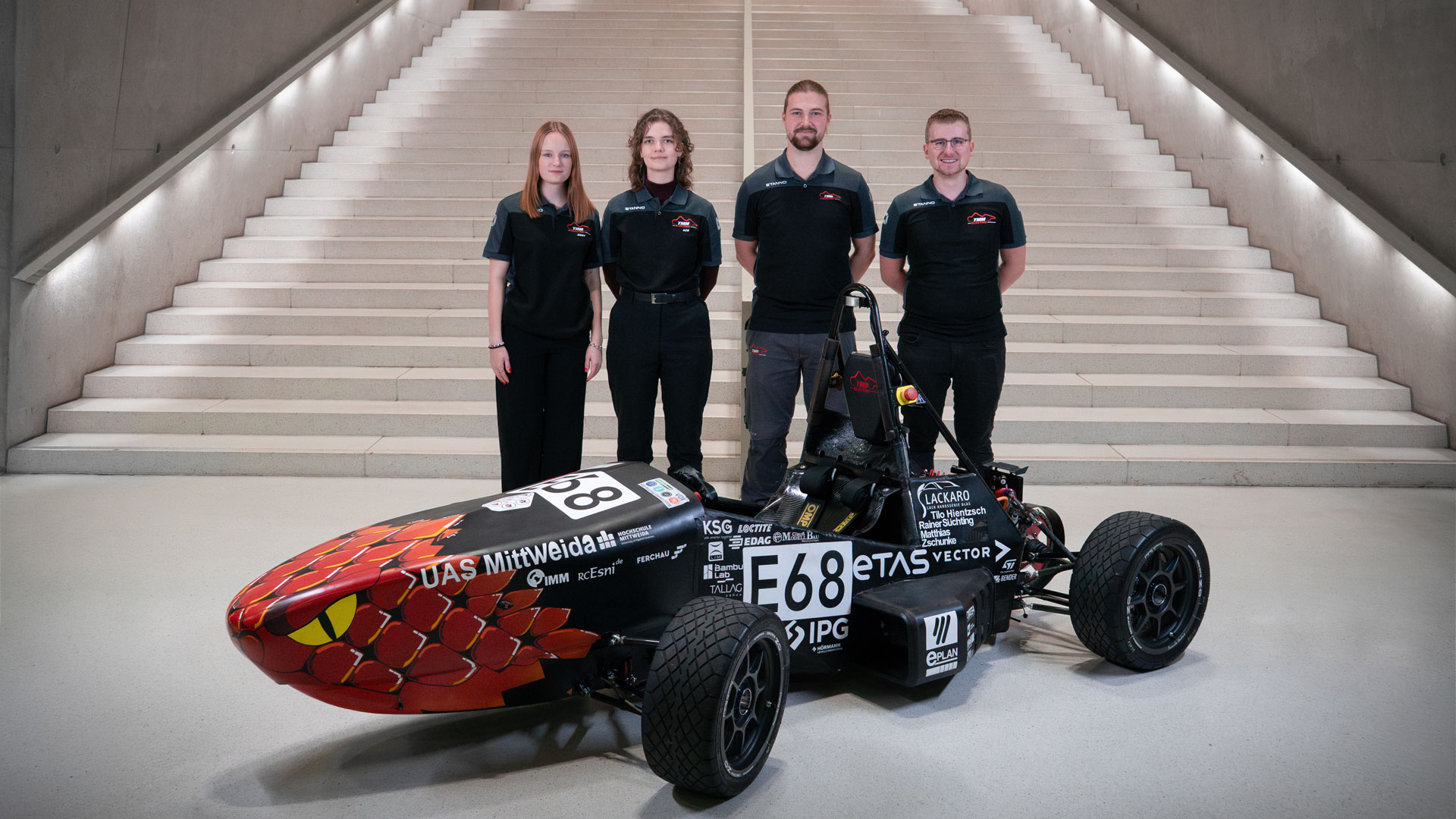
On its website, TMM not only provides information about the latest developments regarding the racing car, but also explains how companies or individuals with a passion for racing can support the team.
Text: Helmut Hammer
Photos: TMM