This page was translated automatically using artificial intelligence (DeepL). The German version is binding. More information about automatic translation
After three years of intensive research and development, the WINNER Final collaborative project has achieved its objectives. At the closing event, the project partners presented the results of a project that focused on the smart interconnection of buildings, photovoltaic systems, charging infrastructure and electric vehicles.
With a project budget of around 544,000 euros for Mittweida University of Applied Sciences, which was funded entirely by the federal government, it was possible to lay important technological foundations for future micro smart grids.
The idea behind the project sounds as surprising as it is logical: in future, electric vehicles will no longer simply consume electricity, but will also be able to feed it back into the grid when required. This will turn them into flexible storage units within a smart energy system.
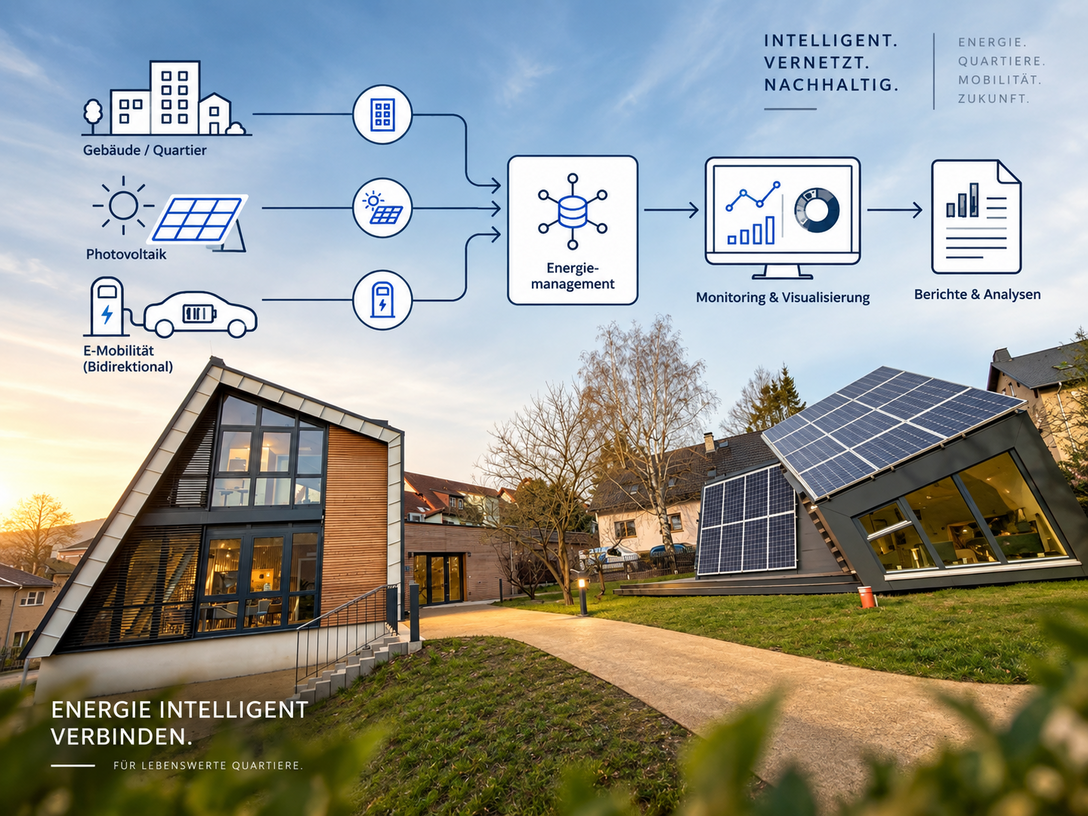
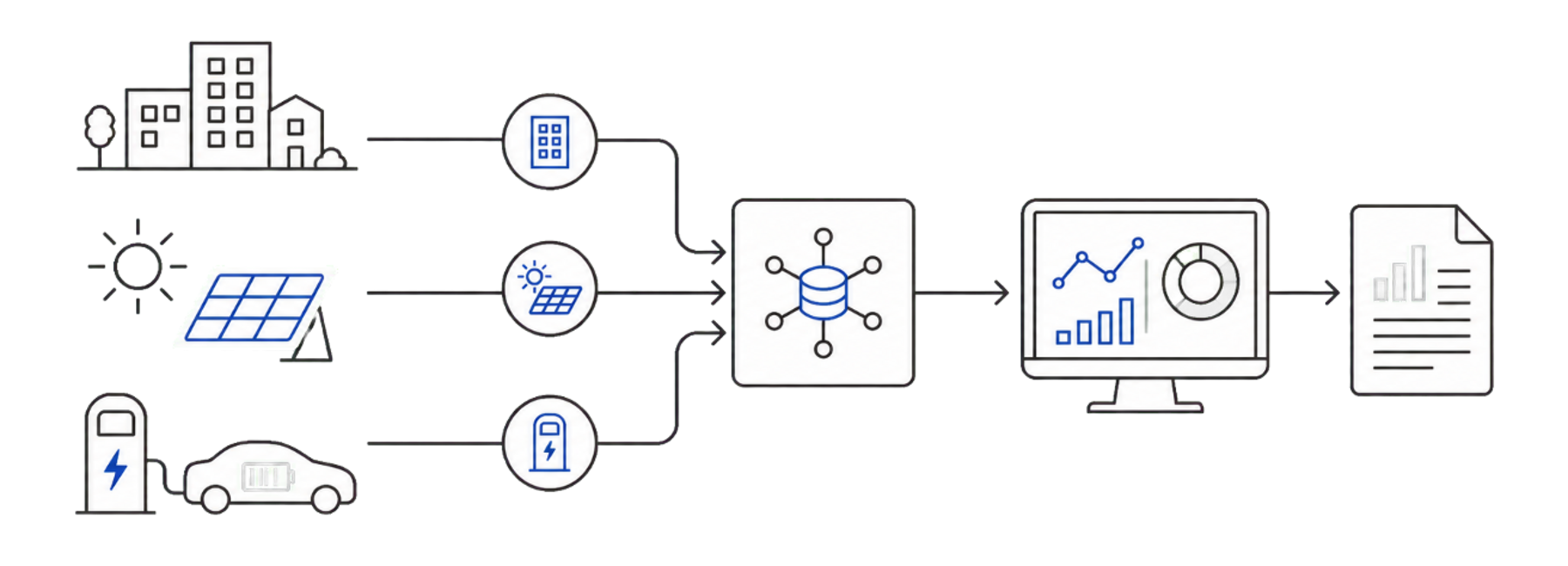
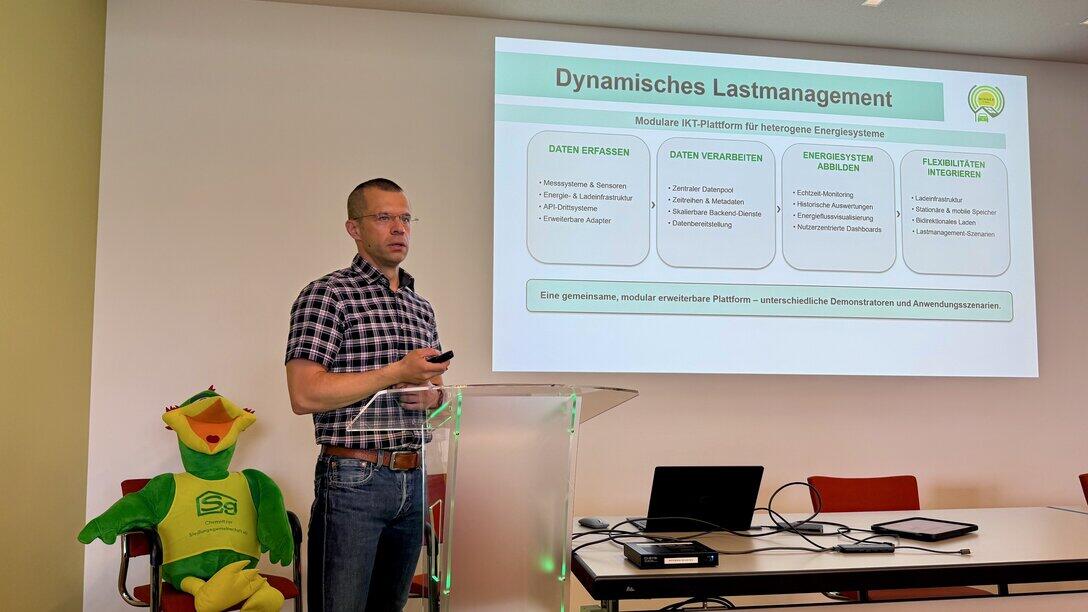
At HSMW, Professor Bert Schusser (Chair of Energy and Resource Efficiency in the Faculty of Industrial Engineering) led a sub-project focusing on the development of a dynamic load and energy management system. The aim was to interconnect energy generators, consumers, stationary storage systems and electric vehicles in such a way that energy could be used as efficiently as possible and peak loads avoided.
In the course of the sub-project, a modular software and system architecture was developed that integrates a wide variety of measurement systems, sensors, energy installations and charging infrastructure. This was supplemented by real-time monitoring and dashboards that provide a transparent overview of energy flows and system statuses. Another key focus was the integration of weather and photovoltaic forecasts to enable the proactive control of the energy system.
A specially developed simulator for emergency power supply demonstrates how bidirectionally connected electric vehicles can supply a neighbourhood with energy in the event of a power cut and how long the available capacity would last. The project thus provides valuable insights into the resilient energy supply of residential and commercial sites.
The developments were not only investigated in the laboratory but also tested on real-world demonstrators in residential neighbourhoods, commercial premises and in e-car-sharing schemes. Together with the project partners Chemnitzer Siedlungsgemeinschaft eG, GEMAG Gebäudemanagement AG, CC Energy GmbH and Mobility Center GmbH/teilAuto, the concepts were trialled under real-world conditions.
The ‘Dancing Settlement’ on Chemnitz’s Kaßberg served as an example.
René Härtel, a project team member at WINNER, explains:
At Christmas, when the solar array produces little power and energy consumption is high, it is possible to supply all the flats in the development with electricity from midday until midnight in the event of a power cut, provided four Volkswagen ID.3s feed their stored energy into the neighbourhood grid. On bright summer days, just two ID.3s are enough to supply the entire neighbourhood with electricity for two days.
There are still many hurdles to overcome before this becomes a reality and before private vehicles can also be integrated into this system. However, an initial pilot project involving the Chemnitz Housing Association’s electric company cars demonstrates that it is technically feasible in principle.
The conclusion reached by those involved is correspondingly positive: WINNER Final demonstrates how the intelligent integration of buildings, renewable energy and electric mobility can already work today. In this context, electric vehicles are evolving from mere consumers into active components of the energy system and will, in future, be able to contribute to load control, optimising self-consumption and, if necessary, even providing emergency power supplies to entire neighbourhoods.