This page was translated automatically using artificial intelligence (DeepL). The German version is binding. More information about automatic translation
DNAzymes are small, highly precise DNA molecules that could, in future, be used to help with tumour therapy, infectious and hereditary diseases, or diagnostics. In this interview, the 27-year-old PhD student explains how she came to choose this topic, what fascinates her about it and why she made a conscious decision to stay in Mittweida.
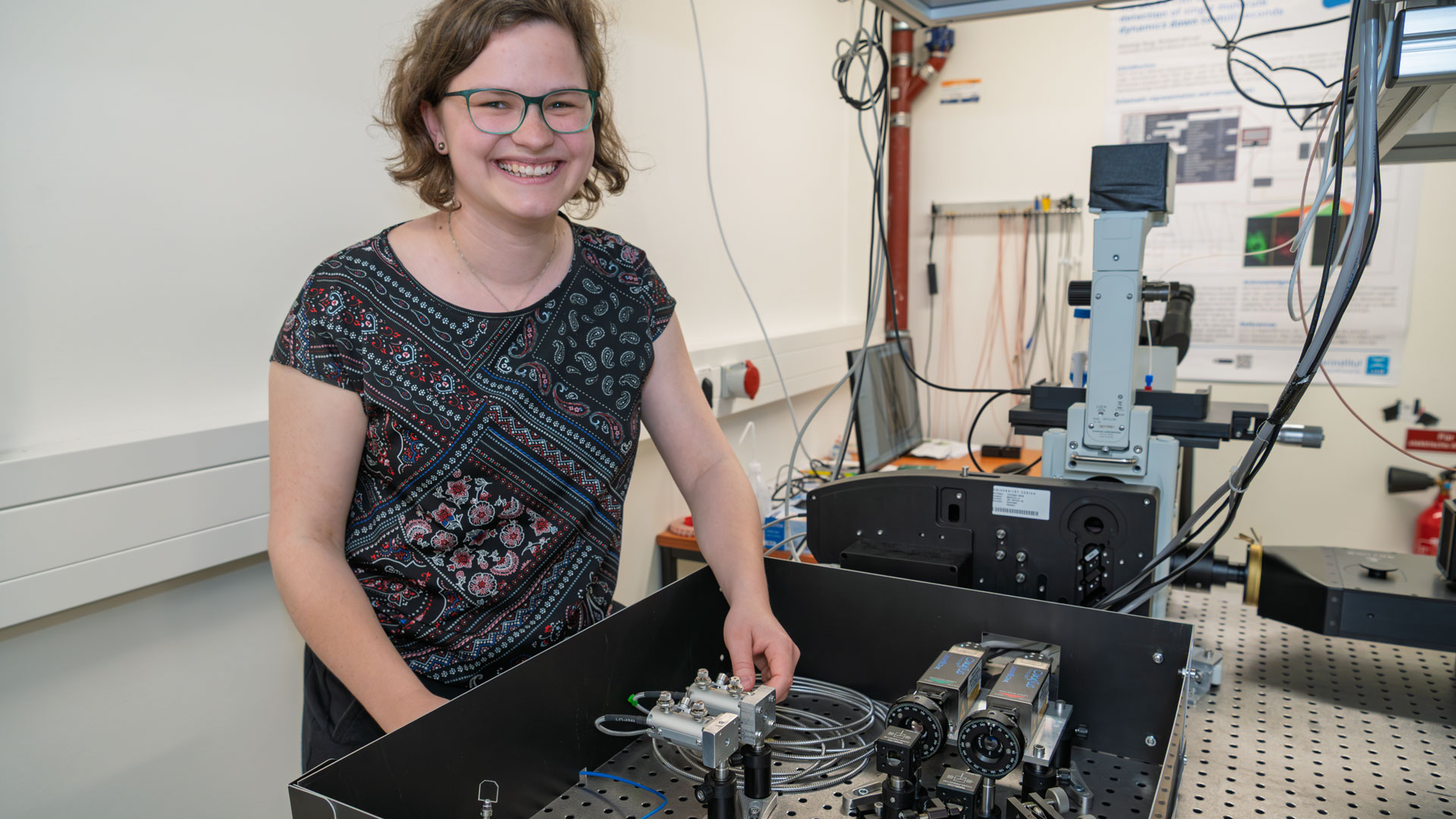
Ms Meitzner, you studied Physical Engineering at the HSMW and are now staying here to do your PhD. How did that come about?
Josephine Meitzner: Even whilst I was an undergraduate, I realised that I was particularly fascinated by Biophotonics research – in other words, the question of how light can be used to make processes visible that would otherwise be impossible to observe. This combination of modern measurement technology and biological questions has never ceased to fascinate me. During my Bachelor’s and Master’s theses, I worked in the Biophotonics Research Group at the Laser Institute, looking, amongst other things, at the fluorescence spectroscopy of DNA and, most recently, at laser control for fluorescence microscopes. The fact that I can now build directly on this in my PhD is a real stroke of luck.
At first glance, the title of your PhD thesis sounds rather technical: ‘Focus on DNAzymes – Development of single-molecule FRET measurements in a microfluidic system’. Can you explain what it’s all about?
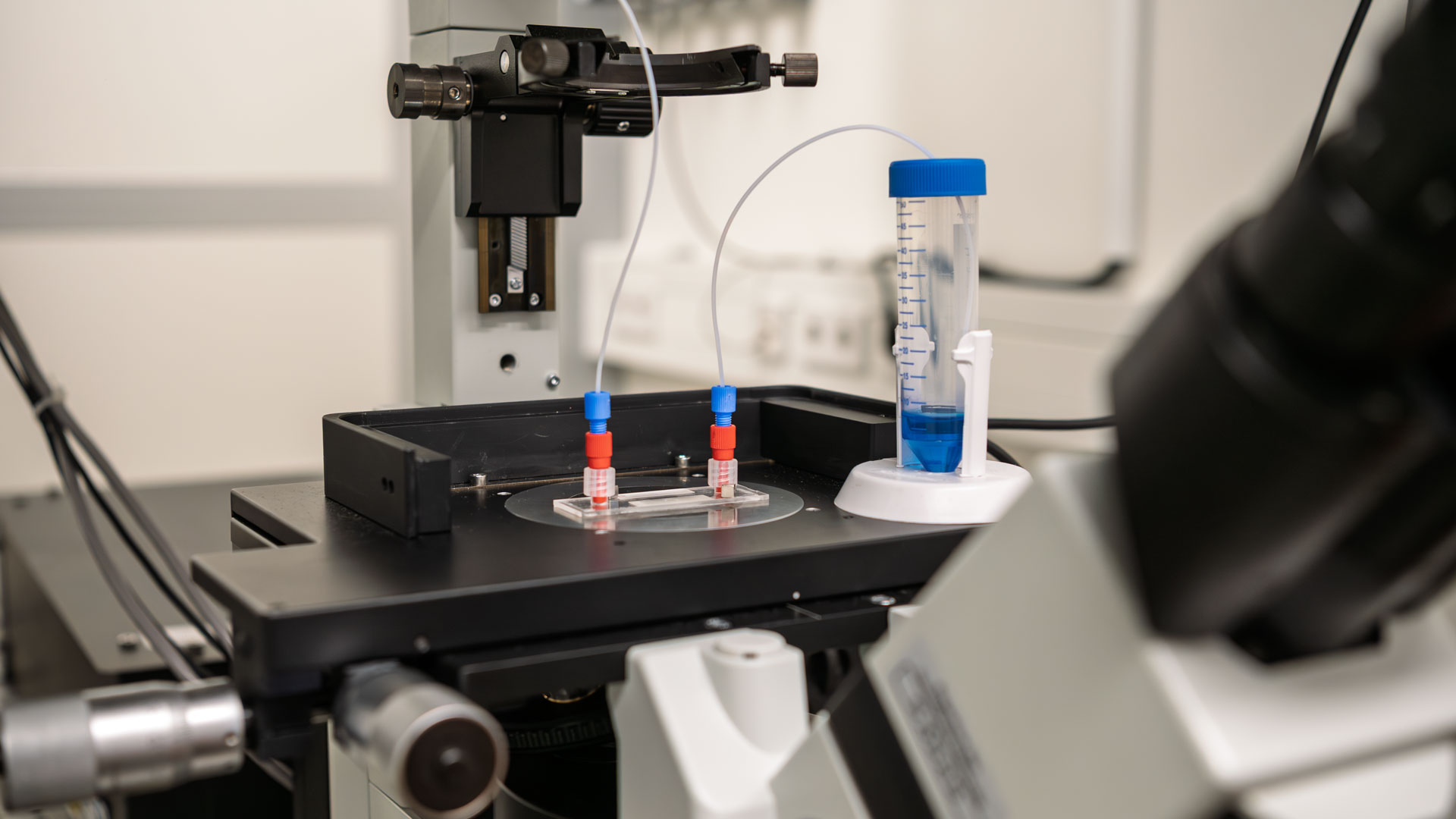
Meitzner: (laughs) Yes, it does sound like a lot of technical jargon at first. DNAzymes are highly precise, catalytically active DNA sequences. They’re thought to have great potential: new approaches in tumour therapy, for infectious and hereditary diseases, or in biosensor technology. The only problem is that we still don’t fully understand exactly how these molecules behave, how they fold, and how their function is influenced under different conditions. That’s exactly where I come in: I’m investigating the structure, dynamics and function of DNAzyme-RNA complexes using single-molecule FRET microscopy and microfluidic approaches. FRET stands for Förster resonance energy transfer and describes a physical process in which energy is transferred from one fluorescent dye to another. To achieve this, the molecules under investigation are specifically labelled with fluorescent dyes. By analysing this energy transfer, we can gain insights into the distances between and interactions of individual molecules at the nanometre scale. These findings could pave the way for important future applications in diagnostics and Biotechnology. Using microfluidics – that is, the control of minute volumes of liquid in the range of one thousandth of a millilitre – I automate my sample preparation to work even more efficiently.
What particularly appeals to you about this research – and who is supporting you in it?
Meitzner: What excites me most is that I can now drive my own research project forward and apply precisely the knowledge I’ve acquired over the past few years. My collaborative PhD is supervised by Professor Ingrid Span at the Friedrich-Alexander University of Erlangen-Nuremberg and by Professor Richard Börner here at the HSMW. In the field of microfluidics, I’m also planning to specialise further in collaboration with various Fraunhofer Institutes. I’ve already made my first international contacts: last September 2025, I attended the iCOLE retreat in Austria with our group, where we exchanged ideas with collaboration partners from Poznań on FRET-based modelling of RNA 3D structures. In September, I’ll be travelling to Kaiserslautern for the German Women Physicists’ Conference, where I’ll be presenting the results of my Master’s thesis on the development of a kHz laser control system. This is essential for taking precise measurements on my samples.
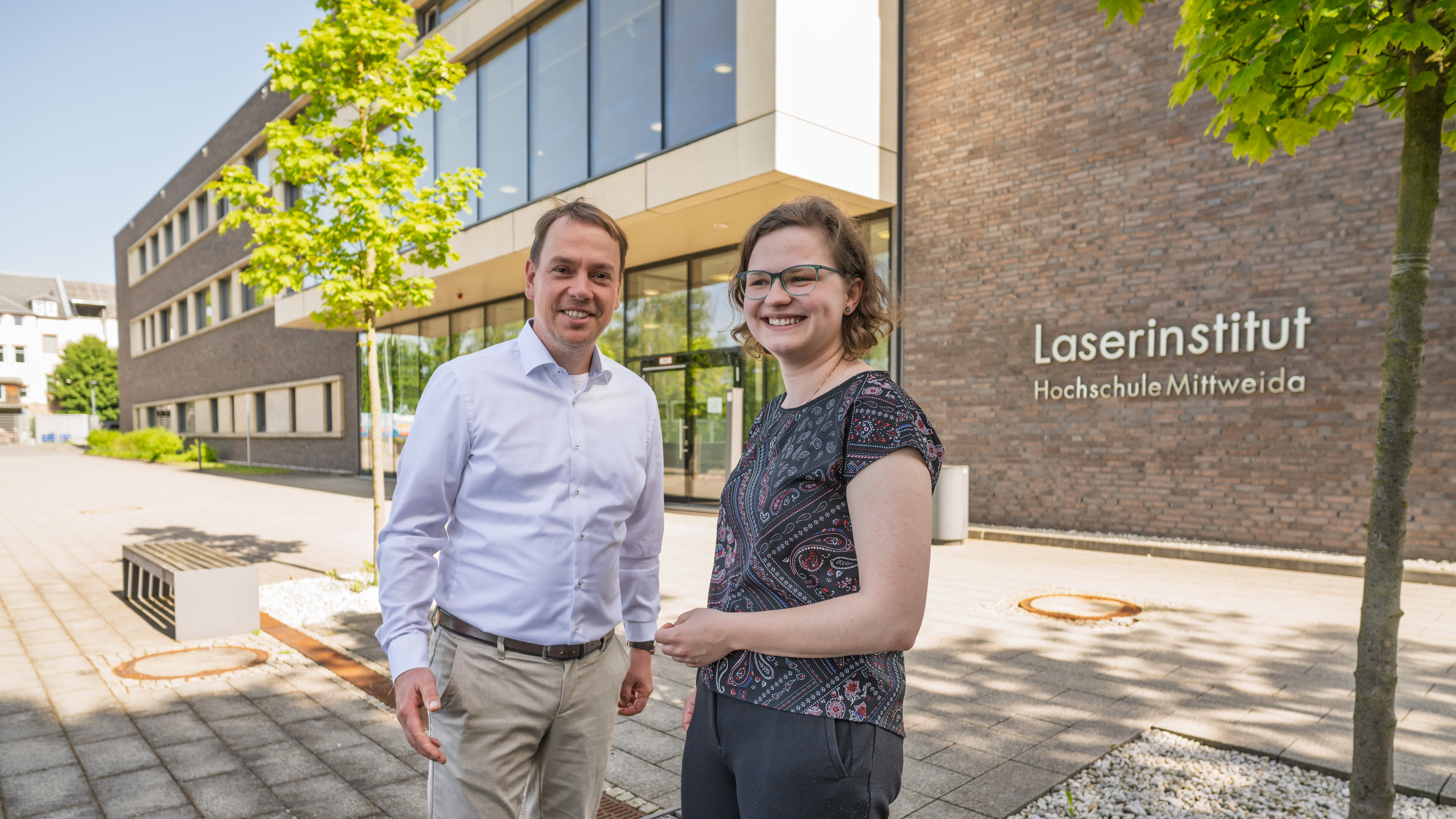
Why did you specifically want to stay at Mittweida University of Applied Sciences for your PhD?
Meitzner: I really value the collaboration within my team and feel well supported, both professionally and personally, within the Biophotonics research group. There’s also a practical advantage: I’m already familiar with many of the pieces of equipment I’ll be working with. This means I won’t need a long induction period and can get started straight away. So for me, it was an easy decision.
Finally: The scholarship is specifically aimed at women in academia. What does that mean to you?
Meitzner: For me, the scholarship is not just financial support, but also recognition of my achievements to date and a real incentive to continue on my path. Through my PhD, I want not only to produce high-quality academic work, but also to help raise the profile of women in STEM – and to encourage other young women to follow this path too.
The path to a PhD at the HSMW
Josephine’s path to a PhD is typical of the HSMW: here, even Bachelor’s students can get involved in research, find a topic that fascinates them, gain their first experience of academic work through their Bachelor’s project, and then consolidate and deepen this knowledge during their Master’s degree.
Like all Universities of Applied Sciences in Saxony, the HSMW does not (yet) have its own right to award doctorates, but here too, Josephine’s collaborative PhD programme with a university is a typical route and currently the most commonly chosen one.
In addition, the HSMW also collaborates with the Doctoral Centre at the Ernst Abbe University of Applied Sciences in Jena, Thuringia, and HSMW professors who collaborate with universities can conduct doctoral programmes there independently. Support from the HSMW is always guaranteed in this process.