This page was translated automatically using artificial intelligence (DeepL). The German version is binding. More information about automatic translation
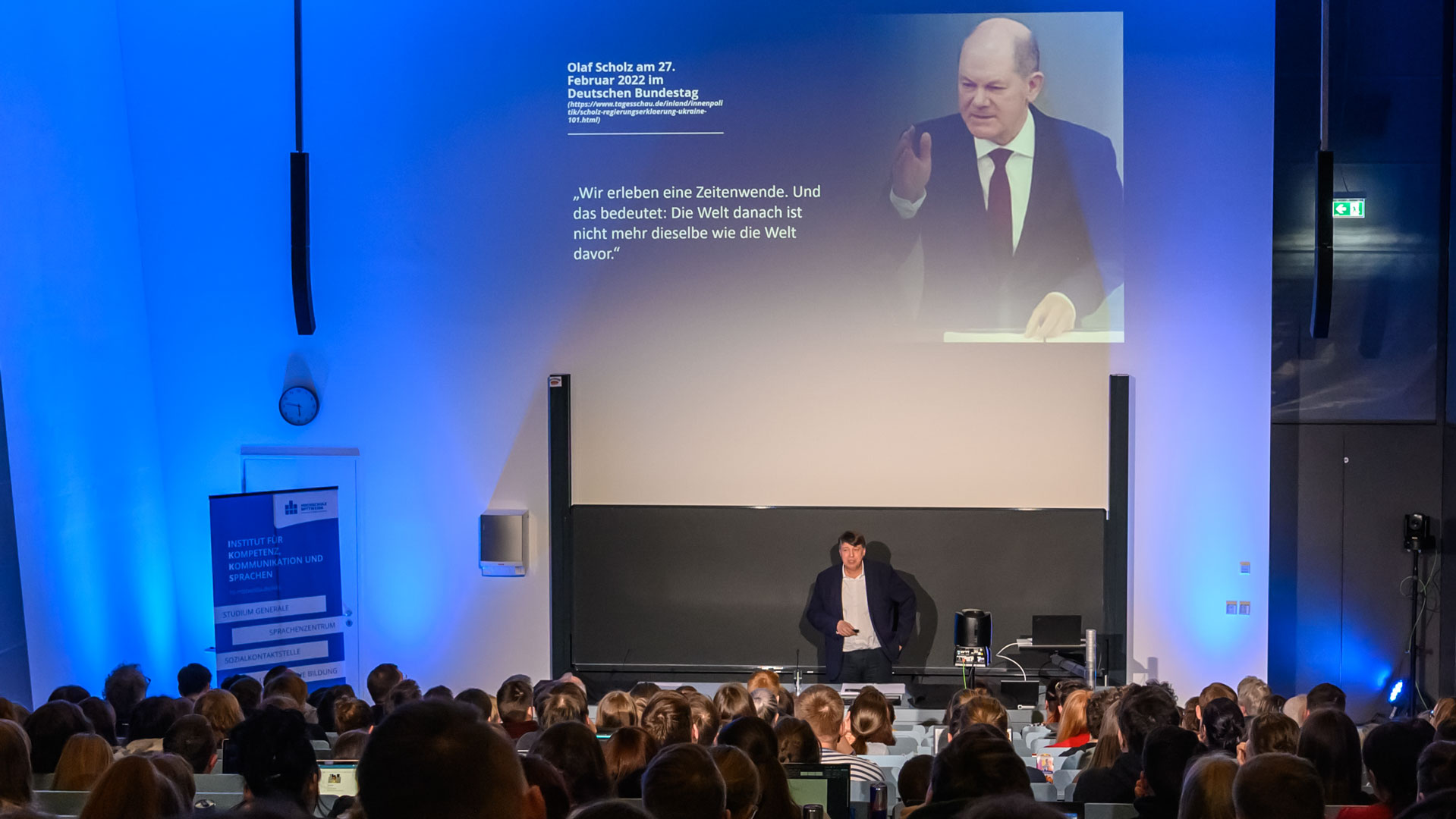
Chancellor Scholz had declared a “turning point” immediately after Russia’s invasion of Ukraine on 24 February 2022. Initially, this referred to foreign and security policy. But many associate much more with the term, because in fact: many certainties no longer hold true, and much has been thrown into disarray.
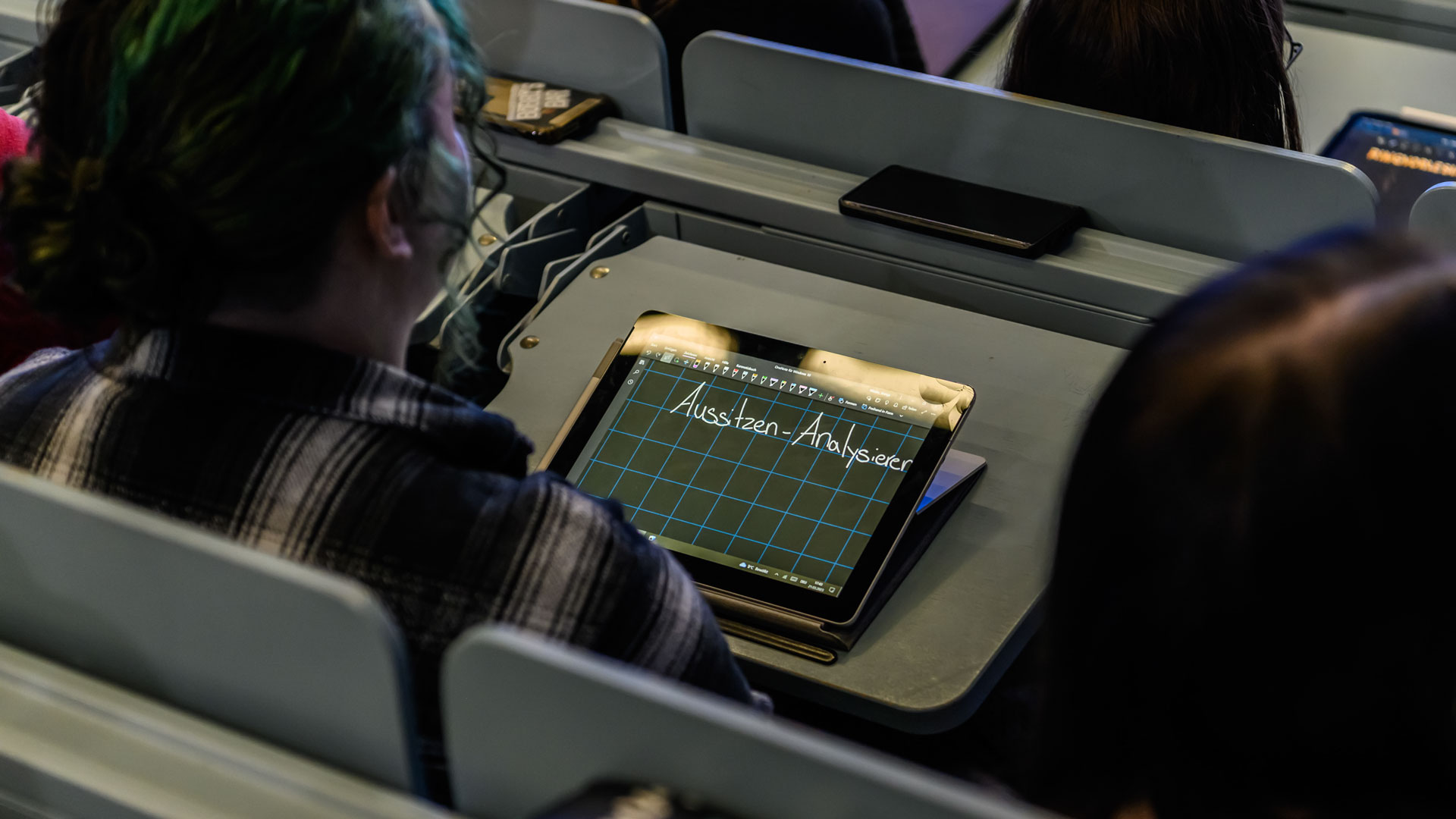
Mittweida University of Applied Sciences has titled this year’s public lecture series ‘Times are changing! Wait it out – Analyse – Take action’. On seven Tuesdays during the summer semester, experts from various disciplines will address the challenges posed by the developments in politics, society and science that are being experienced as a period of upheaval.
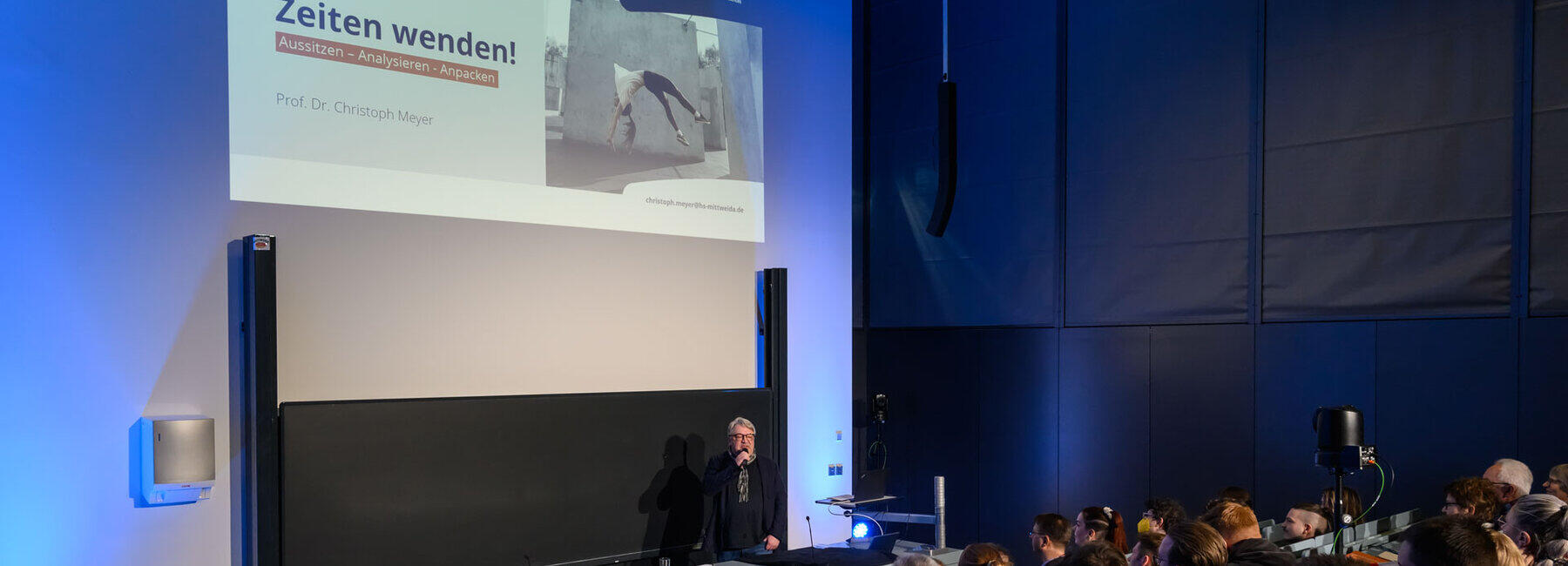
To kick off the lecture series and serve as an introduction, Professor Christoph Meyer therefore began by asking, on 21 March: “A turning point – are we serious about this?” and “What is this actually all about?”. Can we simply turn the tide of history and must we therefore shape it, or do the times simply turn, leaving us merely as powerless spectators? Even linguistically, this is a phenomenon for which there is no adequate English translation.
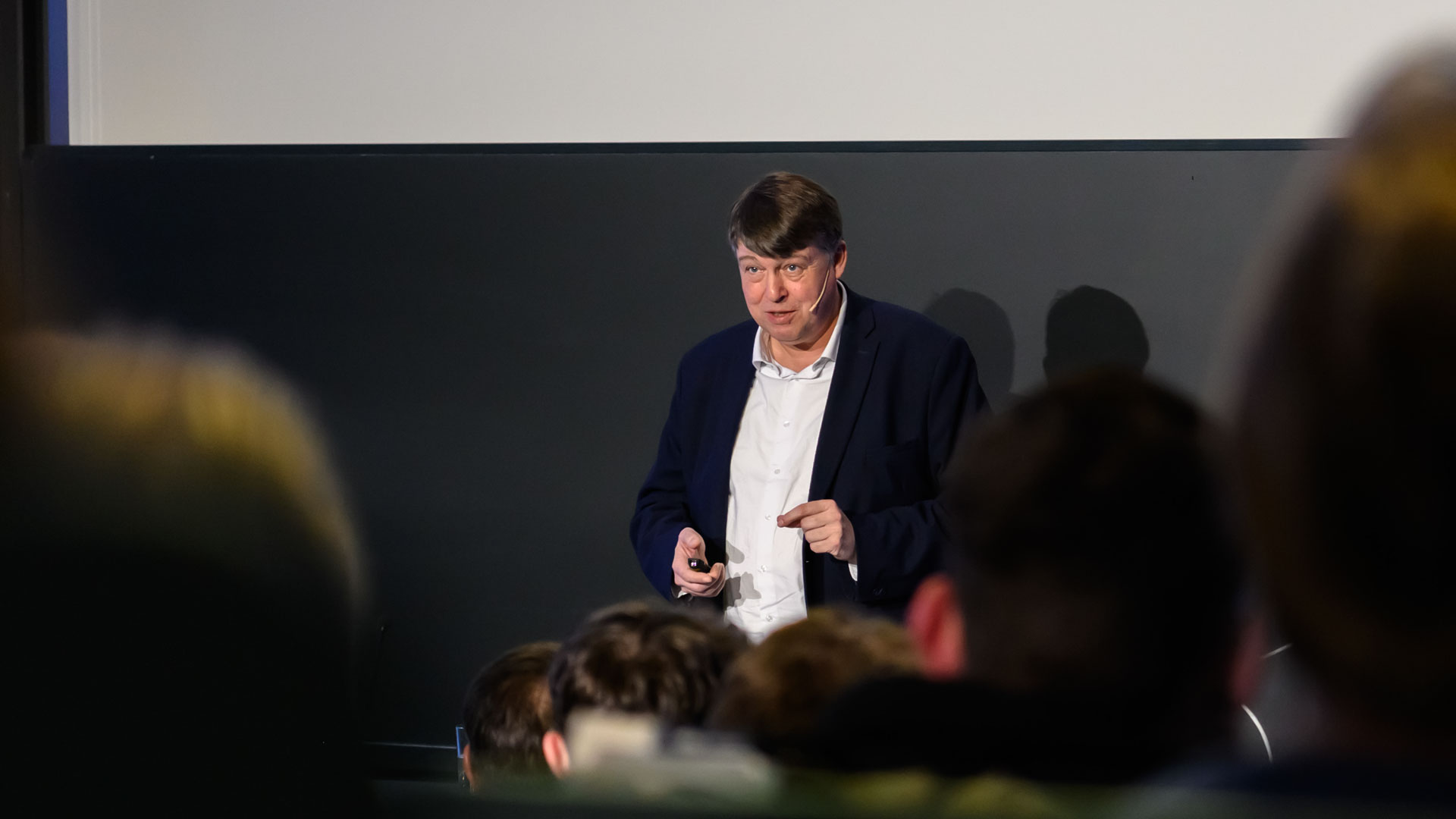
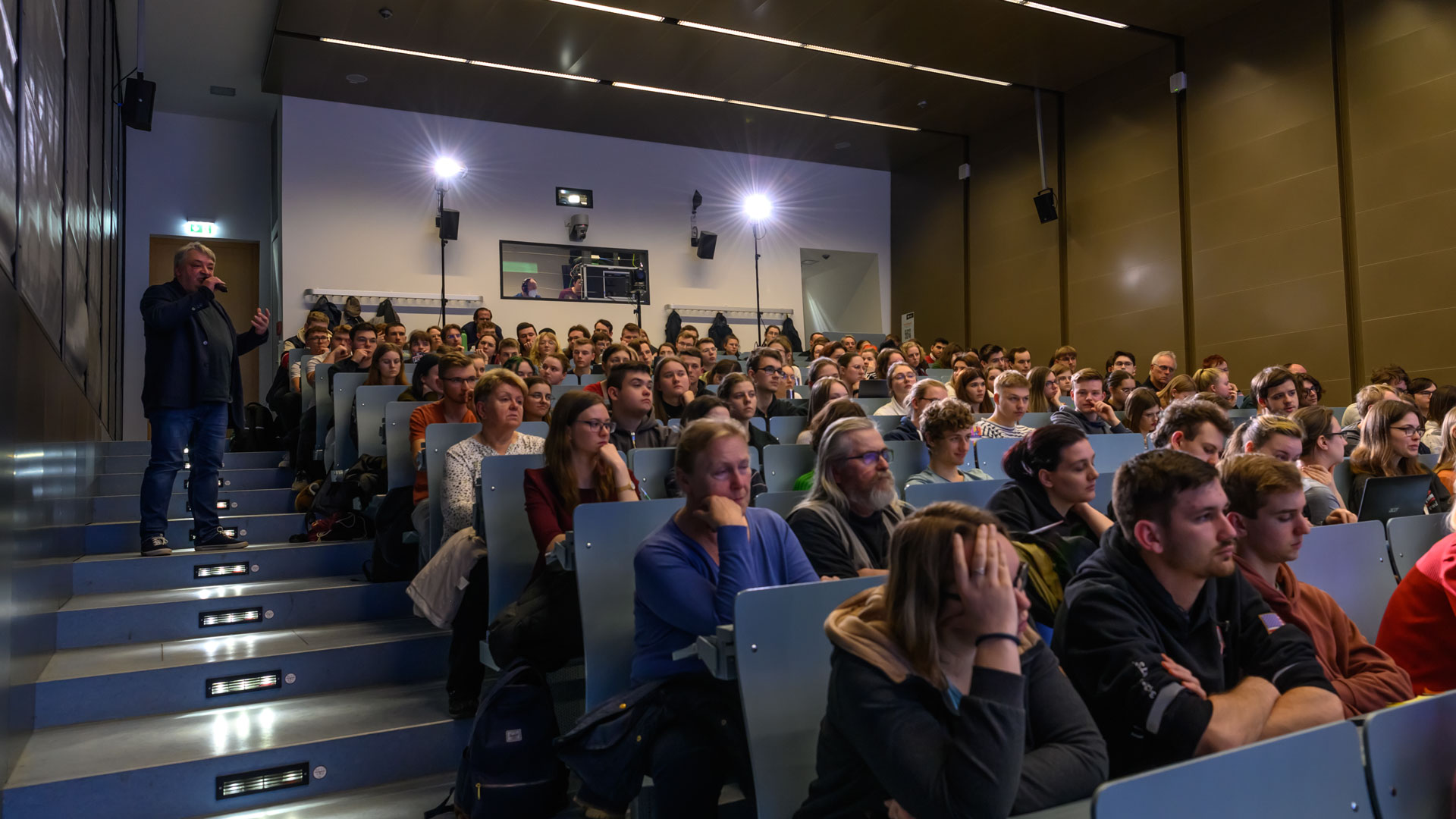
Olaf Scholz also took the floor; his assessment of a world divided into ‘before’ and ‘after’ did not, at that stage, yet form part of a comprehensive political strategy. According to Meyer, one year on from Russia’s invasion of Ukraine, policy had already come a long way, but it was now crucial to tackle matters head-on in all areas. Those attending the lecture had their say, sharing their thoughts on turning points and upheavals in history: the Enlightenment, the Reformation, women’s suffrage, 9/11…
Meyer’s plea to the worlds of politics, academia and society was, therefore, to turn the tide and shape the future, so as to address the major issues of war and displacement, the climate crisis and capitalism, anti-democratic tendencies, populism, pandemics and artificial intelligence in an appropriate manner. In doing so, he provided the key themes for the experts from various disciplines who will be delivering the next six lectures.
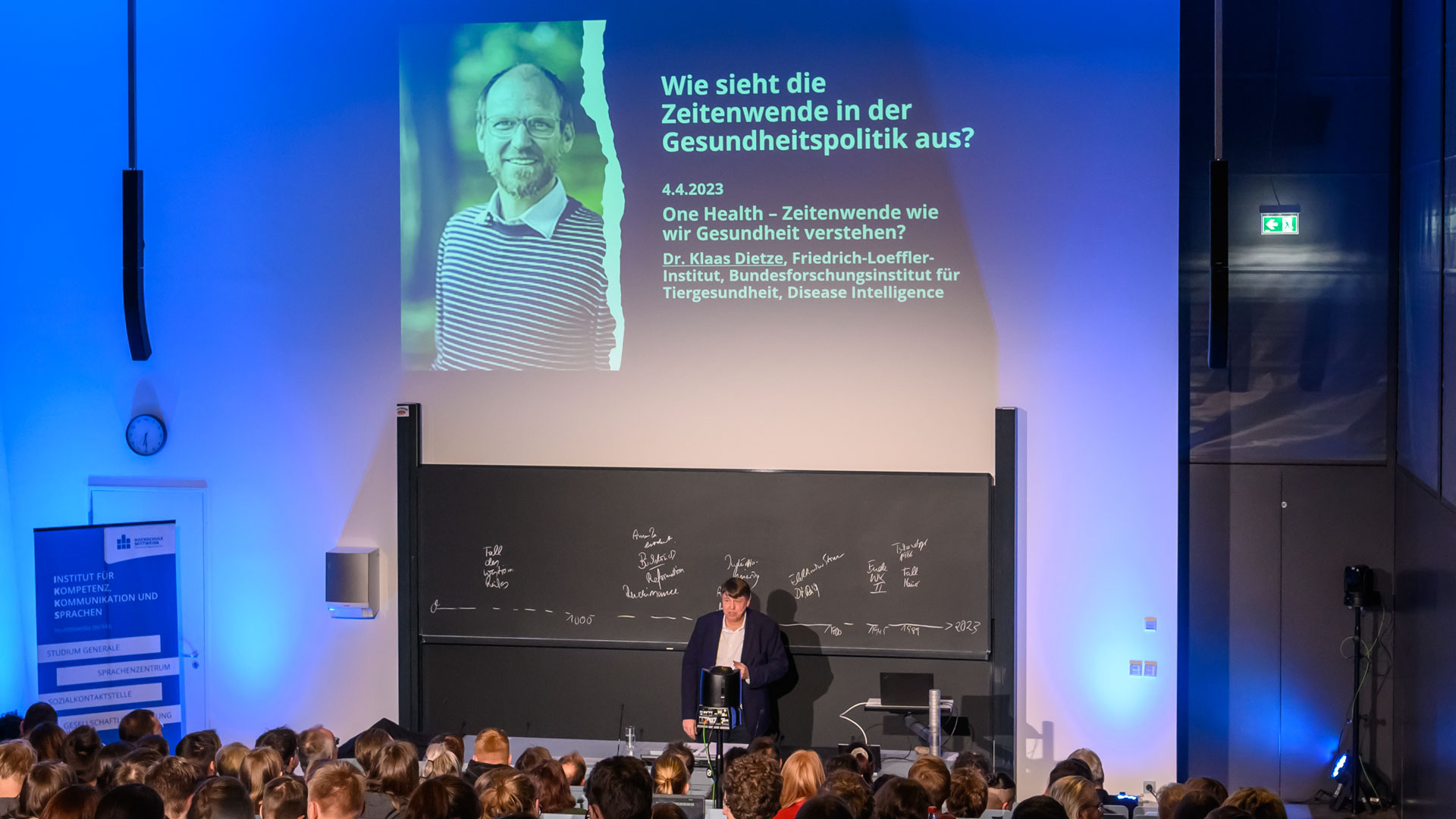
Next lecture: ‘One Health – A turning point in our understanding of health?’
The speaker for the second lecture on Tuesday, 4 April, is Dr Klaas Dietze, a research fellow at the Friedrich Loeffler Institute for Animal Health in Greifswald. He will examine – not only in light of the current coronavirus pandemic – diseases that are transmitted between animals and humans, and describe the ‘One Health’ concept as a groundbreaking approach: understanding the health of humans, animals and the environment within a global context.
The lecture will take place on Tuesday, 4 April 2023, from 5.30 pm to 7.00 pm at the Centre for Media and Social Work at Mittweida University of Applied Sciences, Bahnhofstraße 15. Members of the public are also warmly invited to attend and gain some inspiration.
Full details of the lectures and speakers in the public lecture series: www.hs-mittweida.de/ringvorlesung