This page was translated automatically using artificial intelligence (DeepL). The German version is binding. More information about automatic translation
On 9 and 10 July, the Institute of Food and Bioprocess Engineering at TU Dresden hosted the 99€ Bioreactor Competition for the 11th time. A total of 13 teams from across Germany took up this challenge.
This year’s task was to produce as much single-cell protein as possible within 24 hours using the yeast Cyberlindnera jadinii. At the same time, the cost of building the bioreactor was not to exceed a maximum budget of 99€.
The single-cell proteins produced are derived exclusively from single-cell organisms and are used, for example, in the food industry and animal feed. In this way, conventional protein sources in animal feed can be functionally replaced [1]. However, in addition to the production of single-cell protein, the yeast used has further applications in the pharmaceutical and food industries. It is used, for instance, to synthesise valuable compounds such as food additives, dietary supplements, organic acids and other fine chemicals. This makes it an attractive production organism in modern Biotechnology [2].
A €99 budget calls for creativity
This year, the Mittweida University of Applied Sciences team was represented by Bachelor’s students Johanna Sachse and Luis Herpich, as well as PhD students Anna Nauruschat, Jenny L. Woide and Vanessa Bergler, under the supervision of René Kretschmer from the Department of Biotechnology and Chemistry.
The team name “TYFKACU” is an abbreviation for: The Yeast Formerly Known as Candida utilis and refers to the recent name change of the microorganism used.
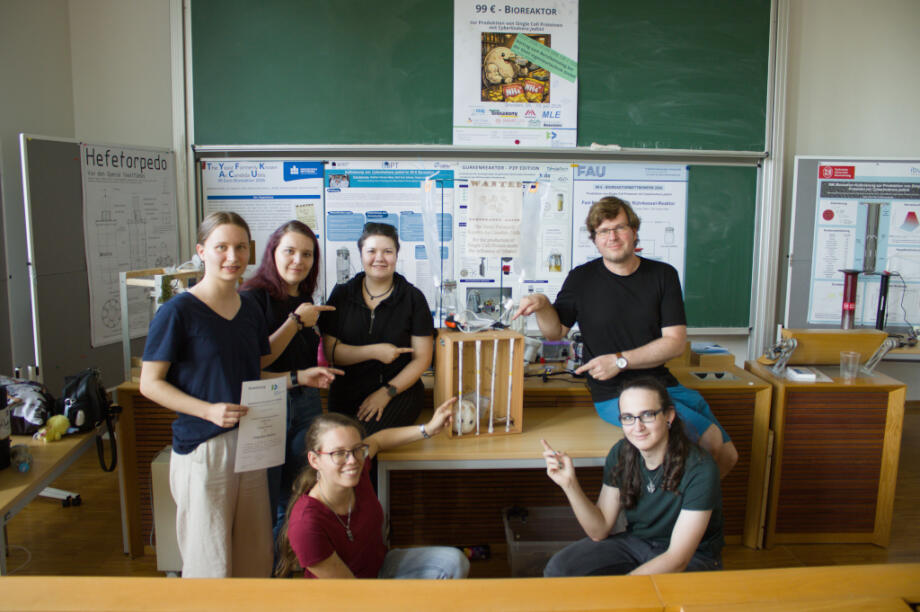
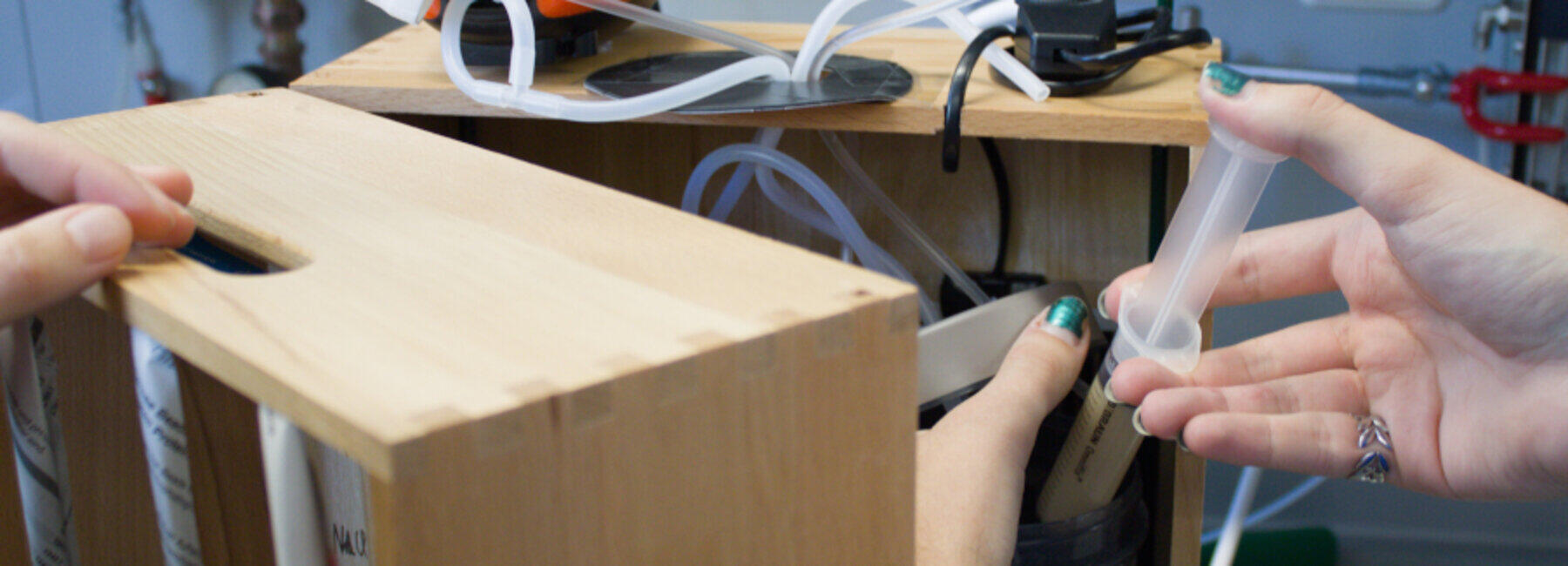
The reactor’s design is simple, requiring no electronic controls or measuring probes. The yeast’s oxygen requirements were met by using the AirLift reactor model, which also ensures thorough mixing of the medium [3]. To this end, trickle stones and an aquarium pump from the aquatics sector were used. Plant watering bags were used for the continuous addition of the additional ethanol required. Sulphuric acid and ammonium hydroxide were also added simultaneously via this method to correct the pH and provide nitrogen [4]. To keep the temperature stable during cultivation, a heating mat was used, as the yeast thrives at a temperature of 35 °C [5]. In addition, two wooden boxes were joined with a hinge to form an enclosed space and reduce heat loss.
Thanks to this creative design, the reactor remained a ‘black box’ right up until it was switched off, much to the curiosity of many rival teams. The team was all the more delighted that, following 24 hours of cultivation in the enclosed space, the result was satisfactory.

References:
[1] Vieira-Lara, Marcel A et al. “Quantitative physiology and biomass composition of Cyberlindnera jadinii in ethanol-grown cultures.” Biotechnology for biofuels and bioproducts vol. 17, no. 1, p. 142. 4 December 2024, doi:10.1186/s13068-024-02585-3
[2] Sousa-Silva, M.; Vieira, D.; Soares, P.; Casal, M.; Soares-Silva, I. ‘Expanding the Knowledge on the Versatile Yeast Cyberlindnera jadinii.’ J. Fungi 2021, 7, 36. doi.org/10.3390/jof7010036
[3] Erickson, Larry E. ‘Airlift Bioreactors, by M.Y. Chisti. First Edition, 1989, 345 pages. Elsevier Applied Science, London, England and New York, USA $74.00 (U.S.)’. The Canadian Journal of Chemical Engineering, Vol. 68, No. 2, April 1990, pp. 349–349. DOI.org (Crossref), doi.org/10.1002/cjce.5450680228.
[4] Ding et al., “Ammonia Nitrogen Recovery from Biogas Slurry by SCP Production Using Candida Utilis”.
[5] Madeira-Lopes, A. ‘The Influence of Temperature on the Relations between Thermal Death, Growth and Yield in Candida utilis’. Journal of Basic Microbiology, Vol. 25, No. 1, January 1985, pp. 39–42. DOI.org (Crossref)https://doi.org/10.1002/jobm.3620250112