This page was translated automatically using artificial intelligence (DeepL). The German version is binding. More information about automatic translation
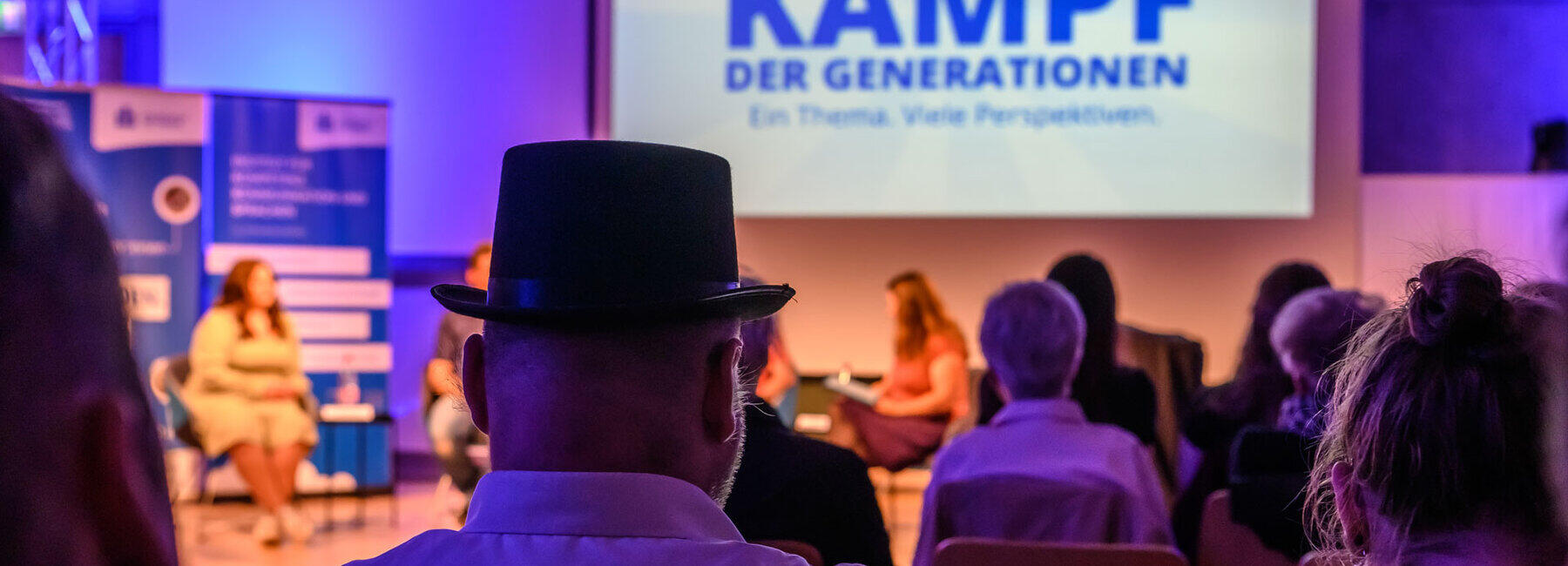
The Controversial Dialogue (Dialog Kontrovers) at Mittweida University of Applied Sciences, entitled ‘The Battle of the Generations’, concludes on Tuesday 11 June with a cross-generational discussion on the question ‘The Tagesschau Generation vs. the TikTok Generation: Left speechless despite media diversity?’.
Whilst many teenagers and young adults no longer watch linear television, in 2022 people aged over 65 were still spending just under six hours a day in front of the telly. At the same time, trust in the Tagesschau as the “go-to source for news and information” is waning. But are videos shared on social media – whose authorship and origin are often unclear – viable alternatives for obtaining “independent” information?
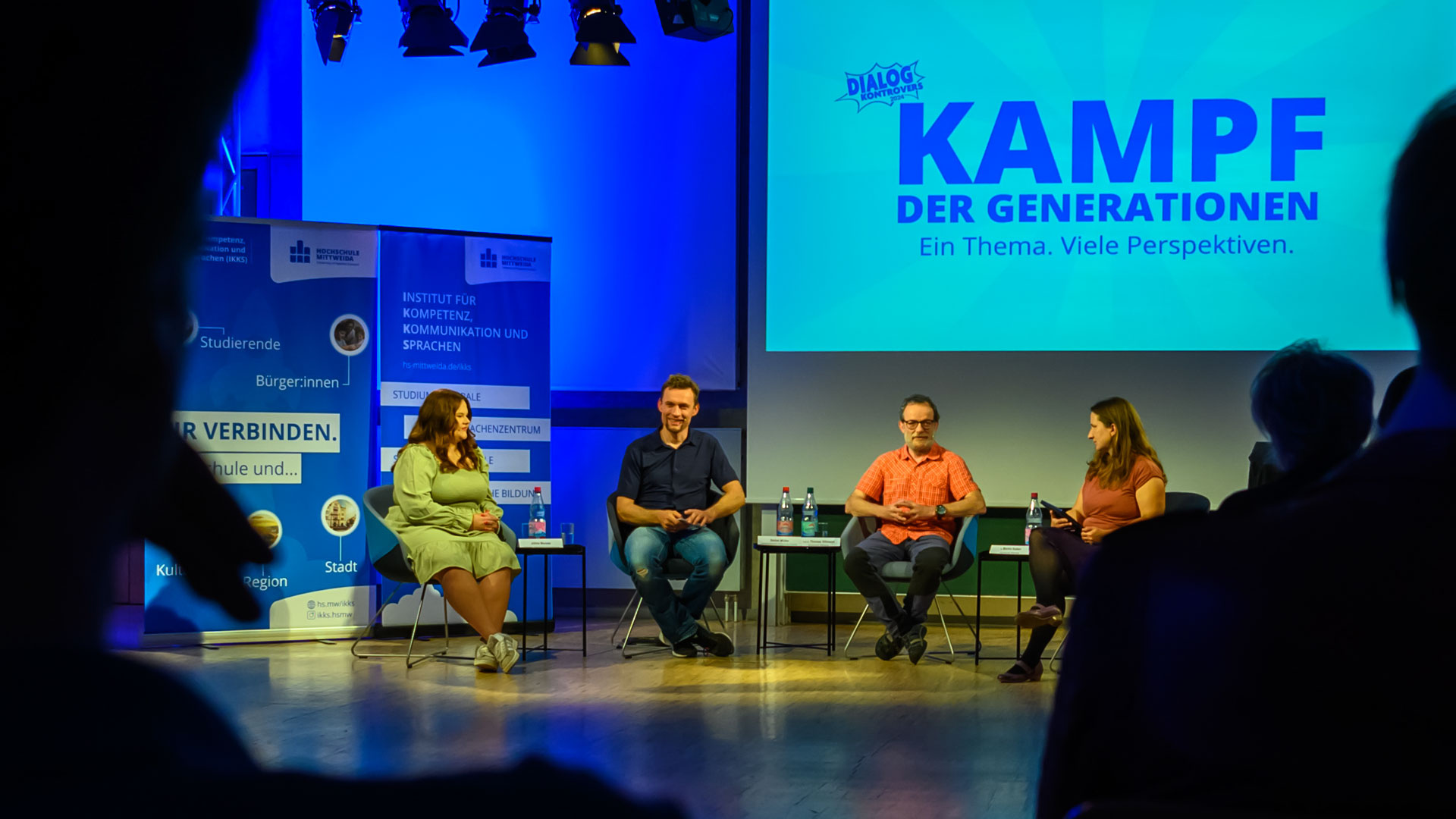
On Tuesday, 11 June, at 5.30 pm, in Studio B at Mittweida University of Applied Sciences, Leipzig-based journalist Ine Dippmann, Thomas Rathgeb, Head of the ‘Media Literacy, Youth Protection and Research’ department at the Baden-Württemberg State Media Authority (LFK), and Laura Sieg, a student on the Global Communication in Business and Culture programme at Mittweida University of Applied Sciences, will discuss this topic in Studio B at Mittweida University of Applied Sciences.
Professor Gunter Süß, a media studies scholar at Mittweida University of Applied Sciences, will chair the event, to which interested members of the public are also warmly invited.
Review: ‘Generations in the AI Debate: Opportunities vs. Concerns’
The fifth and penultimate Controversial Dialogue (Dialog Kontrovers) of this term, ‘Generations in the AI Debate: Opportunities vs. Concerns’, held on 28 May, also featured participants from across the generations. The discussion, moderated by Dr Marika Kaden, brought together different perspectives on AI: the school pupil, the educationalist and the researcher.
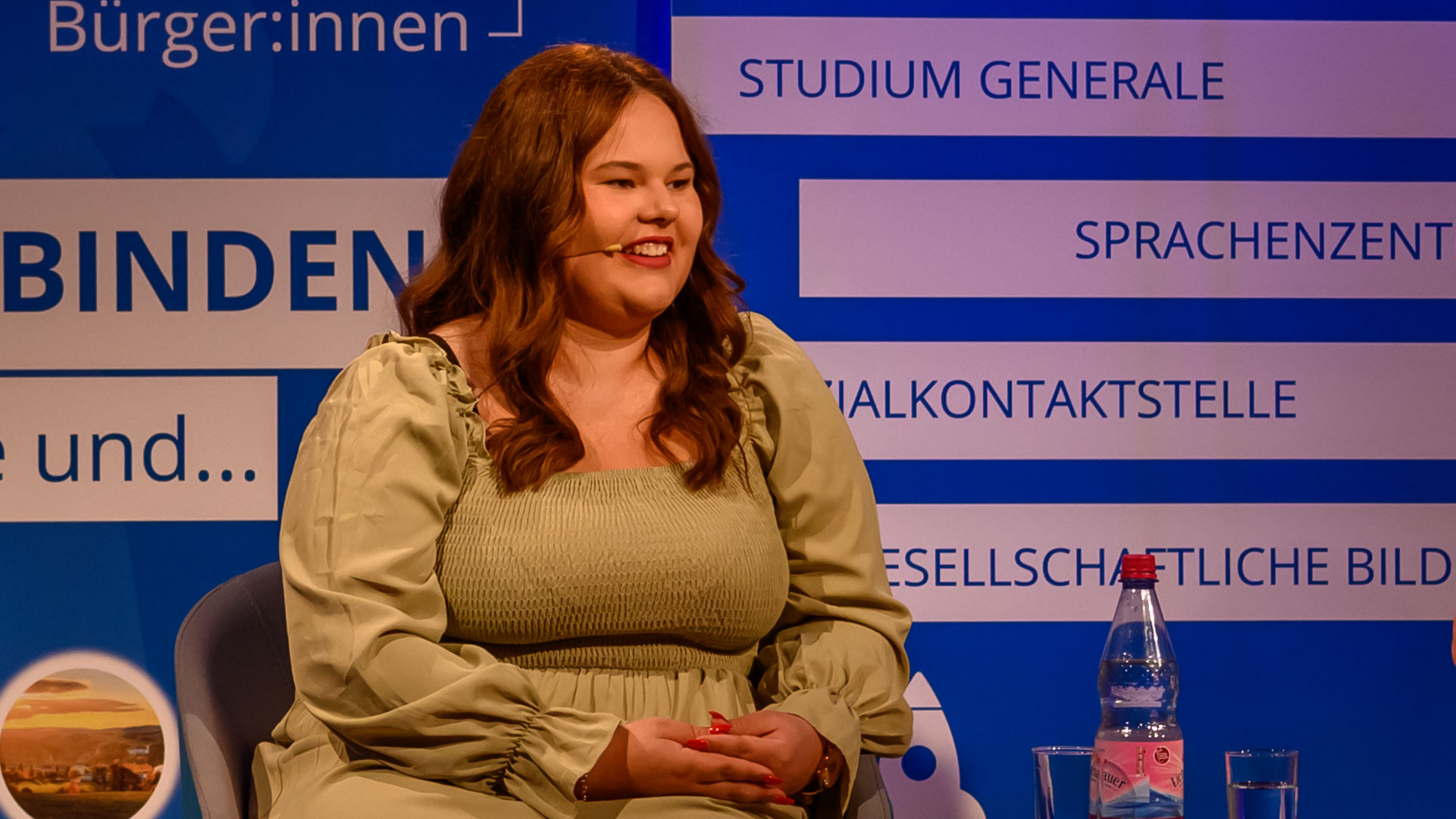
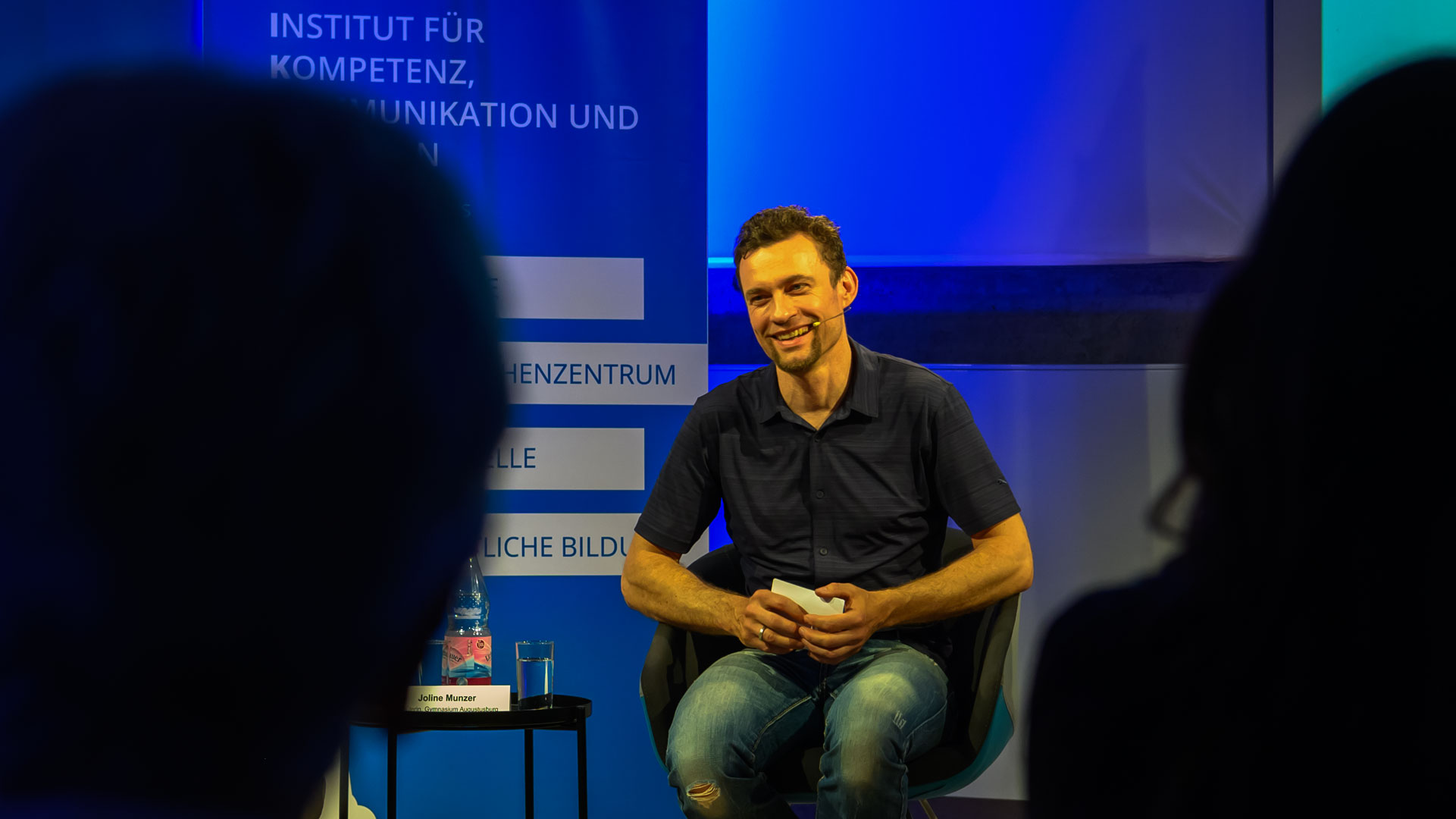
Joline Munzer, a Year 11 pupil at the Regenbogen-Gymnasium in Augustusburg, noted that not everyone in her generation uses AI to the same extent or in the same depth. However, taking the example of how she and her classmates use AI in their everyday school life, it is becoming increasingly clear to her that the current school curriculum is only partially up to date. It is important to have confidence in the new technology, but to maintain a critical perspective on AI and to learn to question it.
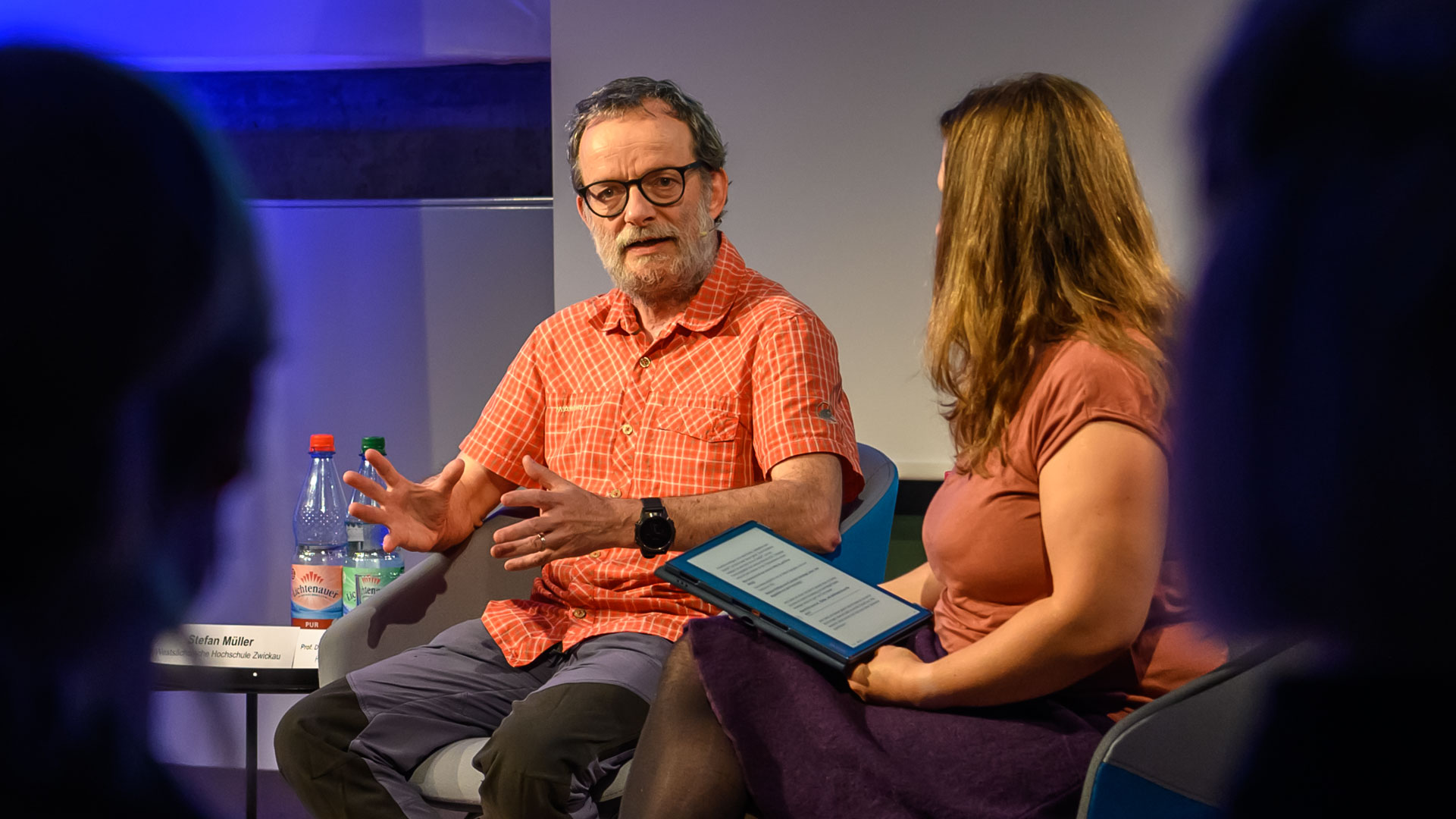
Stefan Müller, a lecturer in higher education pedagogy at West Saxon University of Applied Sciences in Zwickau, is enthusiastic about the possibilities of natural dialogue with a machine: “I’ve never learnt to programme, and […] I’ve never had to […] the computer now understands my language; I don’t have to learn computer language.” At the same time, Müller predicts that data protection will become less relevant, as “AI can only assist us effectively and learn if it has as much information about us as possible”.
The third participant in the discussion was Dr Thomas Villmann, Professor of Technomathematics and Computational Intelligence at HSMW. Among other things, Villmann advises the Free State of Saxony on its AI strategy. During the ‘Controversial Dialogue (Dialog Kontrovers)’, he demonstrated the significance AI already has in our everyday lives and where – to some people’s surprise – it has already become indispensable, for example in modern agriculture and medical diagnostics. On a personal note, he also enjoys having a book read aloud to him by his favourite voice. In any case, Villmann is not afraid of AI; however, he believes it will be a long time before it becomes superior to humans.
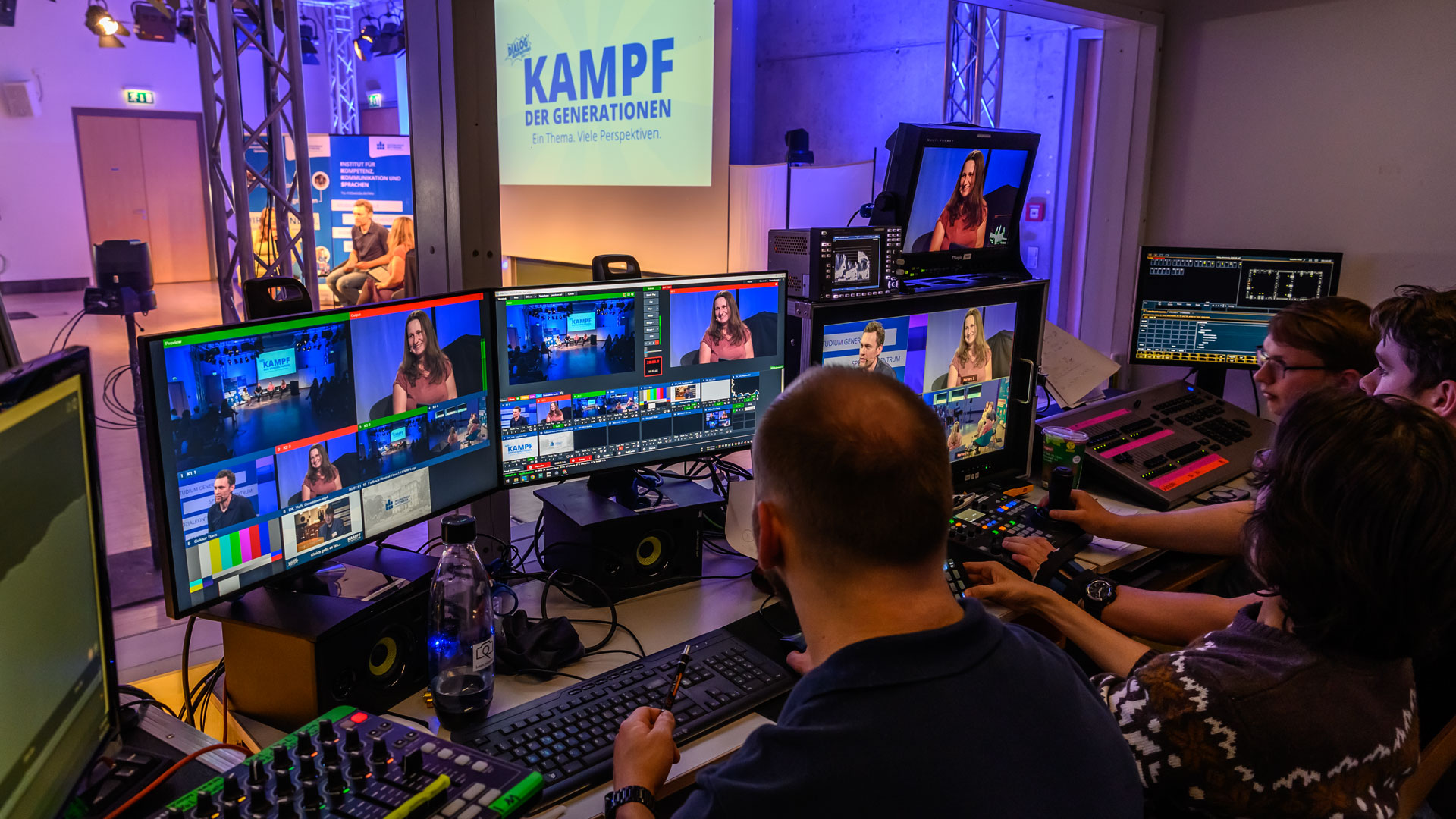
All three agreed that AI has already changed the ways in which all generations learn, live and work, and will continue to do so. We are already witnessing the automation of routine tasks, the widespread use of voice assistants, AI translation, research tools and text generation. Stefan Müller highlighted the role of universities in building on this, as “studying means thinking and engaging in dialogue, debating, questioning things and thinking things through”. Lecturers must prepare the younger generation for “an agile, chaotic world”.
In conclusion: all generations can benefit from AI in different ways: children and young people benefit particularly in the field of education; working people benefit through increased productivity and efficiency in the workplace; and older people benefit through improved healthcare and assistive systems. Ultimately, the benefits depend on individual needs and trust in AI. However, the skills and prerequisites required to use AI are not innate but must be learnt. It is therefore important to equip even the youngest members of society with the necessary skills, in particular the ability to scrutinise and verify AI-generated content, as well as an awareness of the ethical implications of using AI.