This page was translated automatically using artificial intelligence (DeepL). The German version is binding. More information about automatic translation
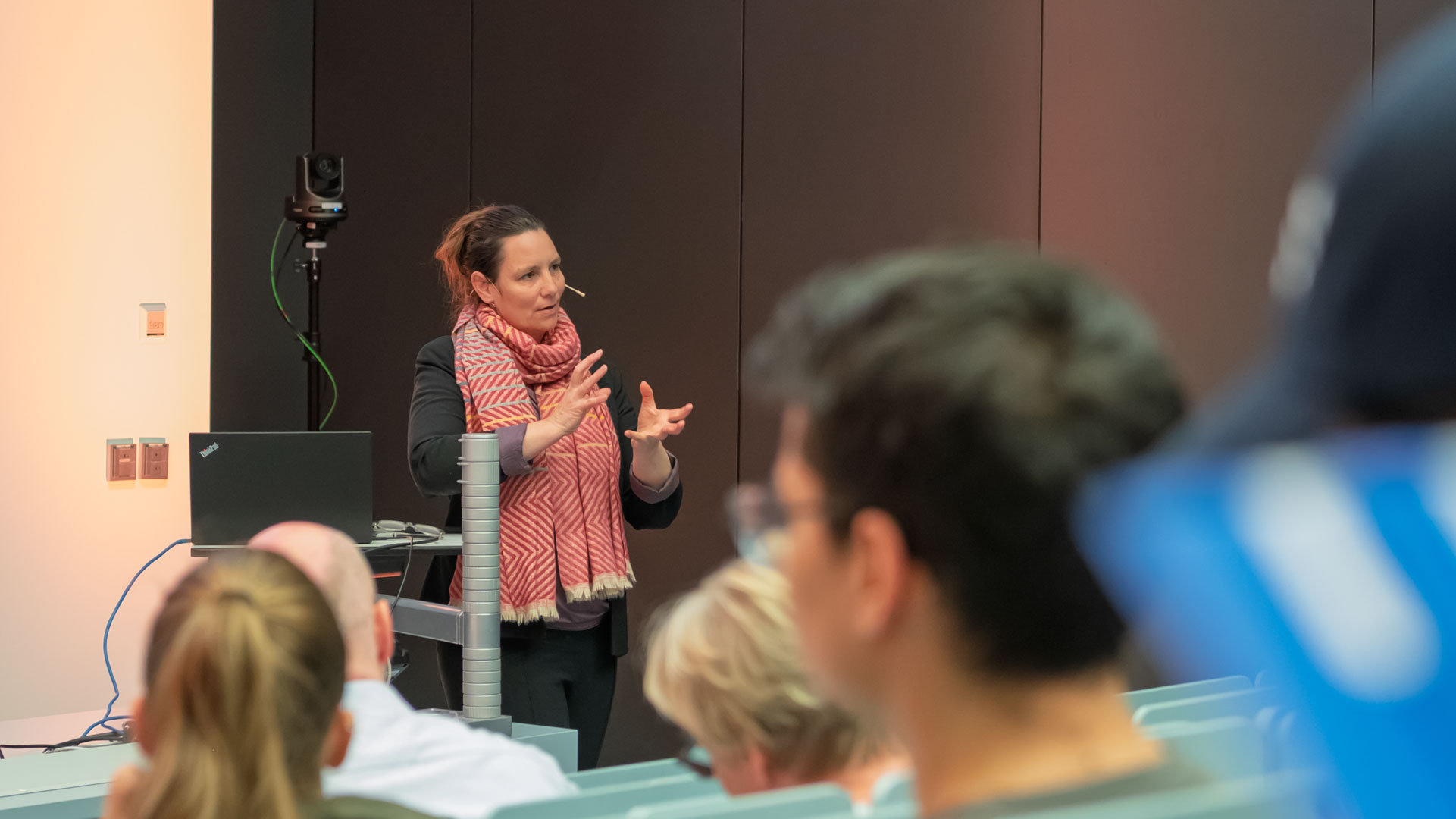
An examination of ‘being normal’ from a psychological and neuroscientific perspective, presented under the title ‘The opposite of mental illness is health, not normality’, once again drew a large audience from the university and the university town to the lecture theatre in the Ludwig-Hilmer-Bau on 30 April. Dr Nadine Bernhardt provided an insight into the biological foundations of mental illness and explained what is considered ‘normal’ – and why this term needs to be critically examined when applied to the human brain.
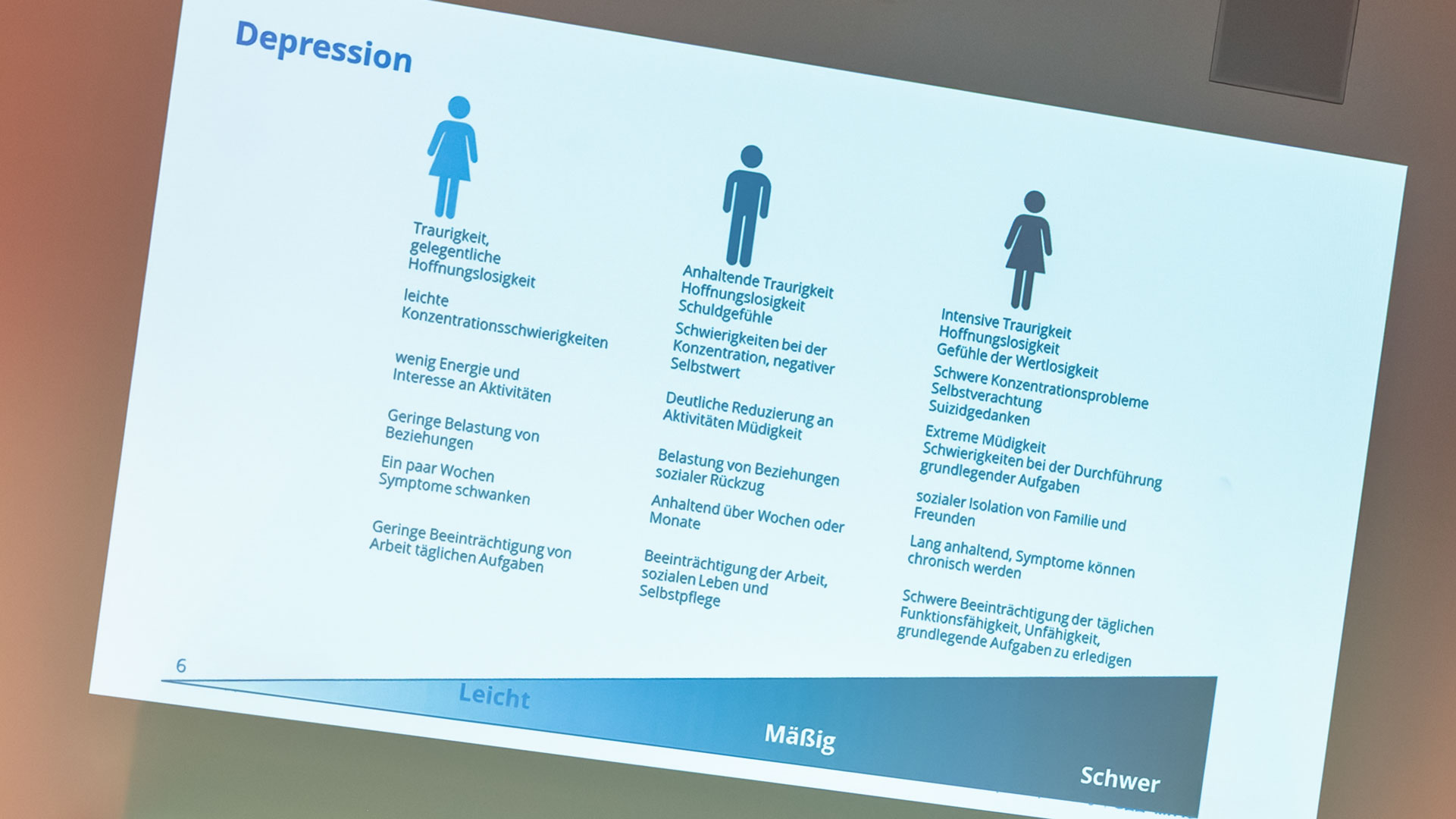
Her lecture focused on neurocognitive disorders such as schizophrenia, depression and anxiety disorders. Bernhardt explained the characteristics and prevalence of mental health conditions such as depression, schizophrenia and anxiety disorders, and provided insights into diagnosis using international classification systems such as the DSM. She emphasised that modern research no longer relies on a single explanatory model, but instead focuses on the interplay of biological, psychological and social factors. Genetic predispositions, prenatal and postnatal influences, and the lifelong development of the brain were key areas of focus in the lecture.
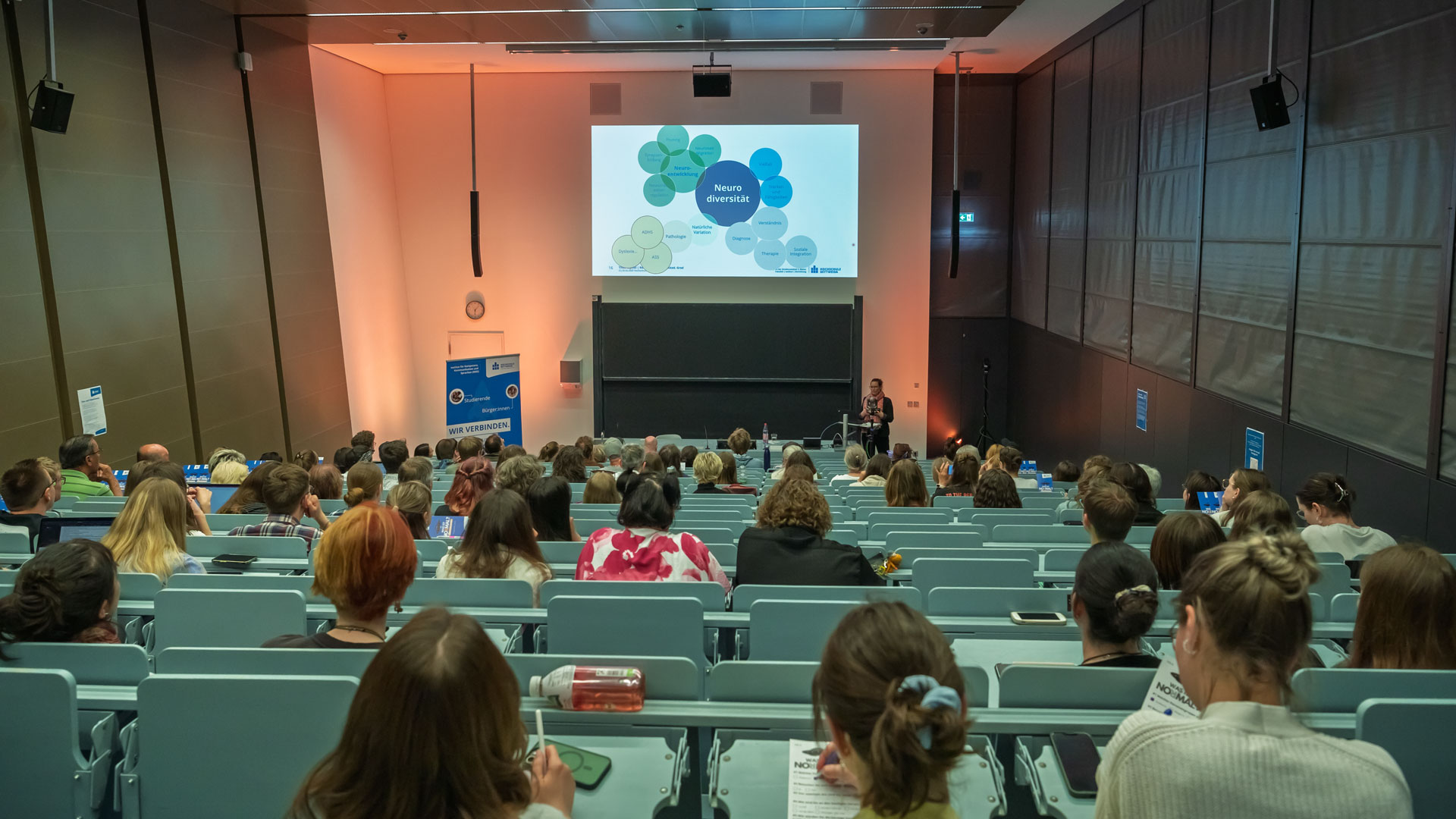
In addition to the medical and neuroscientific perspectives, Bernhardt also encouraged people to examine societal notions of normality: What actually counts as ‘normal’ – and who defines it? She emphasised that neurological differences are part of human diversity and should not automatically be regarded as pathological. At the same time, she advocated for a nuanced understanding of neurological differences: not every deviation from the average constitutes a disorder. Using the neurodiversity movement as an example, she demonstrated that certain developmental characteristics – such as autism, ADHD or specific learning difficulties – can also be understood as part of human diversity, provided that those around them are appropriately aware of these issues.
The open questions posed by the visitors demonstrated just how relevant and true to life the topic is for many people. There were numerous contributions from the interested audience. The discussion covered not only specific aspects of clinical pictures and future research directions, but also everyday issues, such as the impact of media consumption on children.
Not normal
As a one-off, the fifth event will take place on Monday 12 May. In her lecture ‘Is work half of life?’, Professor Tine Haubner from Bielefeld takes the audience on a brief journey through the diverse forms of work. She will also explore the question of what ‘normal work’ actually is and how we define it.
Full details of the lectures and speakers in the public lecture series