This page was translated automatically using artificial intelligence (DeepL). The German version is binding. More information about automatic translation
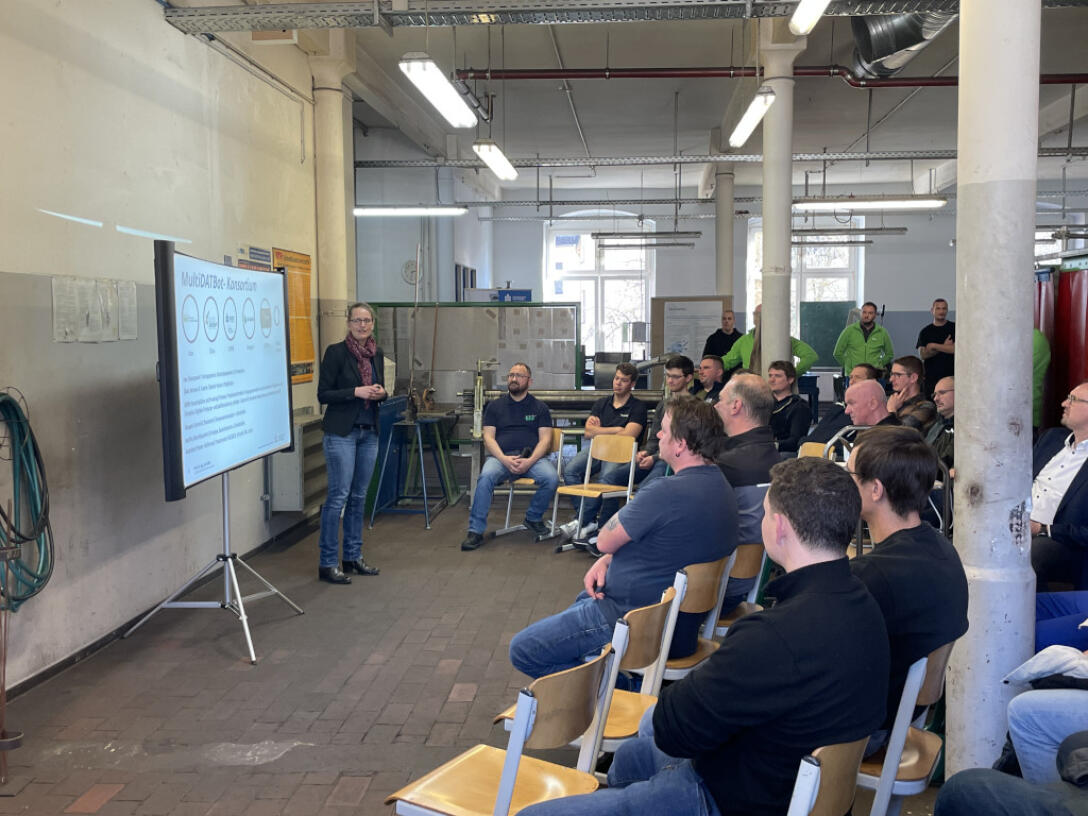
As part of the careers fair held at the Werdau site of the Bildungswerk der Sächsischen Wirtschaft gGmbH (bsw), a large number of interested visitors gathered in early March to find out about the latest developments and future trends in the field of welding.
In the training centre’s production halls, Professor Julia Zähr (Chair of Automated Joining Processes and Simulation) presented the MultiDATBot project, which is funded by the BMFTR and the ESF. She gave an impressive demonstration of how modern robotics, digital training methods and innovative measurement technology will transform both industrial production processes and vocational training and further education in the future.
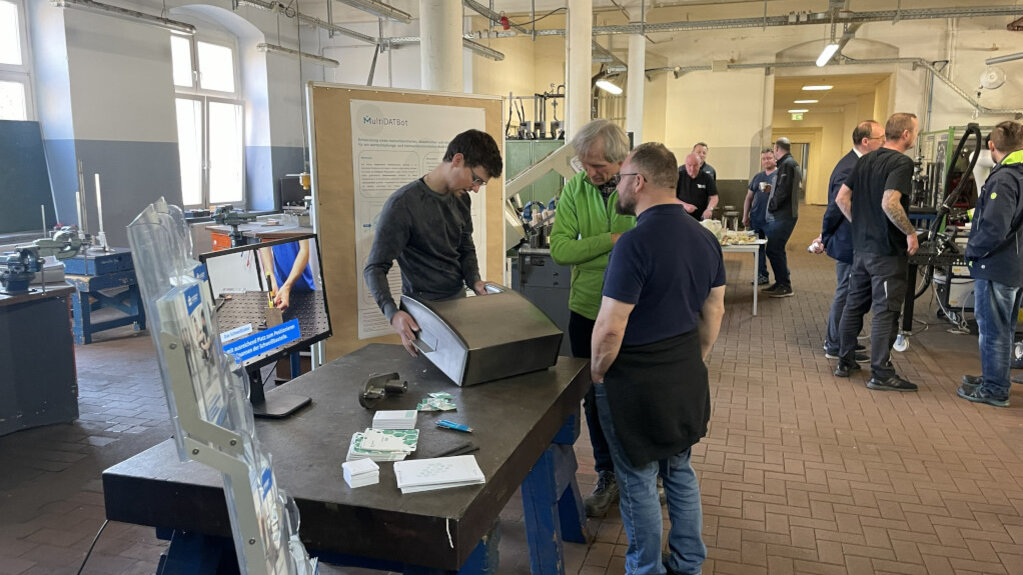
Afterwards, the participants took the opportunity to exchange views at the stands of the exhibiting companies. On display were the latest developments in arc welding technology for manual and automated applications, innovative robotic systems and realistic welding simulations that brought cobot-assisted welding to life.
The event made it clear that the combination of robotics, digital skills development and modern welding technology is set to become a key driver of future production processes. The research sector, industry and educational institutions are working closely together on this, laying the foundations for innovative manufacturing processes, strong companies and highly skilled workers.
This research and development project is funded by the Federal Ministry of Research, Technology and Space (BMFTR) under the programme “The Future of Value Creation – Research into Production, Services and Work” (funding reference 02L25A080) and is managed by the Project Management Agency Karlsruhe (PTKA). Responsibility for the content of this publication lies with the author(s).