This page was translated automatically using artificial intelligence (DeepL). The German version is binding. More information about automatic translation
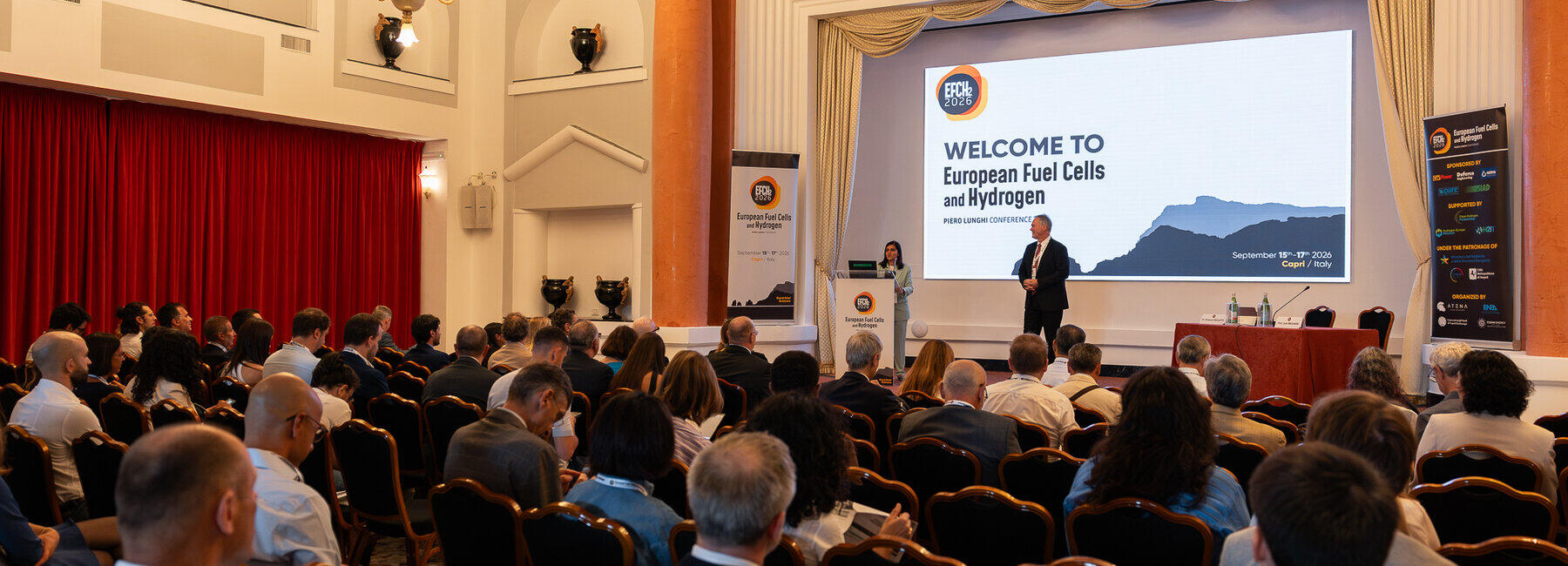
Set against a backdrop of steep rocky coastlines, Mediterranean charm and spectacular views of the Tyrrhenian Sea, discussions on the future of hydrogen technologies took place in mid-September. From 15 to 17 September 2026, researchers and industry representatives from across Europe gathered on Capri for the European Fuel Cells and Hydrogen Conference (EFCH₂ 2026) to discuss the latest developments in hydrogen, fuel cells and electrolysis technologies.
Mittweida University of Applied Sciences was also in attendance. Dr Johannes Näther presented the latest research findings from the EU ‘DC-PEM’ project. The aim of the project is to develop cost-effective and easily scalable electrodes for PEM water electrolysis, a key technology for sustainable hydrogen production.
The project work packages of the Electroplating and Surface Technology Research Group led by Prof. Frank Köster focus on the electrochemical deposition of iridium-ruthenium catalysts onto porous titanium substrates, known as PTLs (‘porous transport layers’). During the session ‘Low-Temperature Electrolyser and Fuel Cell Manufacturing’, Dr Näther presented the latest developments in the direct coating of electrodes with catalyst material (CCE approach).
Particular emphasis is placed on a process known as pulse plating. Pulse plating enables metallic particles to be deposited using precisely controlled electrical pulses. For the production of catalyst layers, this process opens up interesting possibilities for specifically influencing the chemical composition and topographical structure of the deposited catalyst particles. This makes an important contribution to the development of high-performance materials for electrochemical applications and modern hydrogen technologies.
Alongside the specialist presentations, personal exchanges played a particularly important role. In numerous discussions with international researchers and representatives from industry, the latest research findings were discussed, new perspectives were opened up and initial ideas for potential collaborations were developed.
EFCH₂ 2026 once again highlighted just how dynamically and internationally the field of hydrogen research is developing. For the working group from Mittweida University of Applied Sciences, taking part was a valuable opportunity to present their research on an international stage, gain fresh inspiration for their own work and further expand their existing network.