This page was translated automatically using artificial intelligence (DeepL). The German version is binding. More information about automatic translation
Professor Wünschiers, congratulations on your co-optation to the only University of Excellence in eastern Germany. Are you proud?
Röbbe Wünschiers: Well, I can’t take credit for the excellence of TU Dresden. However, during the assessment process for my application, which lasted about a year, I realised that TU Dresden looks very closely at who it admits. In that respect, I was delighted when I received the letter from the Vice-Chancellor confirming my co-optation.
So what was assessed?
Röbbe Wünschiers: The most important criterion was that I had previously successfully supervised collaborative PhDs at TU Dresden. These were Dr Nadine Wappler and Dr Robert Leidenfrost. They both carried out their research work under my supervision in Mittweida. As a result, I and my research were known to some members of the Faculty of Biology, and we met the requirements of the doctoral regulations. The Faculty Council was the first body to endorse my co-optation. In addition to my ‘scientific output’, the support of the local university management also contributed to this. For the university management, my habilitation, my academic reputation as evidenced by publications and completed research projects, and the demonstration of sound academic practice were decisive factors.
So what will change for you?
Röbbe Wünschiers: Young academics for the Free State of Saxony and the whole of Germany can be trained at various levels. Our degree programmes are one such level. However, participation in research and development projects offers a further qualification. Anyone wishing to obtain certification that they have attained a high level of academic qualification can do so by submitting a doctoral thesis. When it comes to applications for third-party funding – which, in addition to addressing a research question, generally also aim to develop the skills of academic staff – I no longer need to worry about finding a partner university. For me, that’s less stressful than it might sound.
Are there any more PhDs on the horizon?
Röbbe Wünschiers: Oh yes. Lisa Prudnikow is closest to the finish line. As part of the DFG-funded research project on wild bee health in agricultural systems, using apple orchards as a case study (keyword: SachsenObst), she is currently analysing environmental, reproductive and DNA sequence data from two generations of wild bees. This is where ecology meets genomics and bioinformatics. I’m very pleased to be collaborating with Catrin Westphal from the Chair of Agroecology & Functional Agrobiodiversity at the University of Göttingen, and Doreen Gabriel from the Institute of Crop Production and Soil Science at the Julius Kühn Institute in Braunschweig.
Nils Schön also has a wealth of genomic data on his hard drive. In this case, it relates to several generations of sheep-poodles. Under his leadership, we have now been able to sequence the sheep poodle genome almost in its entirety and hope to shed light on the question of the population’s genetic diversity in general and the genetic basis for the condition of undescended testicles in particular. This project would be impossible without the collaboration of the breeders Mechthild Jenissen-Tibbe and Nina Borzner, as well as the dog owners who are co-funding the project through donations.
Tom Schmidt’s PhD research focuses on the genetic diversity of Buckfast honeybees and its relationship to Varroa resistance. His work is based, amongst other things, on sampling carried out during the artificial insemination of queen bees, which takes place regularly at our university, and on counting the Varroa infestation in bee colonies. It is therefore also a very multifaceted research project, which would be impossible without the cooperation of the Landesverband Sachsen Varroaresistenzzucht e.V. and the beekeepers associated with it throughout Germany.
Anna Nauruschat’s PhD research focuses on purple bacteria and the question of how they could be used to produce hydrogen. She began her ‘career’ in my research group by refuting, during her Master’s thesis, my research hypothesis regarding the effect of a mutation in a specific protein on the regulation of hydrogen production. She is now investigating the possible effects of other genetic variants, delving deeply into bioinformatics in the process. The variants are then to be tested using the CRISPR/Cas gene-editing tool, and we hope that gene shuttles from Ruud Weusthuis at Wageningen University will assist us in this.
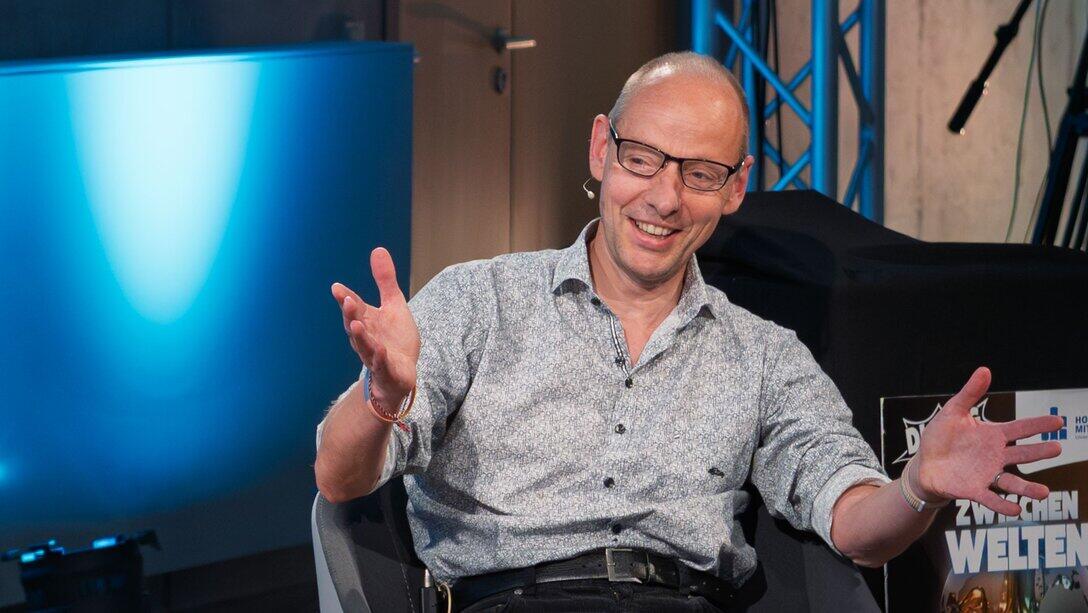
… within them [the doctoral students] burn the fires of fascination and curiosity. My primary concern is to look after the hearth and the fuel.
Prof. Dr. rer. nat. habil. Röbbe Wünschiers
About the author
Röbbe Wünschiers is a professor of biochemistry and molecular biology at Mittweida University of Applied Sciences, a Fellow of the Linnean Society of London, and the author of several specialist books and textbooks, as well as numerous scientific publications. His research focuses on genetic biodiversity, particularly in bees and sheep poodles.