This page was translated automatically using artificial intelligence (DeepL). The German version is binding. More information about automatic translation
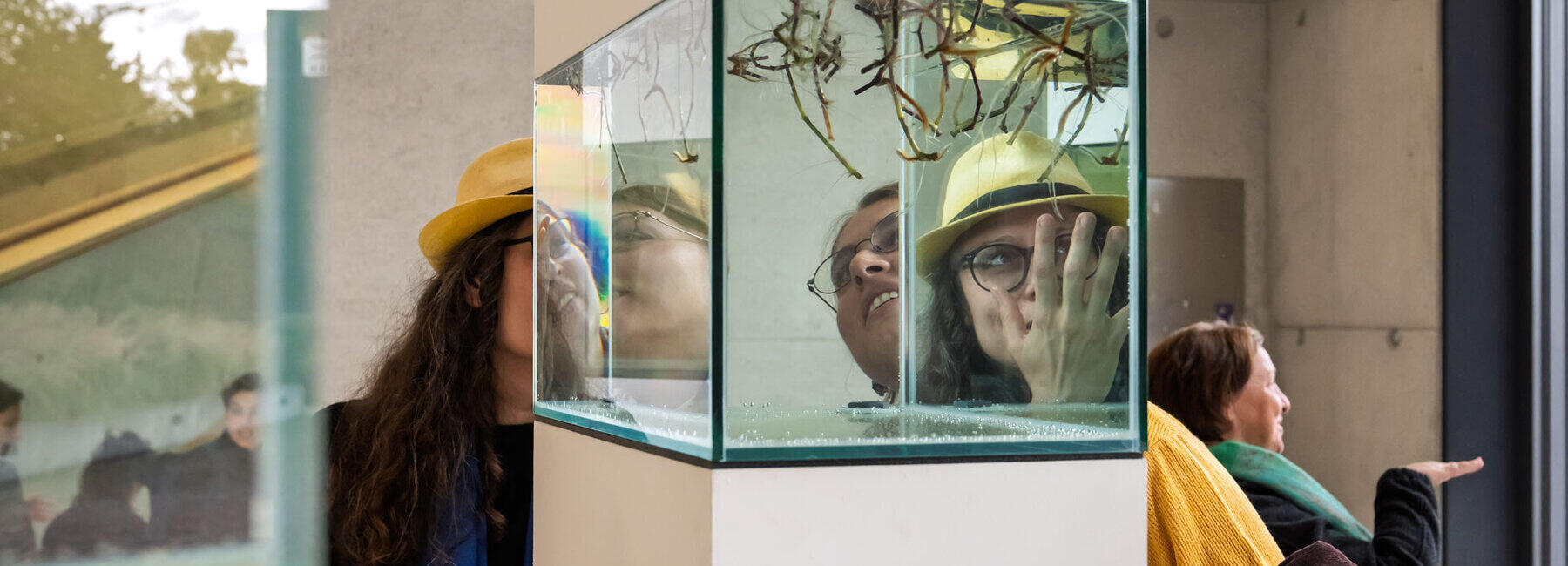
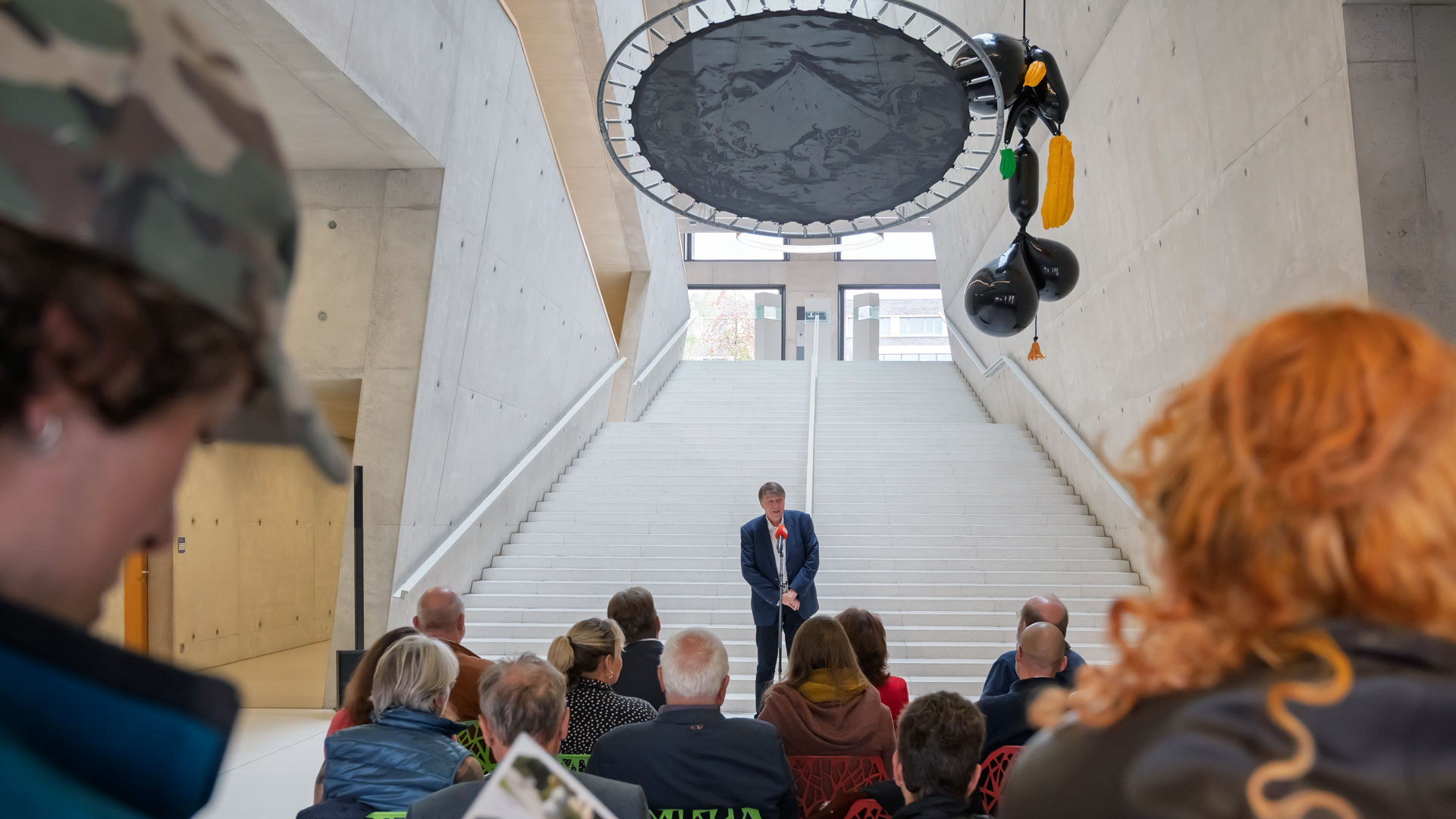
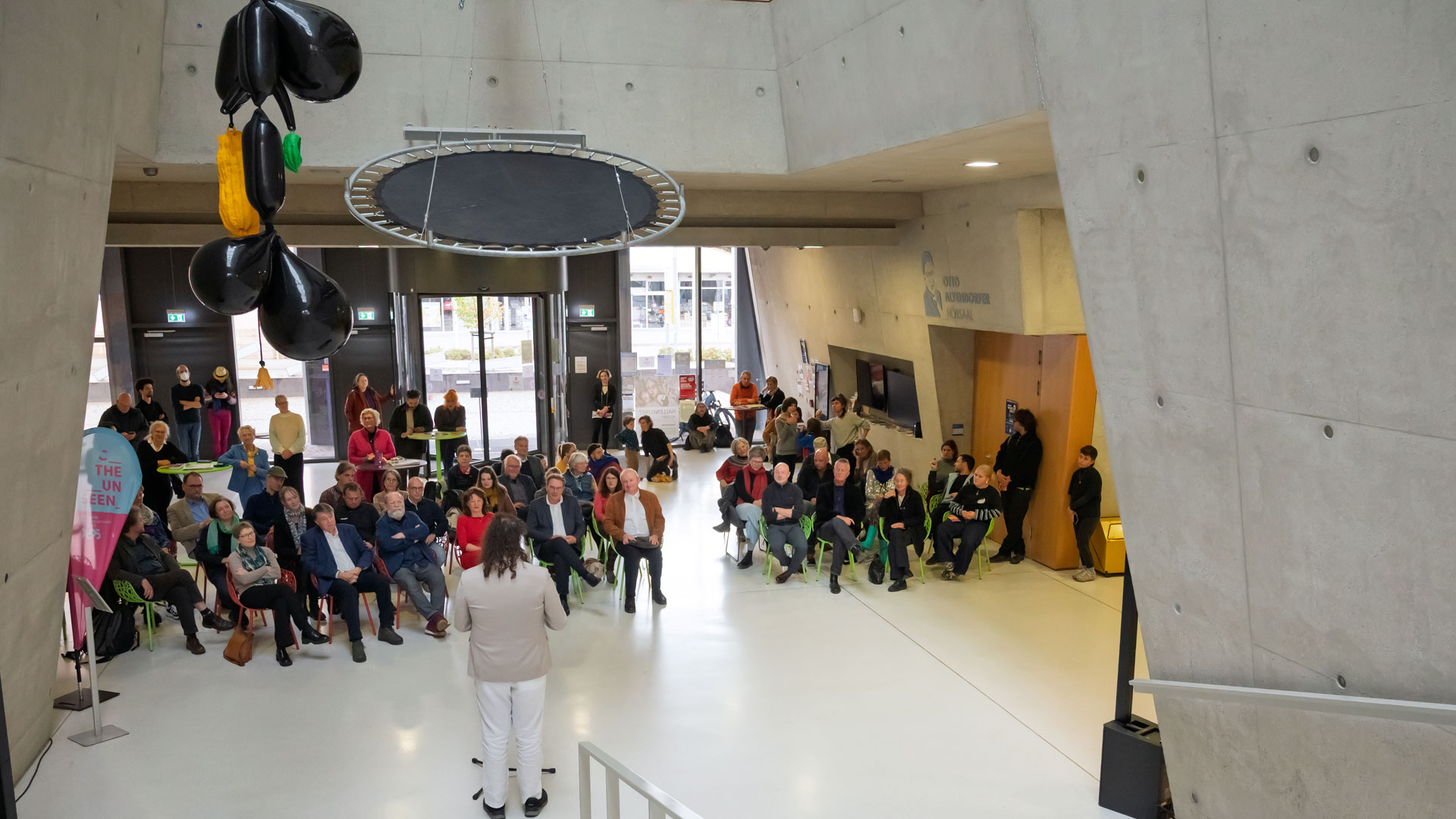
On the afternoon of 5 October, ‘Under Grapes and Citrus Fruit’, the City of Chemnitz 2025 – Capital of Culture and Mittweida University of Applied Sciences launched ‘Sukkot Mittweida 2025’ in the Ludwig Hilmer Building at the university, attended by around seventy guests. The installation by Berlin-based artist Abie Franklin, featuring oversized fruits, hovered in front of the grand staircase: the etrog – a citrus fruit – and grapes. They symbolise both sourness and sweetness. At the top of the staircase, the eye was drawn to another installation: ‘The Wanderer’ by Michal Fuchs from Halle/Saale. In three vases, the roots of the plant colloquially known as the ‘Wandering Jew’ are visible behind glass, growing into the water that nourishes them. The plant owes its name to its remarkable characteristics: it is a master of survival that thrives almost anywhere, adapts to a wide variety of environments and repeatedly takes root in the most diverse of places.

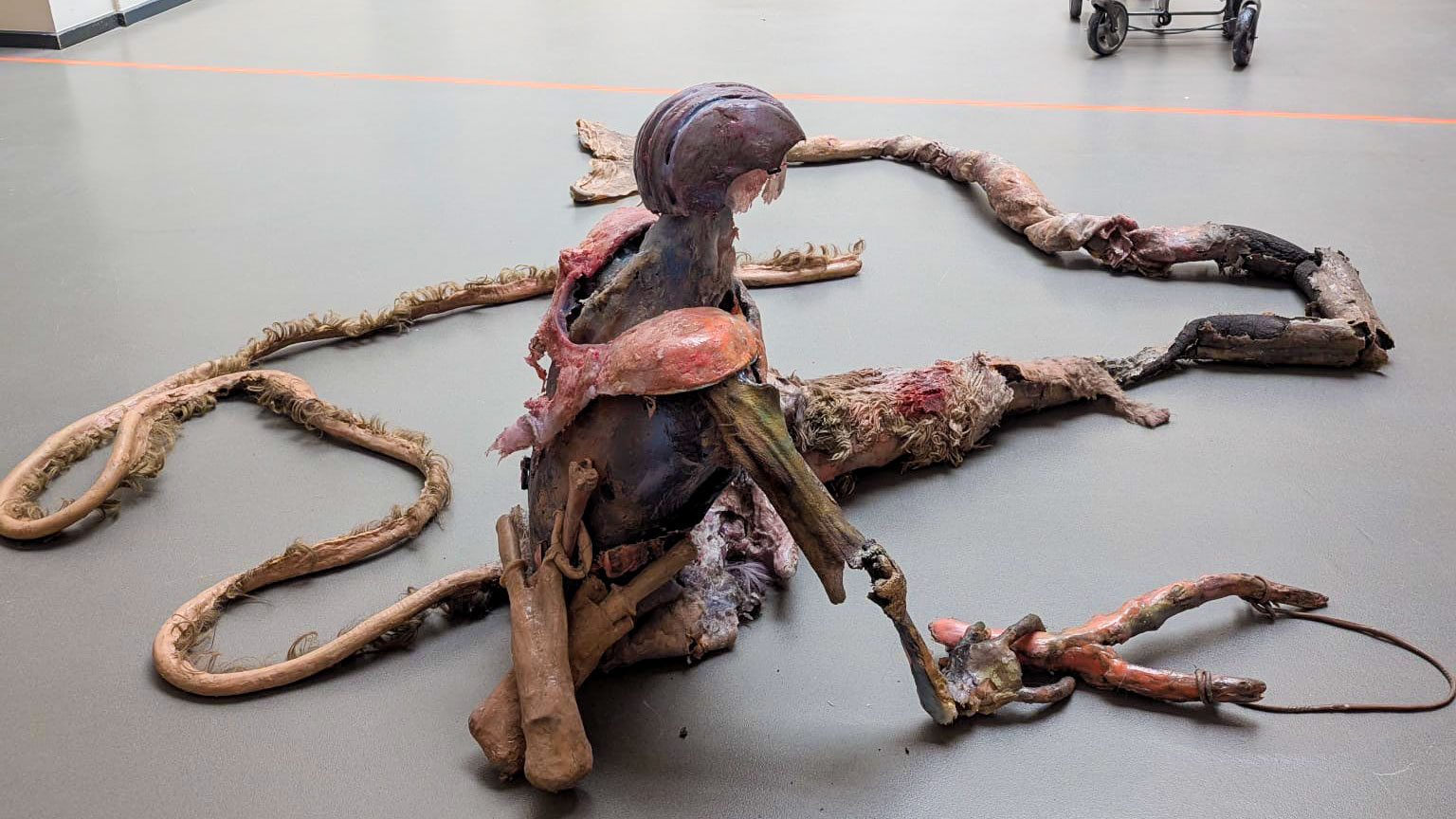
In the atrium of the university’s main building, Moran Sanderovich deliberately presented something unsettling: her installation “In|Humans”. “I explore the space between attraction and repulsion, compassion and anger,” explains the Berlin-based artist. “My works visually depict how wounds and physical trauma become weapons that generate further trauma – the cycle of violence.”
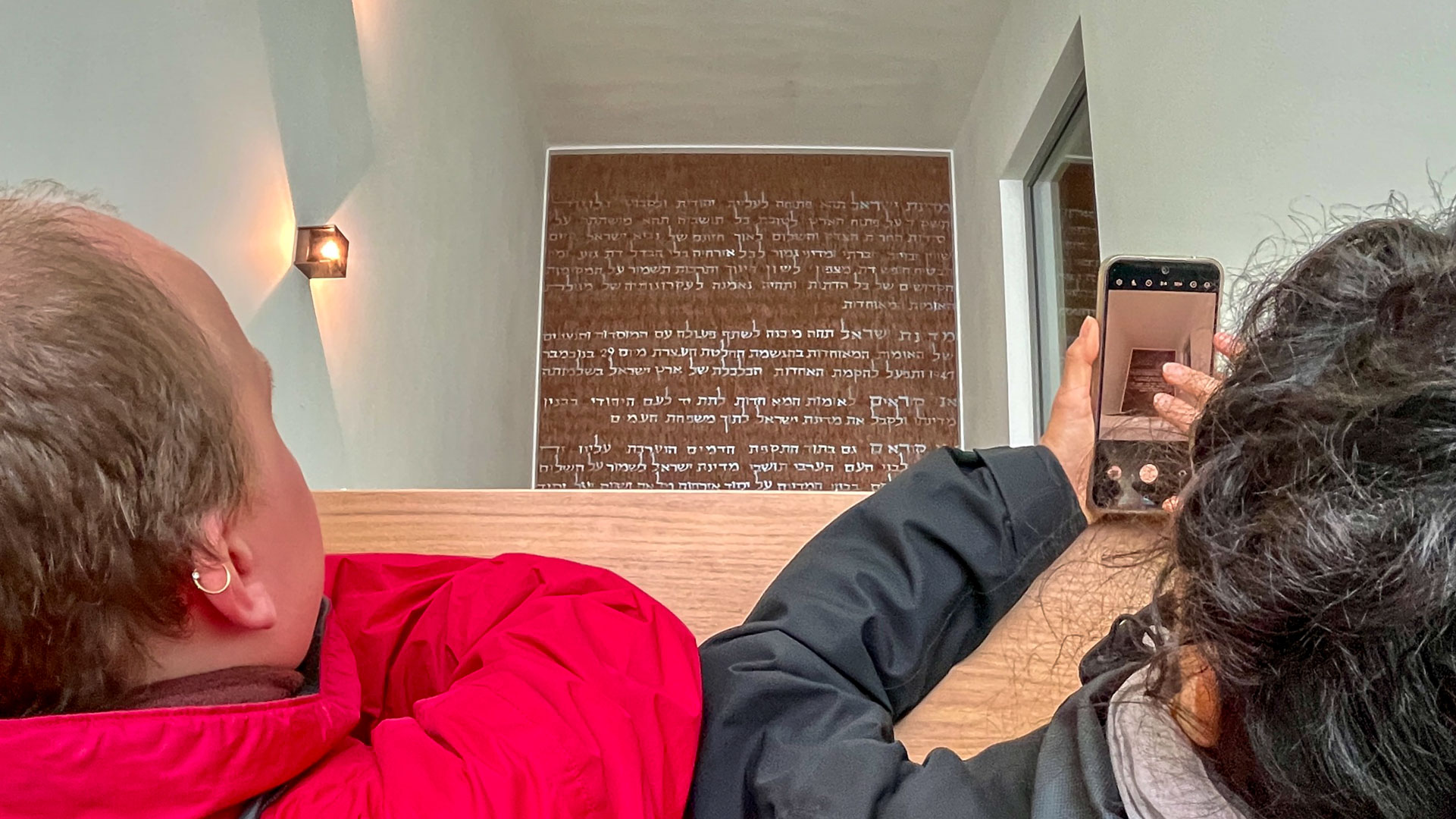
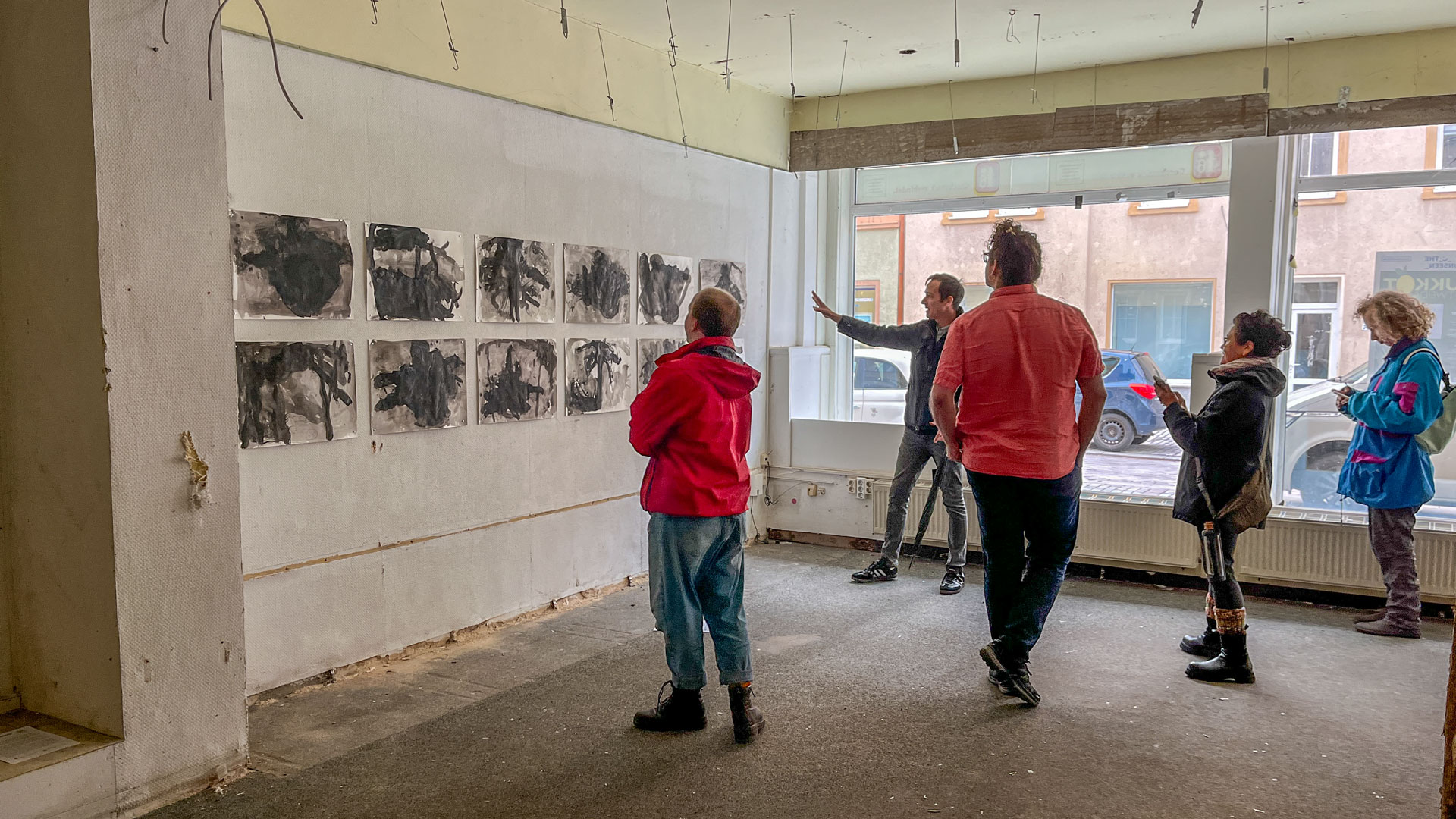
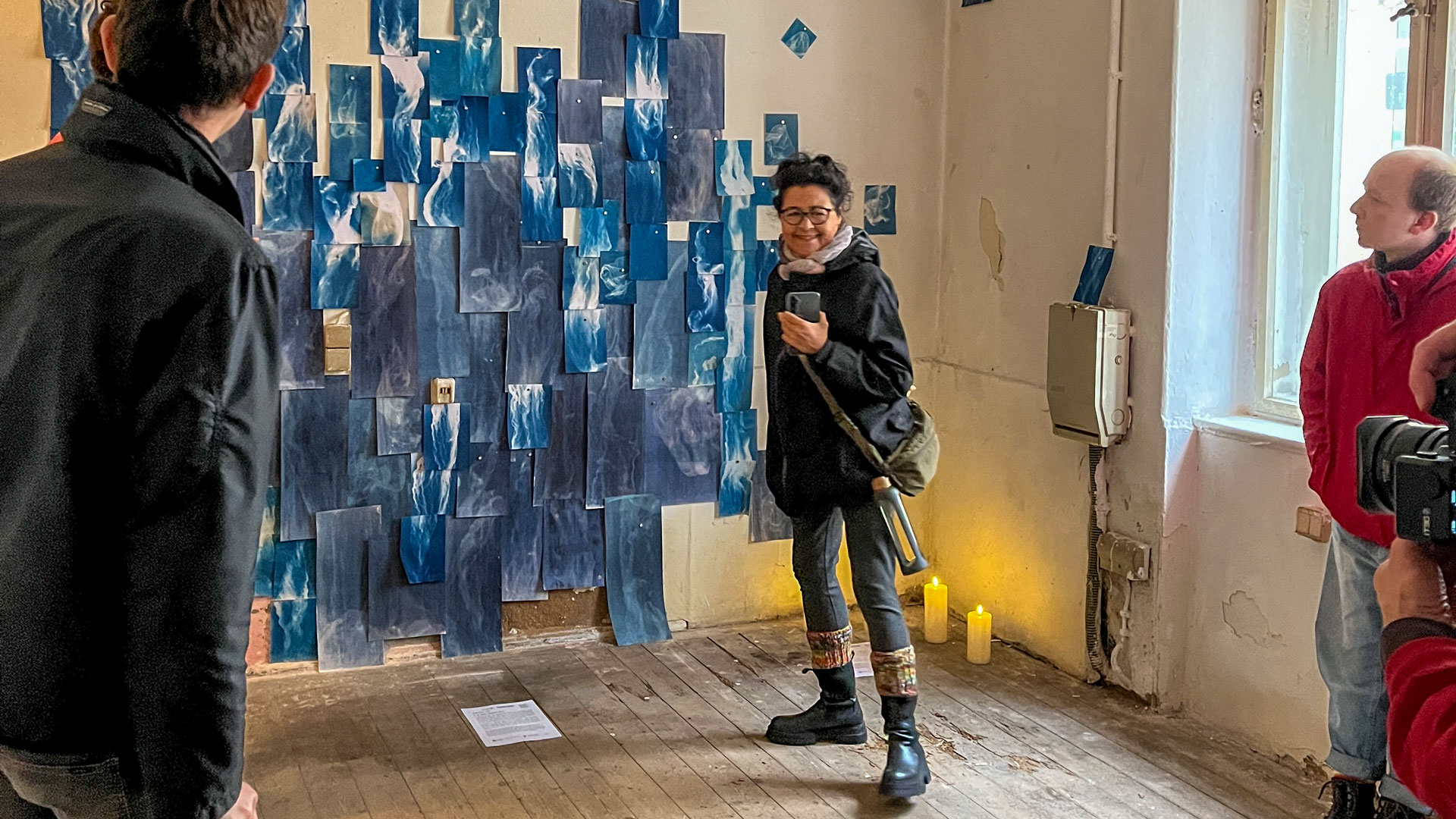
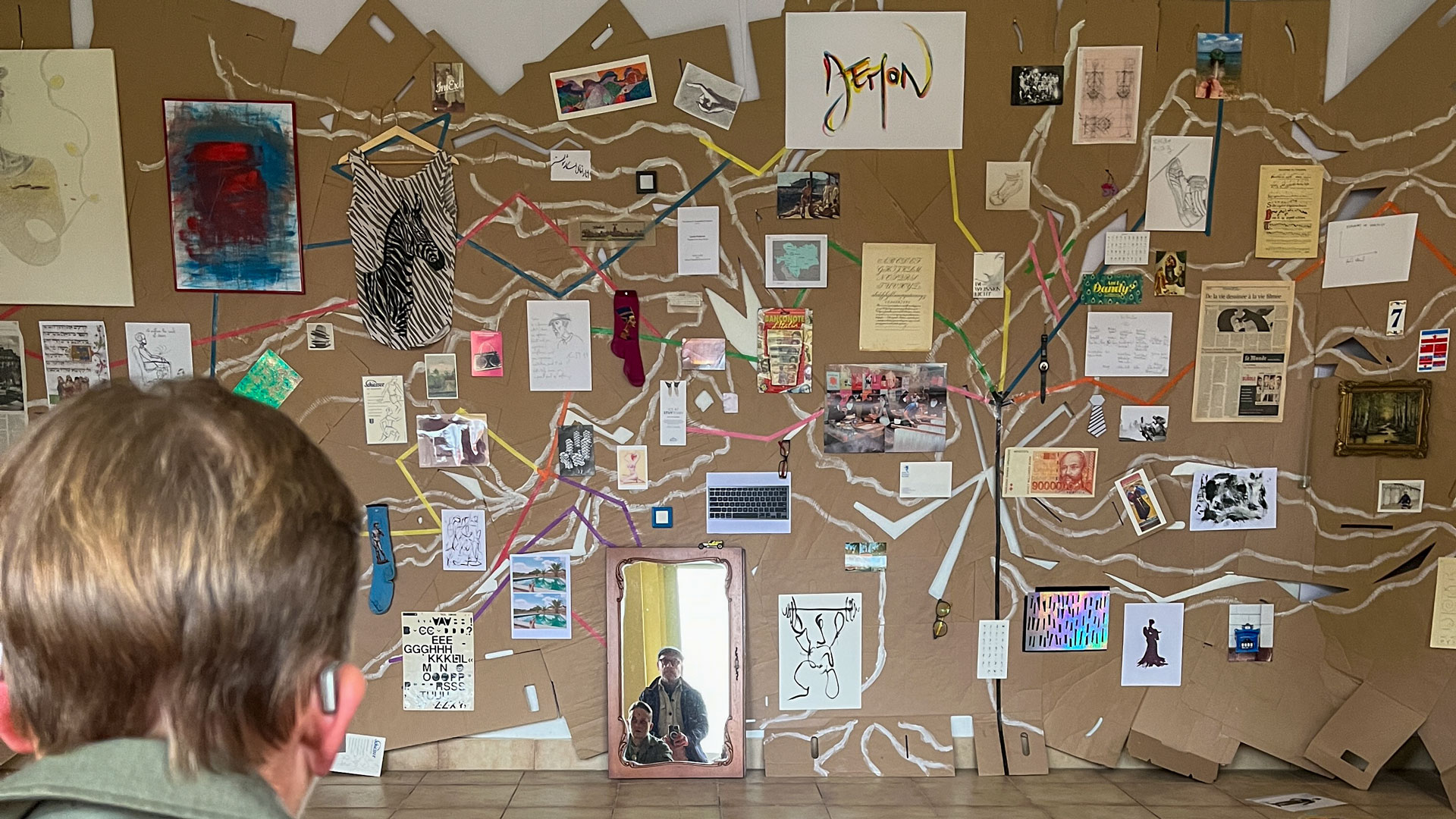
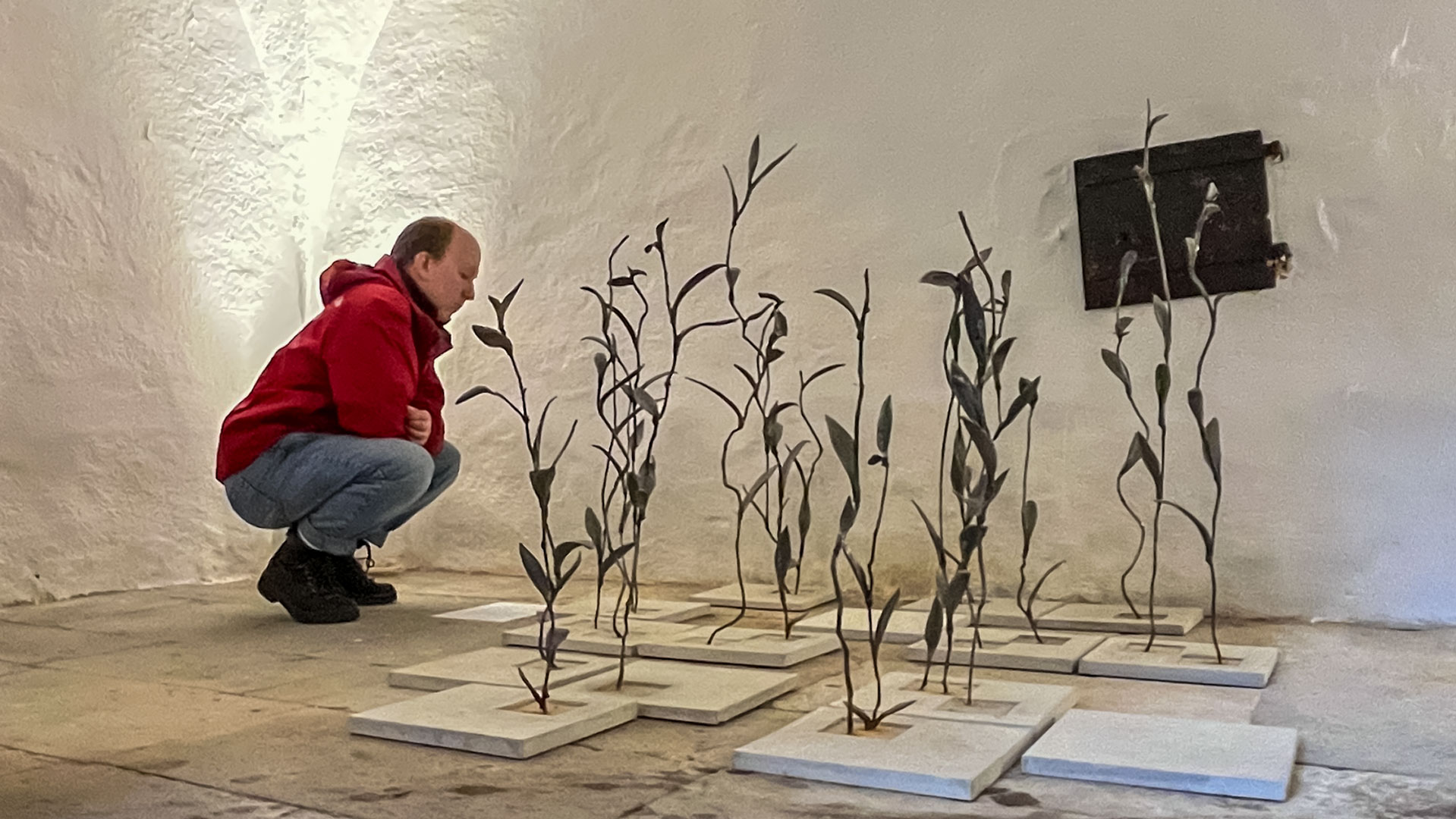
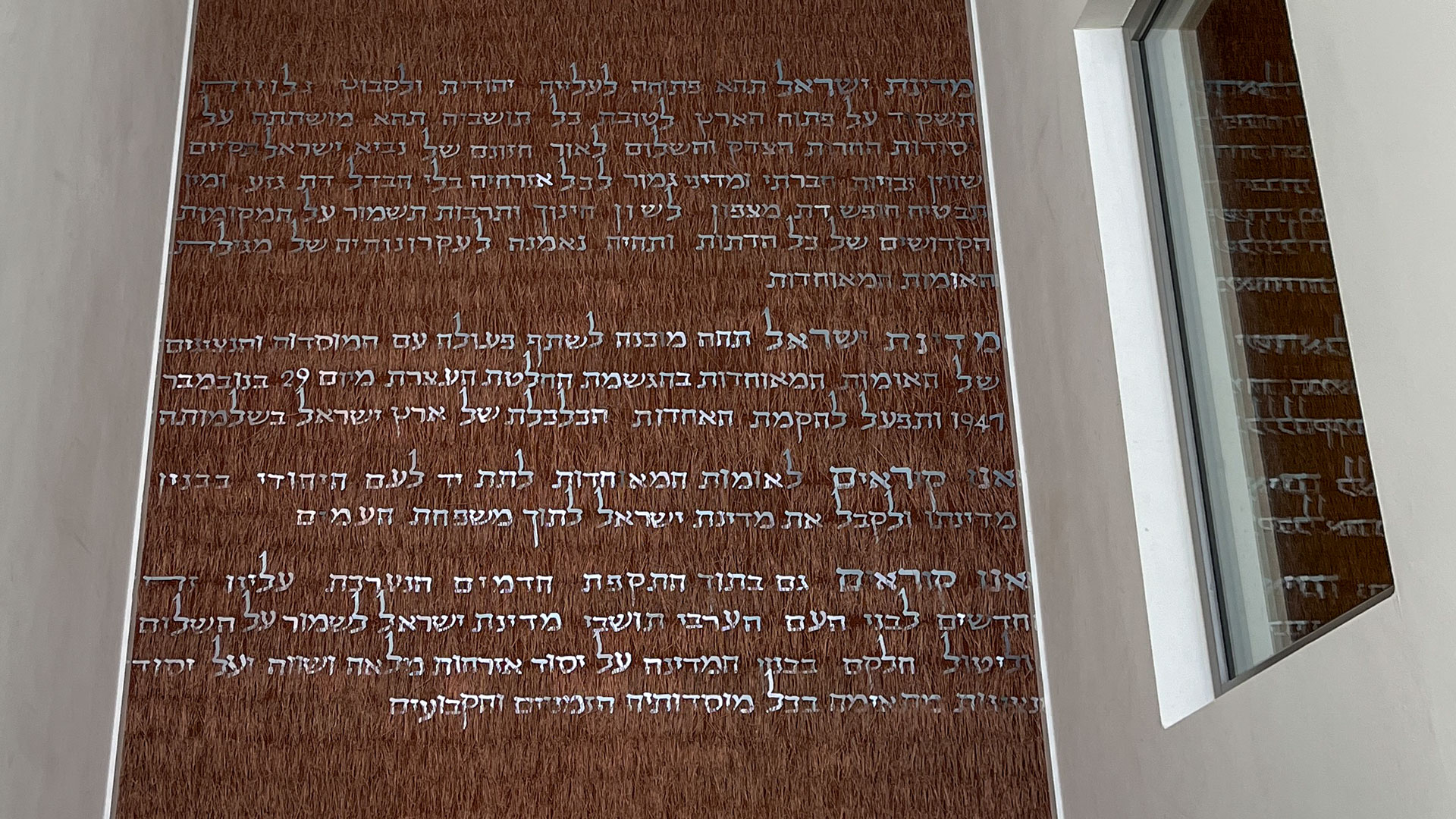
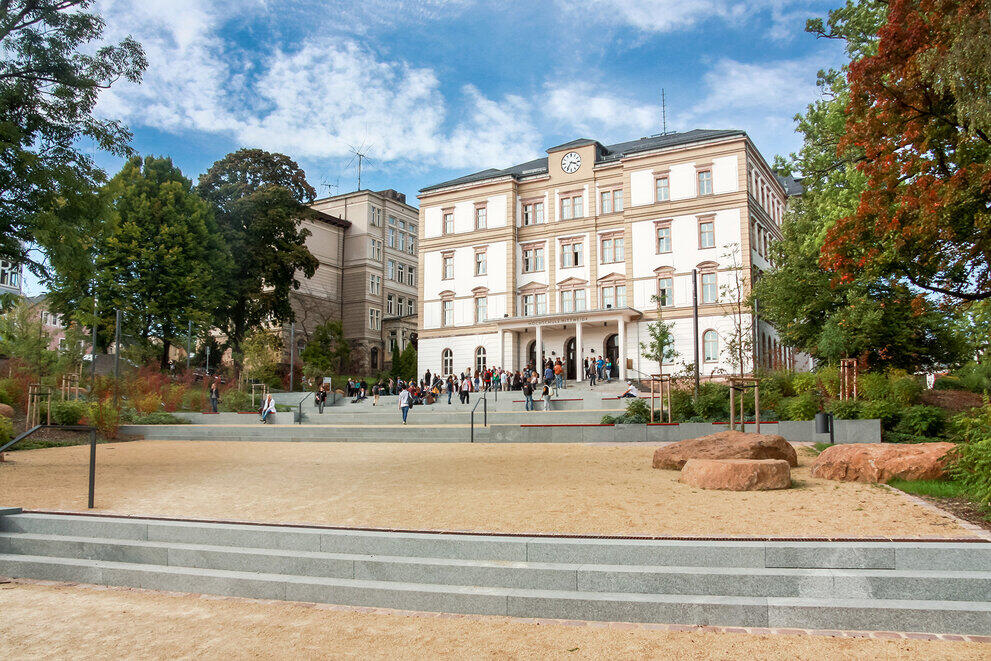
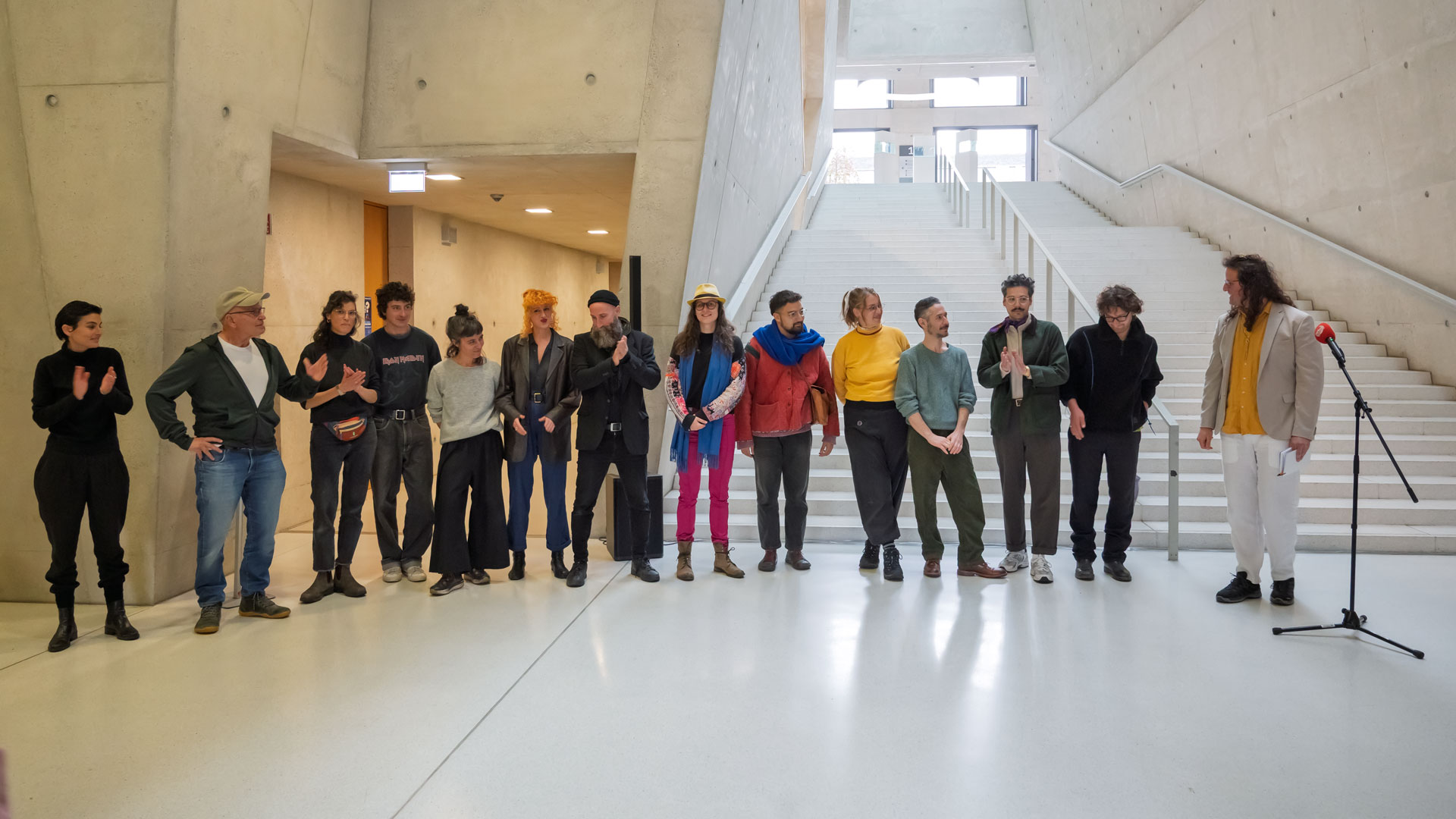
It wasn’t just the Ludwig Hilmer Building and the university’s main building: from 5 to 12 October, numerous venues across the university town served as stages, studios, exhibition spaces and meeting places – ranging from the city library to vacant shops and the ‘Altes Erbgericht’ municipal museum. The main exhibition “Uschpisin” – Aramaic for “guests” – organised by Sukkot Mittweida and featuring works by the artists, can be seen there until 16 November.
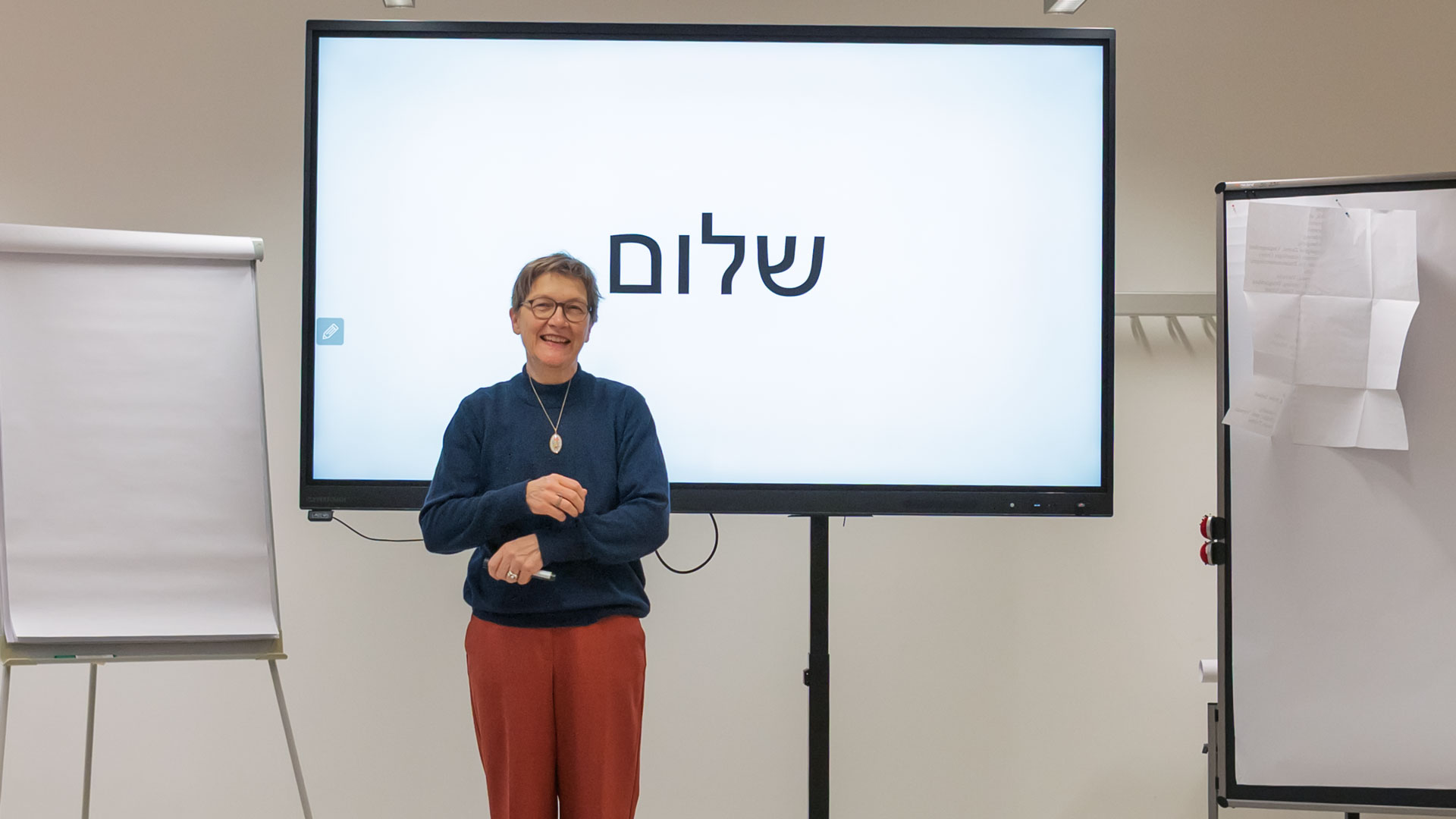
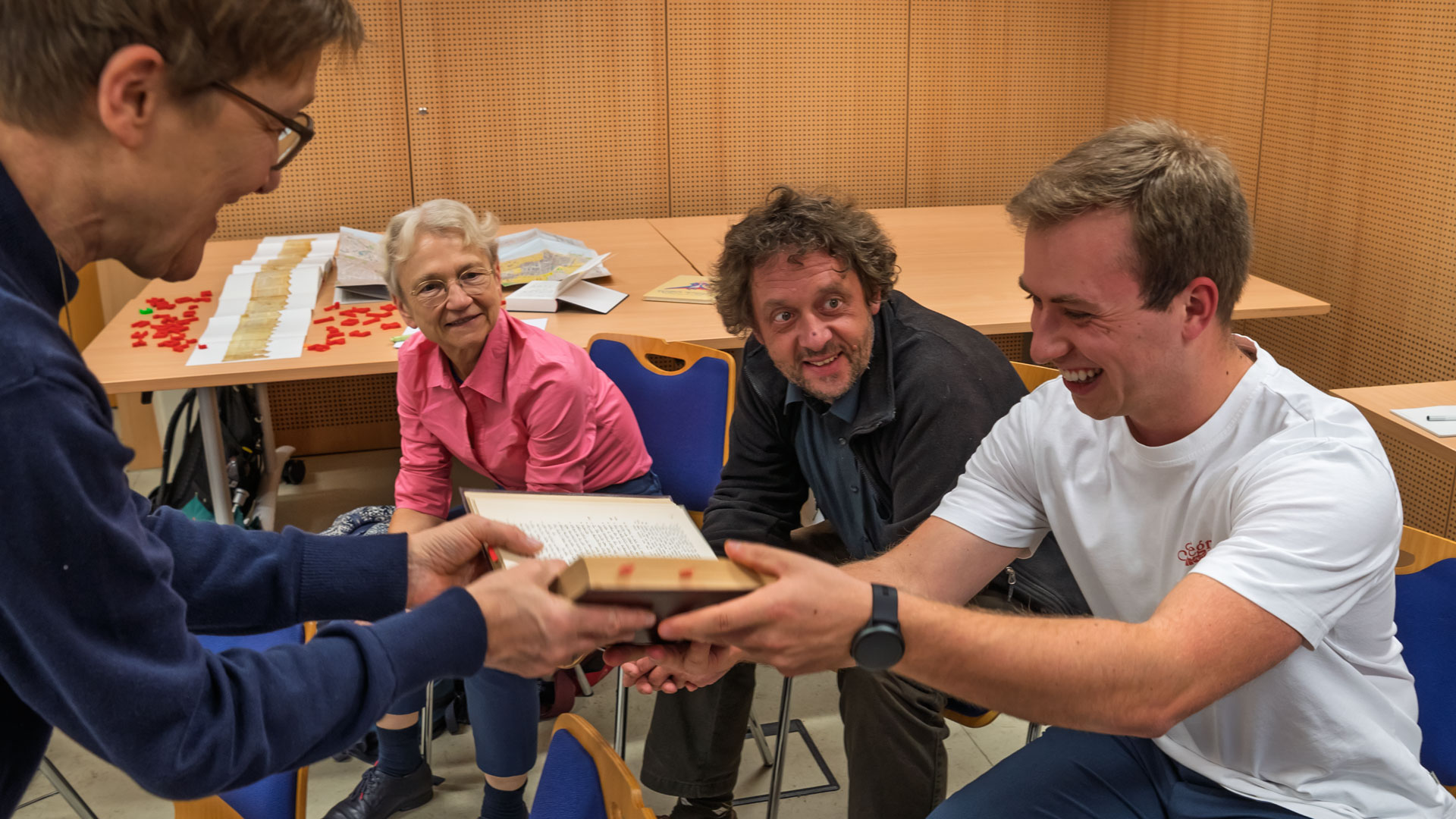
Mittweida University of Applied Sciences organised a series of academic events as part of Sukkot Week. On Monday, Margarete Füßer, a scholar of Jewish studies and Hebrew teacher from Dresden, gave 21 participants in the taster course in Hebrew an insight into the history, alphabet and vocabulary of Ivrit, or Modern Hebrew.
Social Work students, together with members of Sukkot Mittweida, took a critical look at group-focused hostility (GMF) during an intensive seminar – focusing in particular on anti-Semitism from both a historical and a contemporary social perspective.
Two years of war – a dialogue on the anniversary of the invasion
The highlight was the ‘Controversial Dialogue (Dialog Kontrovers)’ on 7 October. The university’s Institute for Competence, Communication and Languages (IKKS) deliberately chose the anniversary of Hamas’s attack on Israel to pose the question: ‘The Middle East – paths out of violence?’. Nirit Sommerfeld, a German-Israeli actress and singer, and Dr Andreas Brämer, a historian and Rector of the Heidelberg College of Jewish Studies, took part in the discussion, which was moderated by Professor Christoph Meyer, the College’s Vice-Rector for Education.
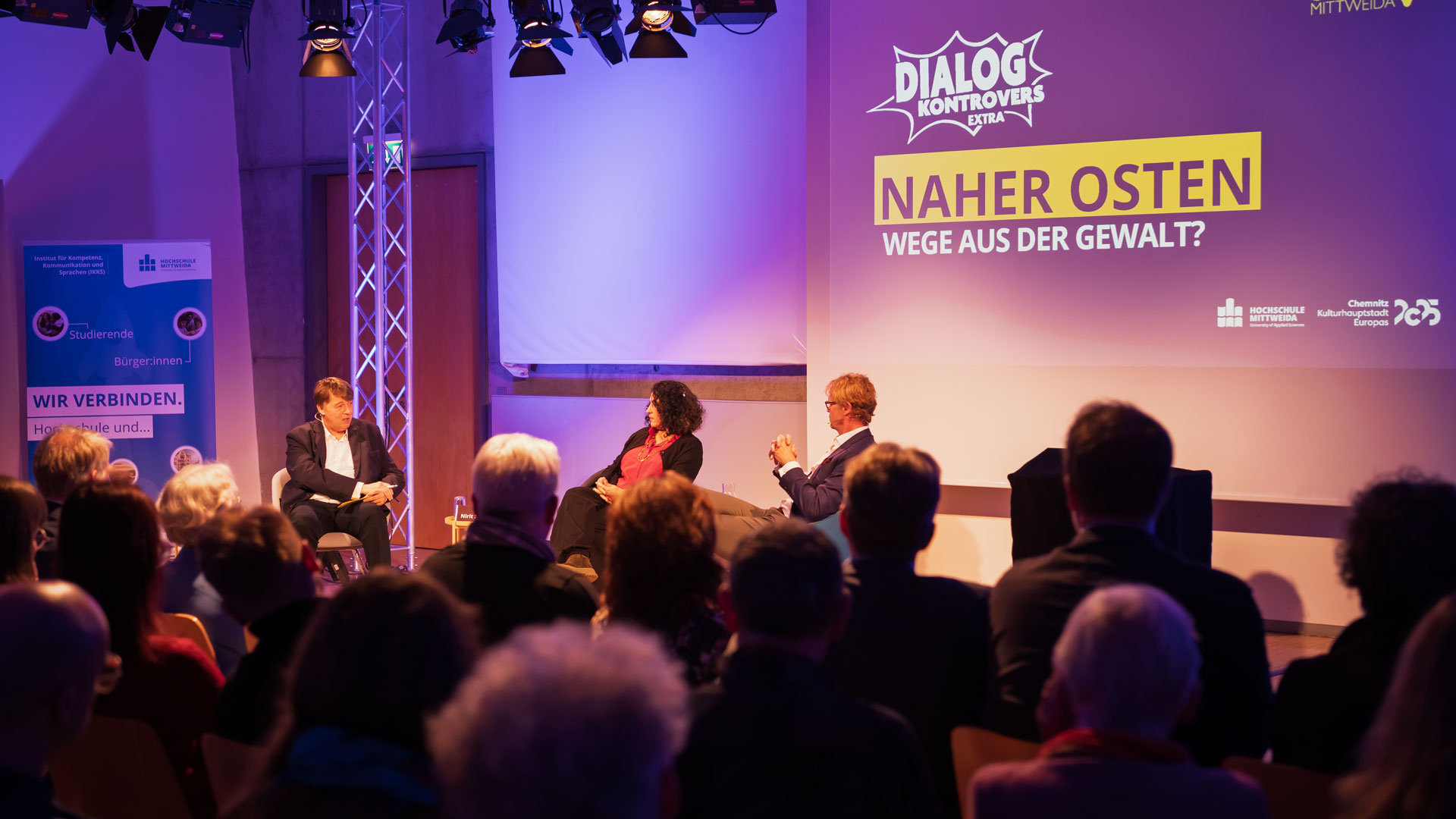
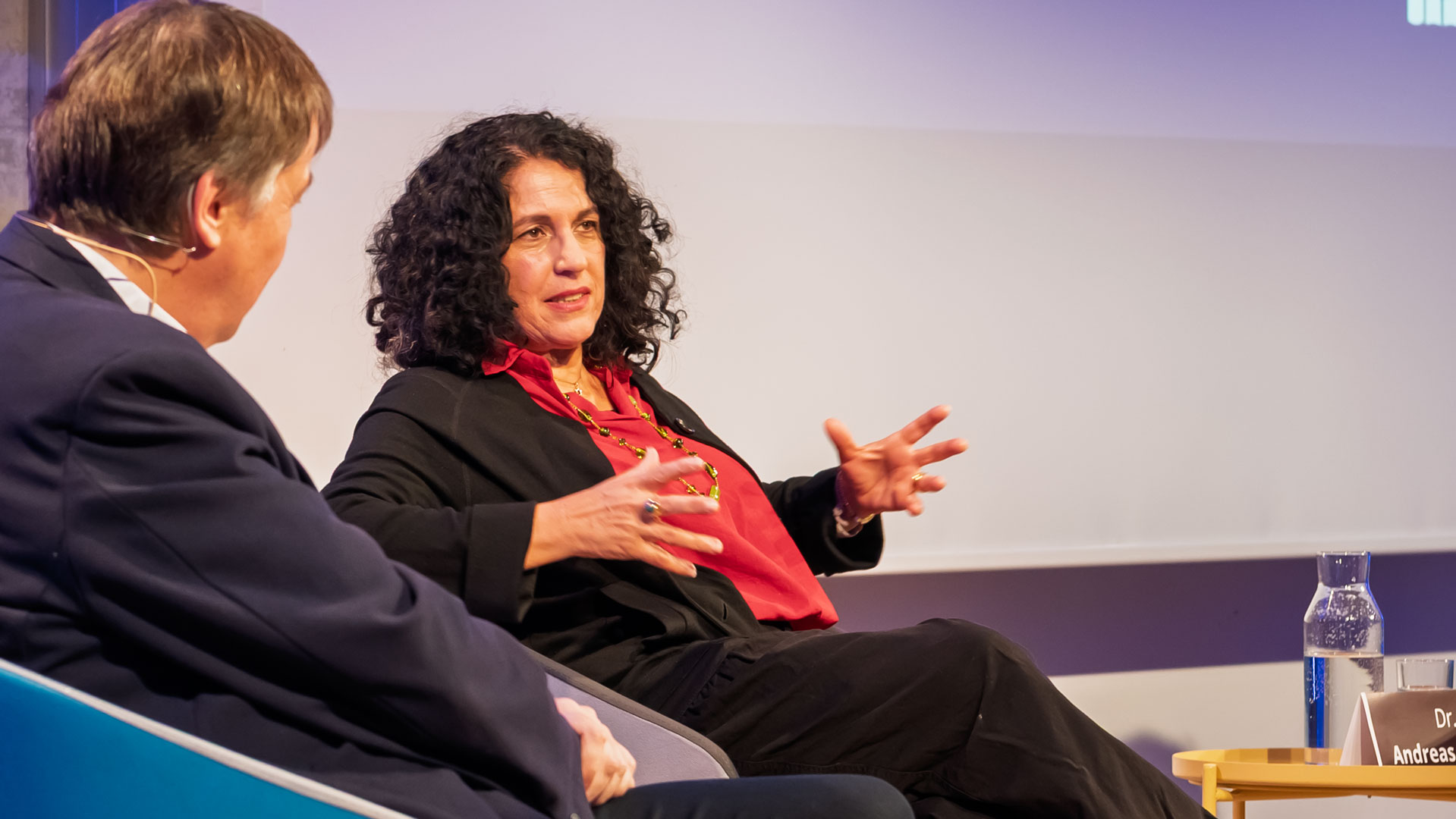
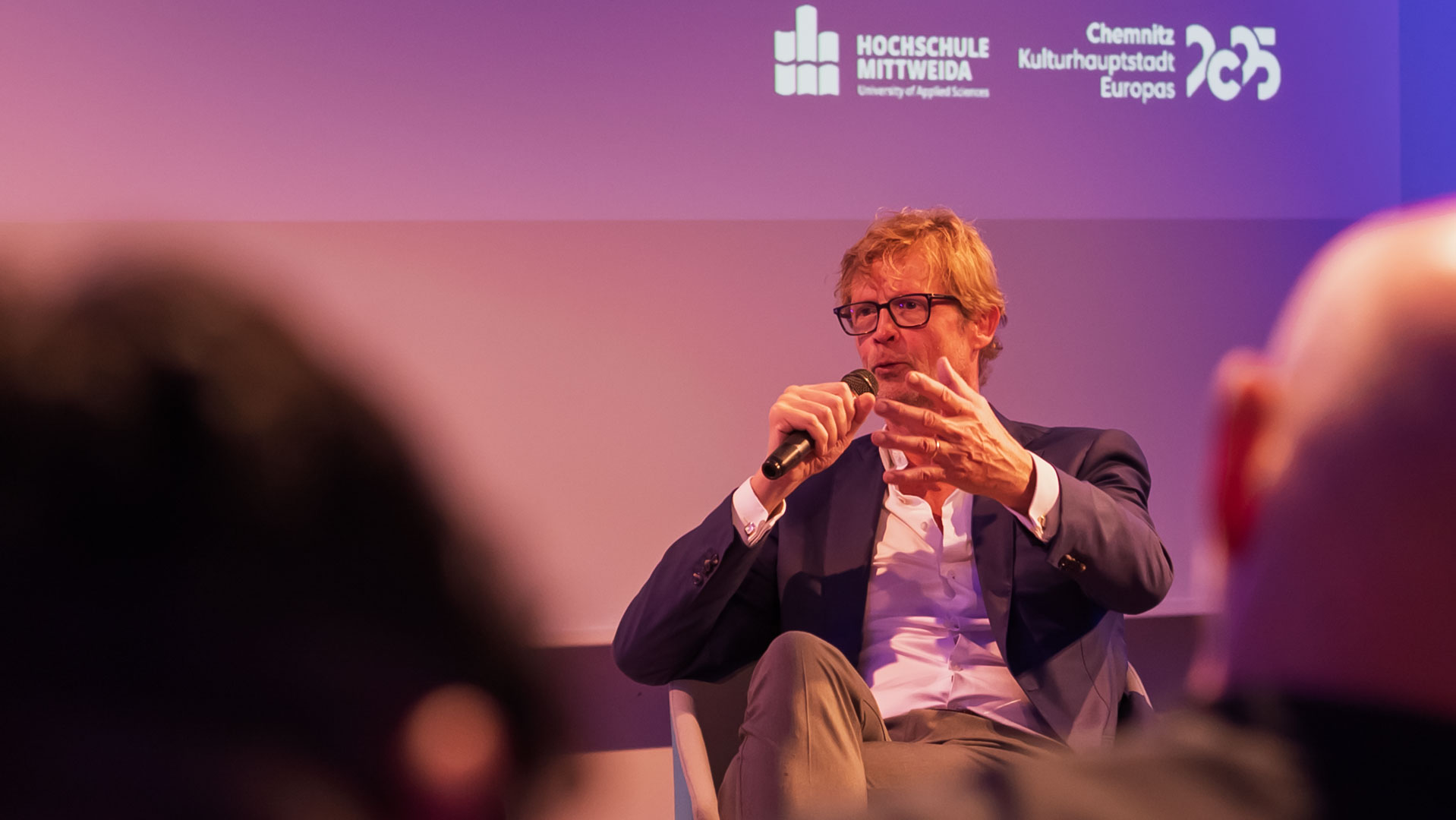
Even in the absence of Alena Jabarine, a German-Palestinian journalist and author who was unable to attend due to illness, the panel engaged in a lively debate, particularly regarding the talk of genocide and a non-violent resolution to the conflict in the Middle East. The engaging discussion ranged from historical causes and current crises to moving personal stories and the search for a common language that transcends black-and-white thinking. The common thread running through it all was the desire for justice, the call for genuine solutions and the responsibility of all those involved in the quest for peace.
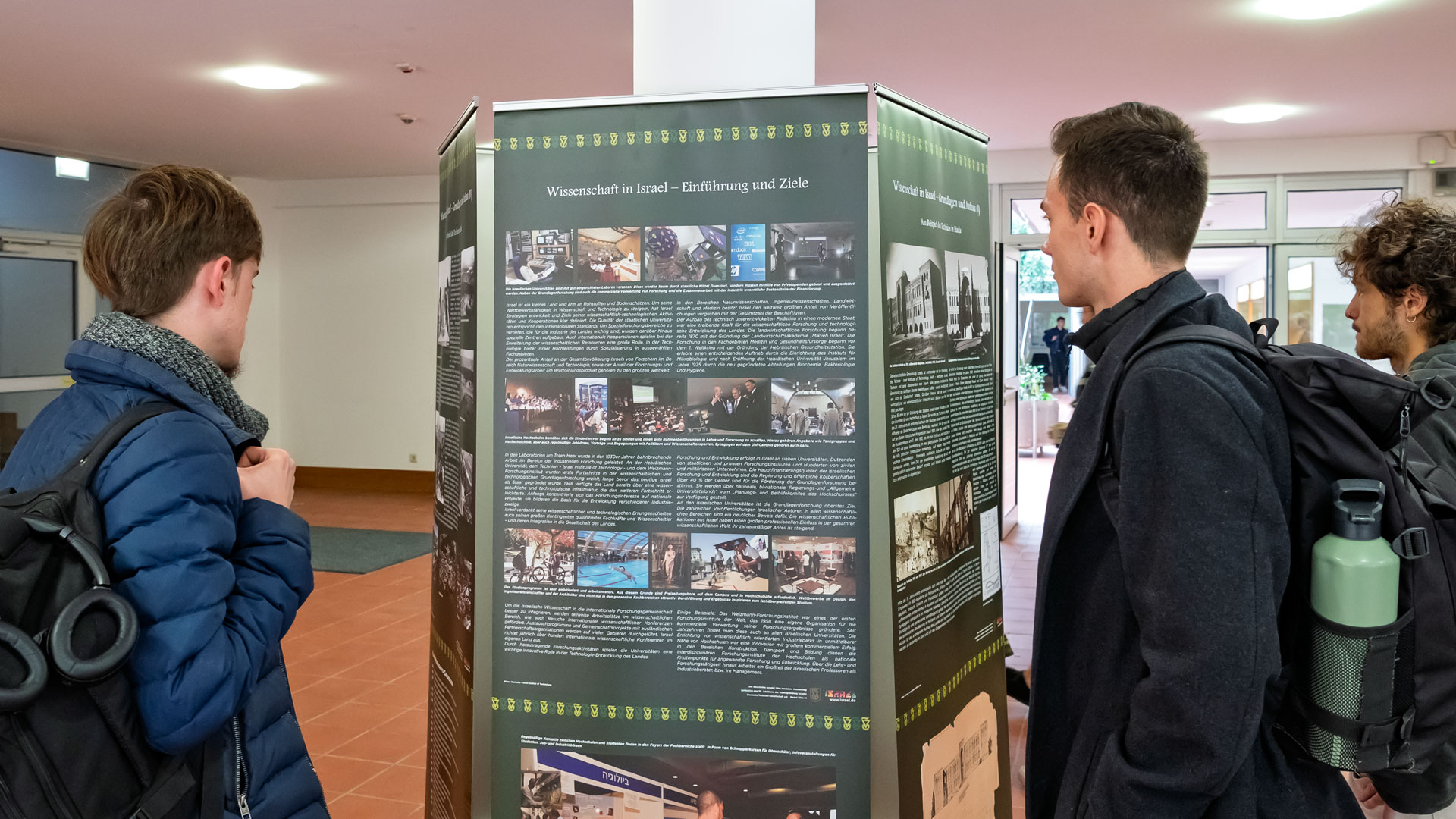
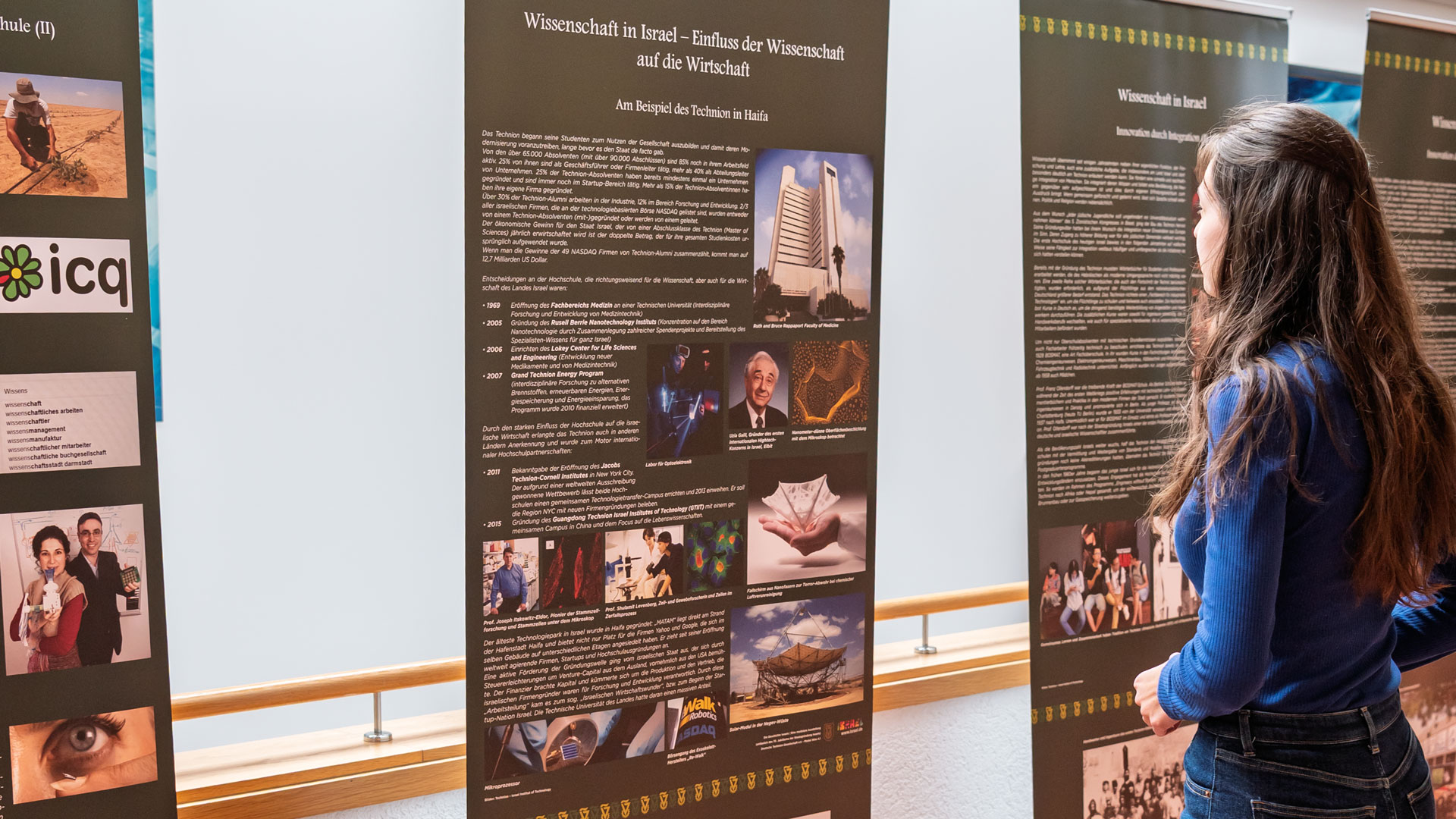
In addition, Mittweida University of Applied Sciences had taken the occasion of Sukkot Mittweida 2025 to stage a poster exhibition on the history of science in Israel, which had been provided by the Deutsche Technion Gesellschaft e.V. in Berlin. The Technion in Haifa, like Mittweida University of Applied Sciences, was originally founded as a ‘Technikum’ and is the oldest university in Israel. The exhibition was on display in the foyer of the university’s Gerhard Neumann Building, named after its Jewish graduate (who studied there from 1936 to 1938) and, following his emigration to the USA, a successful developer of jet engines.
Sukkot – a temporary home in the university town of Mittweida
The occasion and timeframe for the week were the Jewish Festival of Tabernacles, ‘Sukkot’. It is the Jewish harvest festival, a joyous celebration during which people not only give thanks for the harvest but also commemorate the provision they received during their journey through the desert to the ‘Promised Land’, whilst they lived in booths – ‘Sukkot’ – during their journey through the desert to the ‘Promised Land’.
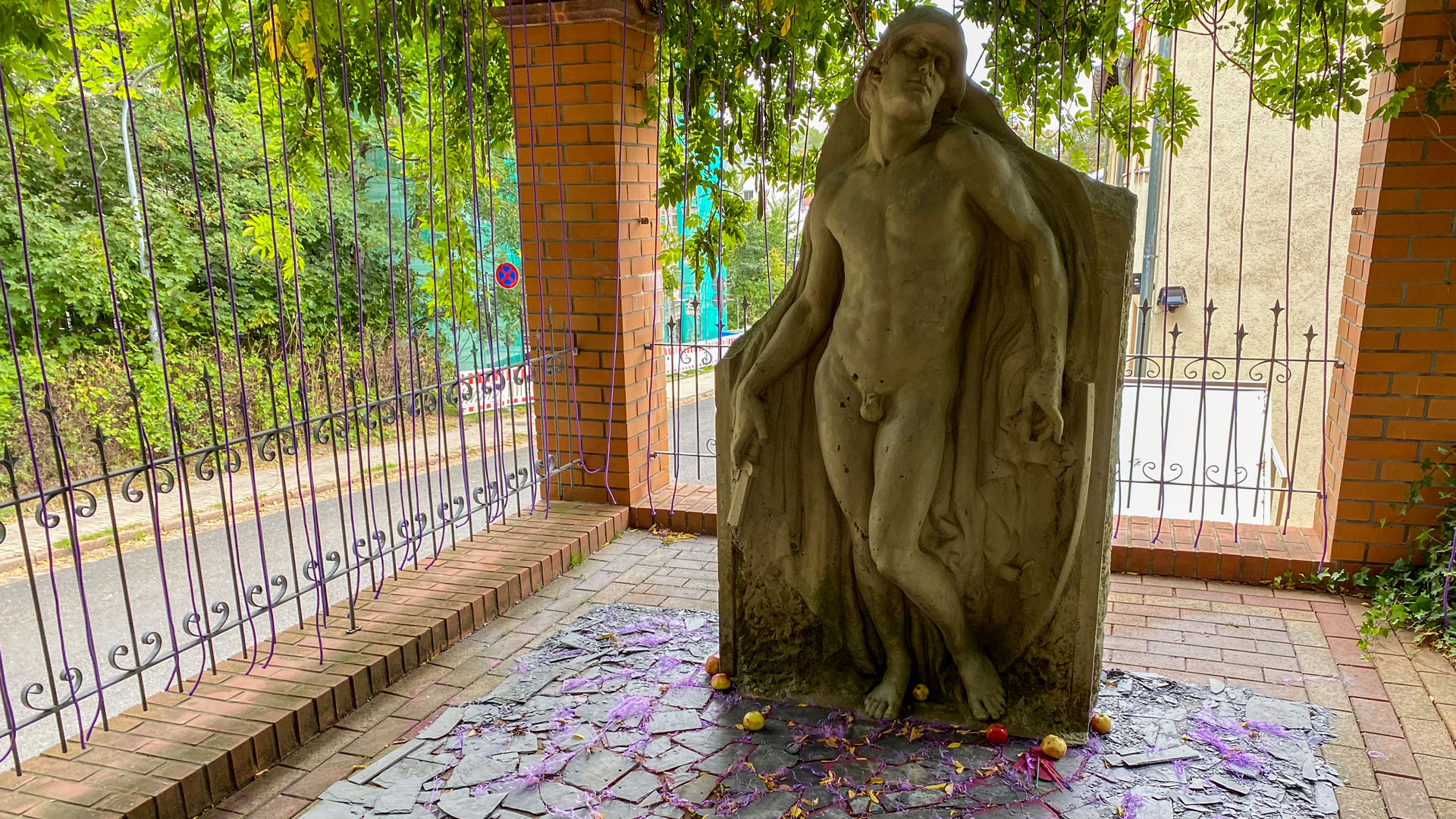
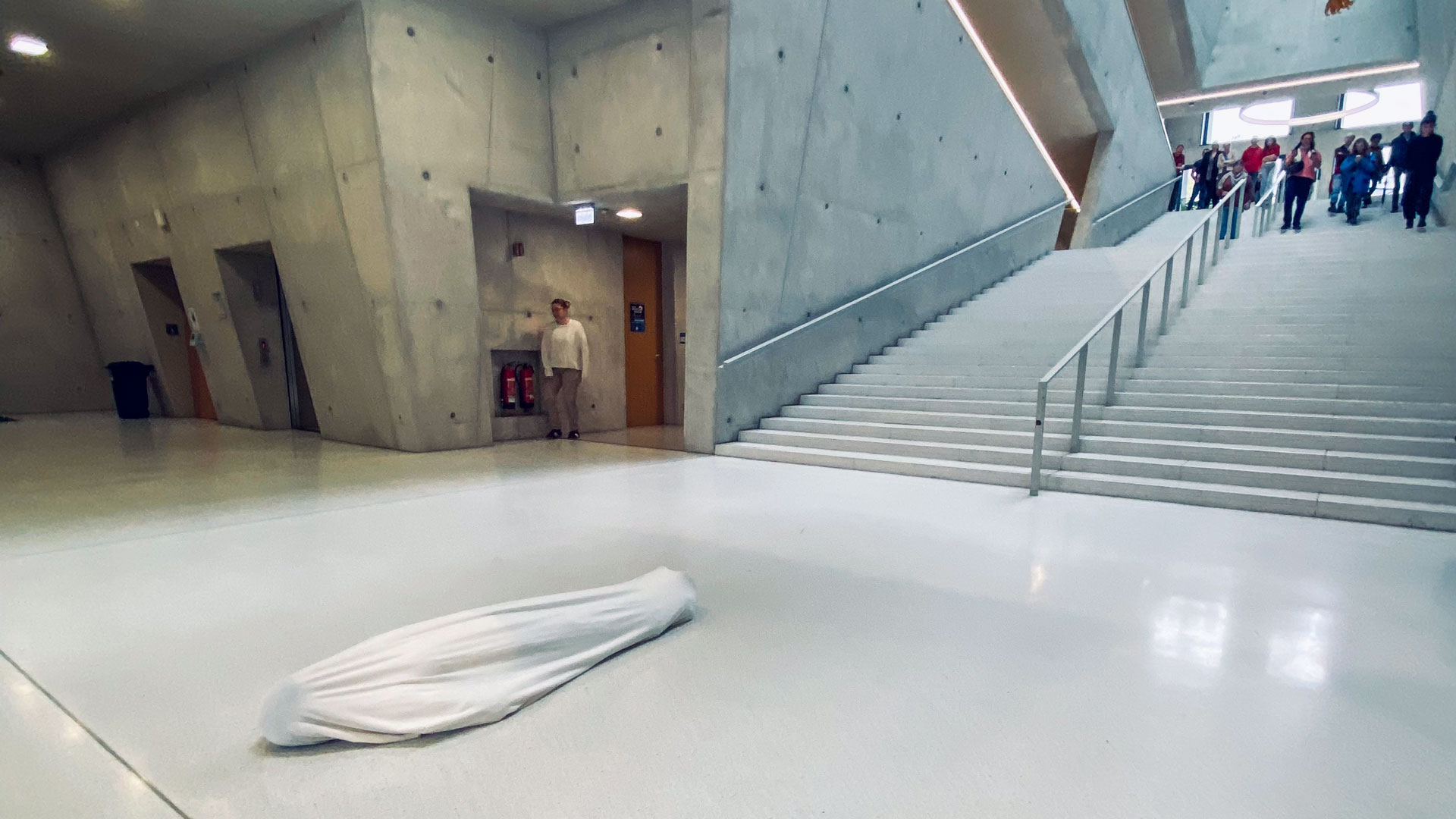
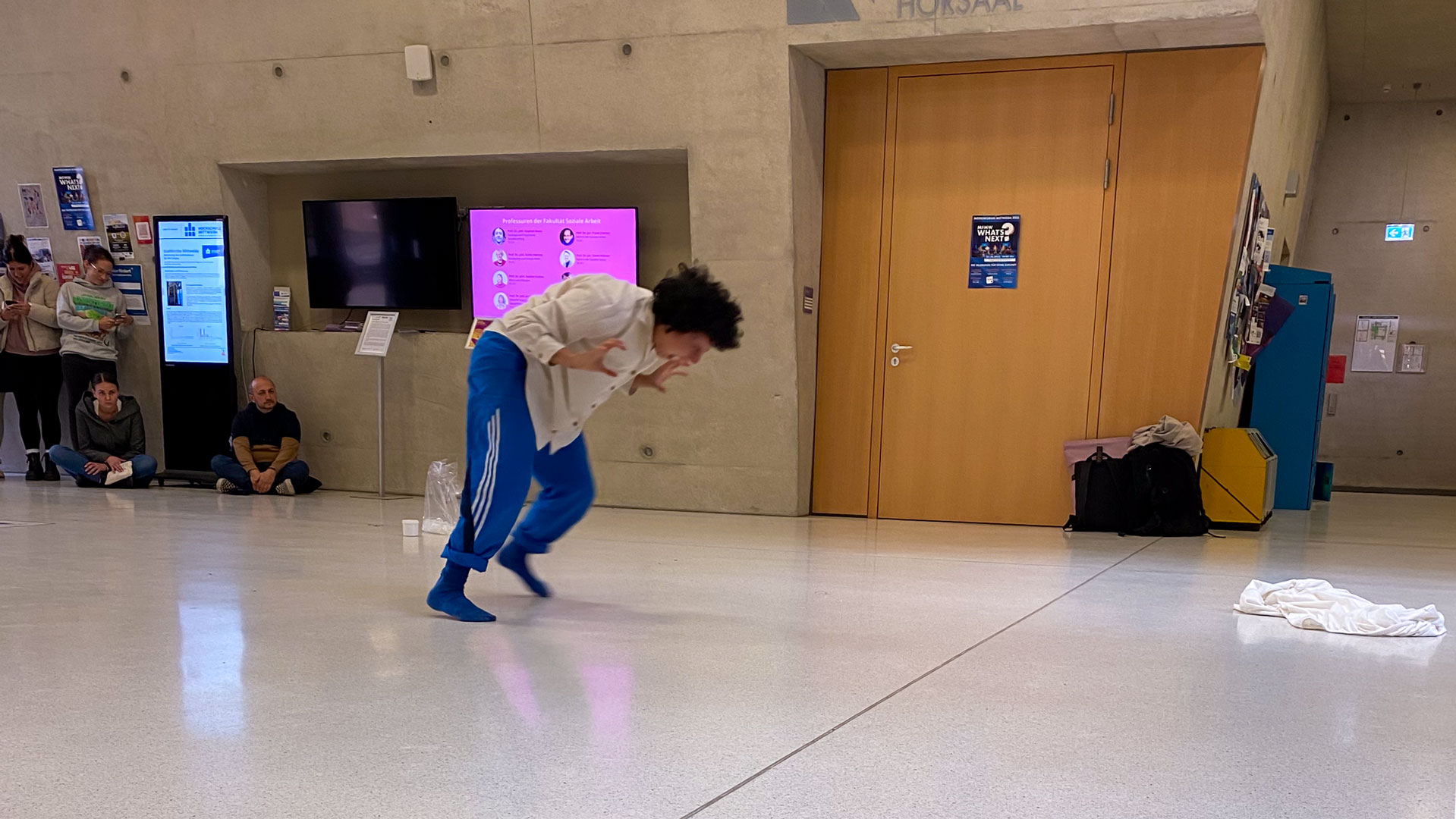
In Mittweida, the pergola at the university’s director’s villa was symbolically transformed into a sukkah during the week. It represents transience and letting go, but also hospitality, community and tolerance. In this spirit, the whole of Mittweida became a sukkah for the week – a welcoming temporary home for the more than twenty artists, their art and their guests. Sukkot Mittweida 2025 thus brought Jewish history and the present to life through theatre, music, film, literature, performance, food and discussion.