This page was translated automatically using artificial intelligence (DeepL). The German version is binding. More information about automatic translation
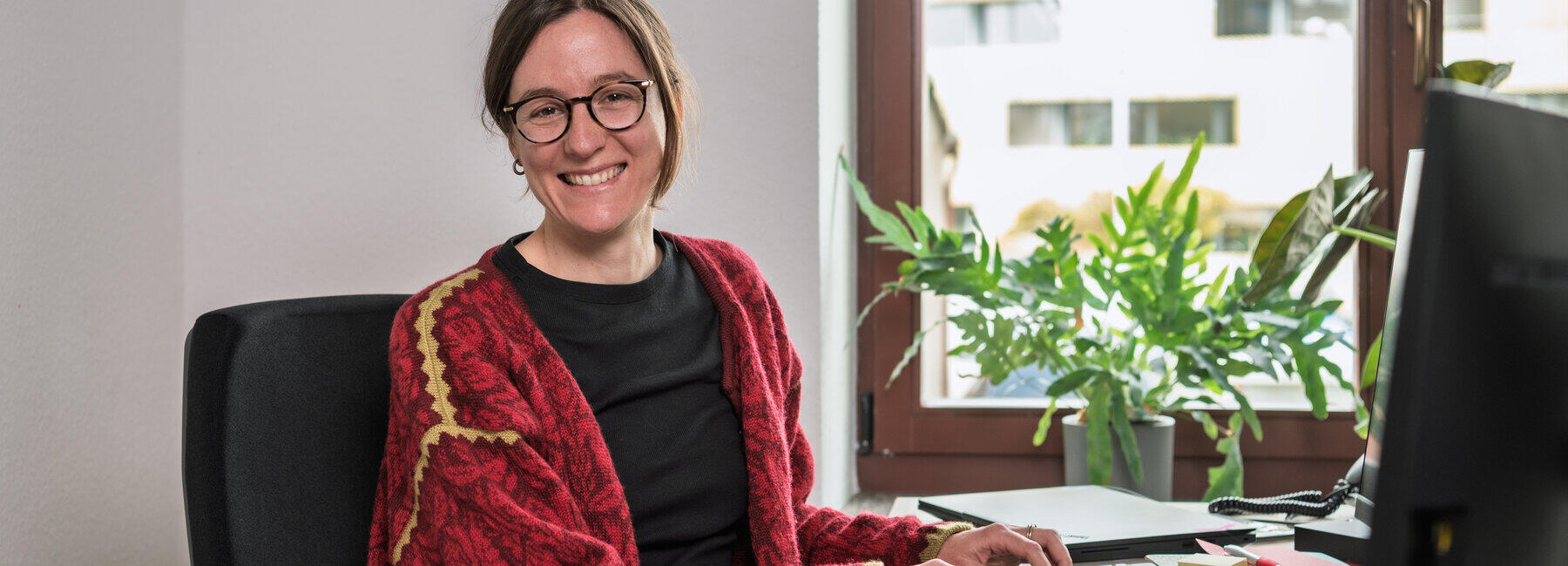
The Foundation for Innovation in Higher Education Teaching (StIHL) is supporting the ILEAS project at HSMW: ILEAS stands for ‘Innovative Teaching Architecture System’. Dr Stefanie Kremmel is coordinating the project. The interview was conducted by the university’s press officer, Helmut Hammer.
Dr Kremmel, could you please briefly describe once again what ILEAS is?
Our project aims to test innovations and further develop the structures for teaching and learning. The teaching staff at HSMW bring these structures to life. We are focusing on two key areas of tension: generational change and artificial intelligence.
To this end, there are a number of specific measures, such as the expansion of continuing professional development programmes in the areas of higher education pedagogy and digital literacy. In Building 6, for example, we will be setting up an interdisciplinary Digital Core Lab with a focus on natural sciences and computer science. There, a small but excellent range of equipment will create an attractive learning environment. Both students and teaching staff will be able to collect, pre-process and evaluate data themselves, and analyse it using AI algorithms.
We also face the challenging but rewarding task of making visible and presenting as a model the methodological, didactic and organisational elements of good teaching, as practised here at the university. This should make it easier to make adjustments in the future.
Our website is currently under construction. The Teaching Architecture Day on 24 June 2026 offers a good opportunity to learn more about the project. However, my current reading recommendation for gaining an insight into the project’s objectives is the well-structured application text for our project submitted to the Foundation for Innovation in Higher Education Teaching.
The ILEAS team has been working together for around half a year. Have you – all of you – settled in well and gelled as a team?
We are a team of 15 project staff with a diverse range of academic backgrounds. Among others, educational science, mathematics, computer science and higher education didactics are represented. In addition, there are professors leading the sub-projects and several academic staff members. Professor Christoph Meyer heads the overall project. The majority of the team have therefore been working at the HSMW for some time, and the project benefits immensely from this ‘home advantage’. We have also been joined by a few new faces, who hopefully bring a fresh and valuable perspective on the structures and processes.
Naturally, this diversity also brings with it a number of challenges. But we have developed a good working relationship. After all, we do not want to remain isolated within our own group, but rather to collaborate with many lecturers and students from all faculties, other projects and, of course, the central departments of the HSMW.
Isn’t it also a challenge to coordinate such a diverse group? What drives you?
Yes, the start was quite a challenge, and there were a few sprints to get through straight away! Without the dedicated and experienced colleagues within the project itself and, for example, in university management, I would have found it much harder. But things have settled into a bit of a routine now. As a long-distance runner, I prefer that to sprints!
I studied translation studies at the University of Vienna, then worked there for a long time and also completed my PhD. Before I came to Saxony, I worked as an advisor on digitalisation and organisational development at the Austrian Ministry for Climate Protection. What’s already clear from this career path is that I enjoy working in public administration and feel at home in a university setting. Communication and outreach work suit me particularly well.
Both are important for my work at ILEAS: my role involves a great deal of translation work, at least in a figurative sense. Objectives set out in the application must be translated into concrete measures; specific observations and the wealth of knowledge available at the HSMW should be incorporated into a conceptual framework; different disciplinary cultures must be taken into account; and much more besides. I find this exciting all over again every day. I also see myself as a liaison for HSMW lecturers within ILEAS and am always happy to be approached with questions and suggestions.
ILEAS responds to two developments: the digital transformation and the generational shift within the student body. Do these two go hand in hand? How is this becoming apparent?
Technological innovations are not a new phenomenon, and there have always been new generations of students in the past. But the combination of these factors is currently having a particularly disruptive effect on a university. However, HSMW has the advantage that, on the one hand, it offers disciplines that are well versed in digital technologies. On the other hand, it is small and agile enough to critically examine teaching practices and, as a result, adapt them or even rethink them. In my experience, many members of the university community are also willing to do this. And this is precisely what ILEAS aims to contribute to, supporting all stakeholders in making processes and methods fit for the future – from course planning right through to curriculum development.