This page was translated automatically using artificial intelligence (DeepL). The German version is binding. More information about automatic translation
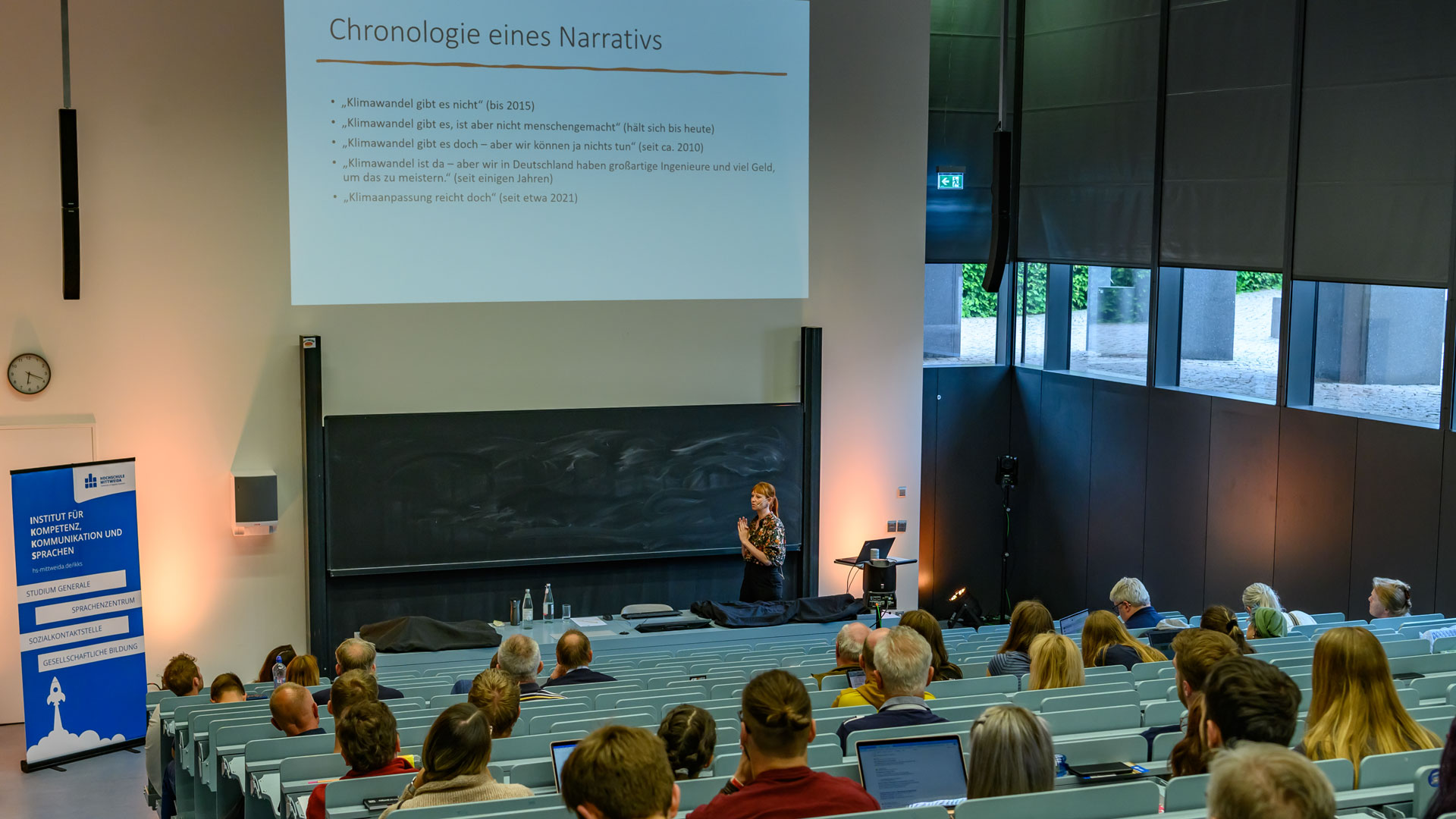
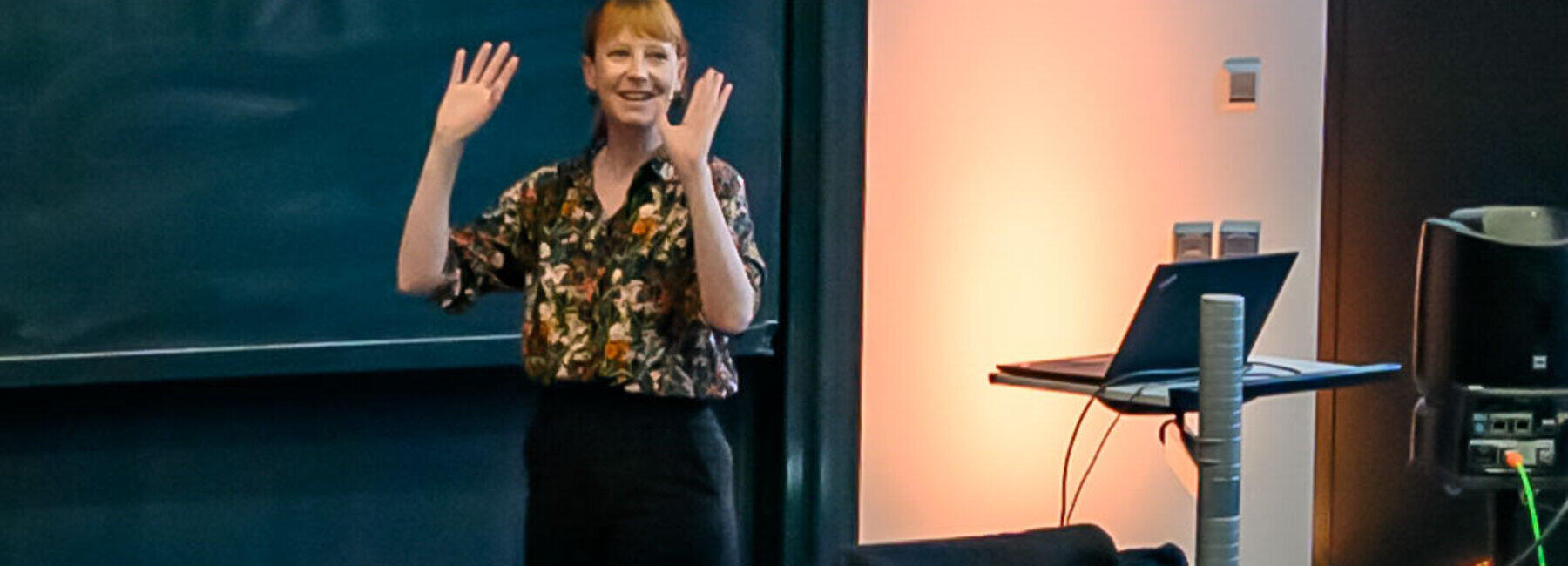
The contrast and interplay between climate protection and climate adaptation, as well as the respective narratives, were two of the key themes of the sixth event in the public lecture series, held at Mittweida University of Applied Sciences on 6 June 2023. Dr Susanne Götze gave a lecture entitled ‘A turning point in the climate crisis: change and those holding it back’. She is a journalist for SPIEGEL and a non-fiction author. Her latest book ‘Climate Out of Control: Floods, Heat, Storms – How Germany Must Protect Itself’ won the NDR Non-Fiction Prize in November 2022.
According to Götze, we are living in times of multiple, intertwined crises. The hope that, at some point, everything will return to the way it was before the crisis is illusory. For this is not a crisis, but a transformation affecting everything and everyone, and in this regard Götze quoted the author Jens Liljestrand from his novel “The Beginning of Tomorrow” (2022): “When we talk about ‘destroying the planet’ or ‘damaging nature’, that is a self-centred lie. We are not destroying the planet. We are destroying our own ability to live on it.”
No country can rest on its laurels. “There is no continent that will be spared,” said Götze, quoting climate scientist Hans-Otto Pörtner, one of the lead authors of the new World Climate Report. Götze identified an adaptation gap in Germany. Quite simply, too little is being done at a political level. “We need to move away from a perception-based approach to climate change and focus more on the figures.”
Götze outlined the “history of delay” in Germany and worldwide, identifying the key players in right-wing and radical free-market think tanks in the US and Germany, as well as in lobby groups opposed to climate protection.
For the necessary transformation to take place, climate protection and climate adaptation must not be played off against one another, as both the AfD and Fridays for Future have done. “It can only work together, especially at this stage: on a direct path to 1.5 degrees of warming.”
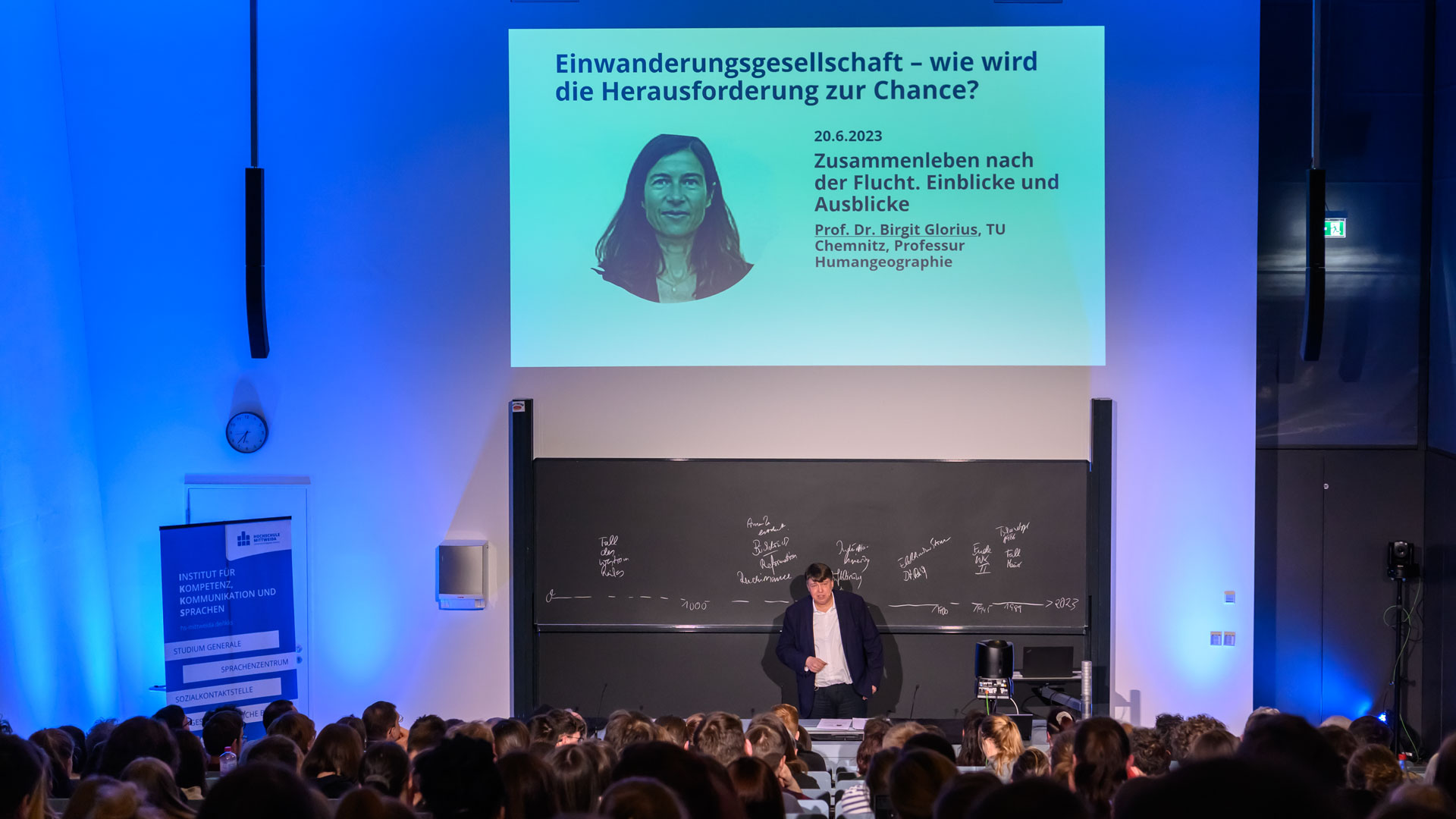
Lecture on 20 June: A shared future after fleeing
The seventh and final event in this summer term’s lecture series is dedicated to another ‘game-changing’ challenge: Around one million displaced persons and refugees from 2015–16 and 2022 face the task of rebuilding their lives after fleeing their homes. Host communities and the local population play a decisive role in shaping the course of their development following their flight.
The speaker, Dr Birgit Glorius, is a professor of human geography specialising in European migration research at Chemnitz University of Technology and a member of the independent Expert Council on Integration and Migration. In her lecture, entitled ‘Living Together After Flight: Insights and Outlooks’ on 20 June, she will present the findings of her empirical research and explore how a shared future can be shaped.
The lecture on Tuesday, 20 June 2023, will take place from 5.30 pm to 7 pm at the Centre for Media and Social Work at Mittweida University of Applied Sciences, Bahnhofstraße 15.
Full details of the lectures and speakers in the public lecture series: www.hs-mittweida.de/ringvorlesung
The lectures will also be available to watch on Mittweida University of Applied Sciences’ YouTube channel 14 days after each one.