This page was translated automatically using artificial intelligence (DeepL). The German version is binding. More information about automatic translation
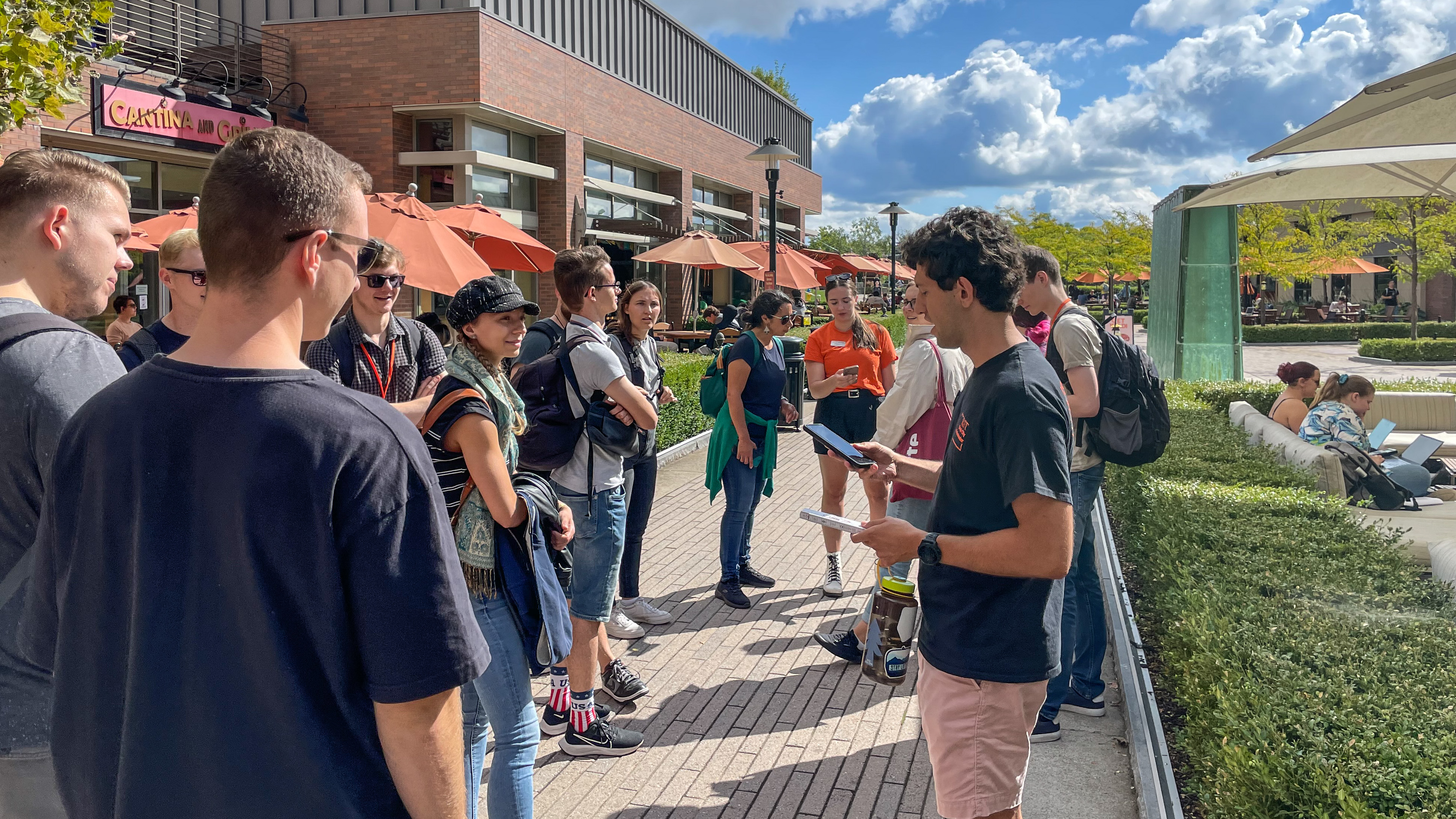
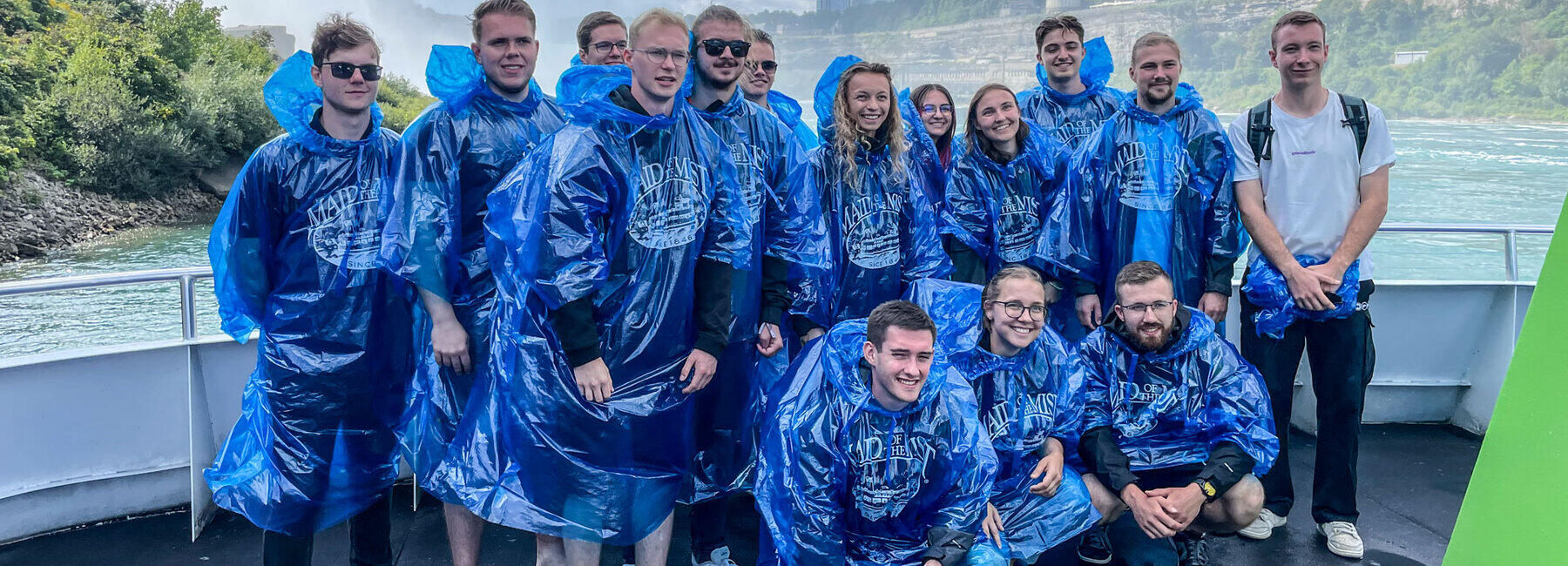
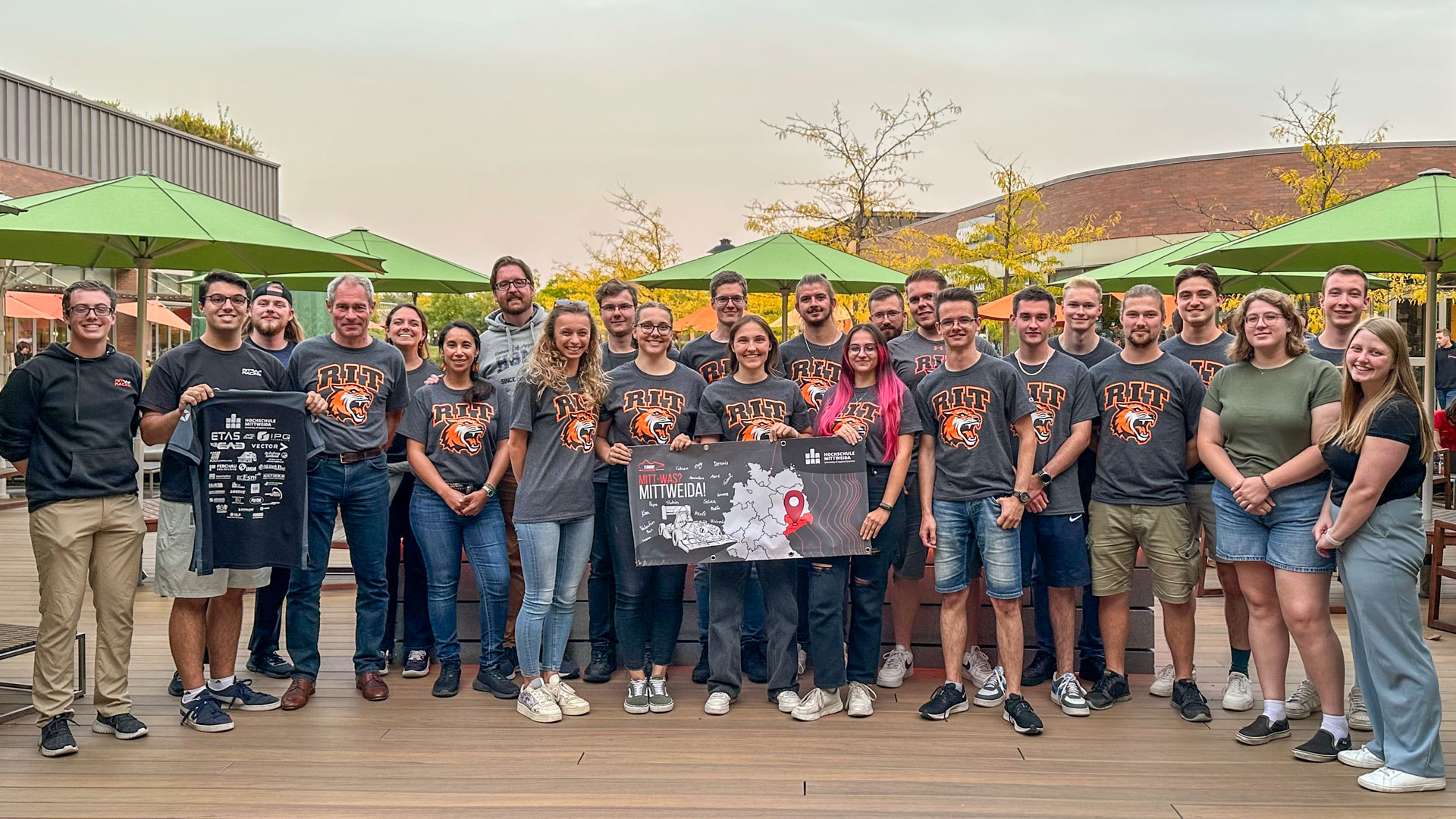
A field school organised jointly with students and lecturers from the Rochester Institute of Technology (RIT) has taken place on several occasions, but this year it was held in Rochester for the first time. Fifteen students set off with Professor Frank Weidermann from the INW Faculty on a trip across the Atlantic to the US state of New York. From 14 to 26 September, they had the opportunity to get to know the country, its way of life and its academic environment. For some, it was also a reunion – for example, for Professor Martin Anselm from RIT with his colleague Weidermann from Mittweida.
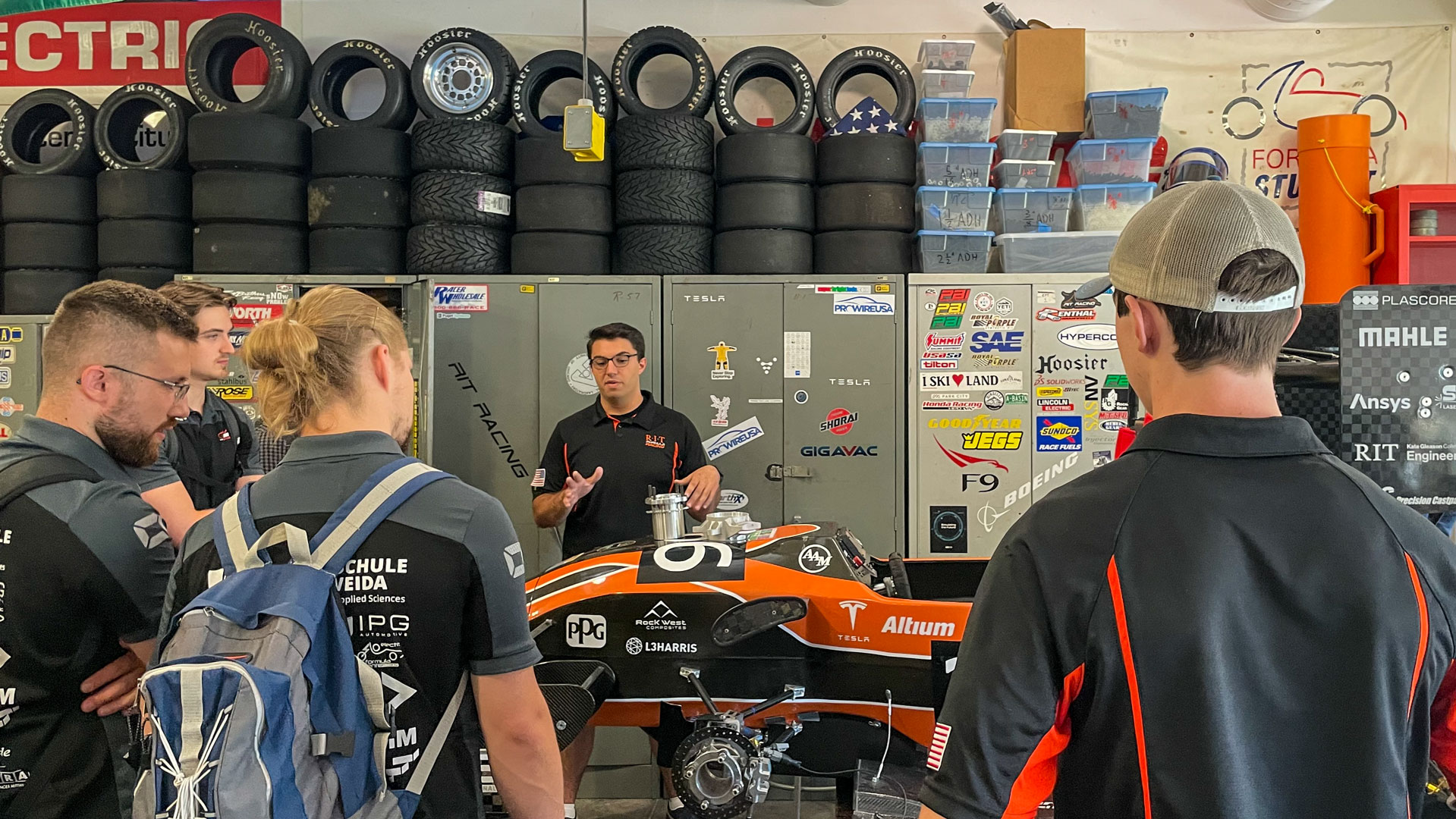
Relations with RIT go back a long way. In terms of content, the collaboration is primarily centred on the field of automotive engineering. This was once again the main focus this year. The Germans’ expertise in this field is highly regarded, and the comparison between the USA and Germany played a key role in the introductory lectures and presentations prepared by the students from Mittweida. What they had learnt at RIT was presented at the end.
The courses attended by the Mittweida students at RIT covered, amongst other things, hydraulic circuits and the practical construction of electrical circuits used in automotive engineering. As drivers will in future be able to occupy themselves with other things whilst driving – thanks to higher levels of autonomous driving – and whilst waiting at charging points, a games design work placement was offered for the first time. This fitted in well with the broad academic background of the group of students from Mittweida, which included not only future engineers in Mechanical Engineering and Electrical Engineering, but also fellow students from the faculties of Applied Computer Sciences and Biosciences, Industrial Engineering and Faculty Media Sciences at Mittweida University of Applied Sciences.

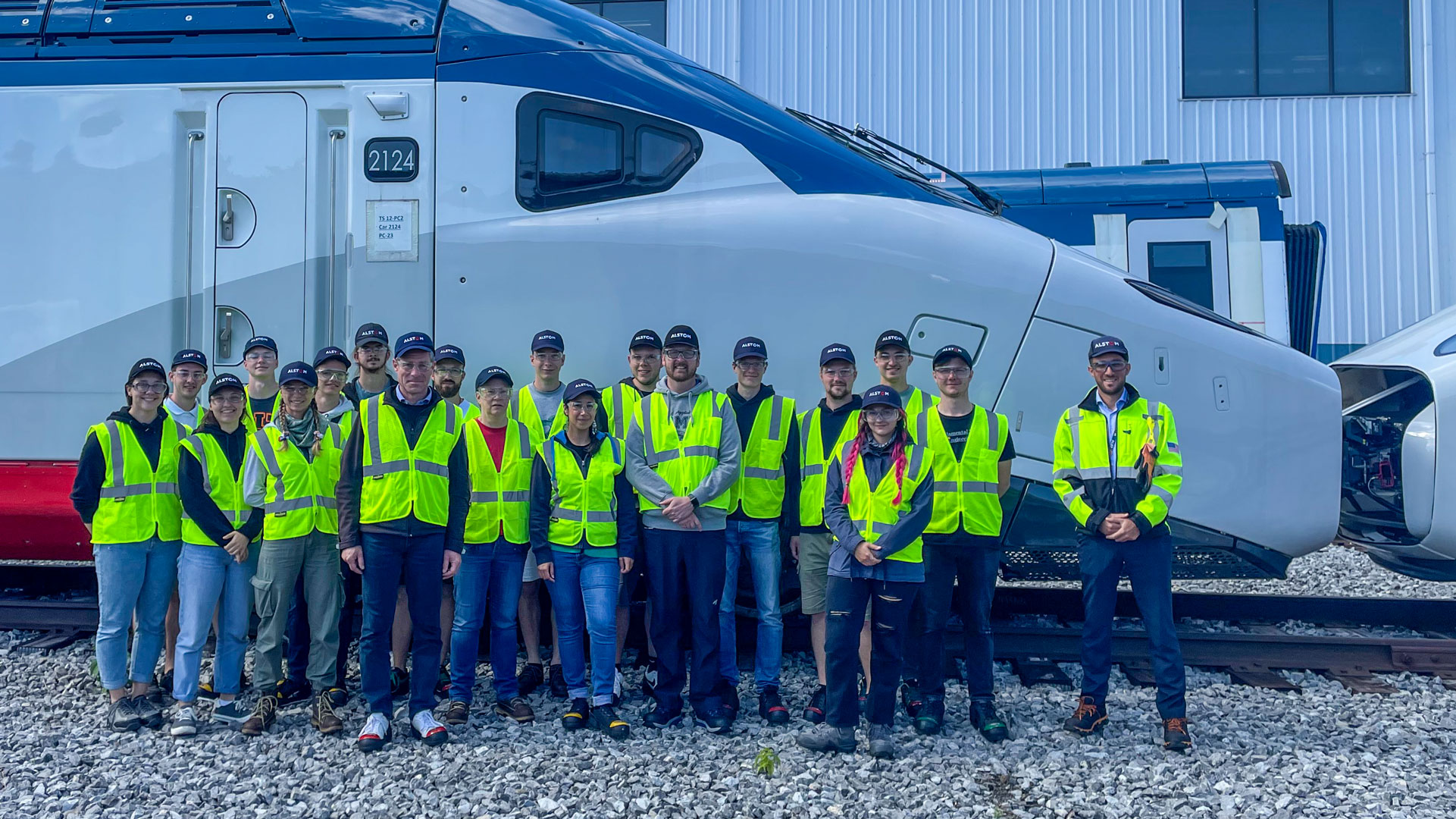
The visits to three companies in the automotive supply industry and vehicle manufacturing provided insights into production: Marquardt in Syracuse, a German company operating worldwide which has also been producing switches for the automotive industry in the US since the 1980s; Alstom Transportation in Buffalo, which builds rail vehicles; and Century Mold in Rochester, which manufactures injection-moulded parts for the automotive industry. Of course, there was plenty of classic sightseeing too: the highlights were Niagara Falls – less than a hundred miles from Rochester – and the ‘Big Apple’, the largest city in the state of New York.
Collaboration with a history and a future
This first joint International Field School organised by RIT and Mittweida University of Applied Sciences in the USA was preceded by three such events held in Saxony in 2018, 2019 and 2022. In 2020, the participants met virtually.
The collaboration between the two universities has personal roots: Professor Martin Anselm’s grandfather held a teaching post at Mittweida University of Applied Sciences for a time. His great-grandfather, Julius Anselm, worked at what was then the Technikum from 1901 to 1948, including many years as its director.
RIT is a private university with around 20,000 students and over 1,000 teaching staff across 11 faculties and institutes. An academic year there costs approximately US$50,000 without the benefit of scholarships.
Thanks to the arrangements made by Professor Martin Anselm, no fees were payable to RIT for the Field School. Travel and accommodation costs were funded by the International Office at Mittweida University of Applied Sciences through the ‘PROMOS’ programme. The faculties also supported their students, thereby reducing the amount they had to contribute themselves.
The next joint field school will take place in May 2024, once again in Mittweida. Anyone interested can contact Professor Frank Weidermann directly. Over 50 students have already applied for the 16 places available to RIT students. In future, the locations are set to alternate every two years, meaning the programme will return to New York in 2025.