This page was translated automatically using artificial intelligence (DeepL). The German version is binding. More information about automatic translation
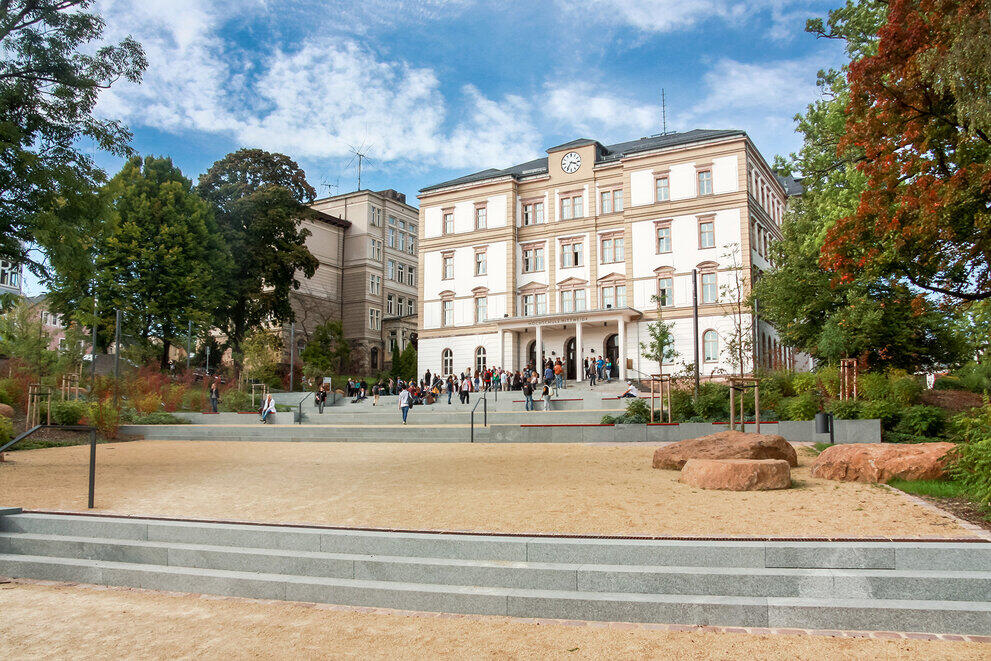
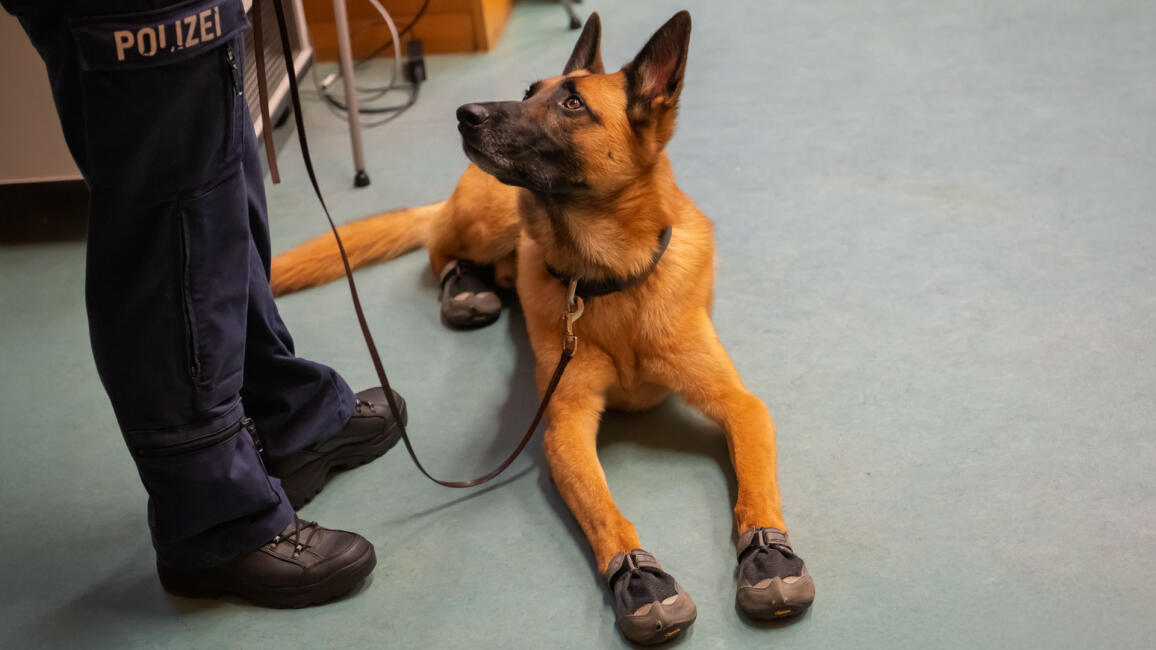
The scene of the incident: the Gerhard Neumann Building at Mittweida University of Applied Sciences, Saturday 17 May, in the morning between 10.00 and 11.30. A police car outside the building, policewomen in the lecture theatre, lots of excited children and, right in the middle of it all, a four-legged friend with a superb sense of smell. Nothing serious had happened; the police presence was, in fact, part of an educational initiative. Jana Kindt, head of the Prevention Unit at Chemnitz Police Headquarters, and her colleague, dog handler Ivonne Naumann, gave the children at the Children’s University some fascinating insights into their work. However, one other guest received special attention: Moby, the police sniffer dog.

The approximately 450 people in the children’s and parents’ auditorium learnt how dogs are trained as police dogs, how they are deployed in a wide variety of situations, and why teamwork is so important in this context. It soon became clear to everyone: dogs are well suited to police work for good reason, because they have superpowers …

Jana Kindt – in typical Children’s University style – got straight down to the nitty-gritty and, together with the children, explored the police’s areas of operation and some of its specialist departments. The discussion covered a wide variety of operational resources, such as helicopters, patrol cars, speedboats and the mounted police unit. Animal assistants are also officially classified as ‘operational resources’ by the police. That morning, the focus was on the police dog with its highly developed senses – or ‘superpowers’. For example, a dog can smell a thousand times better and hear eight times better than humans. This makes them one of the most important assets in police work. Ivonne Naumann, the handler of detection dog Moby, explained that not only do they always work together, but Moby is also part of her family and lives with her. This close bond is important, she said, because in dangerous situations they must be able to rely on one another. The Saxony Police force works with around 150 dogs and 130 dog handlers. The force deploys drug detection dogs such as Moby, as well as protection dogs and explosive detection dogs.

After these fascinating insights into the day-to-day lives of the policewomen, it was time for some hands-on practice. The lecture theatre had to be quiet, as Moby the detection dog had an important job to do: pieces of a Kong toy had been hidden throughout the lecture theatre, and he now had to track them down. An exciting search ensued, which was successfully completed. Time and again, Moby would freeze whenever he found something. That is how he was trained to indicate a find.

Robin Biebl, organiser of the Children’s University, says: “Today’s lecture was an example of our approach to offering a broad range of topics at the Children’s University and also to introducing subjects and professions that aren’t taught at the HSMW. To this end, we invite guest lecturers once a year. The suggestions always come from the children themselves. Last year, for example, we were joined by the senior paediatrician from Mittweida Hospital. I’m delighted that these partnerships enable us to offer a wide range of perspectives.”

Children’s University Away Day: Experimenting in the Park
The programme continues as early as 4 June, as Mittweida University of Applied Sciences’ Children’s University goes on tour: anyone interested can visit the Children’s University tent at the ‘Experimenting in the Park’ event in Wilhelm-Ostwald-Park. Under the heading ‘Where do wild bees find their breakfast?’, there will be five lectures spread throughout the day. What’s more, in the hands-on tent, theory can be put into practice straight away. Under the motto ‘Is there a buzz around you?’, we’ll be experimenting with various aids for bees. Prof. Dr Röbbe Wünschiers and his PhD student Lisa Carolina Prudnikow from the Biotechnology and Chemistry Department will be providing scientific guidance to the children throughout the day. This away event is a collaboration with the ‘Eine Uni ein Buch’ project. Details of the programme can be found on the Children’s University website or the Wilhelm Ostwald Park website.
Outlook: Children’s University special for the Night of Sciences
On 20 June, as part of the Night of Sciences (Nacht der Wissenschaften), there will be a Children’s University lecture on the topic: ‘In search of the best house… – And why we’d rather not rely on fairy tales.’ This special edition of the Children’s University takes a closer look at the fairy tale of the Three Little Pigs, who build their houses out of straw, wood and stone. In the end, only one house remains standing… But what parts of the story still hold true today? During the lecture, the children will take a very close look at various building materials and carry out experiments with them. The lecture lasts three-quarters of an hour and is offered twice: at 6.30 pm and 8.00 pm, both at the Centre for Media and Social Work, Bahnhofstraße 15. No registration is required for this Children’s University session.
Text: Robin Biebl/Helmut Hammer
Photos: Helmut Hammer