This page was translated automatically using artificial intelligence (DeepL). The German version is binding. More information about automatic translation
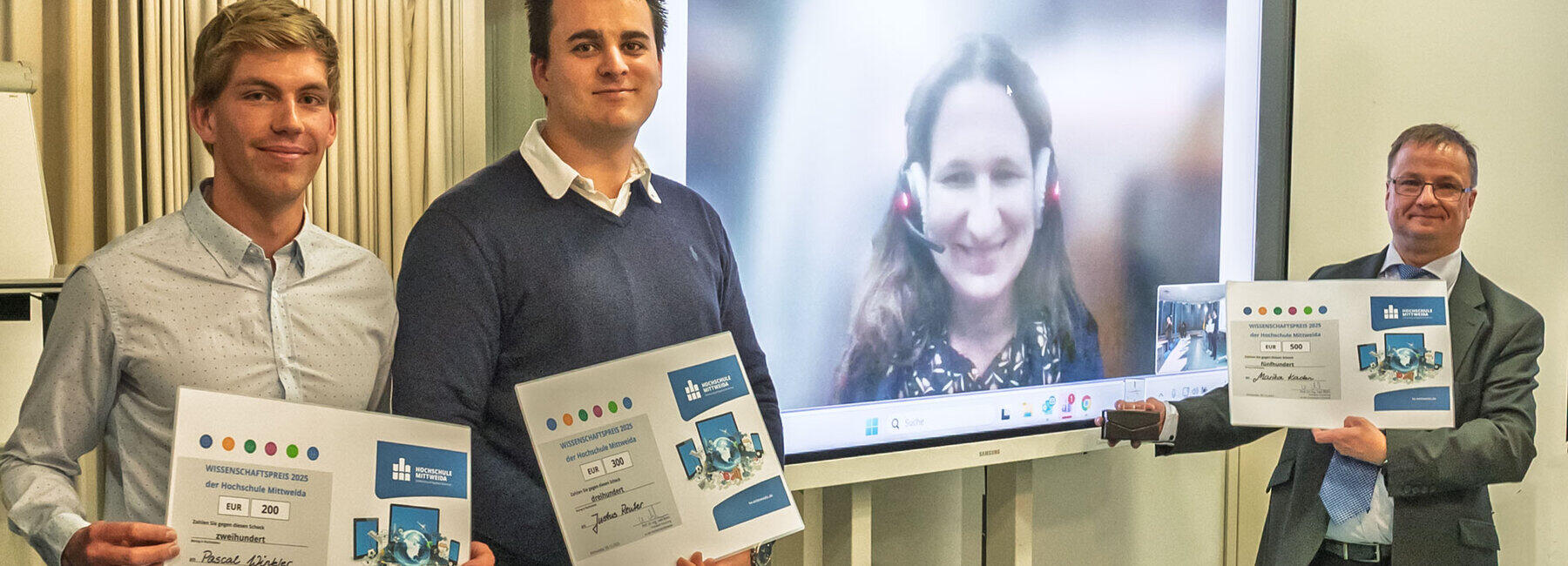
Mittweida University of Applied Sciences (HSMW) has four new prize winners: Dr Marika Kaden, Justus Reuter and Pascal Winkler won the HSMW Science Prize 2025, whilst Fritz Backofen was awarded the Gerhard Neumann Prize. The prizes were presented at the HSMW Research Day on 9 December.
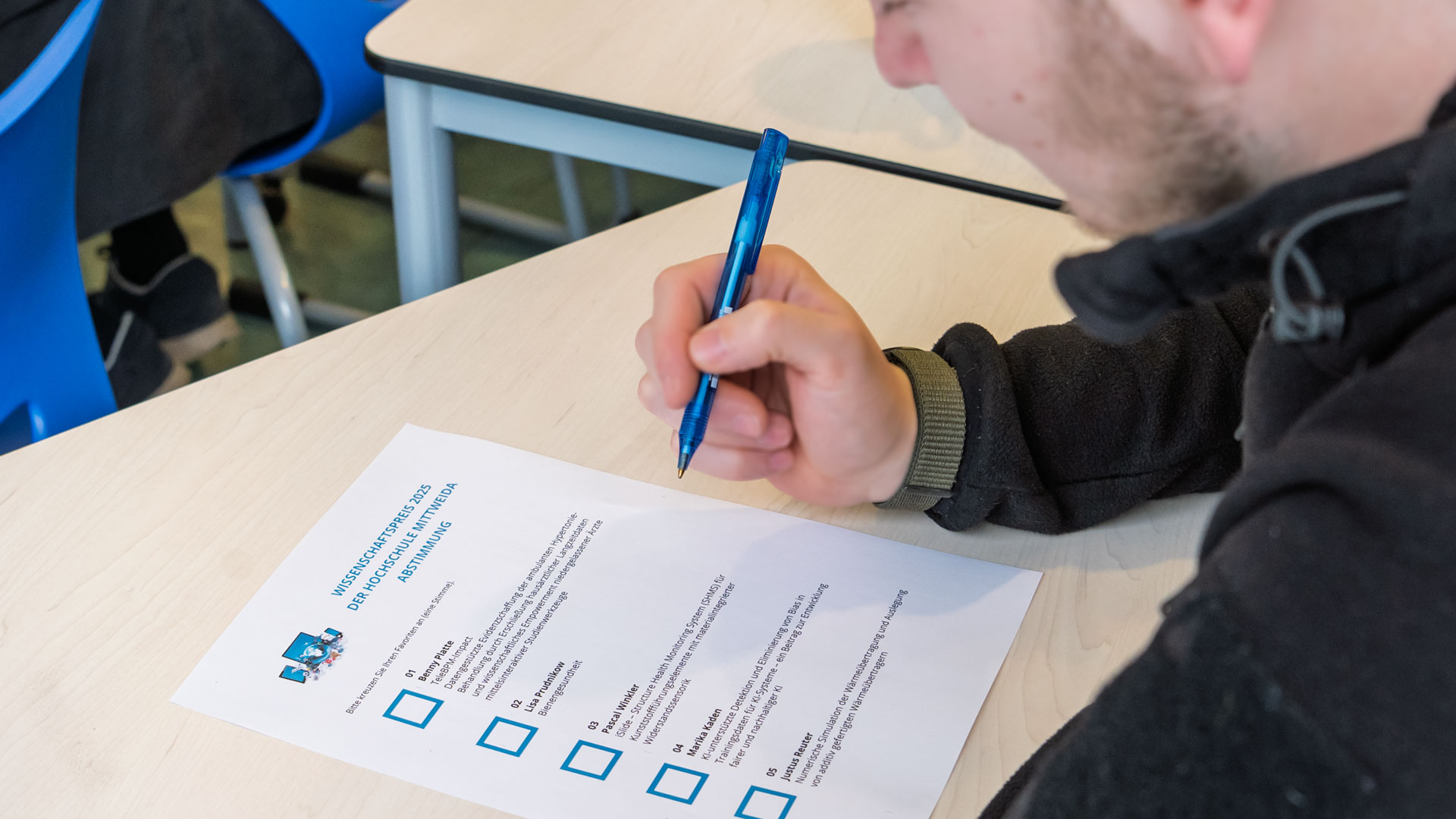
For the Research Prize, a jury had reviewed the submissions and nominated five researchers. At the Research Day, they competed once more in a pitch – which proved decisive for the public vote, ultimately altering the order of the jury’s ranking.
Making AI fairer
Dr Marika Kaden from the Mathematics Section of Faculty CB took first place. She gave her pitch whilst on the move, live from Hanover Central Station, and impressed the judges with her topic: “AI-supported detection and elimination of bias in training data for AI systems – a contribution to the development of fair and sustainable AI”. Dr Kaden’s challenge is what is known as bias: the quality of predictions or decisions made by AI systems is largely determined by the quality of the training data. Unrecognised or unintended distortions in the data relating to a decision-making criterion are referred to as bias. They can lead to biased decisions by the system. For example, assessments of learning outcomes may be unintentionally influenced by hidden information regarding gender. The task now is, firstly, to identify the suspected bias in the training data, to specify it precisely and, where necessary, to correct for this bias. Both are central challenges in the development of AI systems. Existing approaches are often only able to detect bias, or heuristics are typically used to reduce it, meaning that correctness cannot be reliably guaranteed. This makes their application in sensitive areas, such as medicine, difficult.
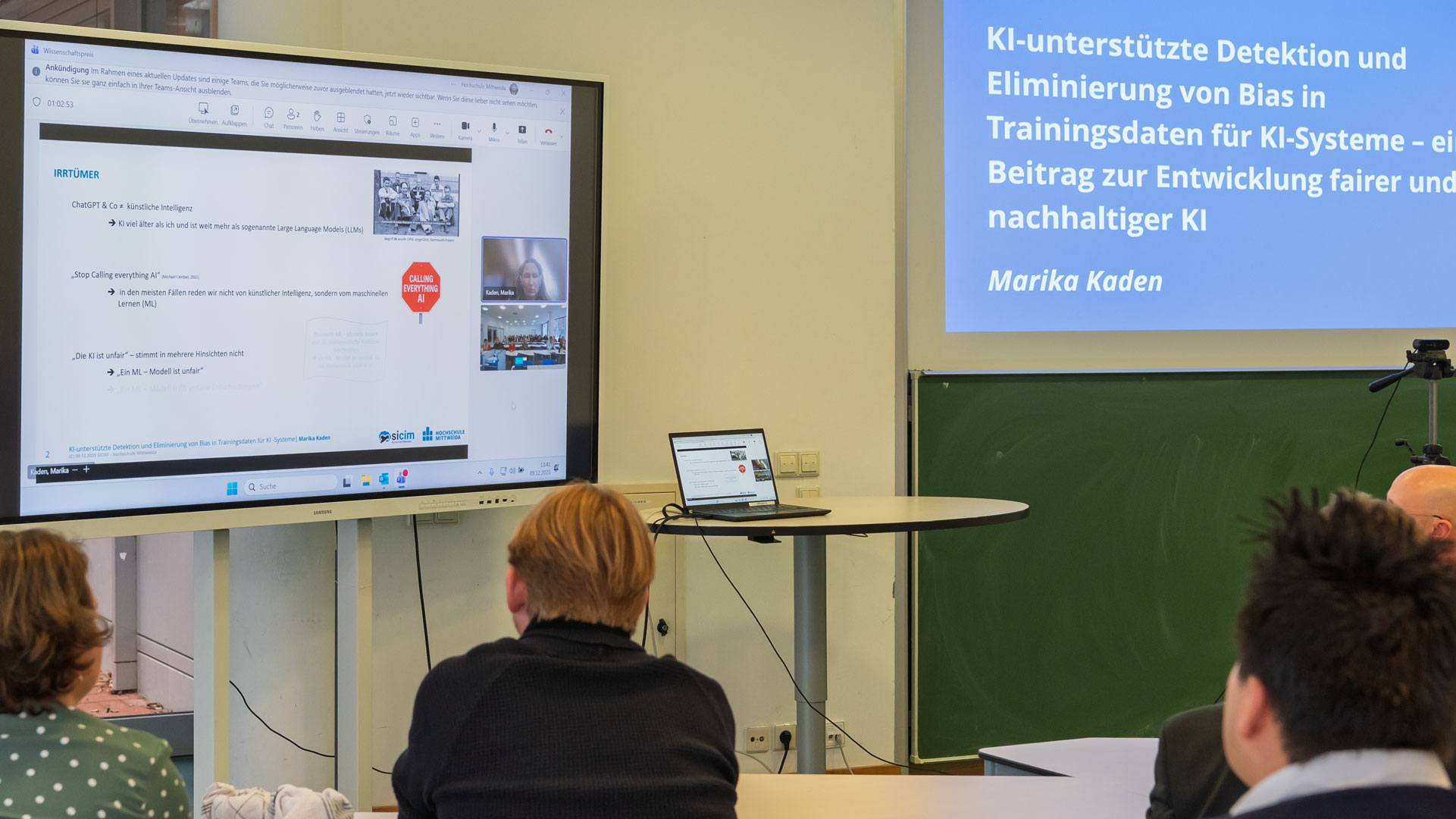
Dr Marika Kaden, in collaboration with the SICIM research group and scientists from the University of Groningen, has devised a new, AI-supported approach that enables both challenges to be resolved using a single AI model. To this end, an architecture was created for the detection model which, thanks to specifically embedded mathematical properties, enables not only bias detection but also this data cleansing in the event of a detection – a so-called null-space projection. Applying this method to the data allows it to be almost completely cleansed of bias, and a fair AI model – in terms of the decision criterion – can be trained using the cleansed data.
Optimising heat transfer
Justus Reuter, who came second, from the Design Section at the INW Faculty, entered the competition with his research topic ‘Numerical simulation of heat transfer and the design of additively manufactured heat exchangers’. Energy-efficient, lightweight and compact heat exchangers are crucial for the aerospace industry, power electronics and energy technology. Conventional heat exchangers achieve heat transfer coefficients of only around 4 kW/(m²·K) and are difficult to miniaturise. So-called triply periodic minimal surfaces (TPMS), such as the gyroid – which can also be found in butterfly wings, for example – have a very favourable surface-to-volume ratio due to their periodic geometry. This ensures low flow resistance combined with high mechanical stability and excellent flow guidance. Using the micro-SLM process developed at the Mittweida Laser Institute (LHM), such structures can be fabricated from stainless steel with cell sizes of 1 to 2.5 mm and wall thicknesses of 100 μm. Objective: a heat transfer coefficient of 8–12 kW/(m²·K) and low pressure drop, which is numerically optimised and experimentally validated.
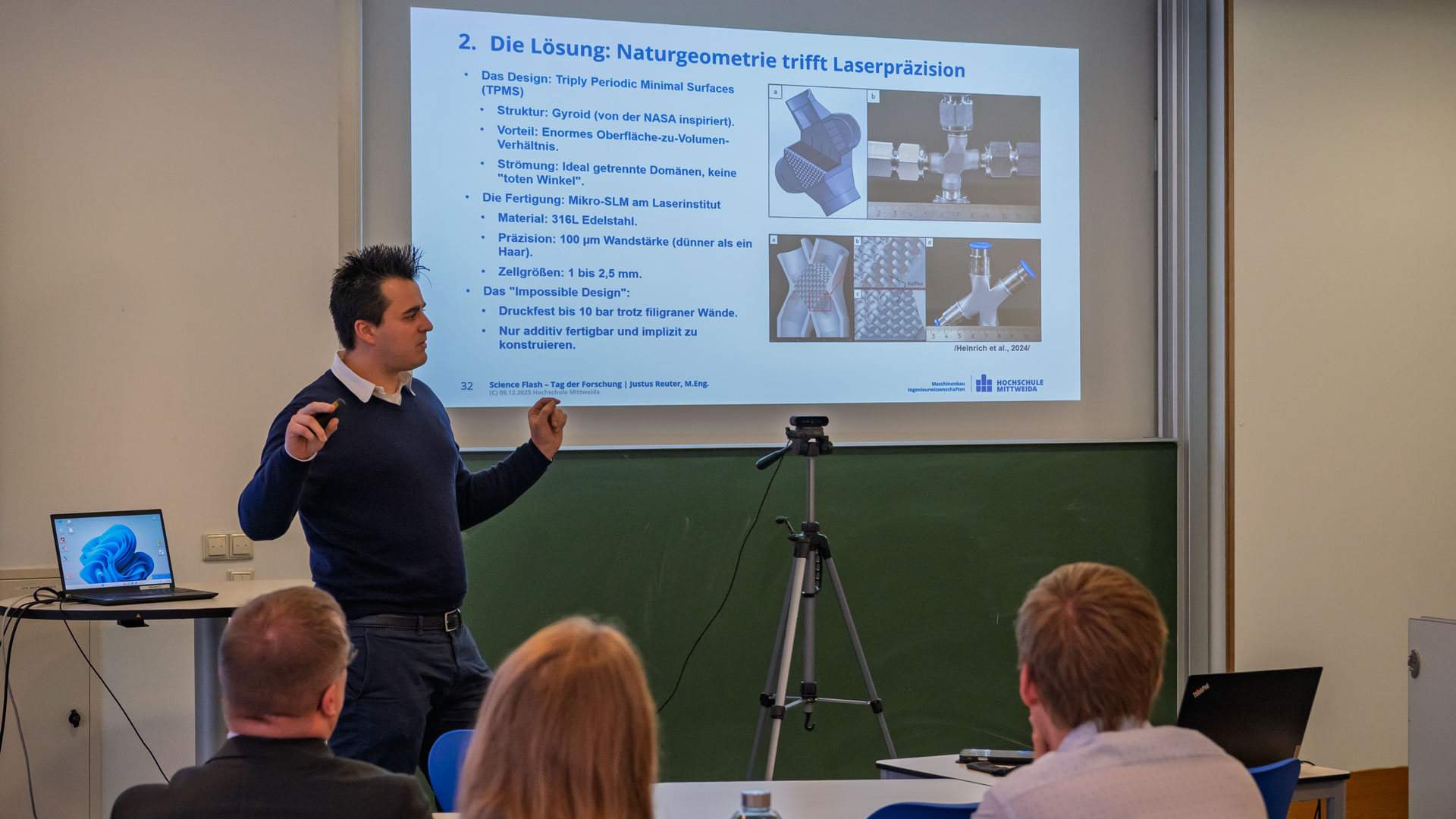
The Reuters work programme began with CAD modelling, followed by numerical simulation, additive manufacturing – and finally experimental validation: the demonstrator achieves heat transfer coefficients of > 8 kW/(m²·K). Simulations predict values of up to 12 kW/(m²·K), which represents an increase of more than 300 per cent compared with conventional plate heat exchangers.
Continuously monitor wear and tear
Pascal Winkler, also from the Design Section, came third in the 2025 Science Prize. He was unable to attend the pitch due to illness, but his colleague Jim Köcher stood in for him to present the project ‘iSlide – Structure Health Monitoring System (SHMS) for plastic guide elements with material-integrated resistance sensors’. Slide rails in conveyor systems are usually made of plastic and wear down over time due to friction. Until now, decisions have been based on empirical values or fixed replacement intervals, which in turn usually results in the slide rails being replaced either too early or too late – both of which are costly.
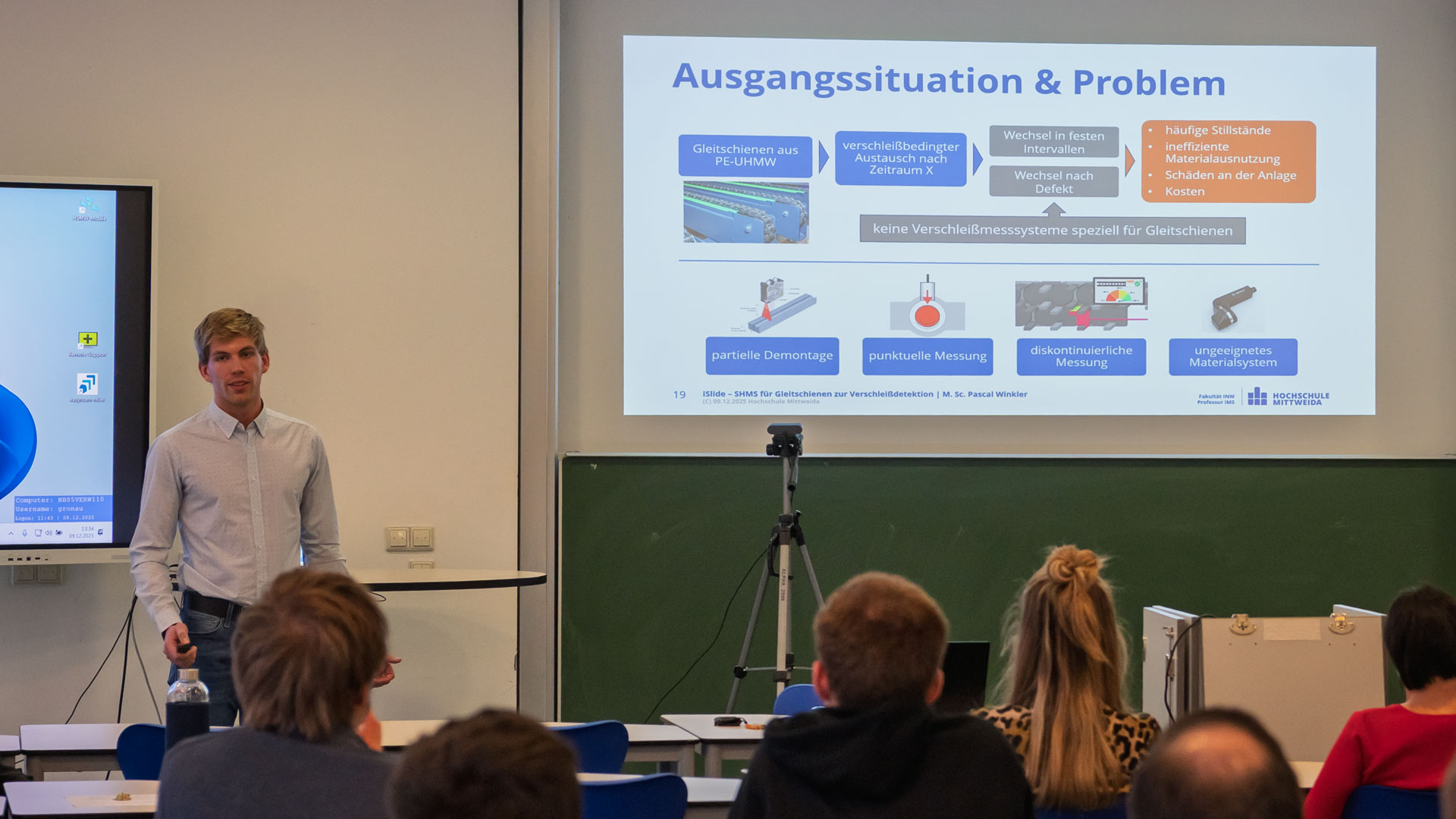
The iSlide project has developed an electrically conductive yet tribologically resistant plastic, which is embedded into the matrix material of the slide rail as a specially shaped electrically conductive strip using a conventional compression moulding process. The resistance of this sensor strip changes during operation in proportion to the degree of wear. Through a suitable electrical connection, the resistance is measured continuously during operation and in real time. Intelligent software determines the wear status of the slide rail. This enables maintenance to be planned precisely, downtime to be minimised and resources to be conserved.
Communicating science
Also nominated were Lisa Prudnikow and Benny Platte, both from Faculty CB, albeit from different disciplines.
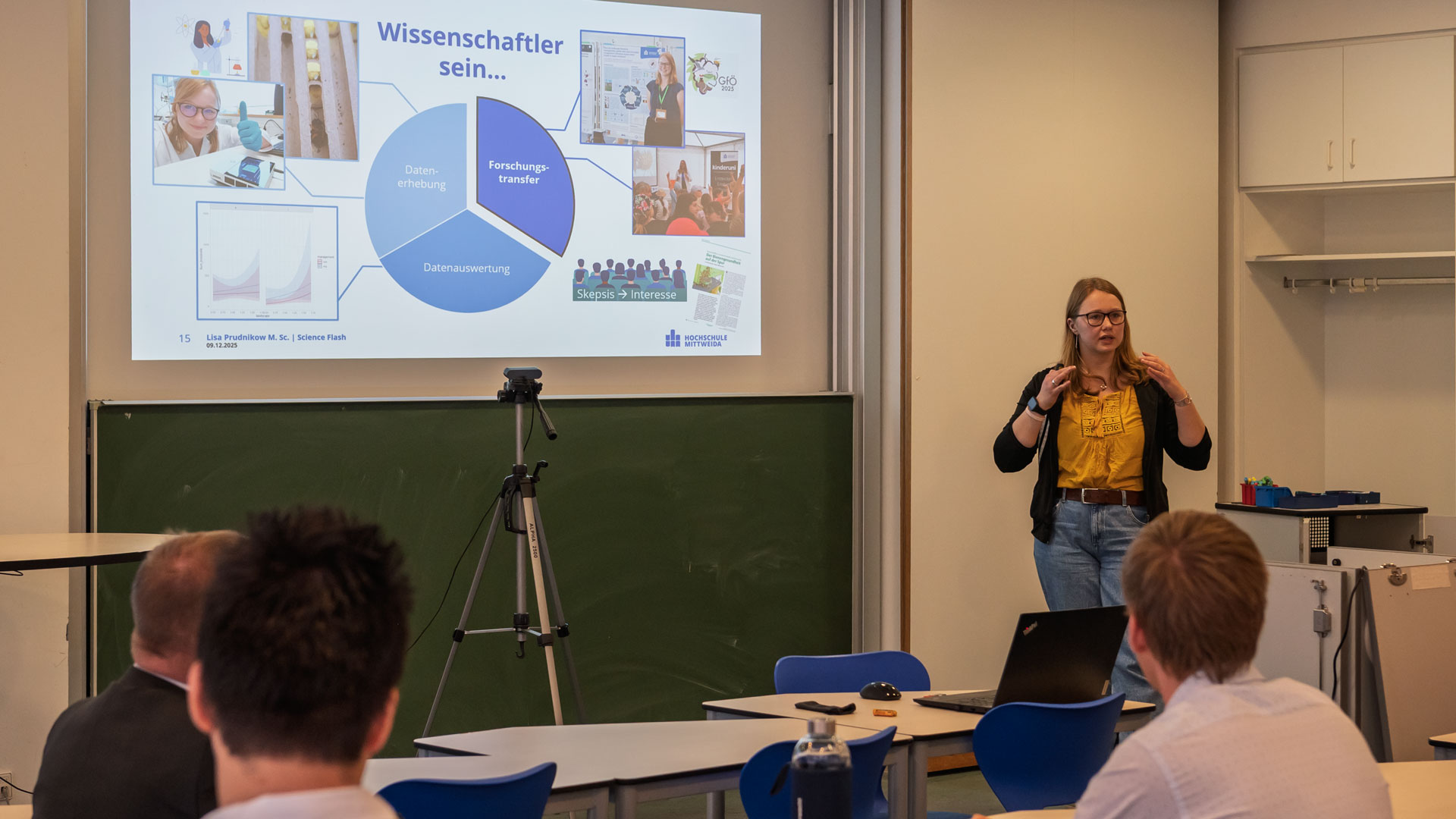
Lisa Prudnikow from the Biotechnology and Chemistry Section used the example of the ‘Bee Competence Centre’ in Mittweida to demonstrate the importance of science communication – that is, both publishing scientific work and making research findings accessible, imparting knowledge, building trust and establishing social relevance. In the specific case of bee colonies, which are severely threatened by the Varroa mite, and the consequences for the pollination of our crops, Prudnikow aims to demonstrate how modern genetic engineering methods can help answer major agro-ecological questions.
Making outpatient care data accessible for research
The “TeleBPM-Impact” study by Benny Platte from the Computer Science Section also addresses a very tangible and highly topical health issue: in Germany’s first study approved by the German Register of Clinical Trials (DRKS) under the brand-new Health Data Utilisation Act (GDNG), Platte investigated how long-term data from general practitioners’ practices can be made available for research and clinical care without personal data leaving the practice. The focus is on chronic, population-wide conditions such as arterial hypertension, the management of which is predominantly outpatient-based, yet data on which are scarcely utilised for scientific analysis. To this end, practice data – accumulated over many years and previously inaccessible to research – was extracted, harmonised and analysed using methods from medical informatics for the first time.
Combining materials science and Data Science
This year’s Gerhard Neumann Prize has been awarded to Fritz Backofen, a graduate of the HSMW’s Bachelor’s and Master’s programmes in Mechanical Engineering. He was recognised for his Master’s thesis entitled: ‘Development of a machine learning-based user tool for predicting the results of a weld-bending test’. In his thesis, which was awarded a grade of 1.0, Backofen developed an application programme for machine learning-based prediction of test results in the weld-over-bend test (ABV), a standard test method for assessing the crack-arresting capacity of structural steels used, for example, in Deutsche Bahn’s bridge construction. The award winner implemented a tool which, once the material parameters have been entered, provides a prediction of the test outcome. The software remains functional even when parts of the data sets are missing.

According to the principal examiner, Professor Kristin Hockauf from the Materials – Manufacturing – Quality section of the INW Faculty, the work “makes a substantial contribution to data-driven materials evaluation and demonstrates an interdisciplinary link between classical materials engineering and modern Data Science. It exemplifies how the intelligent combination of domain-specific expertise with advanced modelling technology can create robust, explainable and practically relevant solutions to complex technical challenges.”
Fritz Backofen, now a research assistant and PhD candidate at HSMW, collaborated on this project with Chemnitzer Werkstoff- und Surface technology GmbH (CEWUS), which, amongst other things, provided him with a database comprising results from numerous experiments.