This page was translated automatically using artificial intelligence (DeepL). The German version is binding. More information about automatic translation

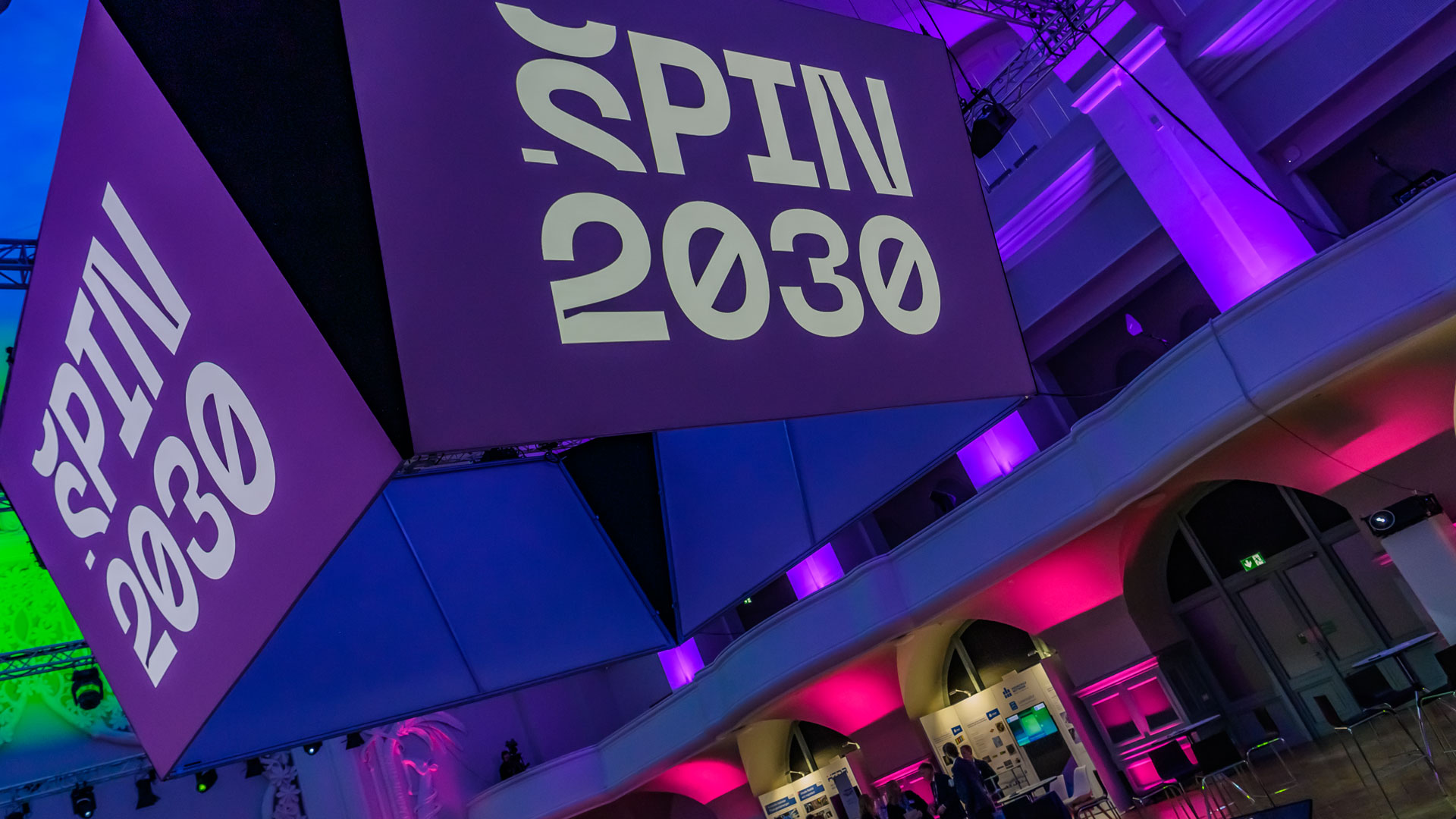
Mittweida University of Applied Sciences will help shape Saxony’s scientific landscape in the coming years. On the morning of 3 February, Minister-President Michael Kretschmer and Minister of State Sebastian Gemkow presented the ‘Agenda for Saxony as a Centre of Science: SPIN2030’ at the Leipzig Congress Hall.
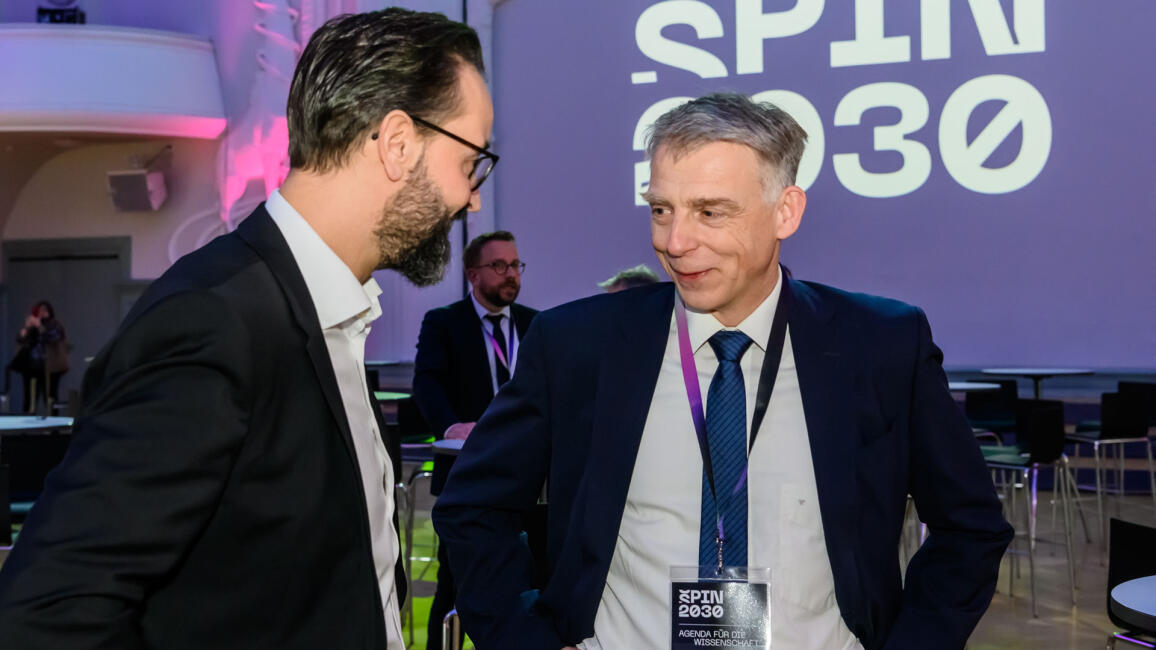
The event included an exhibition showcasing selected scientific developments from across the Free State. Mittweida University of Applied Sciences presented its laser research. It was thus the only one of the five universities of applied sciences in Saxony to have a main stand alongside university and non-university research institutions. Professor Volker Tolkmitt, Rector-designate of Mittweida University of Applied Sciences, welcomed Saxony’s Minister for Science, Sebastian Gemkow, as the first visitor.
Professor Udo Löschner, Deputy Director of the Laserinstitut of Mittweida University of Applied Sciences (LHM), presented the research findings of his scientists to Gemkow and the other interested visitors. For example, laser beams travelling at speeds well in excess of the speed of sound create microscopic structures on surfaces that share the same property as shark skin: extremely low drag, which minimises the energy consumption of vehicles on land, in water and in the air – or also makes it harder for contaminants to adhere to surfaces. Scientists at the LHM have also developed a process for producing super-hard and wear-resistant carbon coatings using laser technology. Although only a few nanometres thick, the effect of such a coating is immense: tools last up to ten times longer in industrial use. This saves valuable resources. At its exhibition stand, Mittweida University of Applied Sciences also provided an insight into how laser 3D Printing is used to produce a metal mirror mount, which is set to be used in future for optical data transmission between satellites.
In addition, the university also provided information about its overall research profile and range of degree programmes at the Saxony5 joint stand.