This page was translated automatically using artificial intelligence (DeepL). The German version is binding. More information about automatic translation
As a PhD student, you spend a lot of time sitting around: reading papers, understanding concepts and applying them to your own research, and working on that massive project known as your ‘thesis’. And as wonderful as it can be to delve deeply into a topic you’ve chosen yourself, it can sometimes feel just as isolating. Of course, there’s the exchange with other PhD students, with your supervisor, and perhaps now and then with people from the professional world. But often, everyone has their own jumble of topics and concepts.
And anyway: all these ‘Name et al.’ – somehow, you end up forming very abstract ideas about these ‘celebrities’ without ever having seen a face to go with the authors. Don’t you think?!
I had the opportunity to attend the international conference ‘Frontiers in Service 2026’ at Hanken University, which has a reputation as a prestigious conference, particularly in the field of service management. There, I was able to meet around 200 researchers in person (including probably 40 PhD students like myself), who are precisely that: the names that come before ‘et al.’! Seeing the most distinguished professors from my doctoral research field (service) talk about their own research, present their arguments and, in particular, address the conceptual weaknesses, was a truly eye-opening experience for me.
You always think you’re completely alone with these problems, but no: others have them too, and they agonise over where and how to structure their research – both theoretically and rhetorically – in order to achieve genuine theoretical and practical added value.
And suddenly you realise: that’s exactly what research is all about! In other words: academic discourse on ideas, comparing viewpoints and perspectives, different interpretations of theories and models – and that works best when you can look each other in the eye.
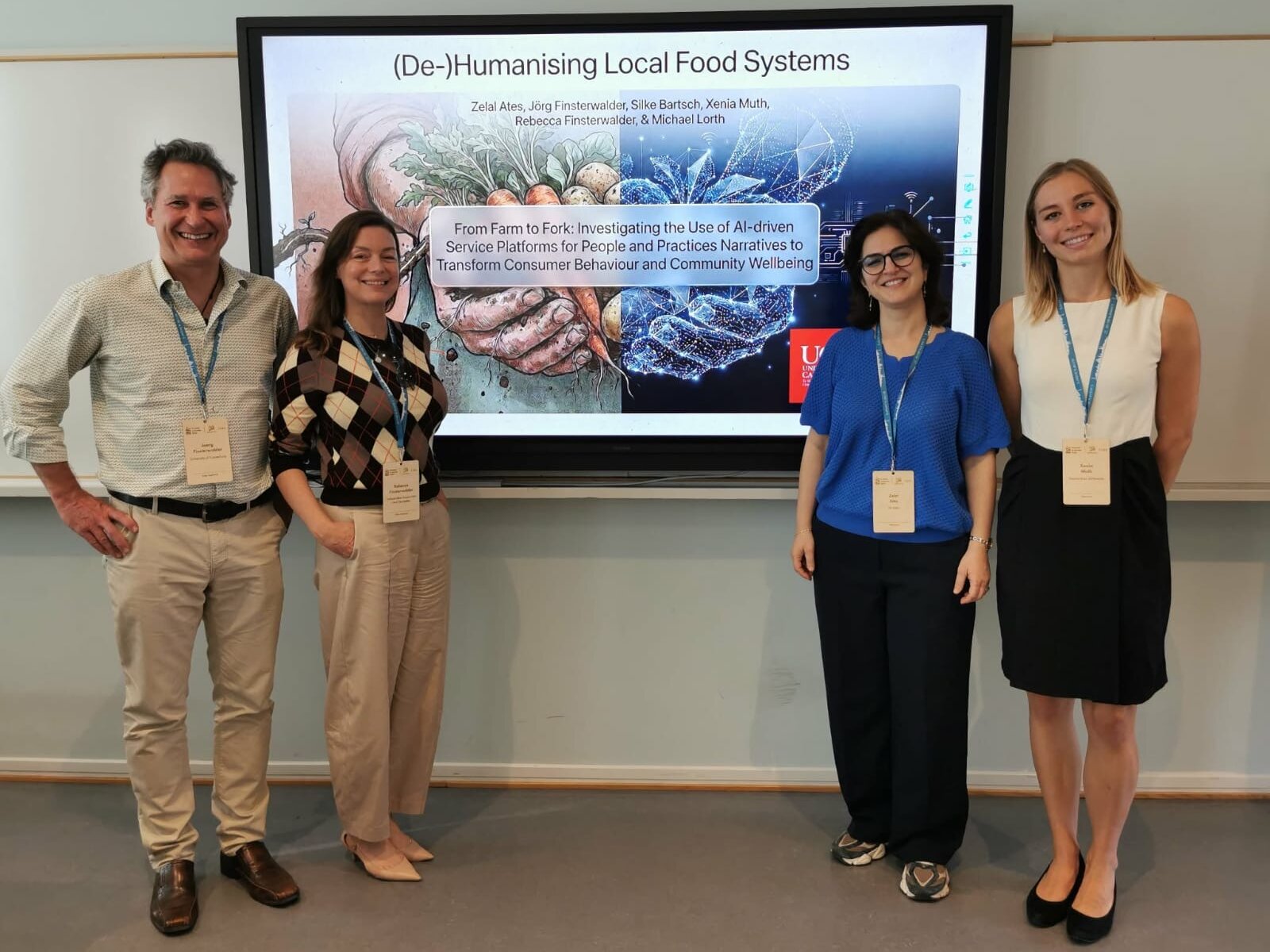
I had the opportunity to give two presentations during the conference: the first was as part of the Doctoral Consortium at the start of the conference, where all 40 PhD students received detailed feedback from highly experienced researchers on their own dissertation projects. And the second time was on the third day of the conference as part of an official conference presentation with my co-authors, whom, incidentally, I was also seeing in person for the first time, away from Zoom: three of them are based in Cologne and New Zealand and had (like me) travelled to Helsinki especially for the conference.
To feel, physically, that you’re in the right place in terms of your research. That research is a community. To see where it can lead. That behind the ‘et al.’s’ are people with whom you can discuss their ideas. And who genuinely want to help you shape your own contribution to this field. That’s what impressed me the most. And yes: in the end, you write your thesis on your own. But I now know that you’re not actually alone.
Many thanks to everyone who made this journey possible!