This page was translated automatically using artificial intelligence (DeepL). The German version is binding. More information about automatic translation
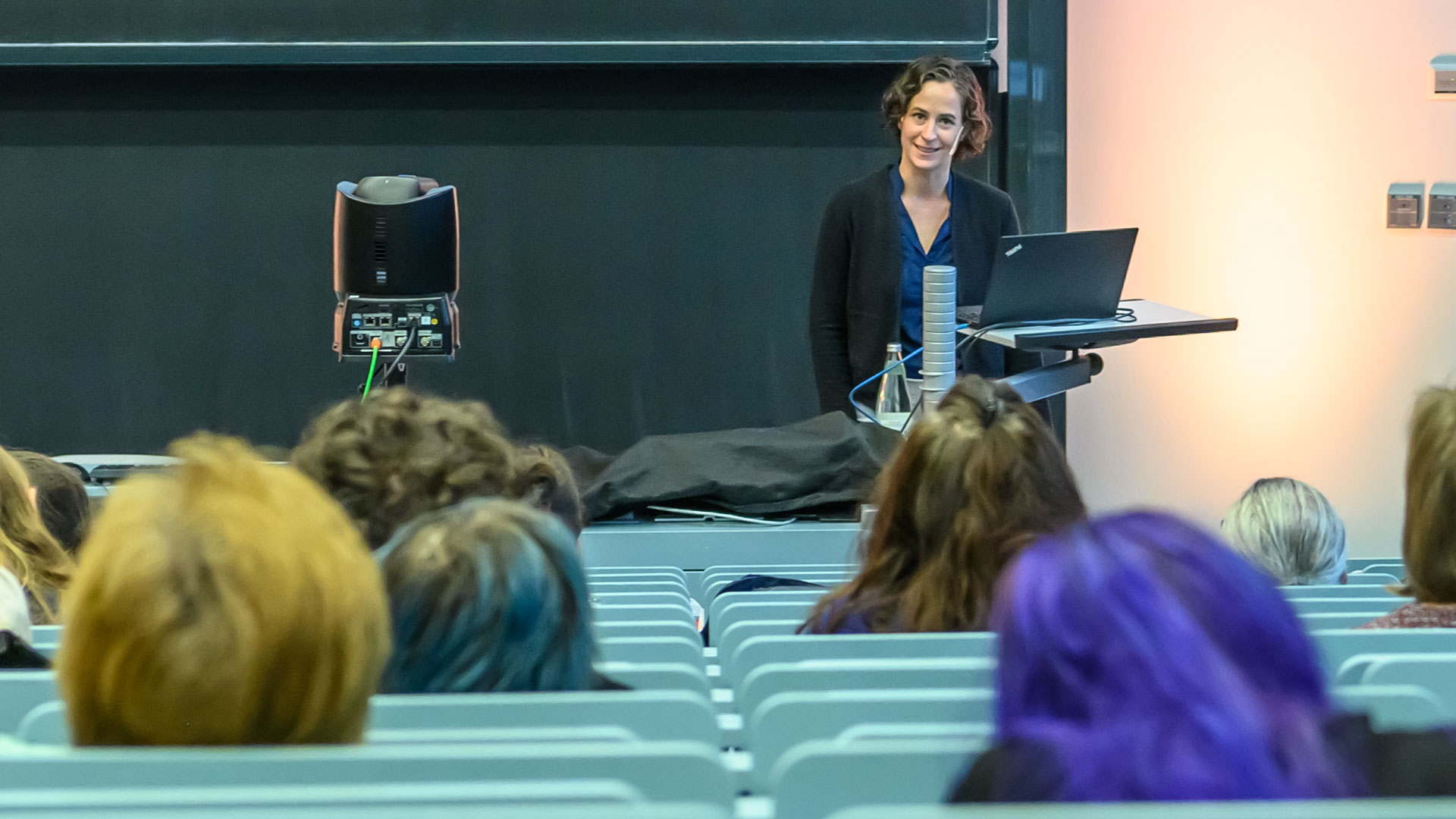
On 23 May, Leipzig-based sociologist Clara Dilger presented her contribution to the “Zeiten wenden” series under the heading “Social Cohesion Under Threat? Trends towards Polarisation and Division in Germany”.
Right at the start, Clara Dilger posed two thought-provoking questions to the audience to introduce the topic: “Off the top of your head: who feels that we are living in a divided society?” Around half of the audience raised their hands. “Who among you found this question difficult to answer?” Just as many responded. And indeed, it is difficult to define the concepts of division or its opposite, cohesion, or to identify criteria for determining which of these states our society currently finds itself in.
The researcher approached the topic via the contexts in which these terms primarily appear, particularly in the media: climate activism, East–West, the coronavirus, replacing heating systems, … – all of which usually carry negative connotations. However, politicians have now recognised that something must be done to promote cohesion. In Saxony, there is a ‘Ministry for Social and Societal Cohesion’. In contrast to the headlines, the focus here is on cohesion with positive connotations, for example through voluntary work.
Since 2020, the federal government has been funding the research carried out by Clara Dilger and her approximately 200 colleagues at the eleven sites of the Research Institute for Social Cohesion (FGZ) on this topic.
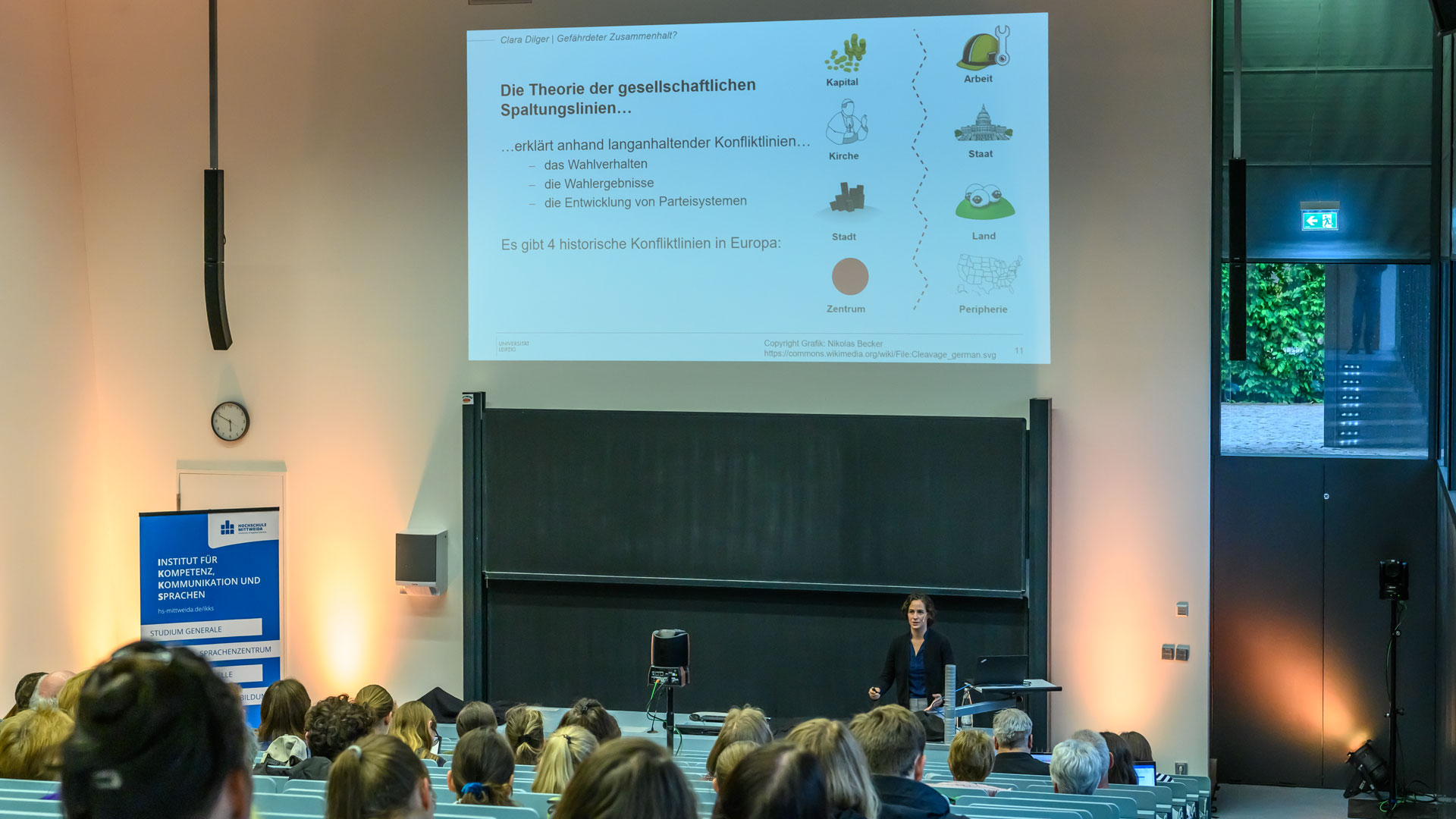
As a theoretical model for investigating and explaining the social phenomena in which a social divide can be identified, Dilger presented the cleavage theory of social divides. Cleavages describe enduring conflicts that shape a (party) system over a long period of time.
As she continued, she identified, alongside the model’s traditional lines of conflict, a new potential cleavage: the conflict over the openness of societies both internally and externally – that is, the divide between openness and pluralism on the one hand, and closed-mindedness, ethnic homogeneity and traditionalism on the other. To this end, the FGZ has developed its own survey instrument to measure the ideological dimension of this divide. Dilger took the audience through the empirical work based on representative surveys and presented many of the latest findings from this research.
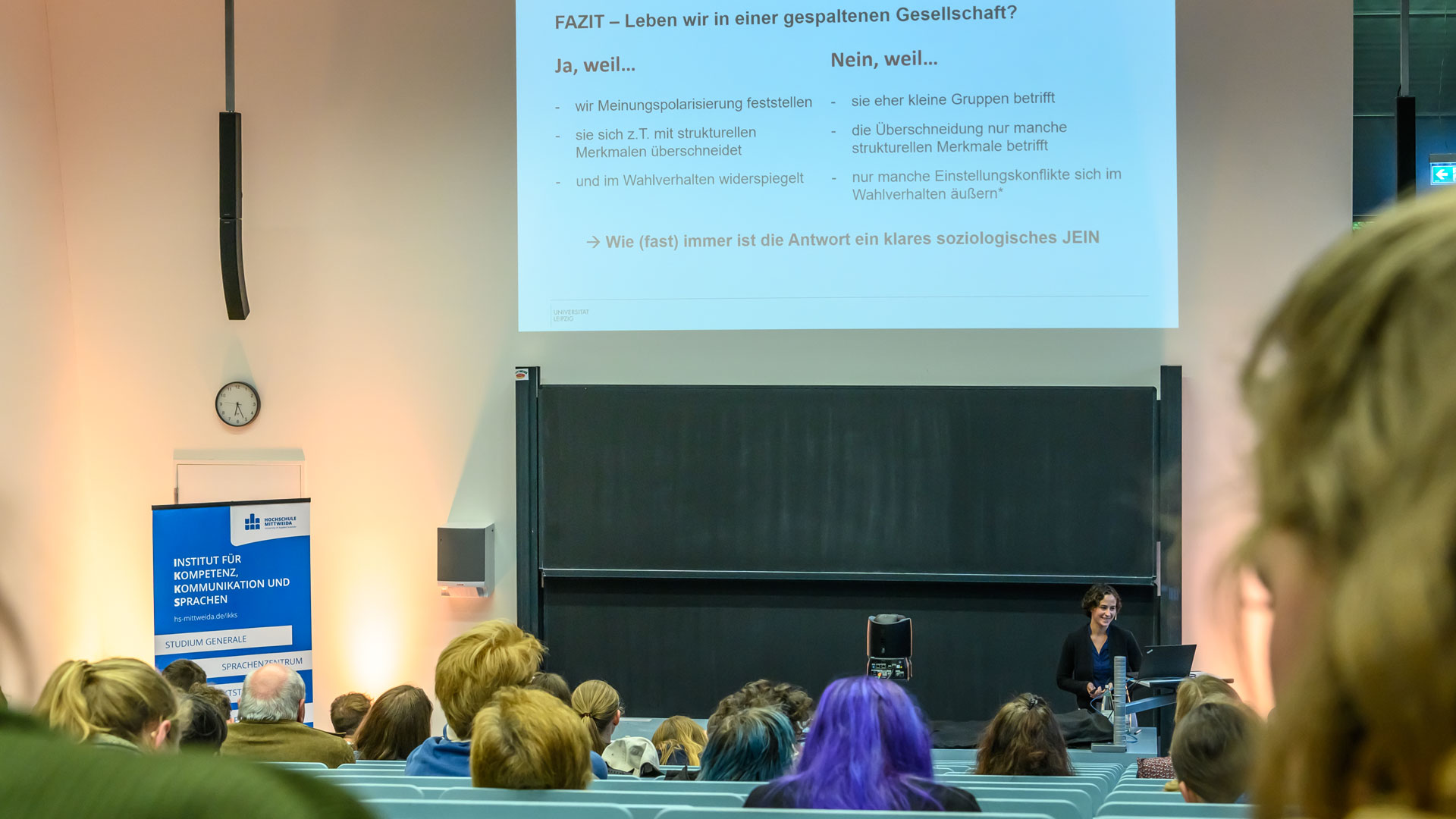
A clear ‘yes and no’
Dilger’s answer to the question ‘Do we live in a divided society?’ is a ‘clear sociological “yes and no”’. Divisions are partial and can be identified, depending on which aspect one considers or which method one applies.
This partial division is clearly reflected in protests, voting behaviour and, to some extent, radicalisation. However, it should not be forgotten that the democratic resolution of conflicts is not merely a problem, but also a driving force behind this resolution, as Dilger demonstrated using the example of the climate protests.
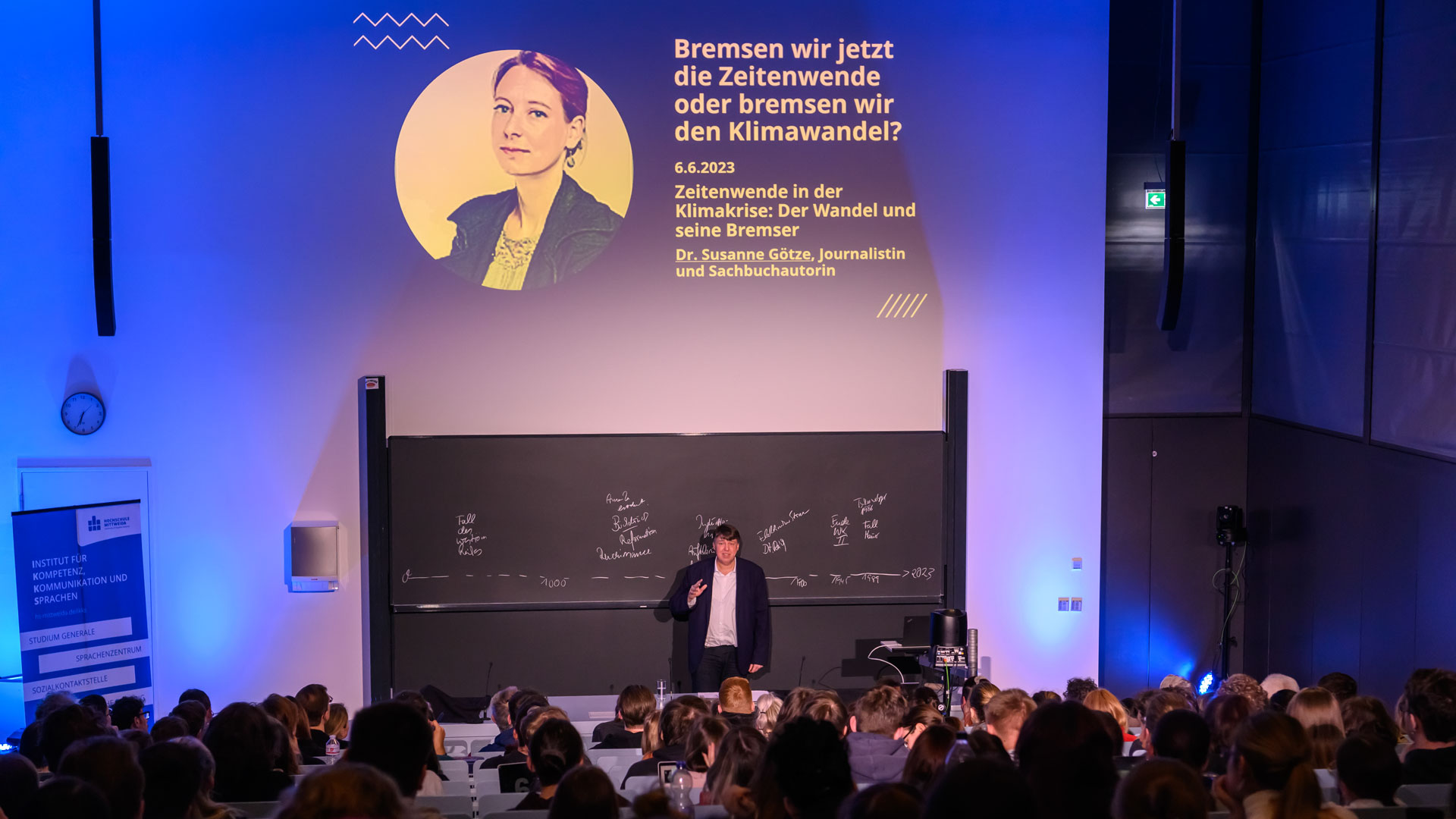
Climate crisis on Tuesday 6 June
The lecture on 6 June focuses specifically on climate change – not from a scientific perspective, but by examining its fundamental consequences for our lives as individuals and as a society. In her lecture ‘A Turning Point in the Climate Crisis: The Change and Those Holding It Back’, SPIEGEL journalist and non-fiction author Dr Susanne Götze demonstrates that how fair, healthy and safe the lives of future generations will be depends on current decisions to move away from a ‘business as usual’ approach. Götze’s latest book, *Climate Out of Control: Floods, Heatwaves, Storms – How Germany Must Protect Itself*, was awarded the NDR Non-Fiction Prize in November 2022.
The lecture on Tuesday, 6 June 2023 will take place from 5.30 pm to 7 pm at the Centre for Media and Social Work at Mittweida University of Applied Sciences, Bahnhofstraße 15.
Full details of the lectures and speakers in the public lecture series: www.hs-mittweida.de/ringvorlesung
The lectures will also be available to watch on Mittweida University of Applied Sciences’ YouTube channel 14 days after each one takes place.