This page was translated automatically using artificial intelligence (DeepL). The German version is binding. More information about automatic translation
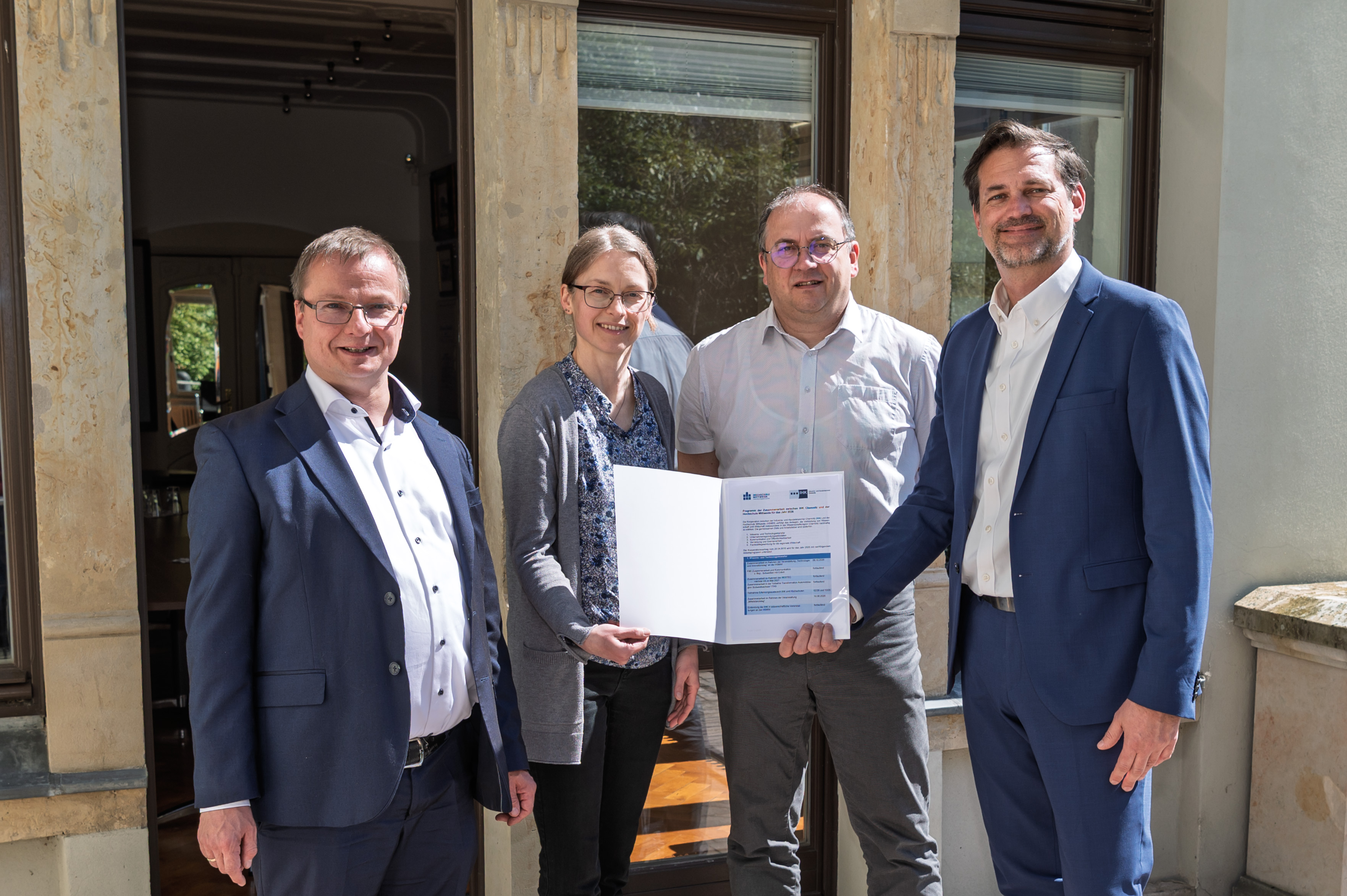
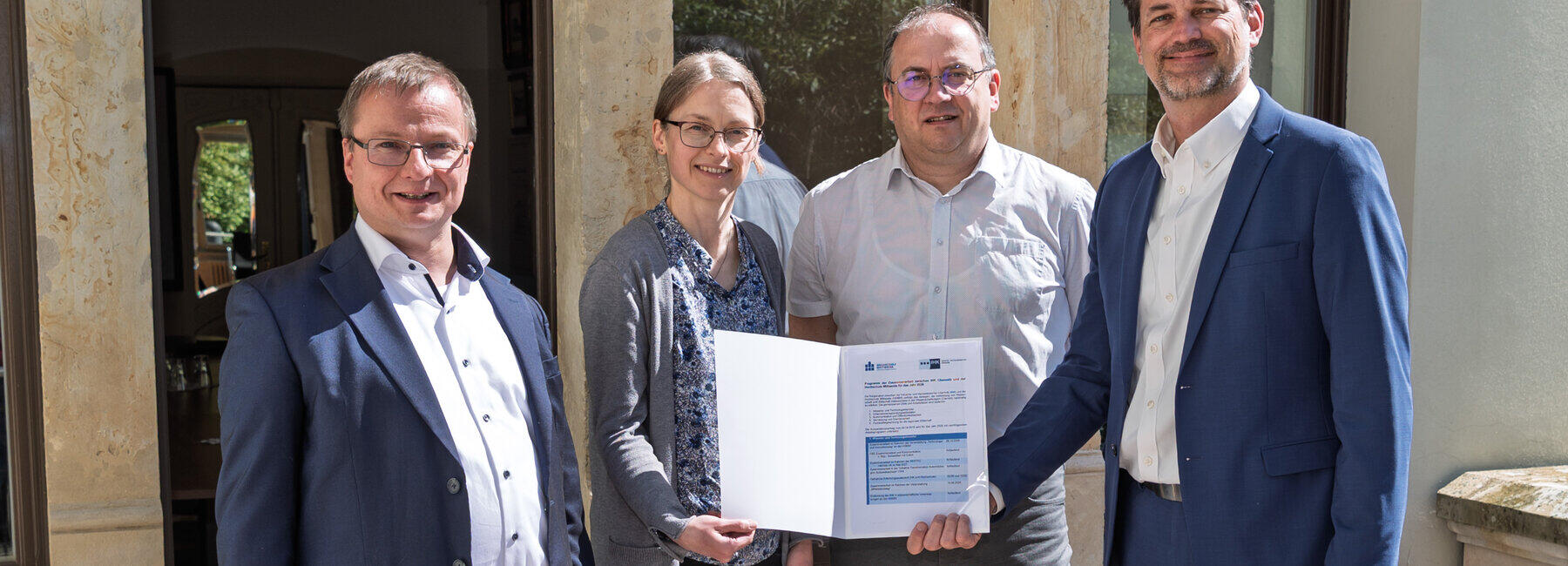
The Chemnitz Chamber of Industry and Commerce (IHK Chemnitz) and Mittweida University of Applied Sciences (HSMW) signed their joint annual working paper for 2026 yesterday. In doing so, both partners have once again reaffirmed their aim of actively shaping and further expanding the transfer of knowledge and technology between academia and industry.
This collaboration builds on the experience and successes of previous years – whilst also setting new priorities. In 2026, the focus will once again be on dialogue with businesses, the promotion of innovation, and initiatives for skilled workers, young professionals and start-up founders in the South-West Saxony region.
For us, the collaboration with Mittweida University of Applied Sciences brings real added value to the region. Here, academic expertise meets business practice – and it is precisely this combination that our companies need to remain competitive and innovative.
Maik Kästner, Head of the Location Development Unit, Chemnitz Chamber of Industry and Commerce
A particular highlight of the annual programme is the Technology and Innovation Day on 6 October 2026, which is being organised jointly by the Chemnitz Chamber of Industry and Commerce (IHK Chemnitz) and HSMW in Mittweida. The event brings together businesses and researchers, creating a space for exchange, inspiration and concrete collaborations. The focus will be on practical examples from the region, the latest research findings and plenty of opportunities for networking.
For our university, close collaboration with the regional business community is essential. The 2026 Annual Work Programme embodies the active transfer of knowledge and technology – and ensures that good ideas do not remain confined to the lecture theatre, but find their way into practice.
Professor Uwe Mahn, Vice-Rector for Research at HSMW
In addition, the annual working paper sets out further initiatives, such as schemes to secure a skilled workforce, joint events for businesses, and support for spin-offs from the university. Knowledge transfer on topics such as digitalisation, sustainability and new technologies also remains a key component of the collaboration.