This page was translated automatically using artificial intelligence (DeepL). The German version is binding. More information about automatic translation
We all live with them, even as children, although we aren’t always aware of them. But they help us to cope better with everyday life: stereotypes.
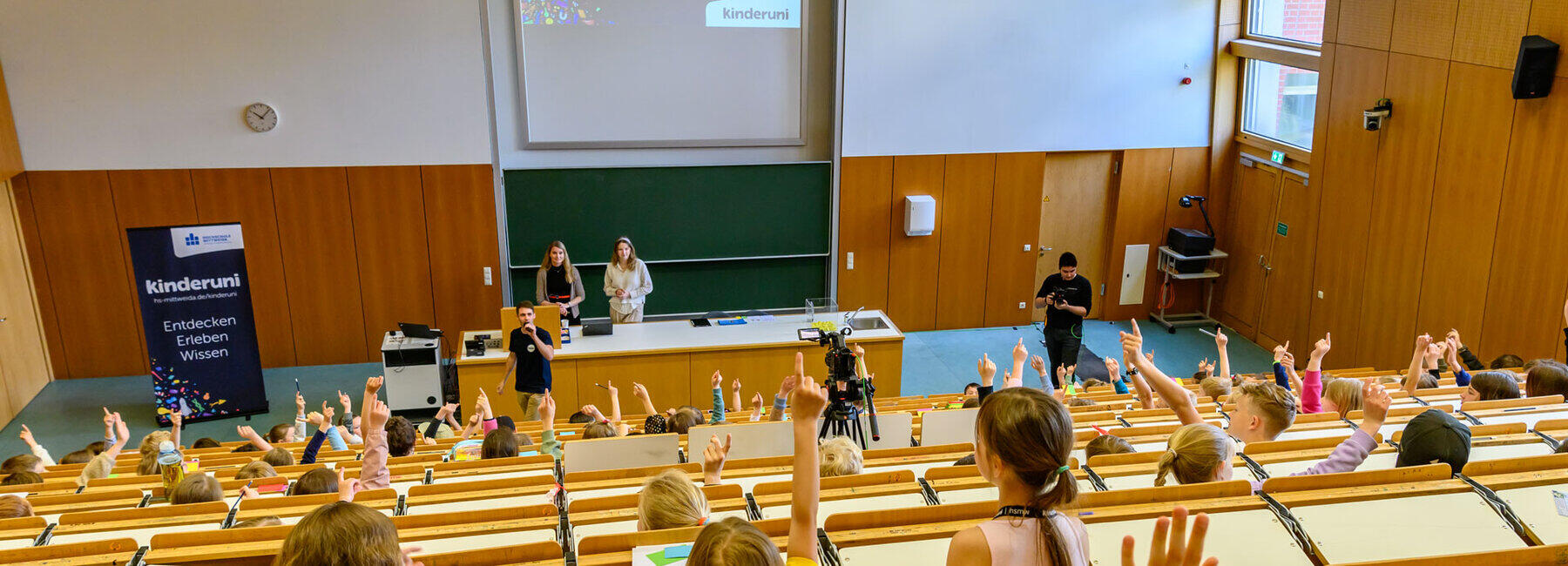
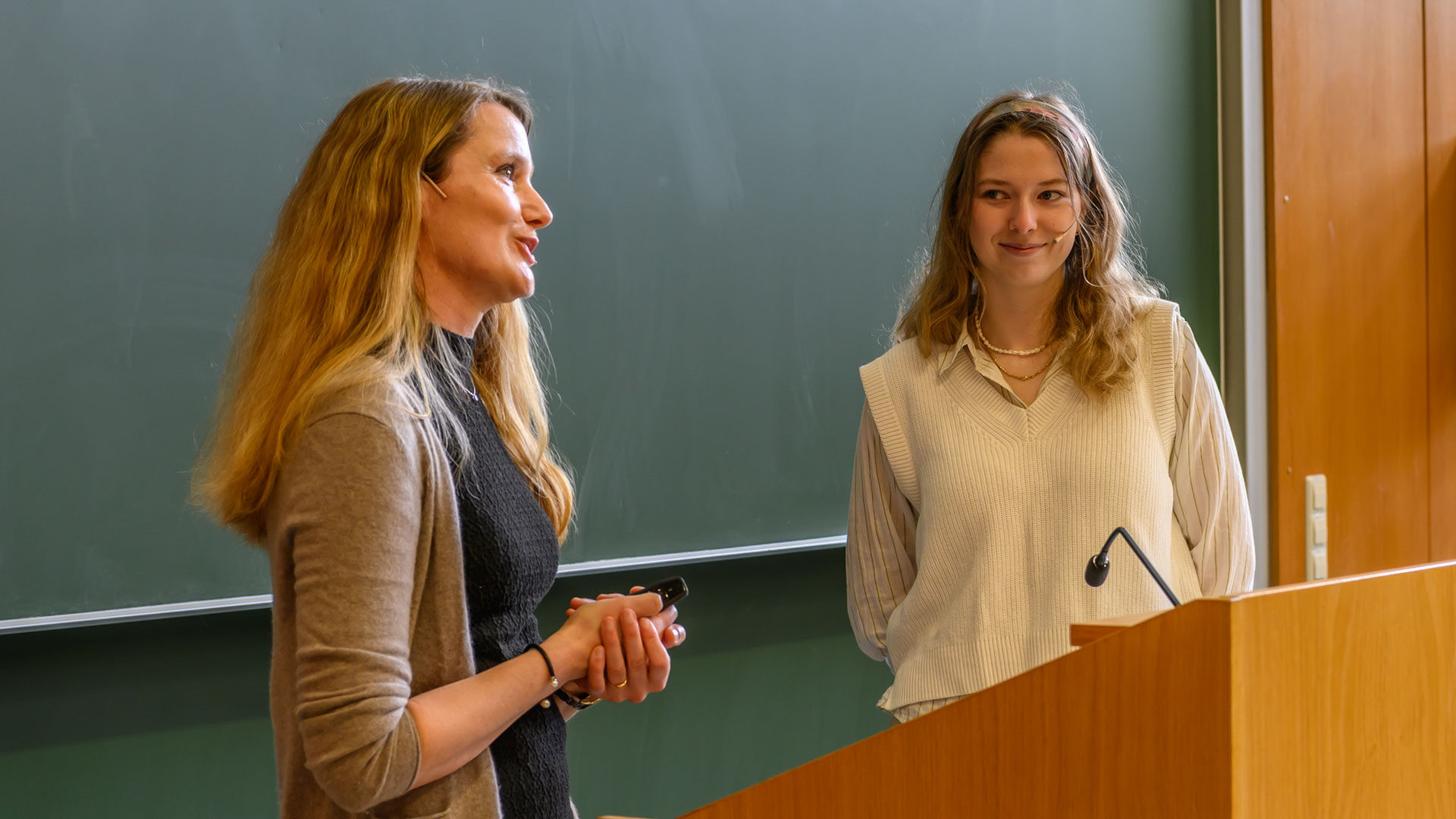
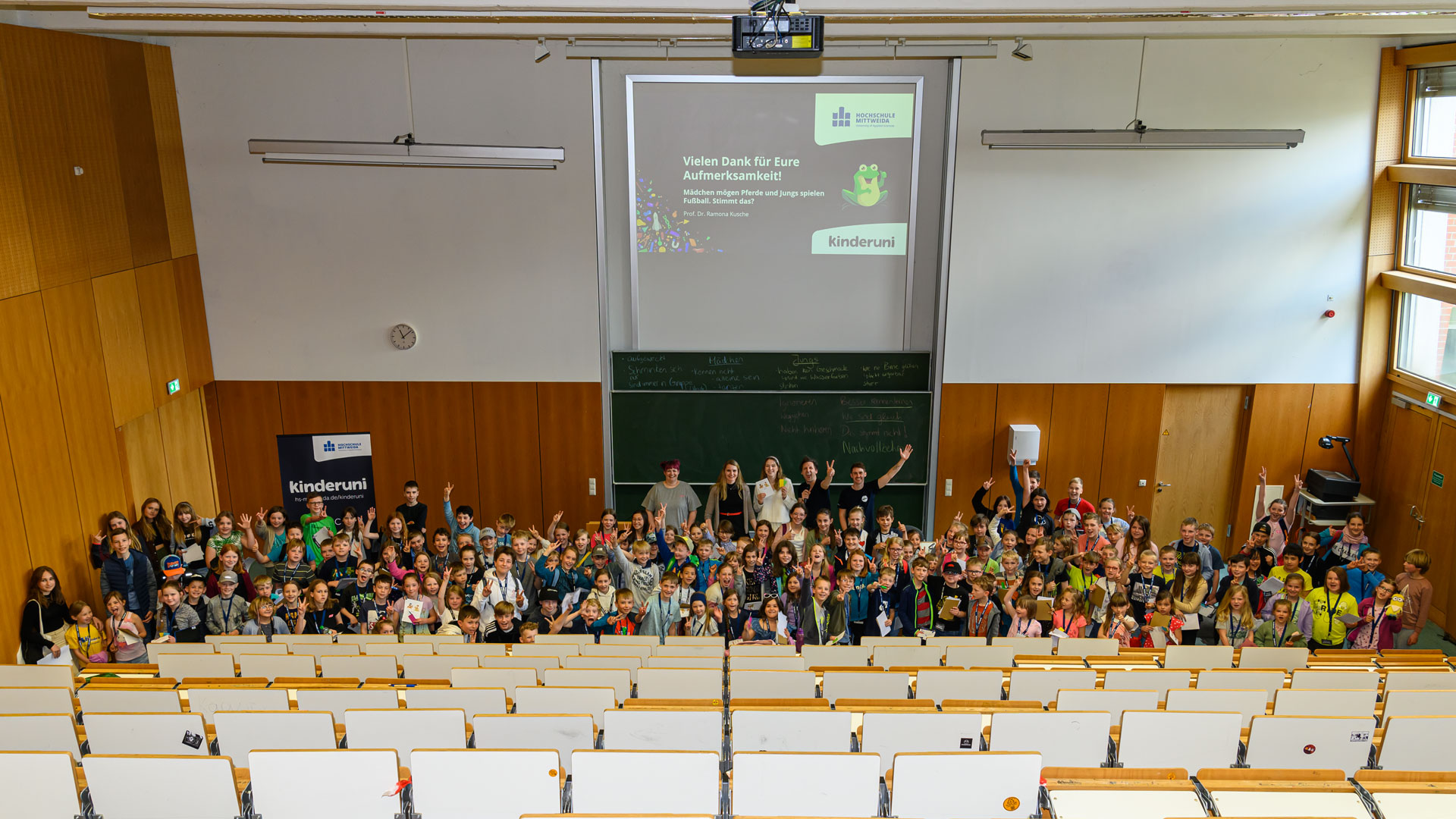
On 13 May, the two lecturers – Professor Ramona Kusche and her former student Jule Hackendahl – presented this topic, which may seem abstract at first glance, in a clear and engaging way during the Children’s University lecture at Mittweida University of Applied Sciences, using plenty of examples from the children’s everyday lives.

Stereotypes are like pigeonholes in our brains. When we meet someone new, we rely on our first impression and slot that person into one of these pigeonholes: for example, ‘girl’ or ‘boy’. There are still labels stuck on these pigeonholes; for boys, for example, ‘are cheeky’, ‘are sporty’, ‘act cool’ (all original comments from the children). Girls, on the other hand, have labels such as ‘are bitchy’, ‘have lovely hair’, …
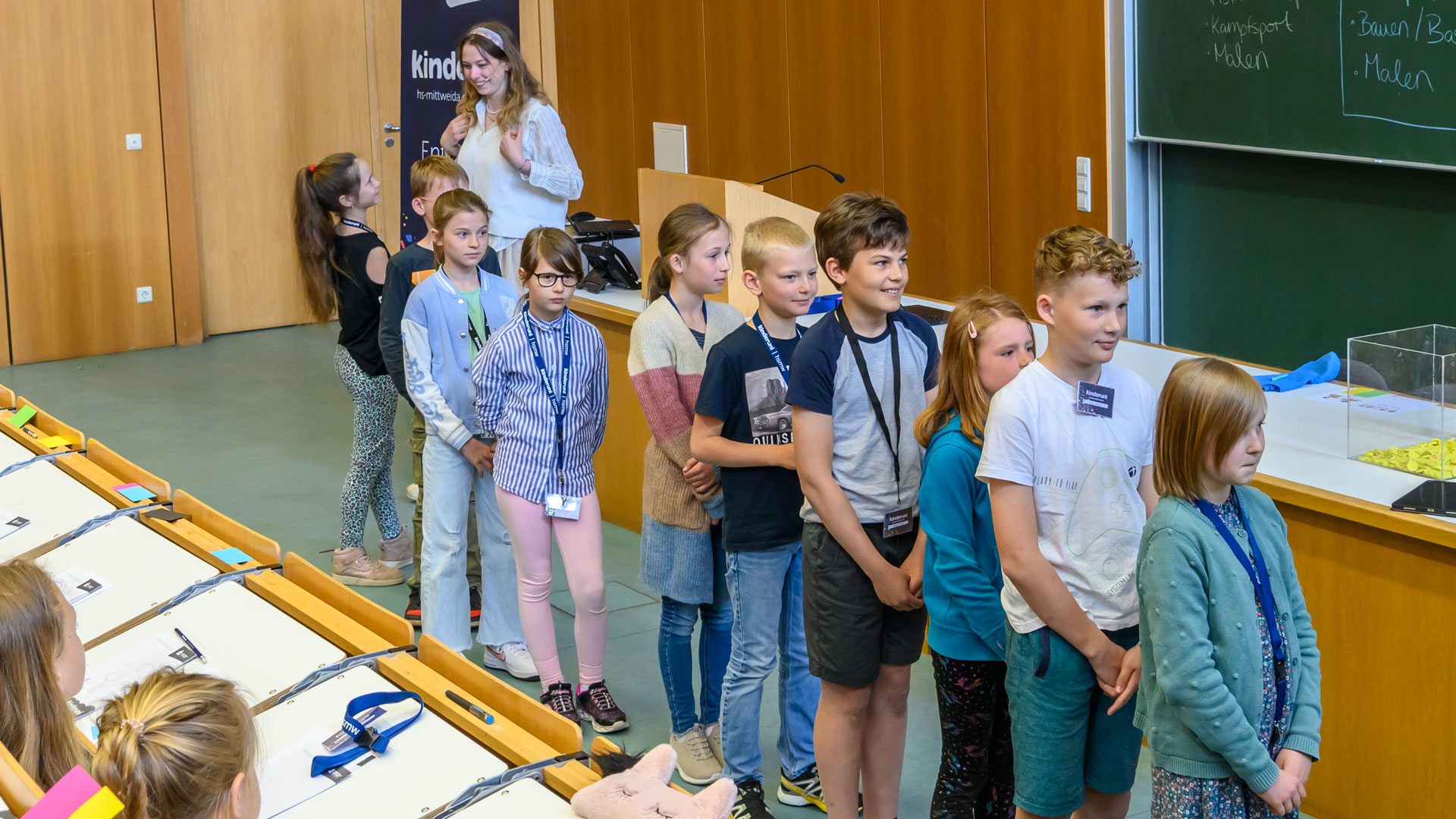
But even from these examples, one realises that stereotypes and labels aren’t necessarily always accurate. Particularly when they are hurtful and exclude others, and when we judge people in advance whom we don’t even know yet, we are talking about prejudice. The good news is that our brains are capable of learning and finding new categories and labels that better suit people.
Premiere of a new format this summer – unfortunately, it’s already fully booked
The Summer University is set to continue as early as June – a children’s university in Mittweida’s Schwanenteich Park, where children will join Professor Dirk Labudde on a detective-style search for the missing stag. Robin Biebl, organiser of the children’s university: “Unfortunately, we only have 25 places, and they were fully booked within two minutes of the last Children’s University finishing. However, there is a waiting list. And the new format – with the venue outside the lecture theatre and even more direct interaction – is not intended to be a one-off event.”
What happens next
The next lecture will then take place in the lecture theatre on 23 September: under the heading ‘Thinking, Feeling, Acting: How to Better Understand Our Behaviour’, Professor Alexander Zill from the Faculty of Social Sciences will explore with the children why we think, feel and act in certain ways in specific situations.
Professor Zill’s field of specialisation is psychology, one of many in which research and teaching take place at Mittweida University of Applied Sciences. Just as the Children’s University regularly asks children what topics they would like to see covered, researchers also have the opportunity to suggest their own topics for a Children’s University lecture. Robin Biebl comments: “The Children’s University is a brilliant format for presenting one’s own research or field of teaching to the public. One aim is to spark an early interest in science, technology and computer science among children. But parents also gain an insight into research and science at the university. I hope that many of our academics will make use of this bridge to the public, and I look forward to receiving topic suggestions for the Children’s University year 2024.”
Further information, which is always up to date, can be found on the Children’s University website.
If you’d like to stay up to date, you can also sign up for the Children’s University newsletter there.