This page was translated automatically using artificial intelligence (DeepL). The German version is binding. More information about automatic translation
From school to university – this usually requires a university entrance qualification after Year 12 or Year 13. But it is also possible to start earlier and progress more quickly. Mittweida University of Applied Sciences offers a range of programmes that give even the youngest and younger pupils the chance to get a taste of university life: the Children’s University, the Night of Sciences (Nacht der Wissenschaften), the Outdoor Technology Camp, the Junior Degree Programme, the Pupils’ Laboratory, and excursions for whole classes and courses accompanied by their teachers. The university also offers a newsletter for these programmes. All these programmes share two objectives: firstly, to spark pupils’ interest in science and in higher education; and secondly, to communicate knowledge from the university to the wider public at an early stage and in a way tailored to the target audience. Armed with these two objectives and a wealth of creative ideas, Saxony’s second-largest University of Applied Sciences has also launched its latest programmes: the one-day ‘Mini-Bachelor’ and the four-day ‘Speed-Bachelor’. Both formats were developed at the Institute for Competence, Communication and Languages (IKKS) at Mittweida University of Applied Sciences as part of the RE-EURECA-PRO sub-project.

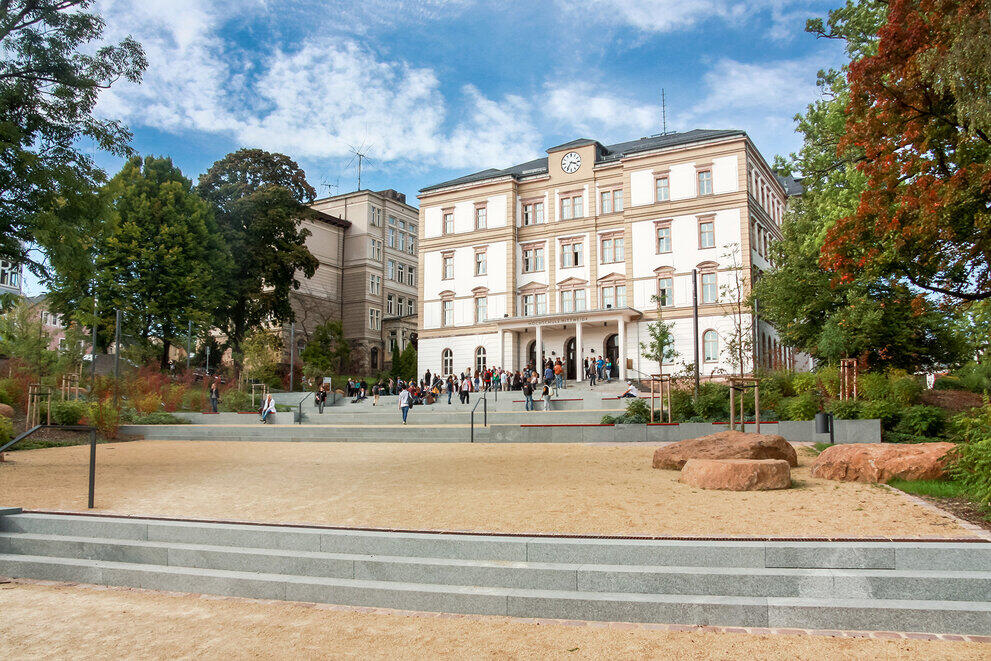
The ‘Speed-Bachelor’ programme made its debut from 3 to 6 July with 31 pupils from Years 9 to 11 at the Städtisches Gymnasium Mittweida, which is situated right next to the Mittweida university campus. In just four days, the ‘Speed-Studis’ completed their degree programme: from the enrolment ceremony through to lectures and practical sessions in various disciplines such as electronics, intercultural communication, biodiversity, sustainable urban development and Laser Technology, right through to graduation, when they were presented with their ‘Speed Bachelor’ certificates by Rector Volker Tolkmitt.
Robin Biebl designed the Speed Bachelor programme together with his colleague Vanessa Juliane Herrmann from the IKKS. He says: “We want to make Mittweida University of Applied Sciences, with all its colourful facets, tangible and experiential, in order to help participants make informed career choices later on. At the same time, we want to portray everyday student life as authentically as possible – this naturally includes not only teaching activities such as lectures, seminars and work placements, but also visits to the canteen, freshers’ goody bags and plenty of conversations on an equal footing.”
Packed with insights, from the freshers’ goody bag to your bachelor’s degree certificate
The freshers’ goody bags for the 31 students were handed out on Monday morning at a small enrolment ceremony. Robin Biebl and Vanessa Juliane Herrmann guided the new students through the week. The topic of the first lecture, led by the two student advisers Annika and Julia Gündel, was: ‘How does university work?’.
Professor Michael Kuhl and Hans Dirk Menzel from the Systems Electronics research group provided an initial example of how university life works with their module ‘From Semiconductors to Transistors to Amplifiers’.
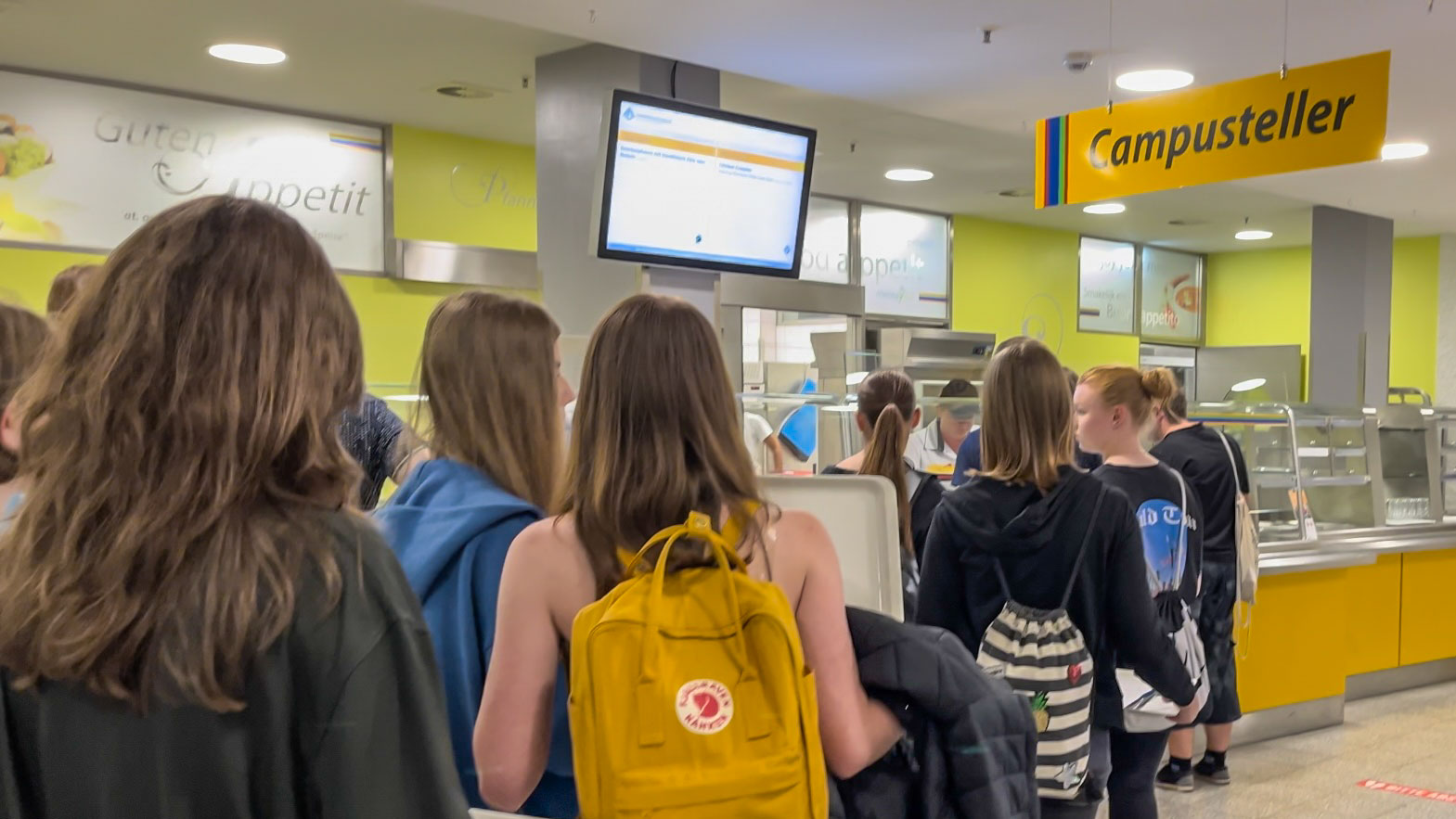
The subsequent campus tour ended at the canteen. That, too, plays its part in a successful degree programme.
Day 2 got off to an international start: in the seminar ‘Communicating globally – what matters?’, Professor Ramona Kusche discussed stereotypes and prejudices and presented the Global Communication in Business and Culture degree programme.
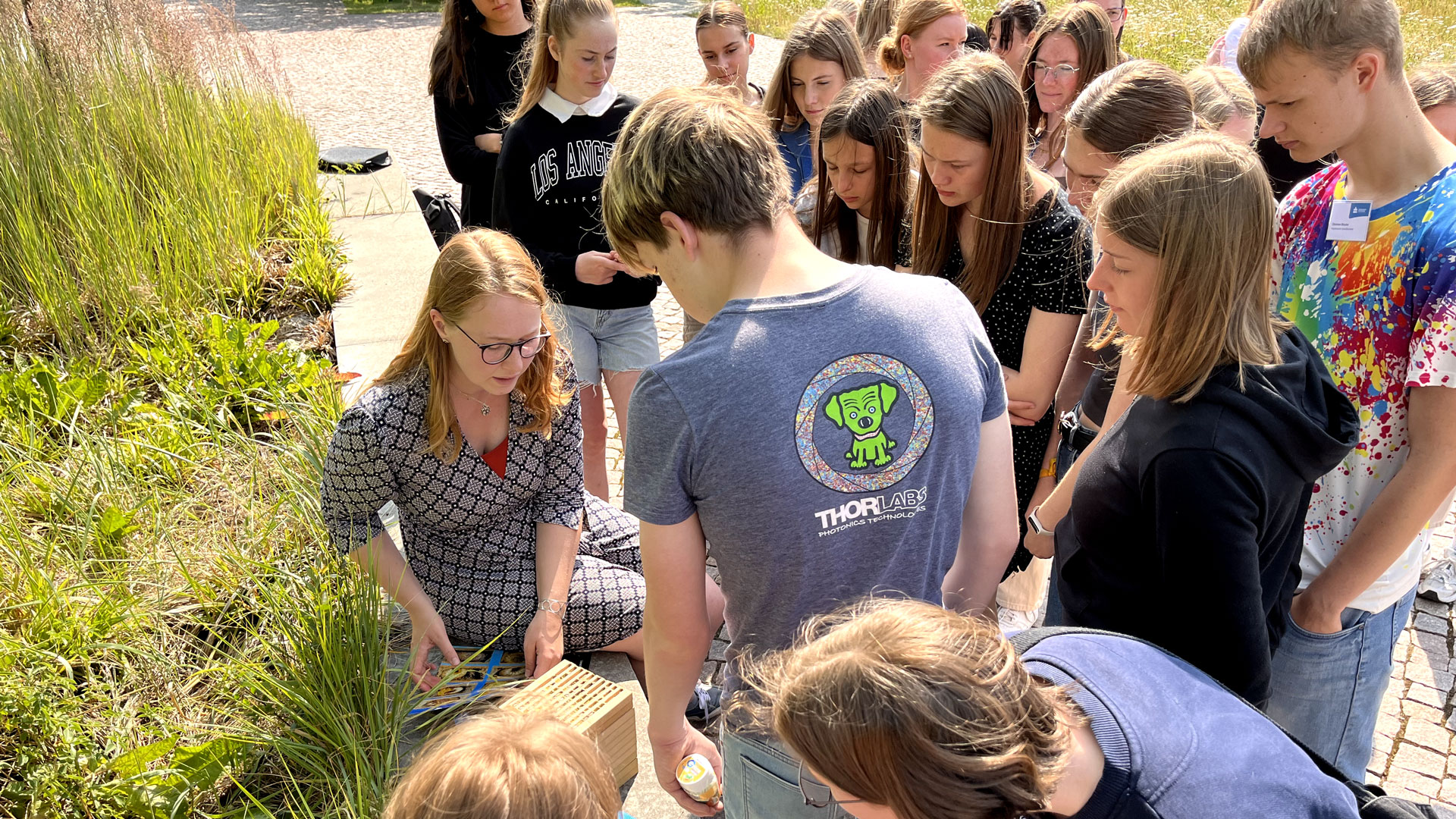
The discussion moved from human behaviour to the behaviour of wild bees when collecting pollen: Professor Röbbe Wünschiers and his PhD student Lisa Prudnikow from the Biotechnology and Chemistry Group provided insights into research on nutrition and disease control in pollinating insects. During the subsequent field trip to the flowering meadow behind the Centre for Media and Social Work, relevant field research was carried out.
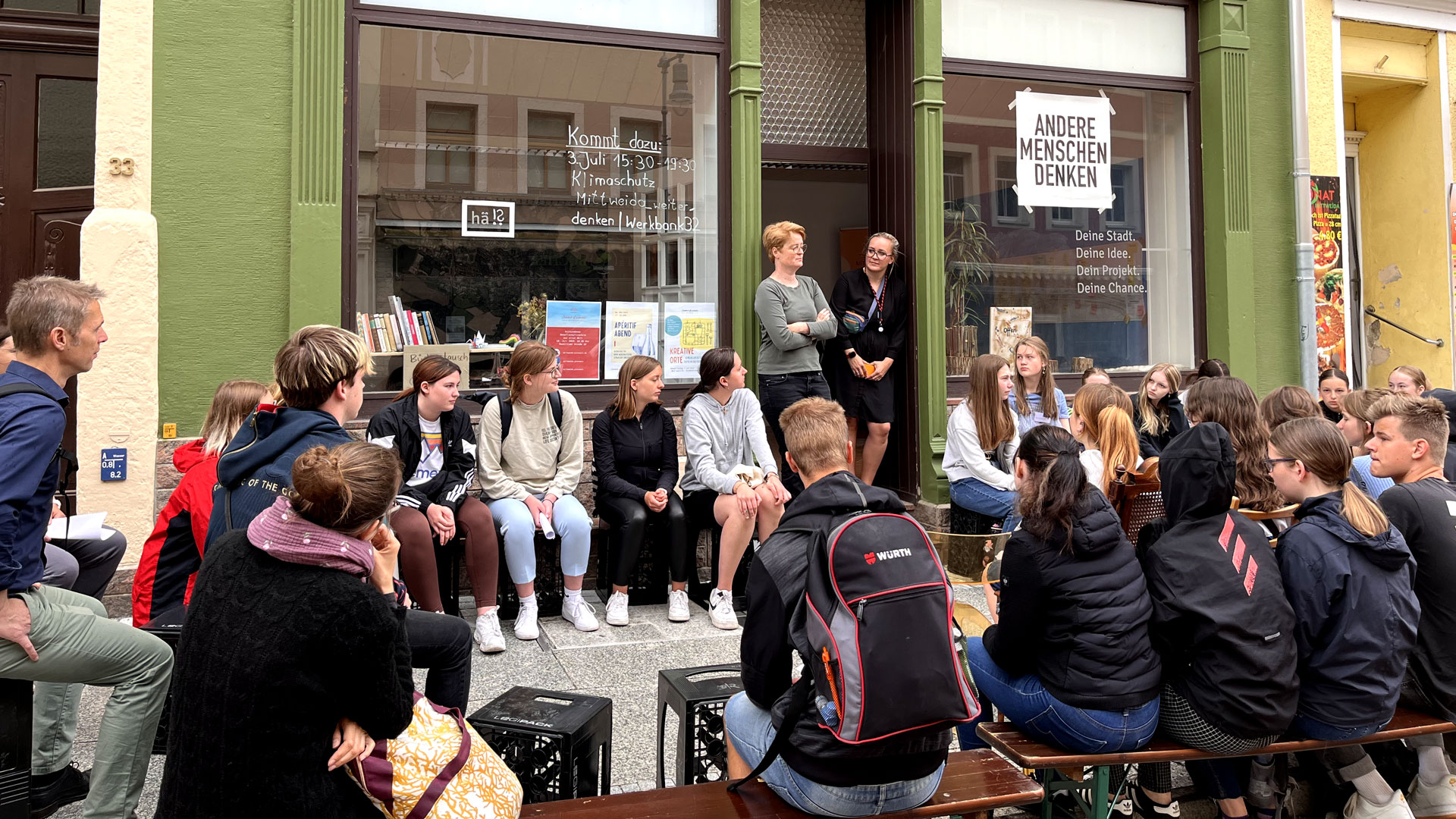
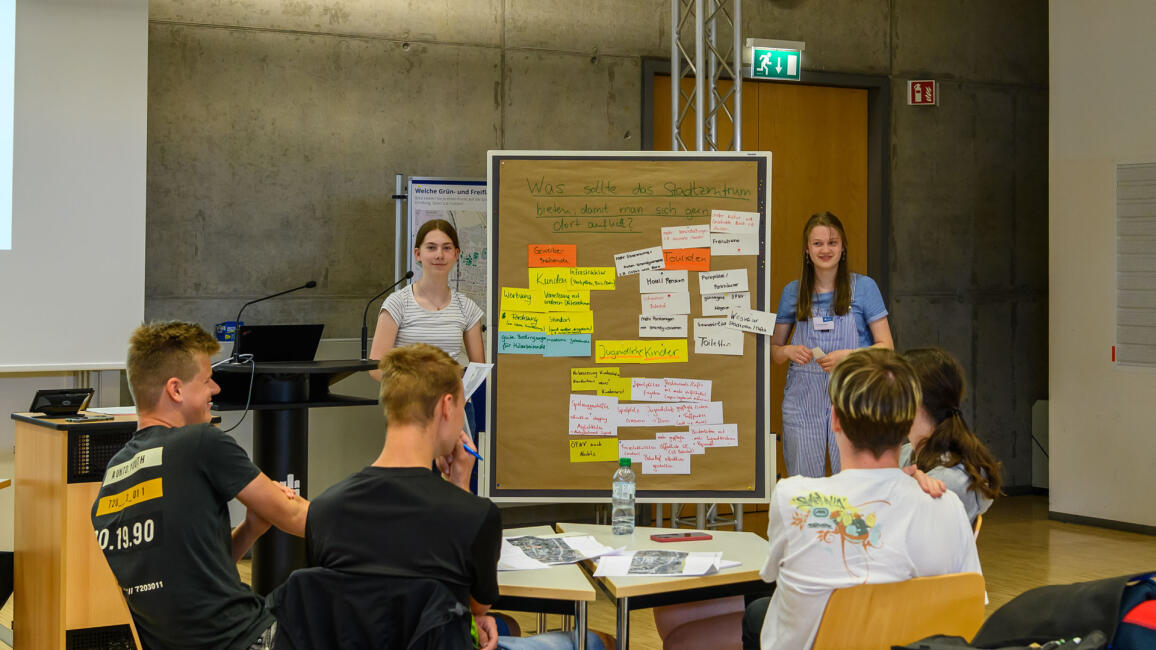
Day 3 may have started off rainy, but it was all the more creative and dynamic for it: Together with Professors Jan Schaaf and Jörg Mehlis from the Sustainable real estate management degree programme, the Speed Bachelor students identified the needs of various interest groups and sections of a city’s population: for example, young people, older people, business owners and visitors. These needs were examined and refined during a walking tour of Mittweida – this research method is known as ‘promenadology’.
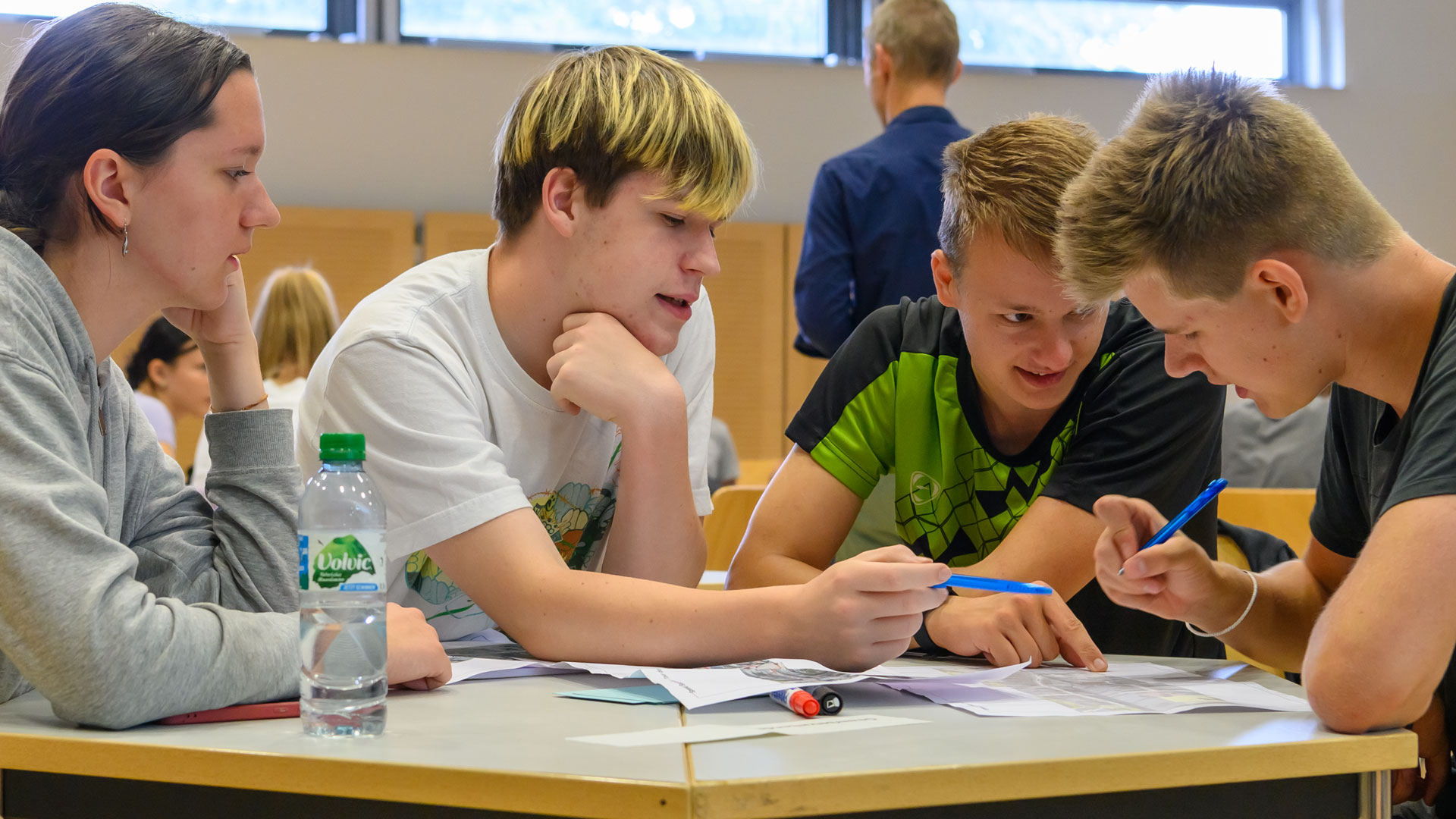
After a stop-off at the ‘Summer of Pioneers’ project office on Rochlitzer Straße, we headed back to Studio B at the university. Here, the students presented the concepts they had developed and discussed them with their fellow students, as well as with Sebastian Killisch, Head of the Building Authority, and urban planner Rico Ulbricht from Mittweida Town Hall.

On the fourth and final day, Professor Alexander Horn, a physicist and Director of the internationally renowned Laser Institute at Mittweida University of Applied Sciences, encouraged the future A-level students to choose a degree in science or engineering – and to approach it with curiosity and without fear, even if not everything comes easily straight away.
Following the visit to the Laser Institute and shortly before the end of the course, the pupils had the opportunity to reflect on the week in small groups and take stock. The result: everyone unanimously held their ‘Speed Bachelor’ certificates in their hands, having gained a clearer idea of their own future careers.
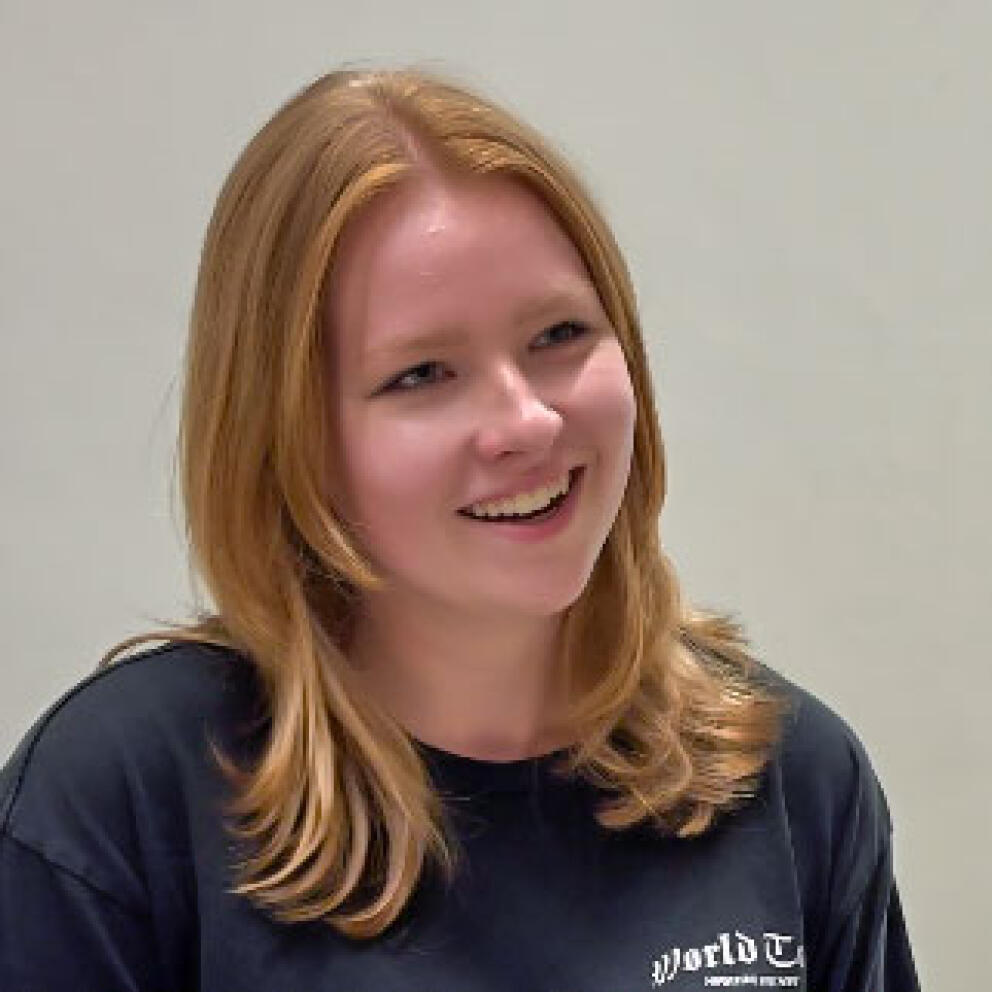
Here’s what two ‘Speed Bachelor’ graduates have to say
Johanna (Year 10): “I’ve learnt a lot about university life – now I finally know how it really works. I thought it was great to see how passionate the lecturers are about their subject. That’s what made the biggest impression on me and motivated me.” (Photo: Robin Biebl)
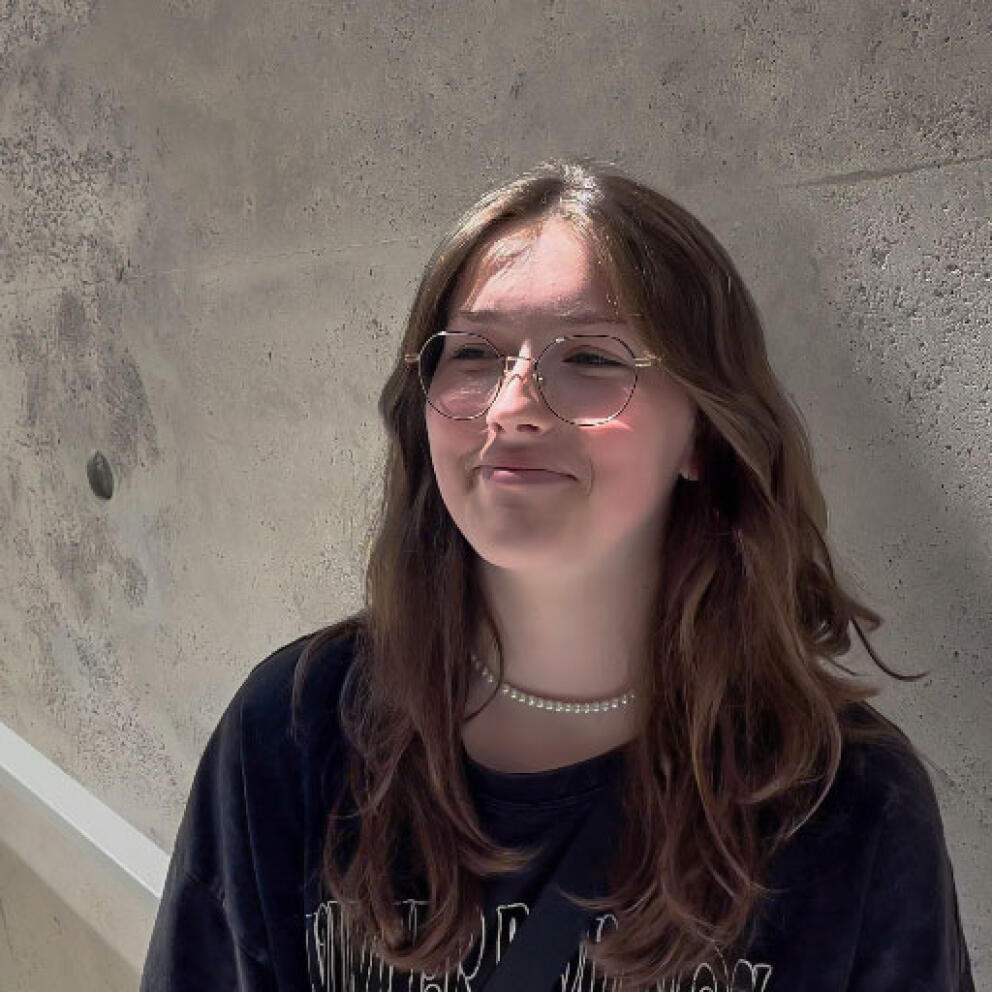
Clara (Year 10): “I took part in the Speed-Bachelor because I’m not yet sure what I want to do after school. I really enjoyed lots of the topics this week – but especially the ones on wild bees and stereotypes. There’s definitely something there for me.”
Text: Robin Biebl/Helmut Hammer