This page was translated automatically using artificial intelligence (DeepL). The German version is binding. More information about automatic translation
The Speedbachelor programme was developed at the Institute for Competence, Communication and Languages (IKKS) at Mittweida University of Applied Sciences. After pupils from the Städtisches Gymnasium Mittweida first took part in 2023, the programme was deliberately opened up to secondary school pupils in 2026, as the path to university does not only lead via the Gymnasium. Even after completing a Realschule qualification, there are various ways to embark on a degree course.
Over two days, pupils from Fichte Secondary School got to know several of the university’s faculties and laboratories and experienced for themselves just how varied a degree course can be. The programme included sessions from various subject areas – all with a strong practical focus.
There are many paths to university
A key item on the agenda was the question of what pathways actually lead to higher education. On the first day, student advisor Lisa Viehweg explained to the young people the differences between universities of applied sciences, traditional universities and dual universities. She explained that, for example, after completing secondary school, pupils can obtain the Fachabitur (vocational baccalaureate) or, following vocational training, gain the Hochschulreife (university entrance qualification) via the Berufsoberschule (vocational upper secondary school).
Some of the lecturers themselves demonstrated that this is possible: they too had initially obtained a secondary school leaving certificate and later made the transition to higher education through adult education.


Hands-on study
In the field of engineering, the pupils worked on the further development of autonomous driving under the guidance of Prof. Jan Thomanek. In the ‘Motion Simulation & Software Development’ Living Lab, they used a driving simulator under the guidance of Josefine Welk to experience what it feels like to drive on a racetrack. At the Laser Institute of Mittweida University of Applied Sciences, Felix Erichson used Lego bricks to demonstrate how DNA sequencing works.
Dr Rayko Ehnert provided insights into Biotechnology, chemistry and ecotoxicology, as well as nutritional and materials sciences. In Social Work, the young people learnt from Prof. Patricia Kröber which skills will be in demand in their future careers: professional expertise is important, but above all, it is social and personal skills that matter – such as empathy, communication skills and the ability to work in a team.


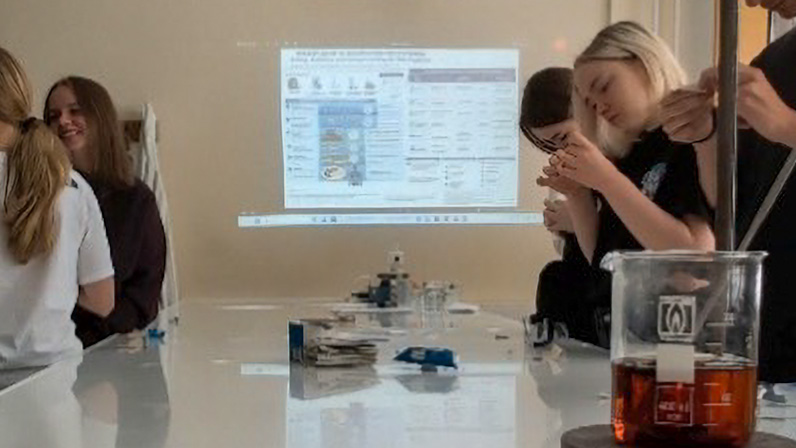
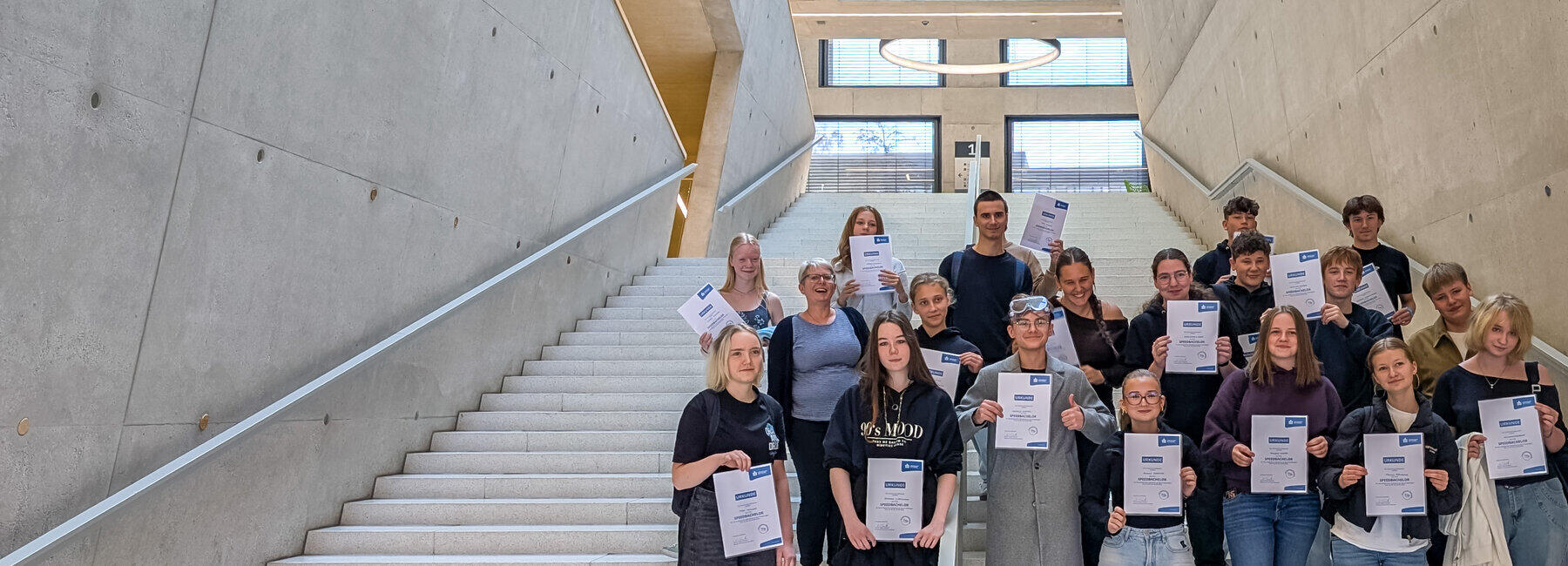
As is customary at Mittweida University of Applied Sciences, the sessions were not just about listening: the young people were able to experiment, ask questions and engage in discussion with the lecturers. This enabled them to discover, in very concrete terms, which specialist areas and degree programmes interested them most. As is fitting for a university course, there was a short exam at the end. Their successful participation and the subsequent presentation of a certificate marked the end of the event.
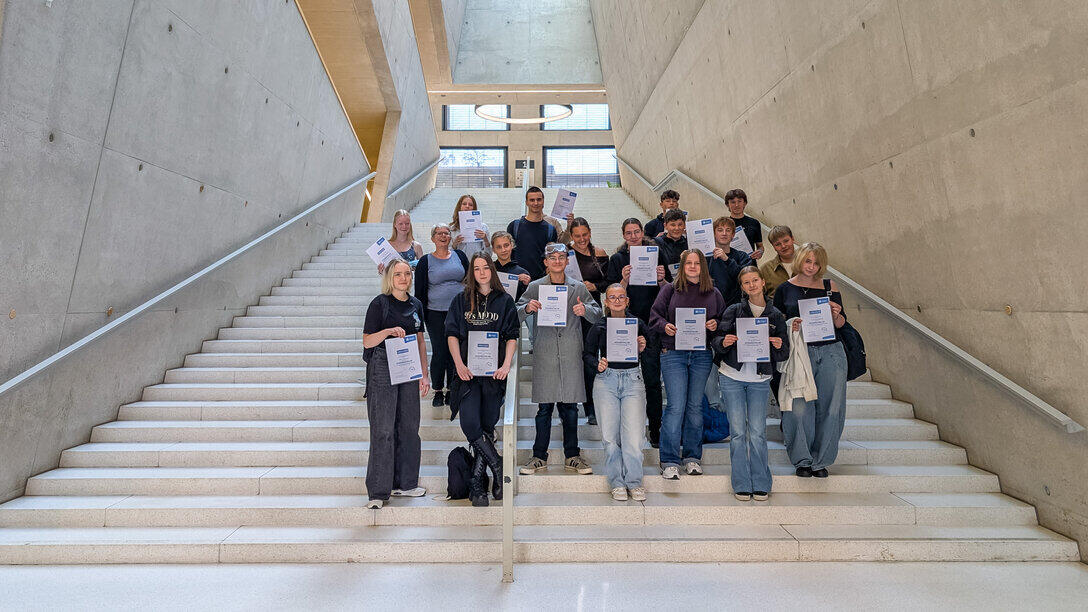
The Speedbachelor was organised by Robin Biebl, Christina Lucas and Vanessa Juliane Herrmann from the IKKS. Together with the teachers from Fichte Secondary School, they were on hand to support the pupils.
The final survey showed that, for many participants, the two days provided valuable guidance. The practical exercises and the direct interaction with the teachers were particularly well received.
What the young people took away from the Speedbachelor is correspondingly varied: new insights, an interest in specific subject areas and the realisation that, whilst a degree course is challenging, it is achievable.