This page was translated automatically using artificial intelligence (DeepL). The German version is binding. More information about automatic translation
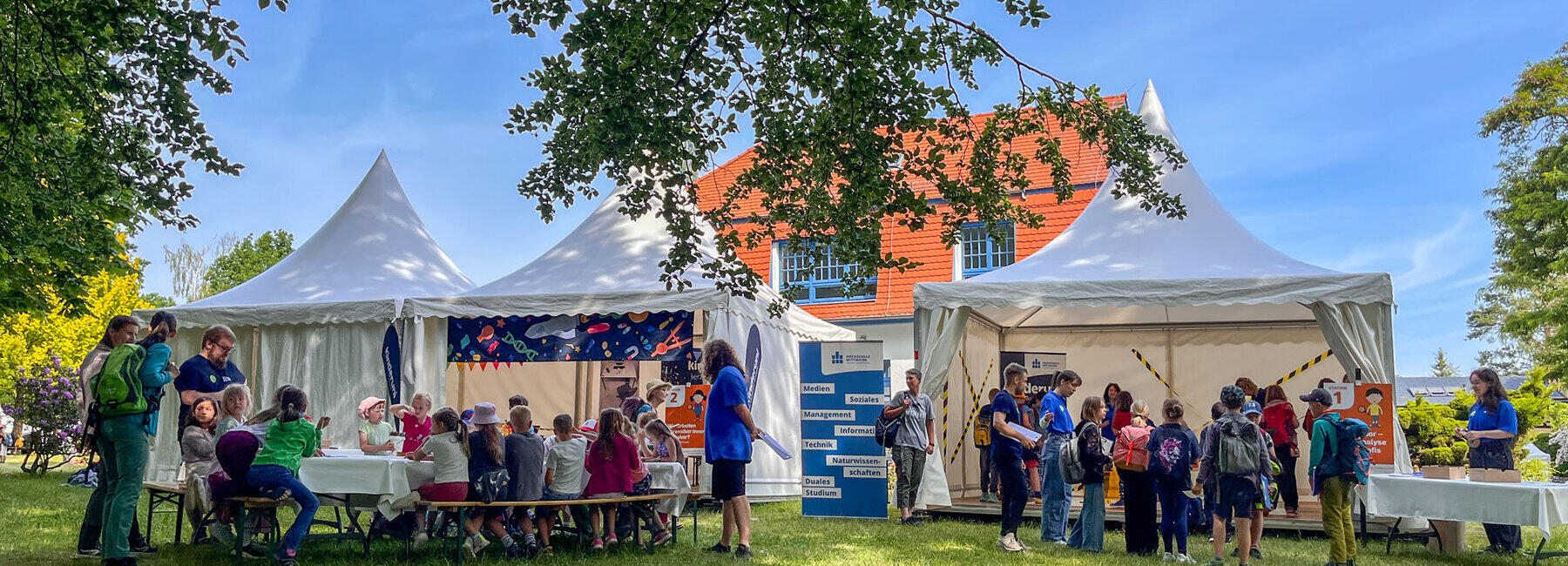
Armed with a skeleton, a microscope and plenty of scientific curiosity, the Children’s University team from Mittweida University of Applied Sciences (HSMW) set off for Großbothen on 2 June. At the ‘Experimenting in the Park’ event, they and their hands-on tent transformed Wilhelm-Ostwald Park into a place full of puzzles, discoveries and ‘aha’ moments. Together with numerous other organisations from the region, the university inspired hundreds of children to take an interest in science, technology and research.
The invisible becomes visible…
In the Children’s University tent, the young visitors took on the role of investigators. Through a series of interactive lectures, they learnt how forensic scientists work at real crime scenes and why science plays a crucial role in solving crimes.
Michele-Nadine Wagner from the Forensics Section and Robin Biebl from the Institute for Competence, Communication and Languages (IKKS) organised the lectures. Together, they took the children on a journey into the world of forensic evidence gathering and explored an exciting question: How can traces invisible to the naked eye be made visible and correctly analysed? To this end, the children learnt about techniques such as powdering, for example, and discovered what information even the tiniest fibre traces can reveal when examined under a microscope.
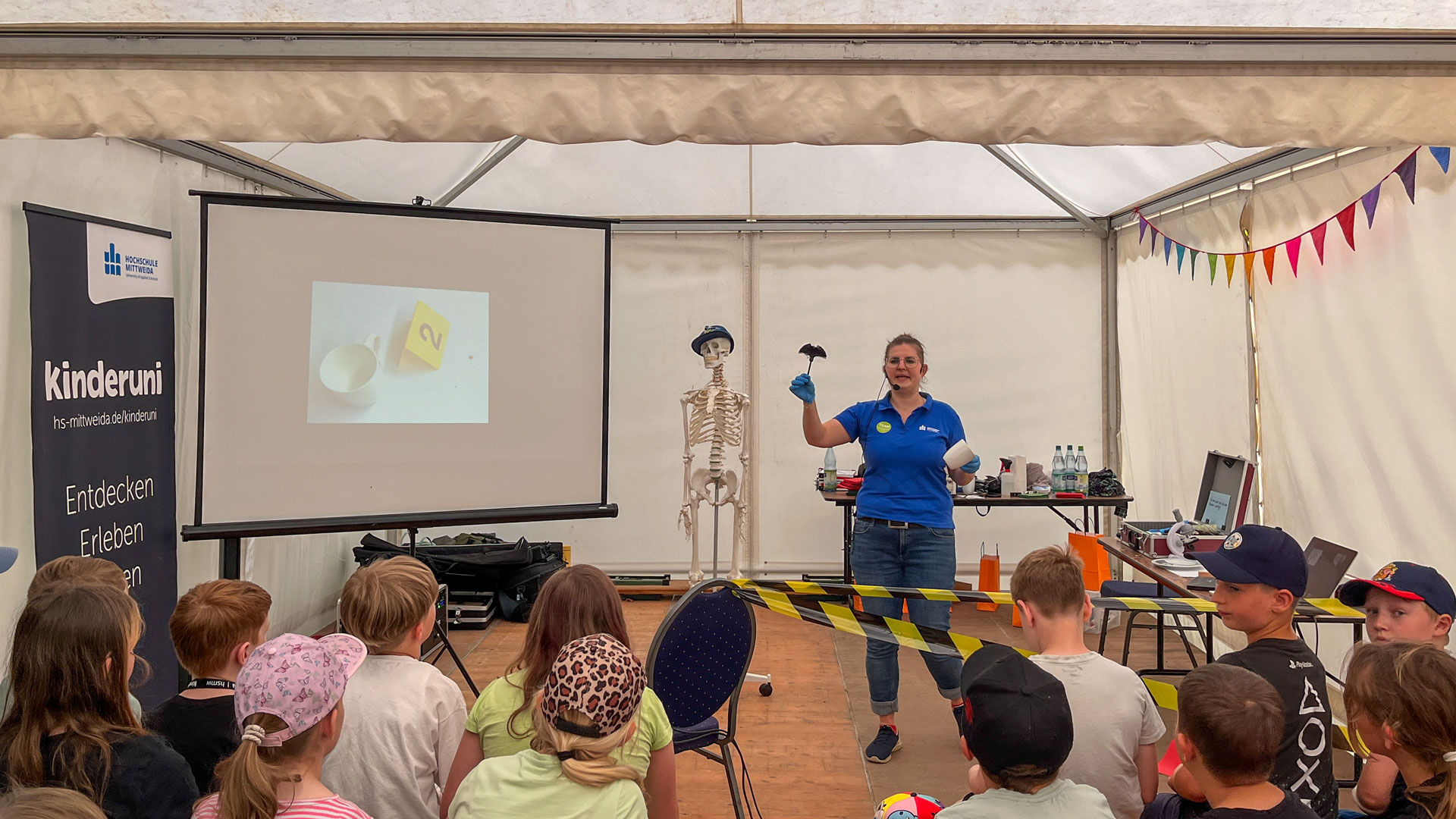
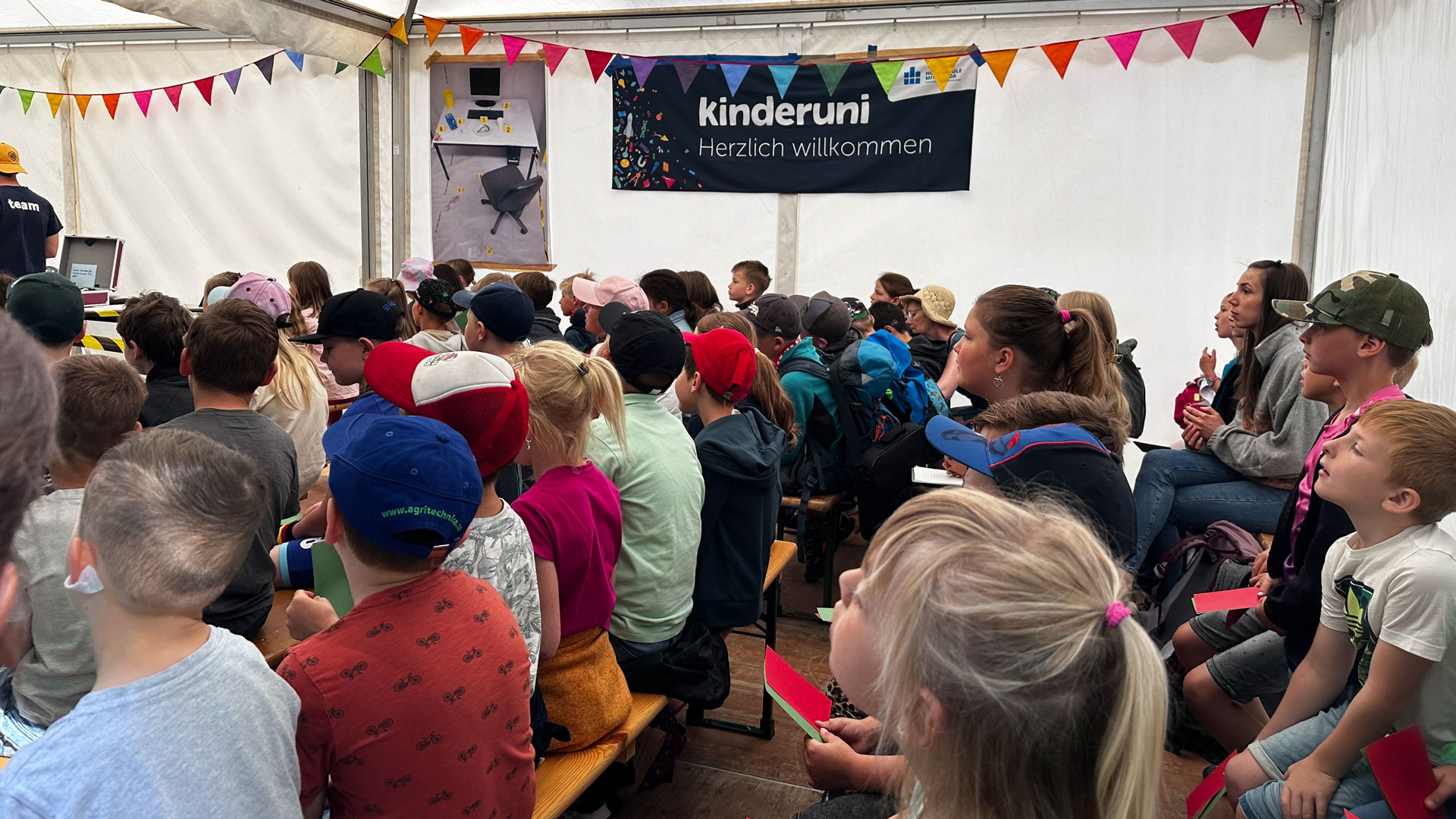
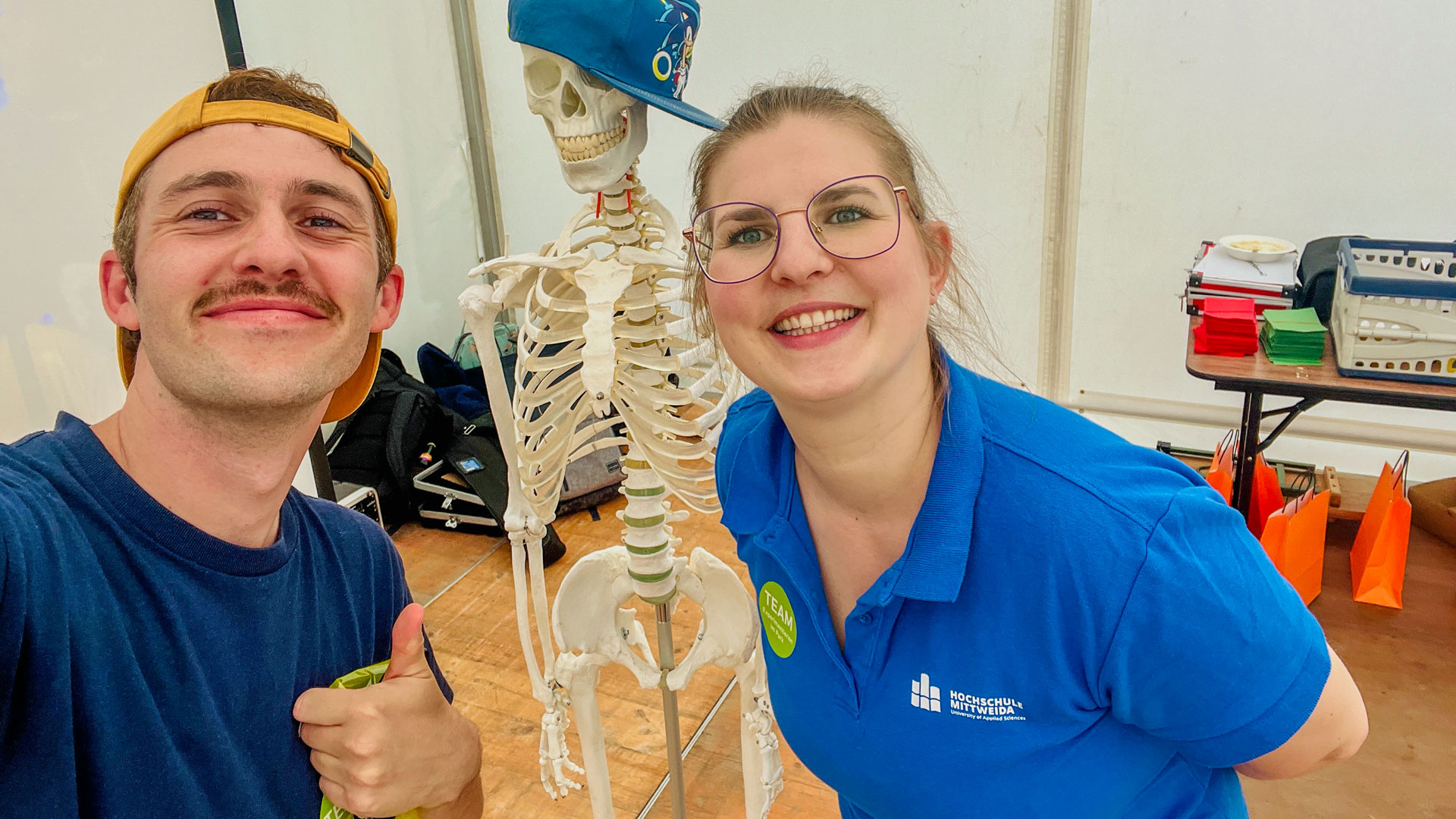
However, before any search for evidence can even begin, a crime scene must be professionally secured. The young detectives therefore also learnt about the most important rules of crime scene investigation: Why is a crime scene cordoned off? Why do forensic investigators wear protective suits? And how do you prevent important evidence from being accidentally destroyed? The evidence collected helps to reconstruct the sequence of events, and scientific forensic methods provide insights that lead to the conviction of a suspect.
Evidence collection at the ‘real’ crime scene
Right next door, in the hands-on tent, a practical challenge awaited. Here, the children were able to put their newly acquired knowledge into practice straight away. Before the investigation began, everyone first gathered in the ‘detective’s office’. Together, they compiled the most important rules for a professional crime scene investigation and prepared for their upcoming mission. They then headed to the specially set-up crime scene, where numerous clues awaited the young investigators.
Staff and students from the Forensics Department supervised the hands-on tent. With great enthusiasm, they supported the children in their investigations, offered guidance, asked questions and ensured that the fictional crime scene became an authentic investigative environment. This allowed the young visitors to experience just how closely scientific work, teamwork and the search for forensic evidence are intertwined.
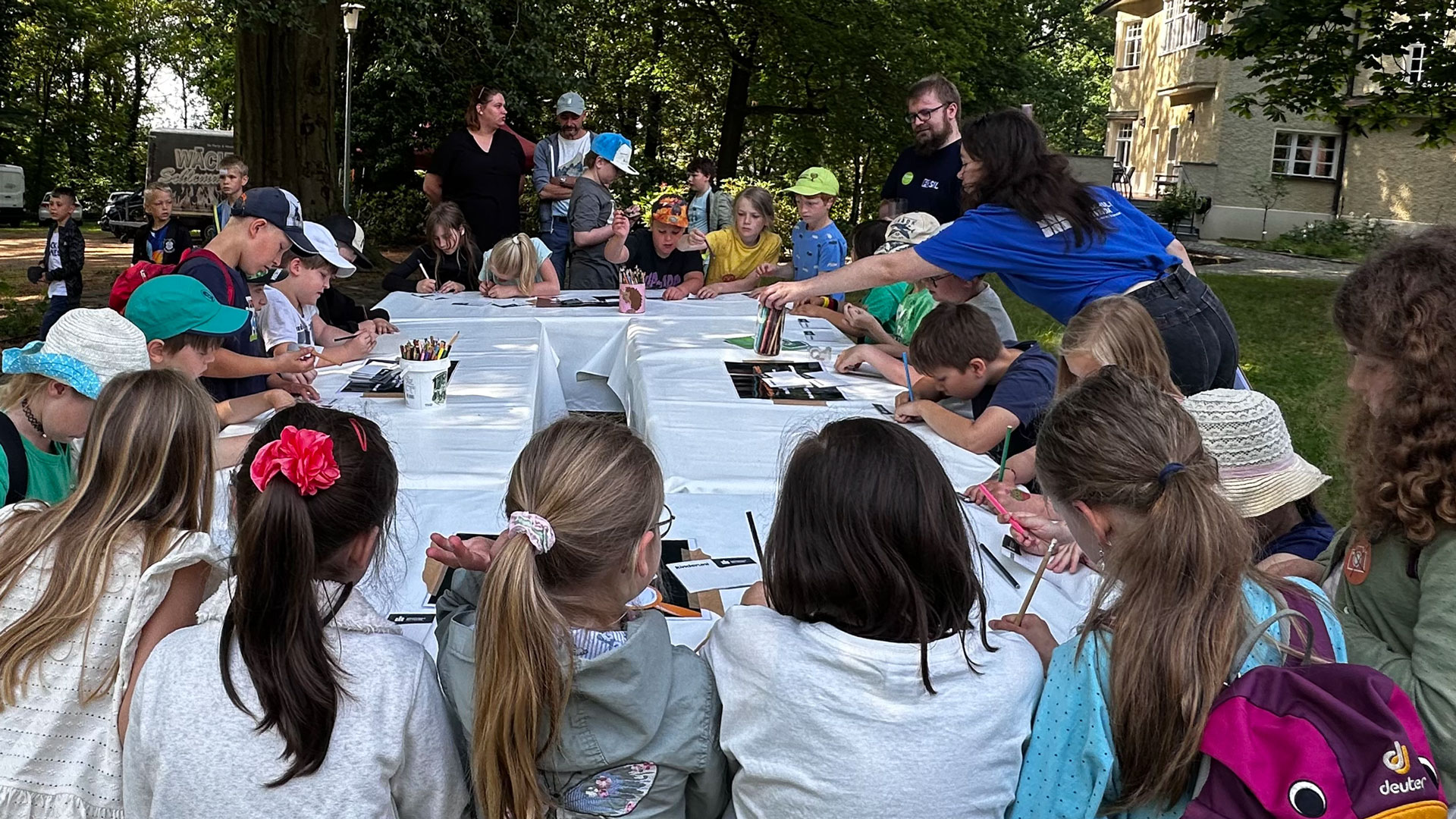
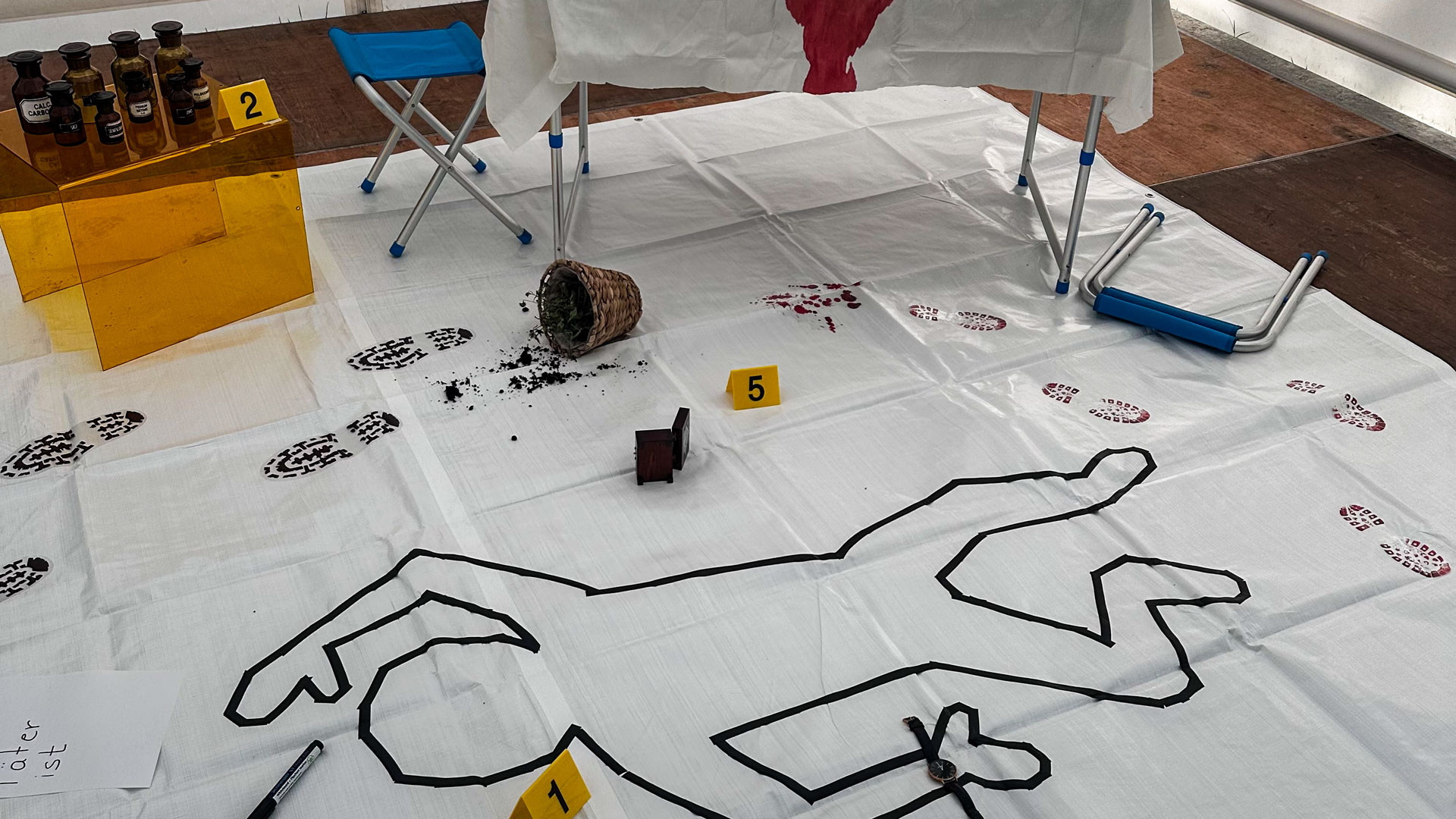
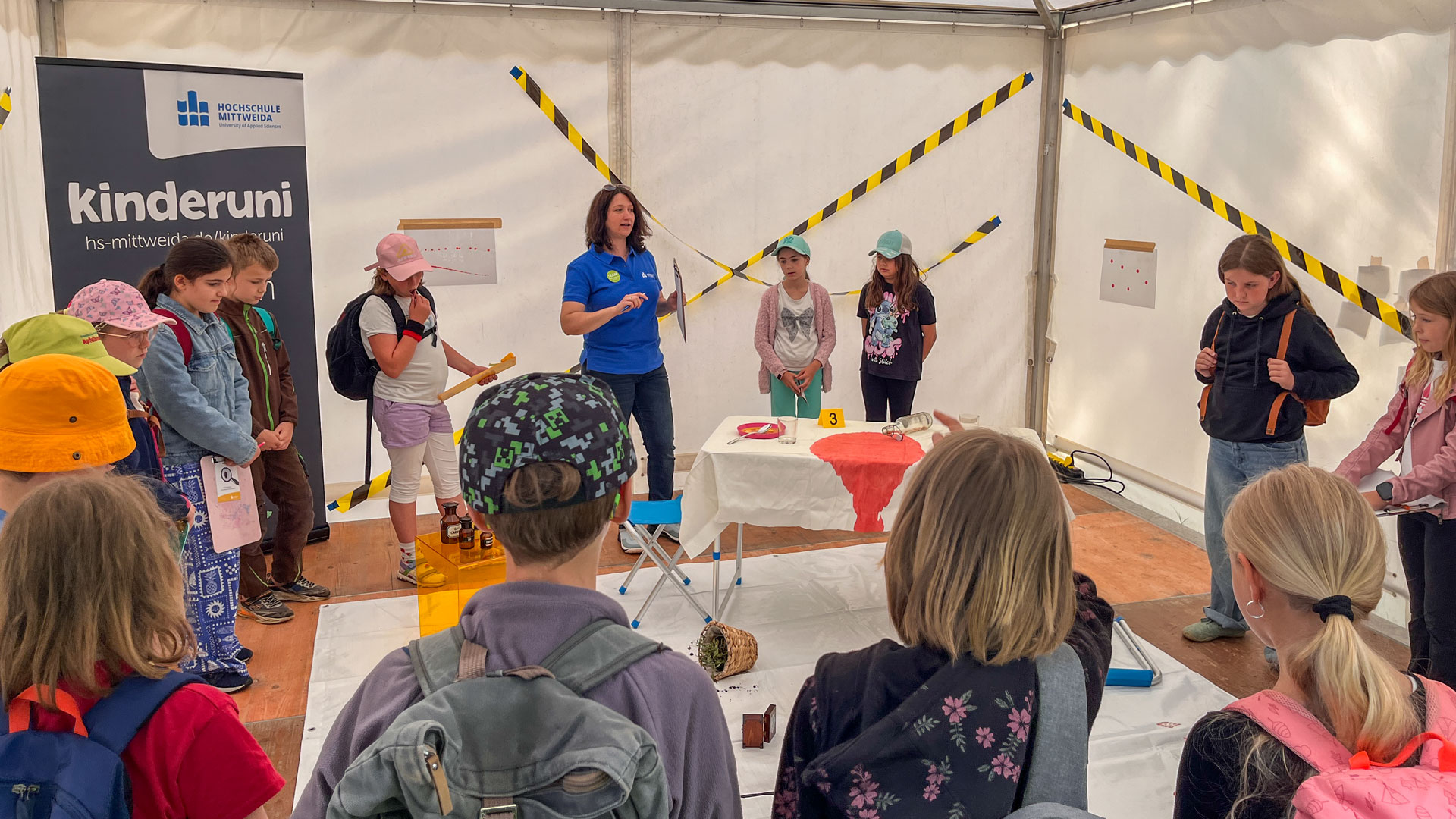
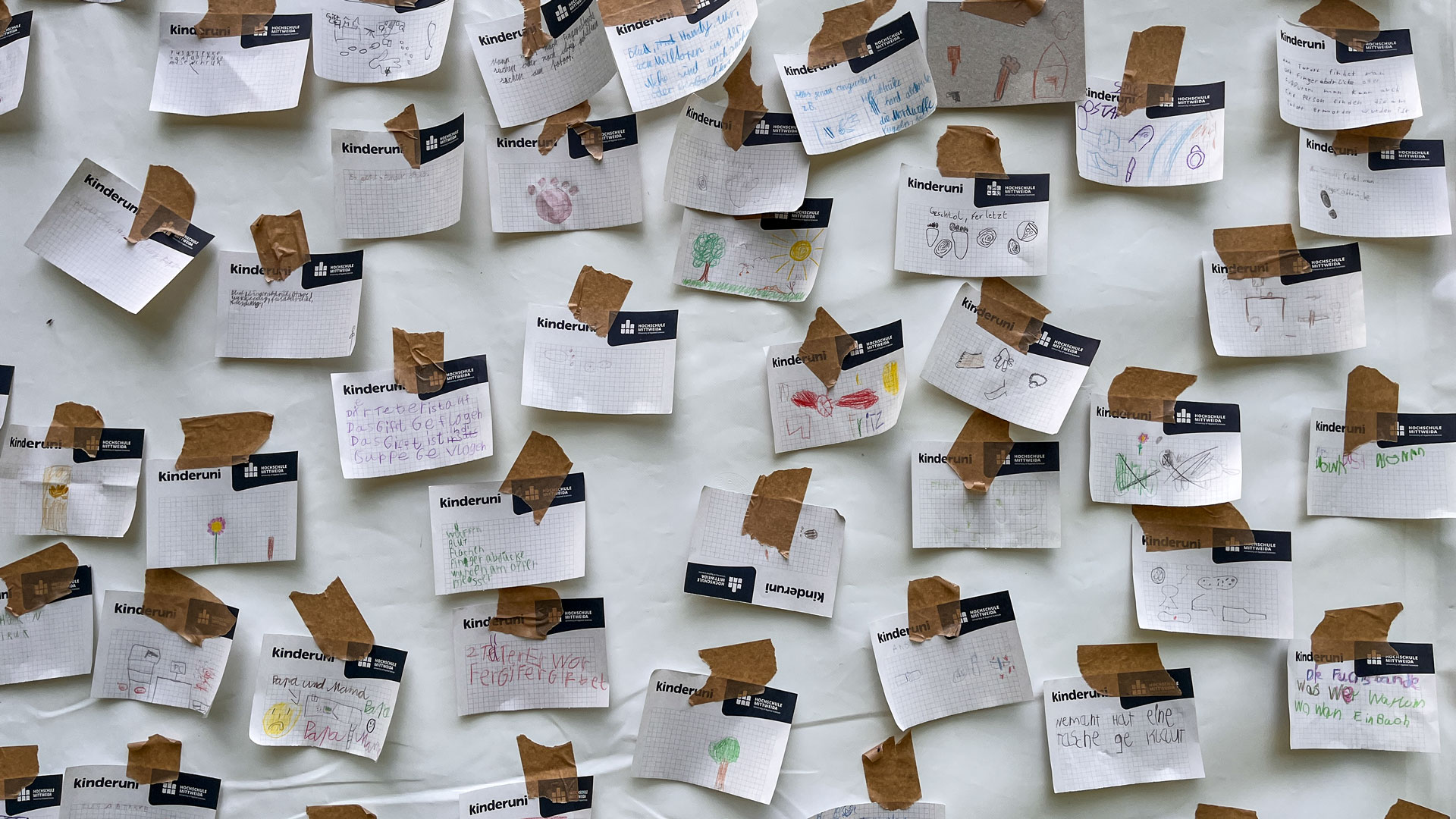
With great concentration, the children searched for, secured and documented clues. They compared clues, discussed possible connections and, piece by piece, reconstructed the sequence of events. In the process, it became clear what is important: observing carefully, asking questions, developing hypotheses and testing them against the evidence.
Things got particularly creative afterwards on the ideas board outside the tent. There, the children recorded their theories about what had happened – sometimes as a short note, sometimes as a drawing. The board quickly filled up with a wide variety of hypotheses, exciting explanations and creative solutions.
Hands-on science
With ‘Experimenting in the Park’, the university is, for the third time now, taking the opportunity to bring science to life in the very places where children spend their free time – away from lecture theatres and laboratories. It is precisely these kinds of initiatives that form an important part of the university’s Third Mission.
For the HSMW, this also represents a significant contribution to promoting STEM subjects in the region. Scientific and technical topics do not only become relevant once you start university. Interest, curiosity and enthusiasm often arise as early as childhood. Events such as ‘Experimenting in the Park’ create early points of contact with science and show that research, analysis and critical thinking can be exciting tools for understanding the world.
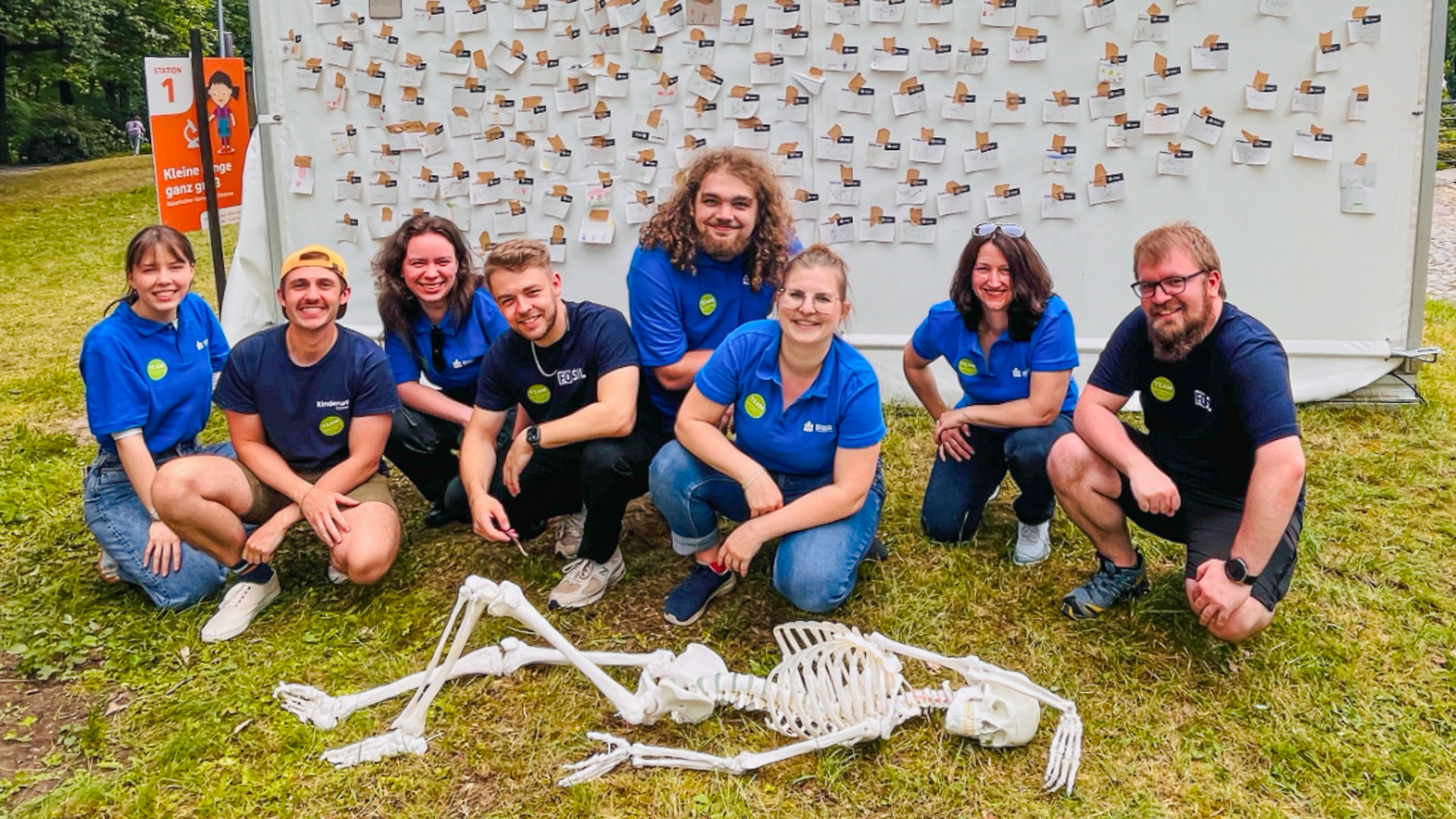
For Robin Biebl, organiser of the Children’s University, the programme is a prime example of how science communication can succeed: “Our ideas board was a wonderful way to see what science is all about: children ask questions, develop hypotheses and discuss different approaches. It is precisely this curiosity that we want to encourage. After all, science does not begin with ready-made answers, but with questions, observations and the courage to pursue one’s own ideas. At the same time, the programme thrives on the people who share their knowledge with enthusiasm. That is why I am delighted that all our colleagues and students will continue to take part in the future. The diversity of our university offers countless opportunities to inspire children’s enthusiasm for STEM subjects and science. This is a great opportunity!”
This year, too, it was clear that this concept works: throughout the day, there was a steady stream of visitors at the two HSMW tents. Everywhere, children were observing, discussing, experimenting and combining ideas. For many children, it was their first encounter with scientific methods – and perhaps the start of a long journey of discovery.
All the information about the Children’s University at Mittweida University of Applied Sciences.
From the crime scene to the film set
From 6 pm until midnight – a long evening on a campus brimming with ideas, experiments and hands-on activities for young and old, big and small: that’s the Night of Sciences (Nacht der Wissenschaften) at Mittweida University of Applied Sciences on Friday 26 June. The Children’s University will be taking part with a ‘special’ session that lets children experience how a film crew works. The 45-minute lecture will take place twice: at 6.30 pm and 8 pm at the Centre for Media and Social Work. No booking is required.
The full programme for the Night of Sciences (Nacht der Wissenschaften).