This page was translated automatically using artificial intelligence (DeepL). The German version is binding. More information about automatic translation
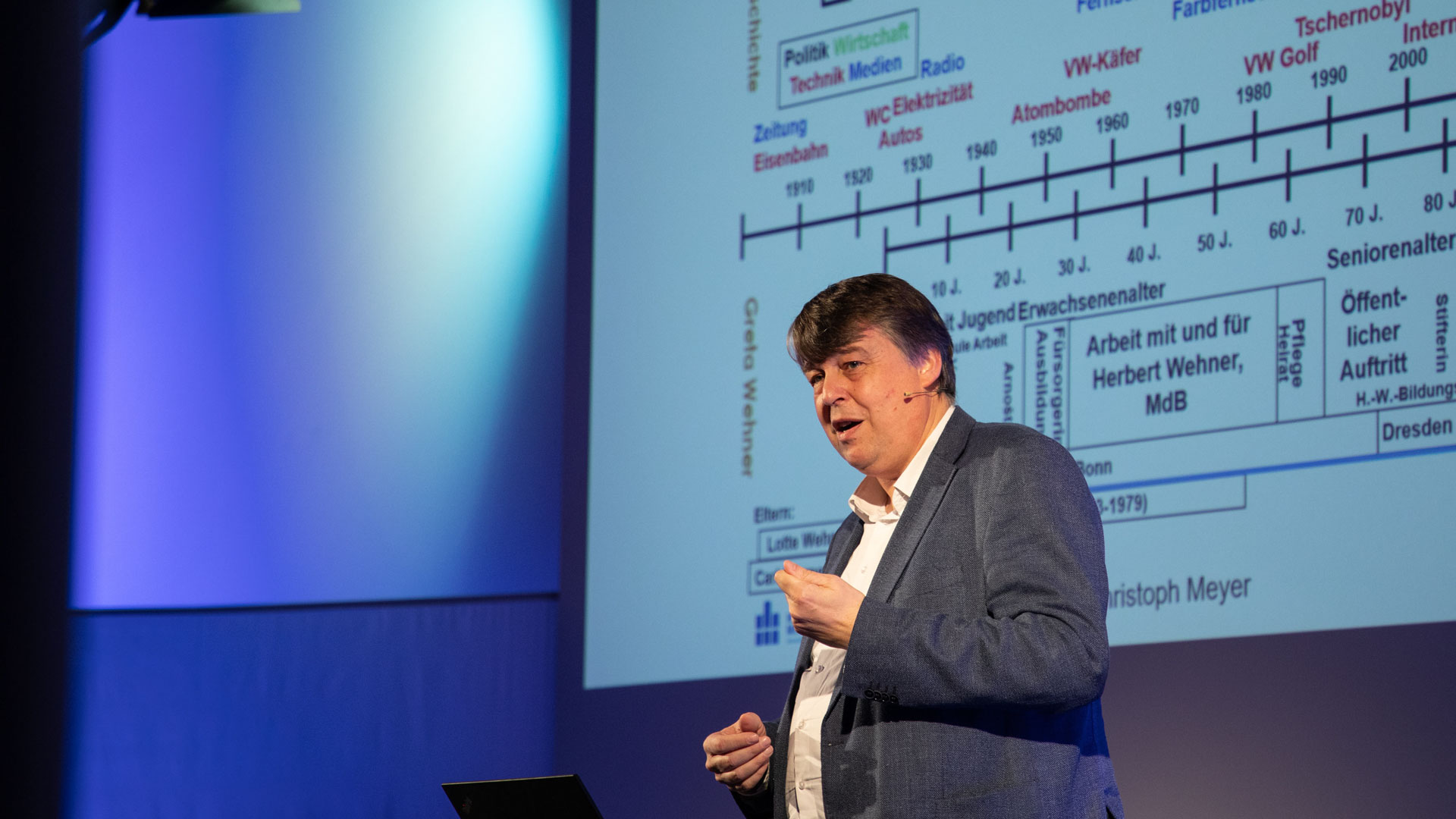
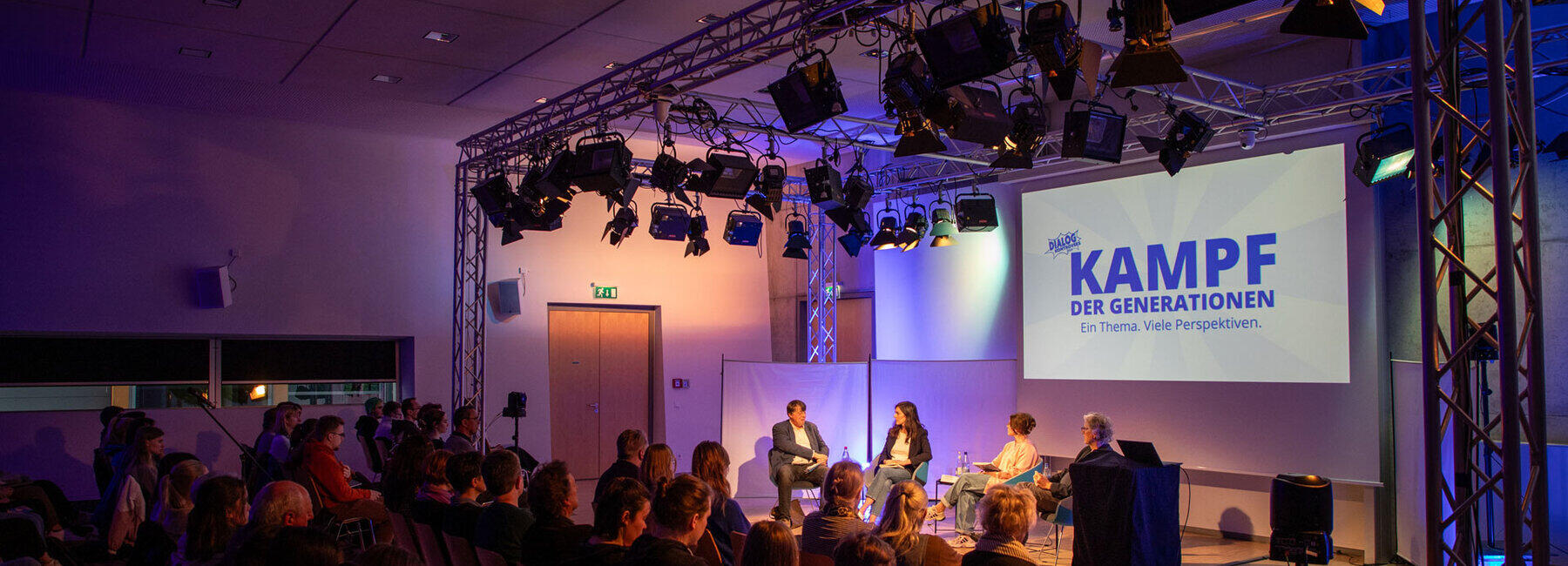
The six-part ‘Controversial Dialogue (Dialog Kontrovers)’ series at Mittweida University of Applied Sciences (HSMW) kicked off on 26 March with a discussion entitled ‘33 1/3 Years of East Germans versus West Germans – or: Which generation will achieve “inner unity”?’. Moderator Professor Christoph Meyer introduced the series and outlined the “basic facts about generations”: his “generational slide rule” enables the visualisation of how people are shaped by their age and contemporary historical events. Meyer is Vice-Rector for Education at HSMW and Director of the university’s Institute for Competence, Communication and Languages (IKKS). The IKKS organises the Controversial Dialogue (Dialog Kontrovers) series, alternating annually with the Public Lecture Series.
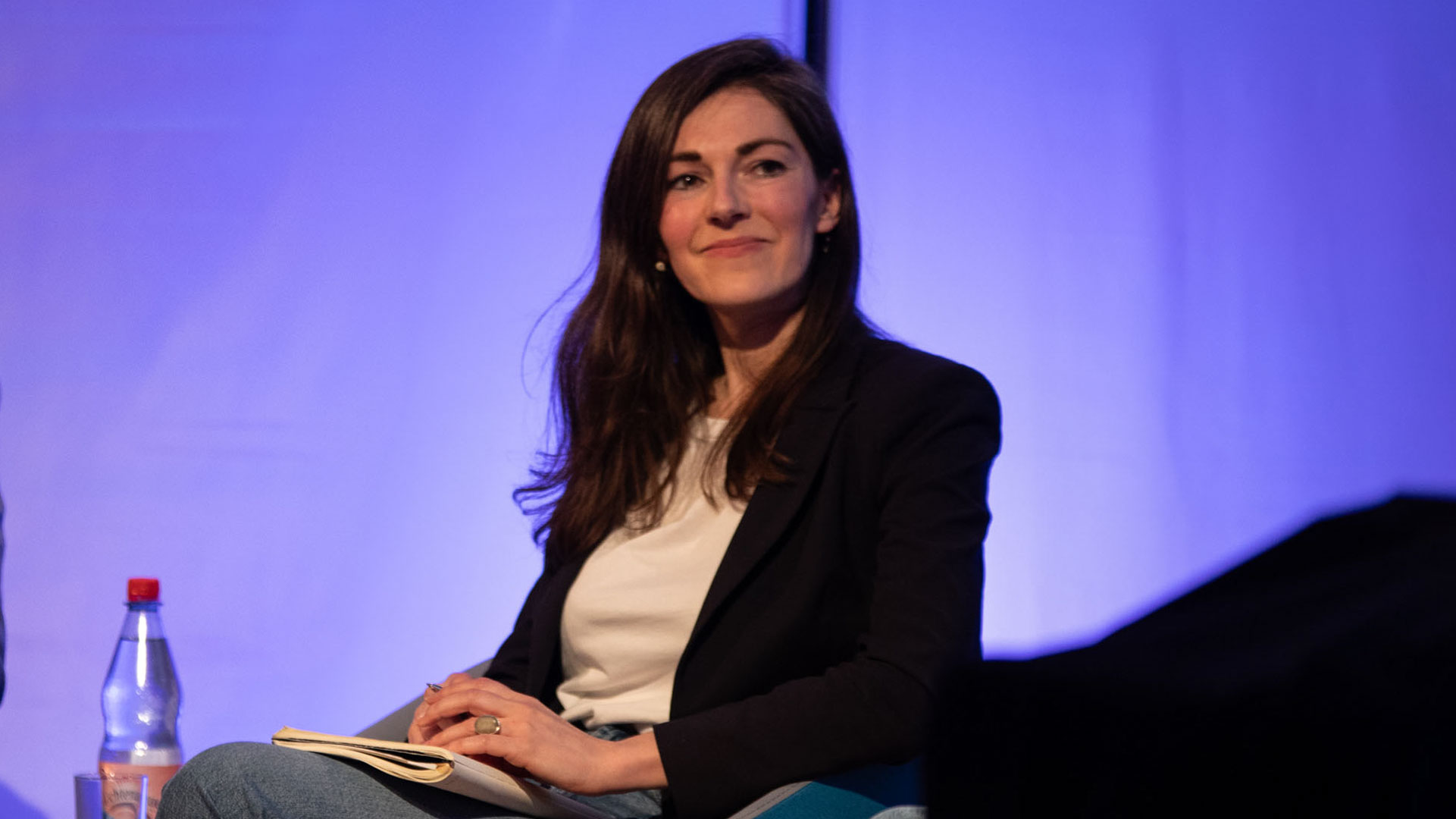
The panellists had experienced the fall of the Berlin Wall from different generational perspectives: Franziska Wetterling, representing the third generation from the East, described how, as a young person in the East, she had to find her identity amidst enormous political, economic and social changes without much support from her parents’ generation – and how this continues to shape her life and identity to this day.
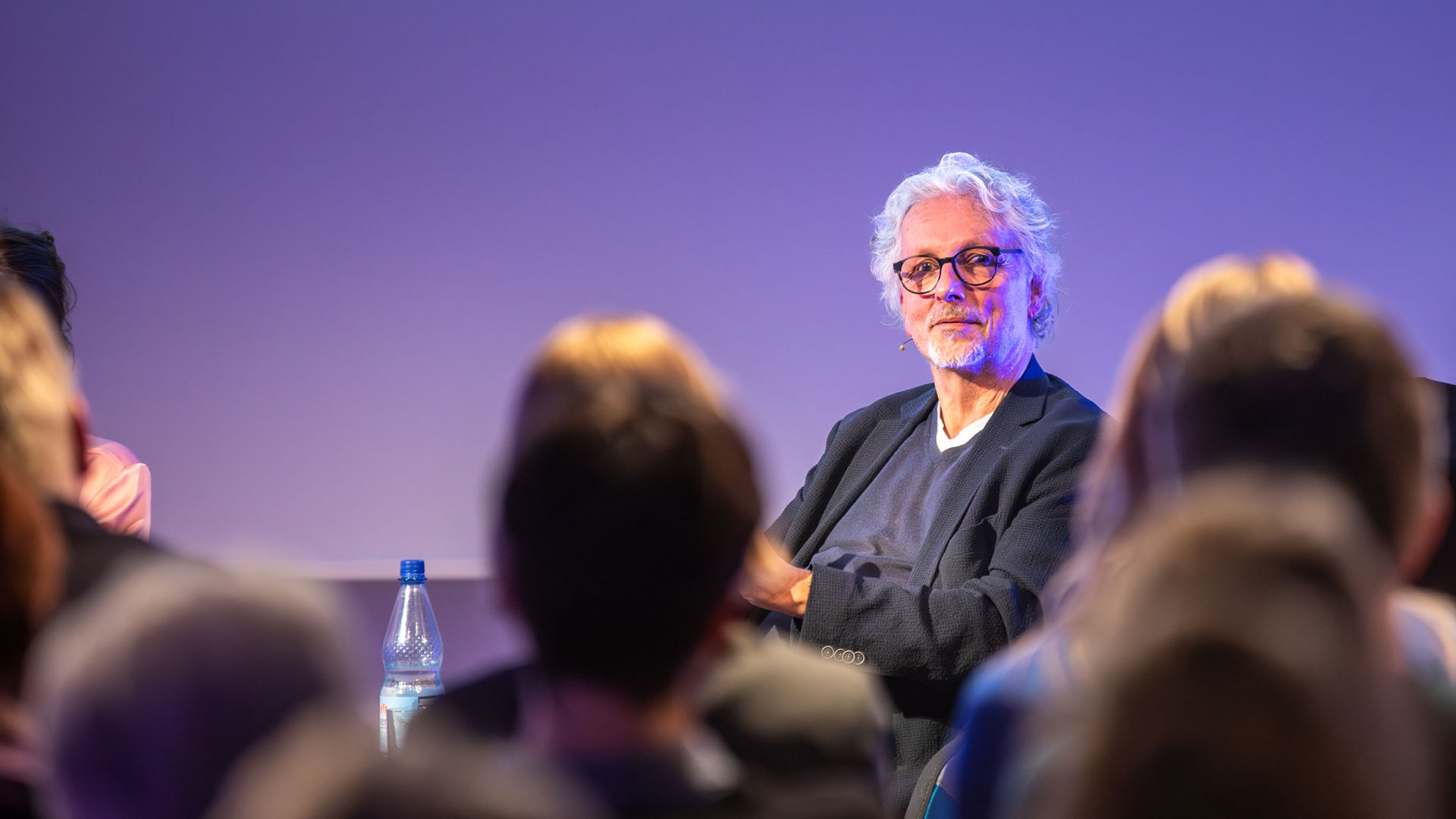
Professor Stefan Busse, Professor Emeritus of Psychology at the HSMW, shared with the panellists and visitors his experiences of the upheavals in socialist society, the loss of security and structural changes – what it meant for him to be ‘turned into an East German’ and how these experiences continue to shape him to this day.
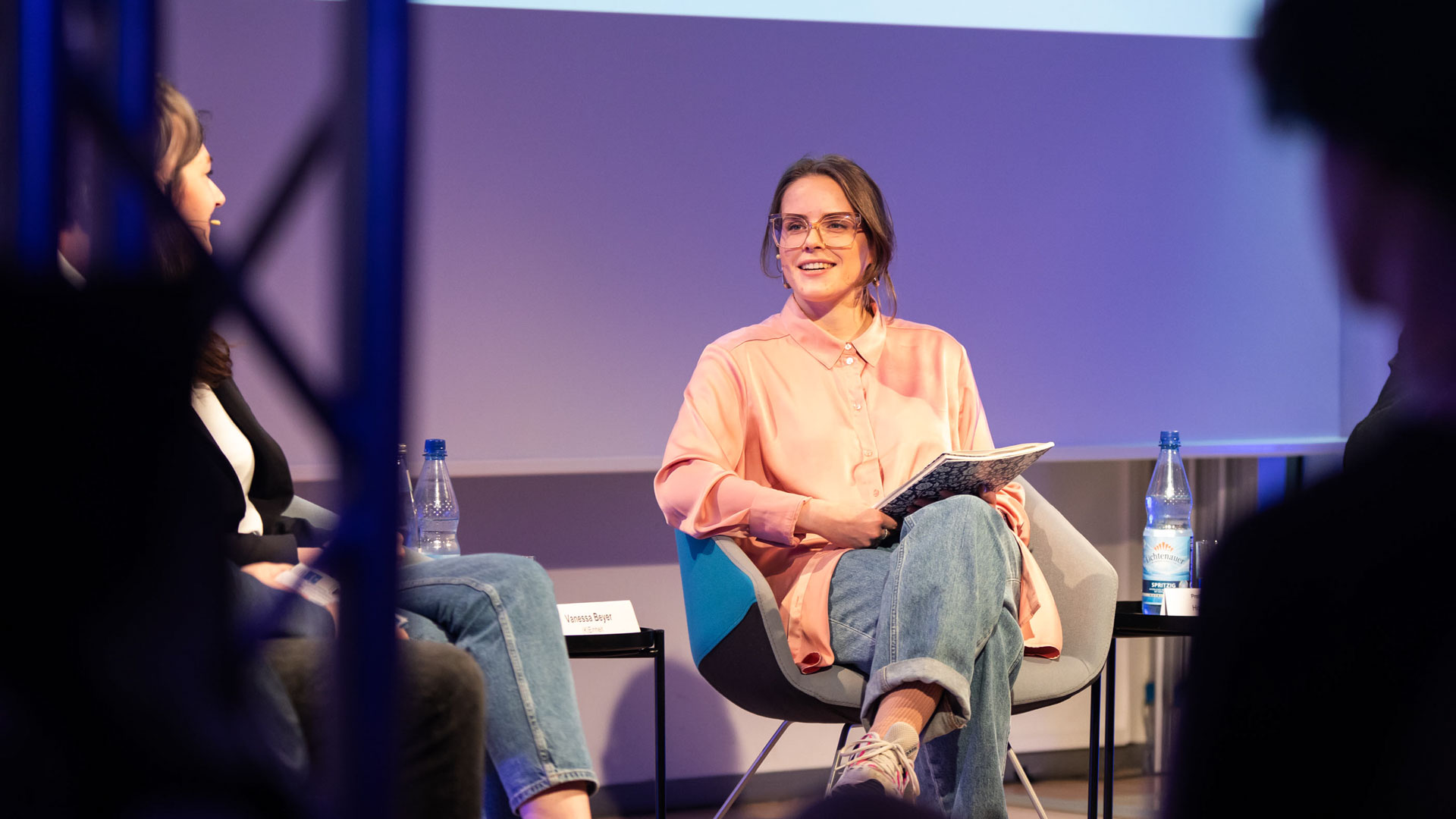
Vanessa Beyer and her fellow participants in the ‘(K)Einheit’ project have no direct memories of the division of Germany or of life under socialism. They feel less of a connection to an East German identity, but still notice its lingering effects – conveyed to them by older generations and by society at large.
Diversity shapes identity
The discussion has shown that regional identities in a united Germany are changing, as for many young people the experience of division is becoming increasingly a matter of history and less directly relevant. Representatives of the younger generations in the audience, too, are less attached to the traditional terms ‘Ossi’ and ‘Wessi’ due to growing cultural and social integration. Instead, they tend to place greater emphasis on what they have in common.
There was, however, a consensus that some differences will persist for some time yet due to economic disparities, social structures and networks, and cultural characteristics. The specific collective memories and identities of the older generations also play a role here. Yet these differences also form an important part of the regional diversity and identity of Germany as a whole.

Next discussion on Tuesday: The loss of gender roles
The growing significance of a distinction that has always been caricatured as ‘minor’ is the focus of the second of a total of six events in the ‘Controversial Dialogue (Dialog Kontrovers)’ series on Tuesday 9 April at 5.30 pm. The discussion will then centre on the question: ‘The “Gender Shift” megatrend – is diversity the new normal?’
In short, ‘gender shift’ means that gender roles are becoming less rigid. This development is a ‘megatrend’ because it is being observed worldwide and is having an impact on society. The topic undoubtedly has the potential to spark debate, including in the dialogue between generations.
The discussion will feature Eunike Zobel from the association ‘different people e.V.’, cultural studies scholar and social anthropologist Pauline Seuß, and Simon Moses Schleimer, Professor of Social Work and Migration at the HSMW. The discussion will be moderated by Patricia Kröber, Professor of Social Pedagogy and Counselling at HSMW. The Controversial Dialogue (Dialog Kontrovers) event is open to the public. Interested members of the public of all generations are warmly invited to join the discussion.
Admission is free. Up-to-date information on topics and speakers can be found on the ‘Controversial Dialogue (Dialog Kontrovers)’ website.
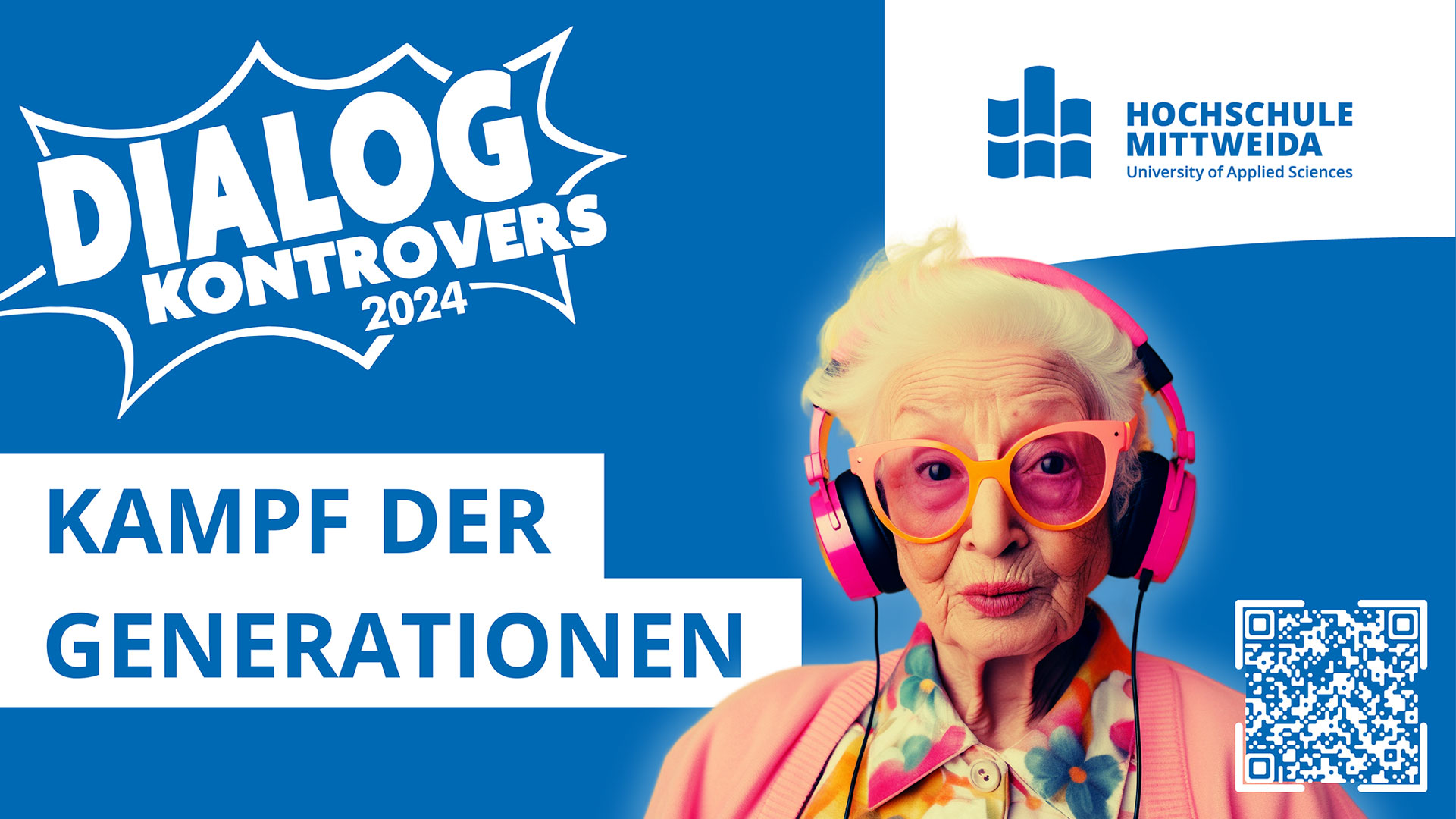
Generational conflict the subject of heated debate
Older people value stability – younger people are open to change: are these mere clichés or accurate descriptions? Do the differences and conflicts between the generations weaken a society, or do they make it more resilient and better equipped for the future? What is young, what is old? Is this categorisation useful for finding one’s own identity and coping better with everyday life, or does it tend to hold individuals back? Where are the opportunities for the battle of the generations not to be a battle against one another, but a joint effort towards shared goals?
There is a wide range of areas in which generations can either cooperate or clash. During the summer term, the Controversial Dialogue (Dialog Kontrovers) programme at Mittweida University of Applied Sciences will focus on six areas, examining what divides the generations and what unites them – in relation to politics, technological change, the media, the environment and climate, as well as cultural norms and social values.
Text: Babett Nimschowski/Helmut Hammer
Photos: Raphael Heimann
Graphics: IKKS