This page was translated automatically using artificial intelligence (DeepL). The German version is binding. More information about automatic translation
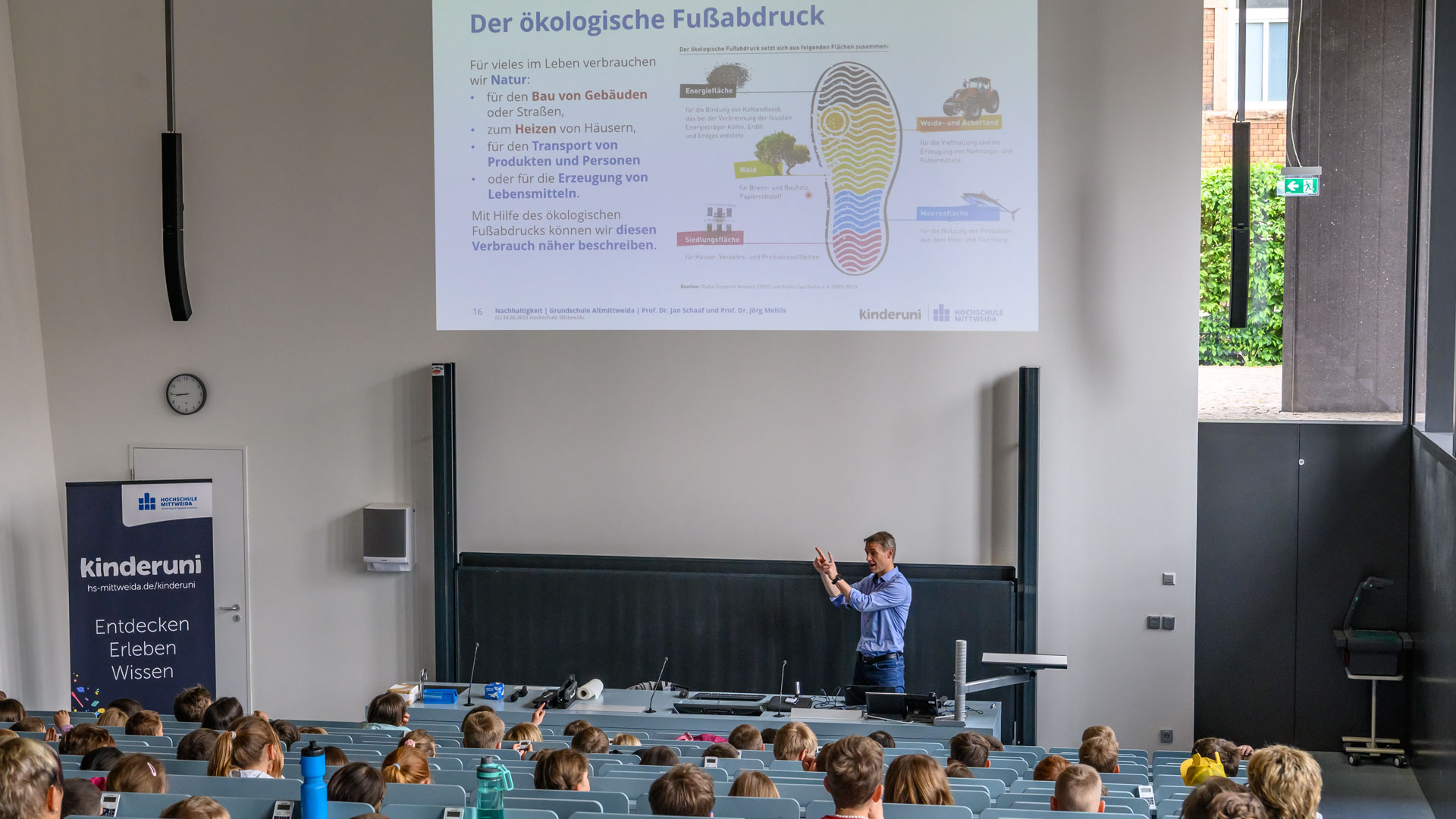
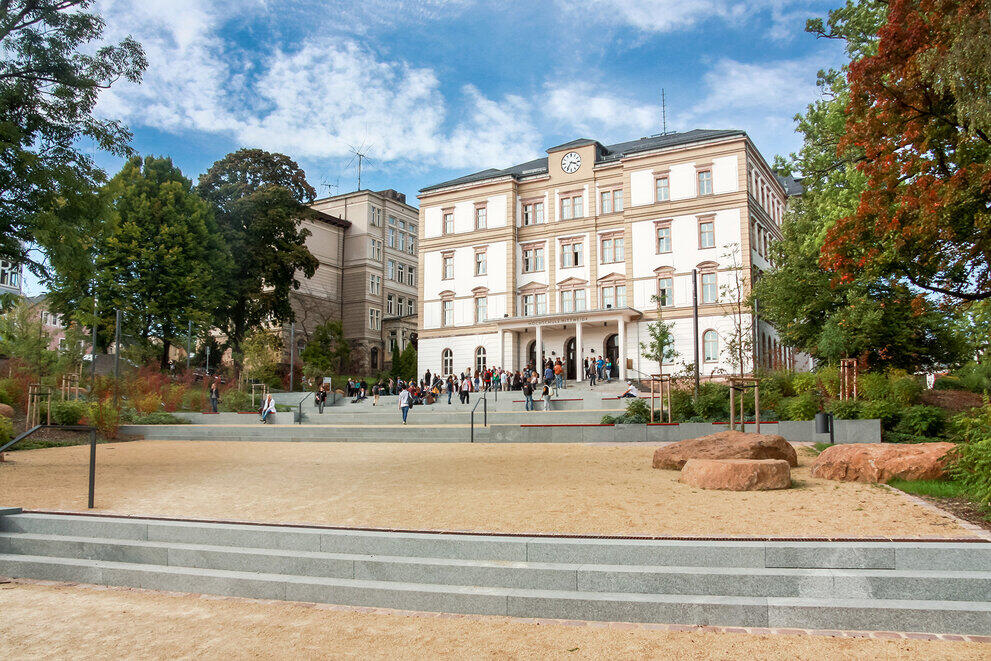
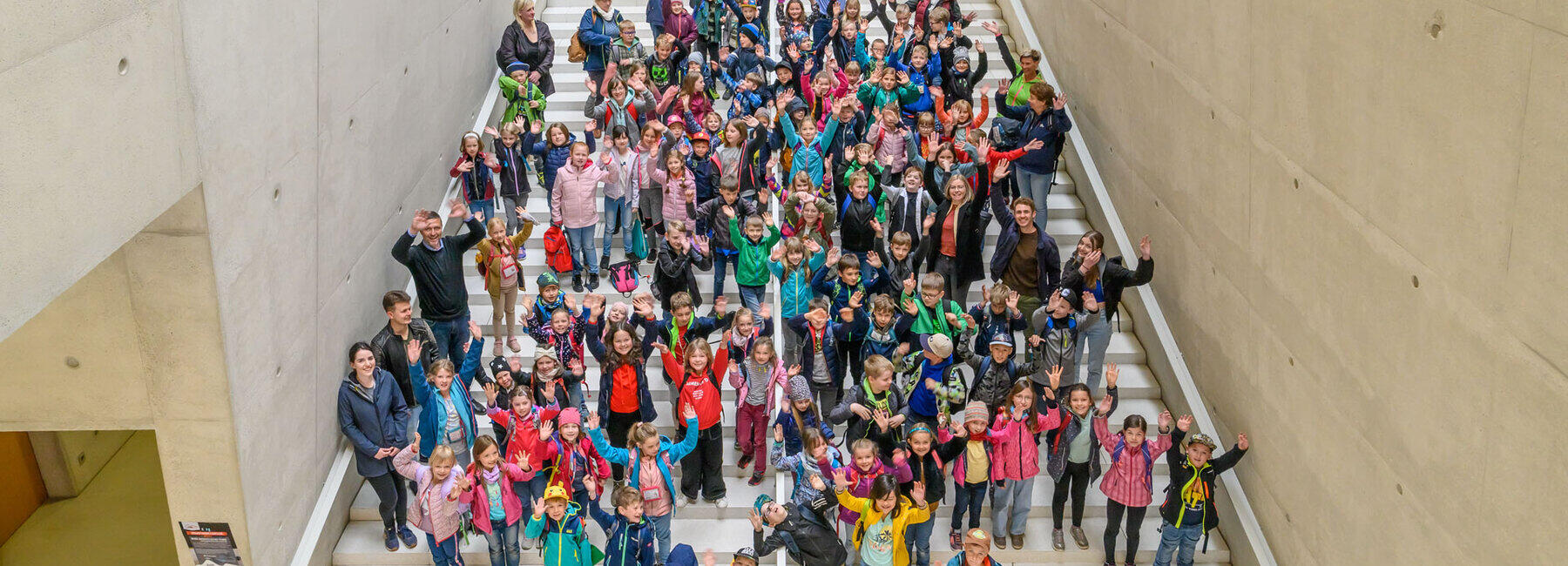
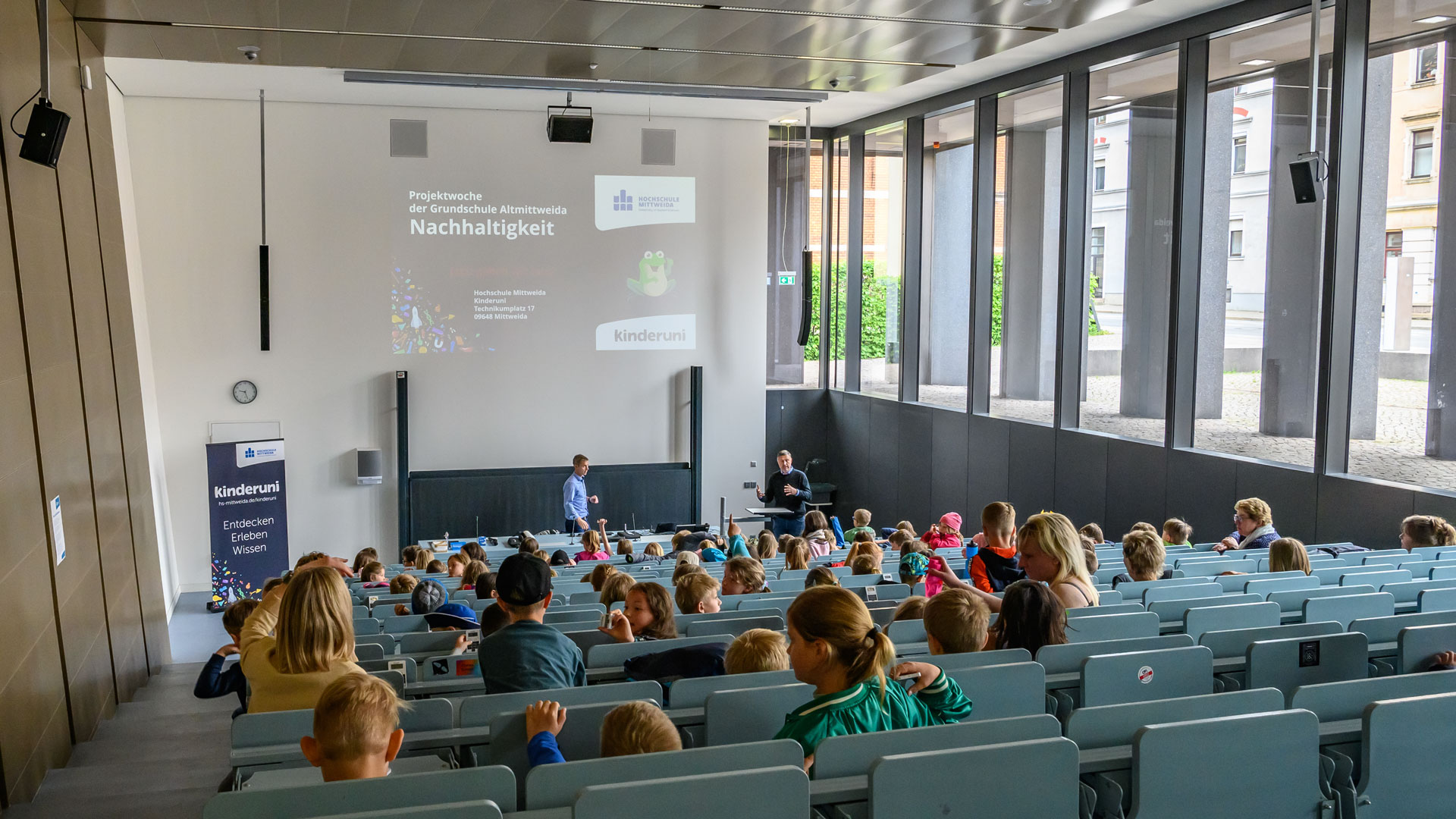
There’s always a bustle at the Centre for Media and Social Work (ZMS) at Mittweida University of Applied Sciences whenever lectures are in session or events are taking place. On the morning of 24 May, the hustle and bustle was just a fair bit younger than usual: all 103 pupils from the four year groups at Altmittweida Primary School and their five teachers travelled by Citybahn to the university town for a project day and took over the large lecture theatre at the ZMS.
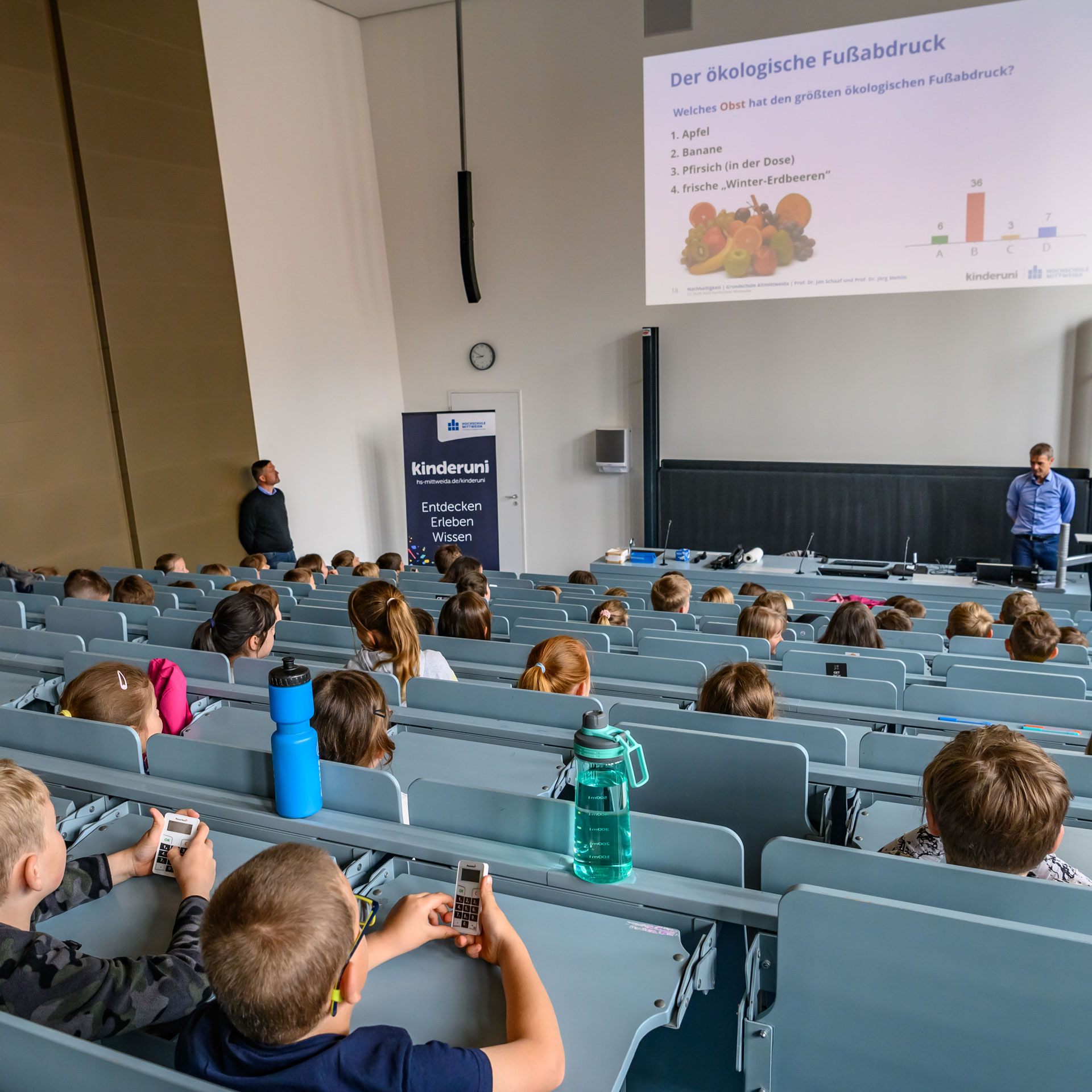
Their topic for the day was ‘sustainability’: today’s children will one day benefit from what we are all doing about it today. As is customary at a university, they began with some theory in a ‘Children’s University Extra’ session led by Professors Jan Schaaf and Jörg Mehlis from the university’s Institute for Sustainability and Sustainable Real Estate Management.
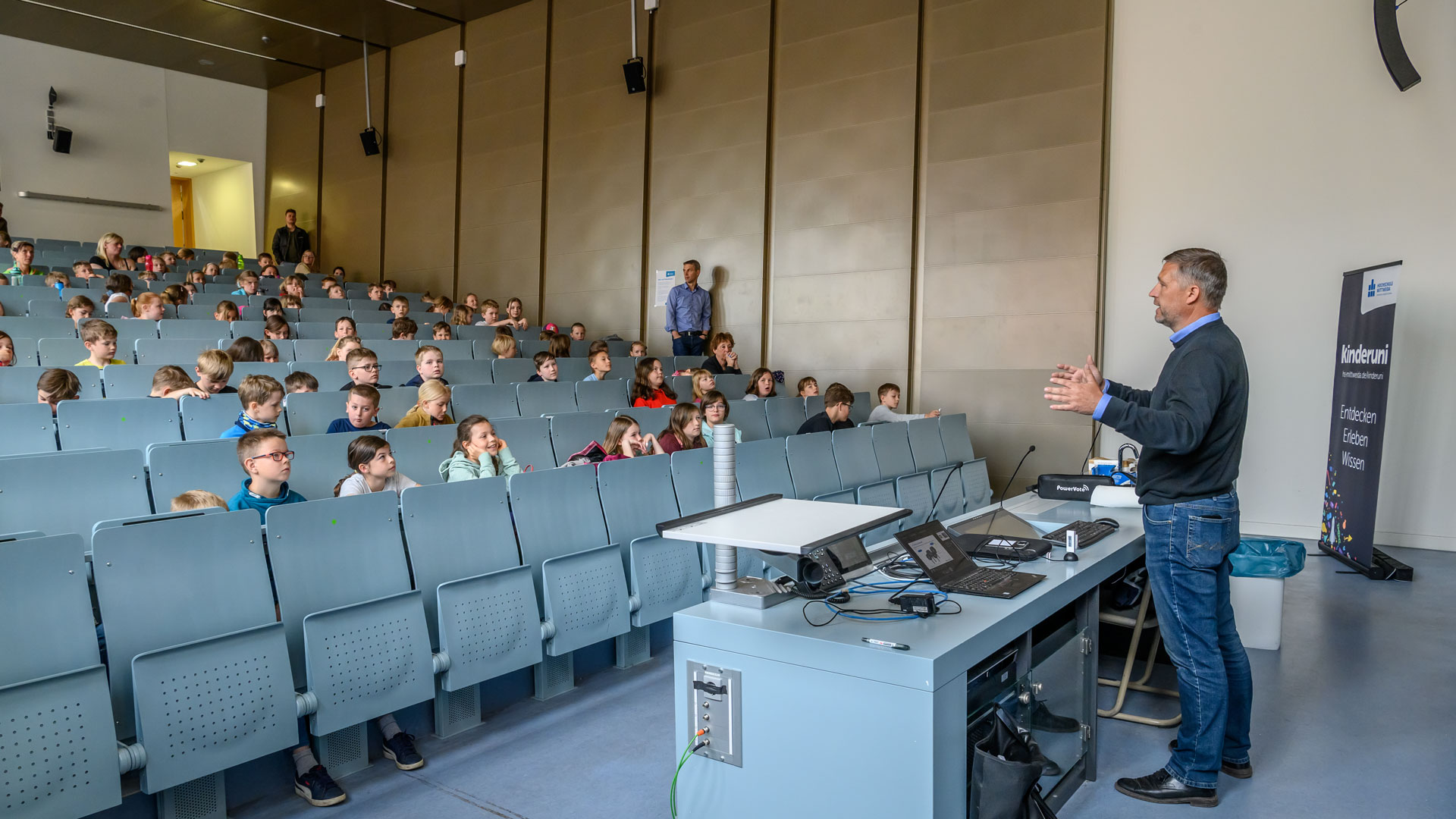
Professor Schaaf explained the three pillars of sustainability: the sustainable management of money, nature and human interaction. Using the example of the ecological footprint, he demonstrated how one can measure the sustainability of one’s own actions. Professor Mehlis showed the children how renewable materials such as wood and straw can even be used to construct large, sustainable buildings that do not look at all like log cabins or mud huts.
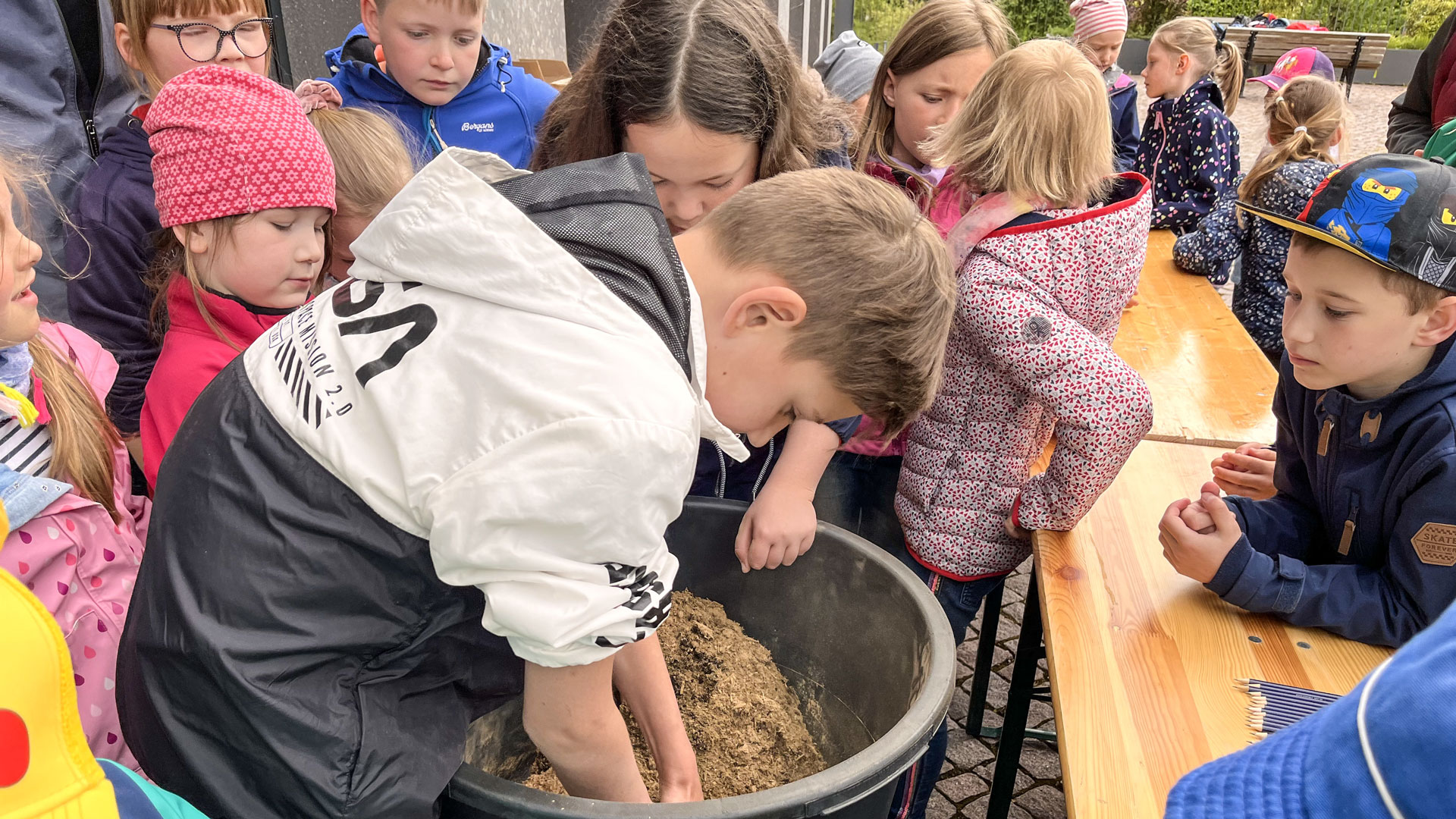
After the theory session, the children got to experience sustainability first-hand: together with the two students, Sophia and Maximilian, they made seed bombs outside behind the ZMS for their school playground, explored the wild bees’ nests (the ones that don’t sting!) and counted insects on the flowering meadow. The result was lots of little tally sheets, confirming that there’s plenty of life in the meadow, then nearly 250 seed bombs made by muddy hands – and lots of beaming faces.
A topic for young and old alike
Robin Biebl, organiser of the Children’s University at the university, helped to organise and lead this rather unusual morning as well. He says: “We want to bring scientific topics to the public and make them accessible to people outside the university. It therefore makes perfect sense to engage with children right from the start, as they are curious – particularly when it comes to topics that are important for their own future.”
Julia Nerlich, a teacher at Altmittweida Primary School, confirms this: “Sustainability is something that resonates with children of all year groups. The topic features very prominently in their everyday lives. Furthermore, we want to continue to develop as a school and incorporate more sustainable practices into our daily school life. As a school, we are very grateful for the commitment, the brilliant ideas and the effort put in by the whole team. We look forward to further joint projects!”
Professors Mehlis and Schaaf teach the ‘older’ students on the Sustainable real estate management degree programme at the university. Together with academics from other universities, they are also conducting research as part of the “WaNdel!4 – Knowledge for Applied Sustainability at German Universities” project into how universities, with their large numbers of students, staff and extensive buildings, can themselves act sustainably and serve as role models in the region.
The next ‘regular’ Children’s University session at Mittweida University of Applied Sciences will take place on 23 September 2023 at 10.00 am. The session will focus on thinking, feeling and acting – and how we can better understand our behaviour.
Full details can be found on the Children’s University page on the Mittweida University of Applied Sciences website.