This page was translated automatically using artificial intelligence (DeepL). The German version is binding. More information about automatic translation
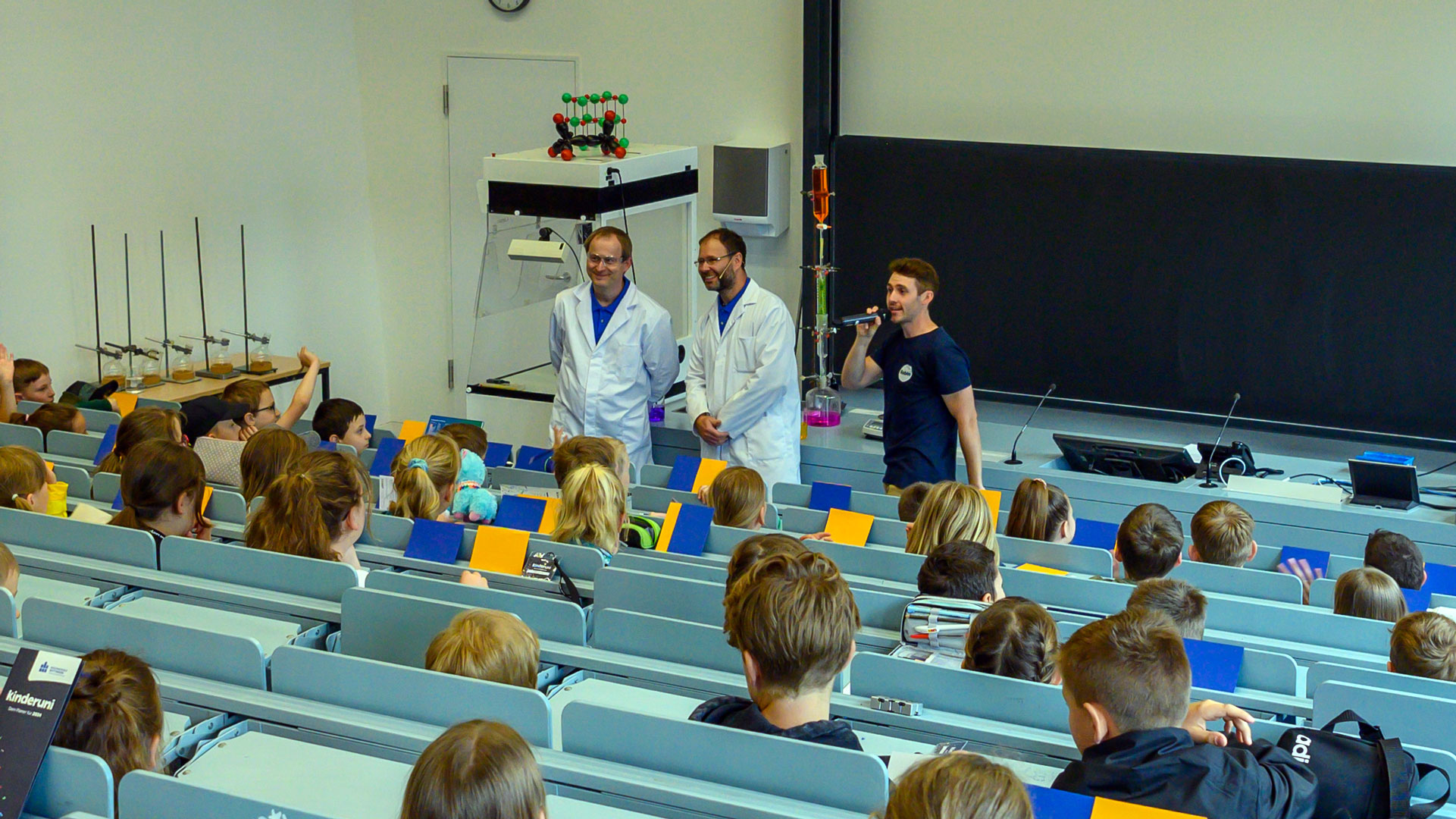
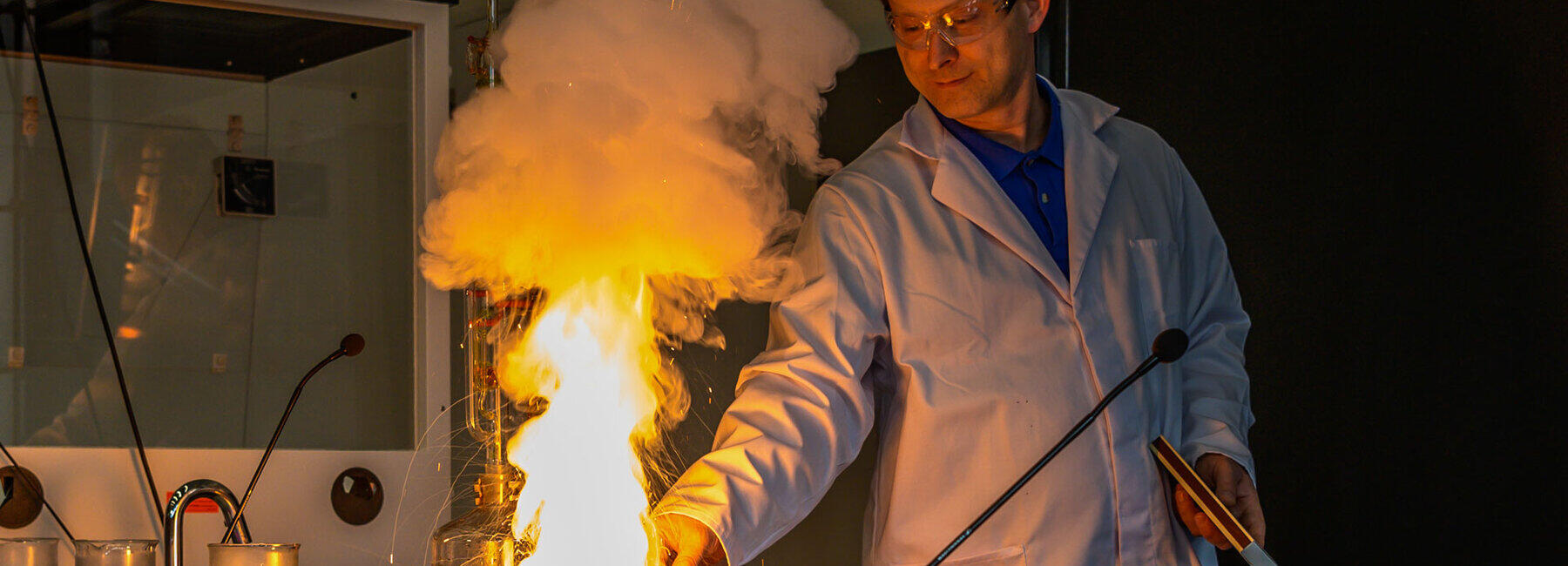
With a loud bang, the Children’s University at Mittweida University of Applied Sciences bid farewell to the academic year on 15 June as it headed into the summer break. To be precise, there were several loud bangs from exploding gas-filled balloons, some of which made the large lecture theatre in the Ludwig-Hilmer Building shake. However, Children’s University lecturers Marcus Vieweg and Rayko Ehnert immediately demonstrated that the volume doesn’t depend on the size of the balloon. The lecture, entitled ‘Everything without chemistry – is that even possible?’, is sure to remain a vivid memory for the 150 children, as there was plenty else to hear, see and smell.
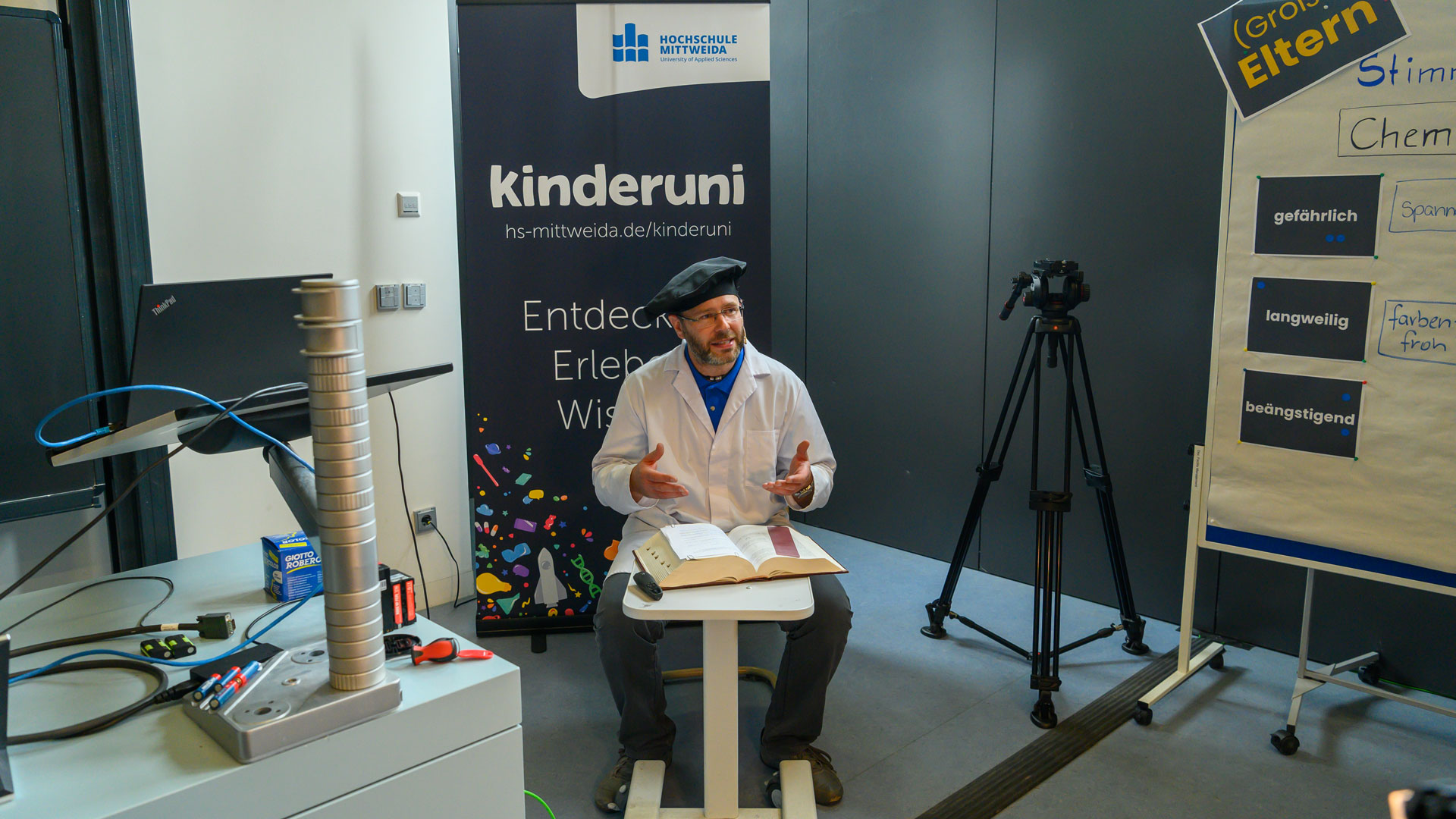
Before answering the question of whether we could live without chemistry, the lecturers took the children on a journey through the history of chemistry. For example: Fire, in particular, has always fascinated people. Mastering it revolutionised life, as it enabled us to cook and keep warm. However, as for what fire actually is and what happens when something burns, there were various theories throughout history until, at the end of the 18th century, scientists discovered the crucial role played by oxygen in combustion.
Fire is an oxidation reaction, a chemical process – just as our breathing is a form of oxidation for which we need oxygen. So nothing in our bodies works without chemistry. Even though many substances are not good for our bodies, such as artificial colourings or the nicotine in cigarettes.
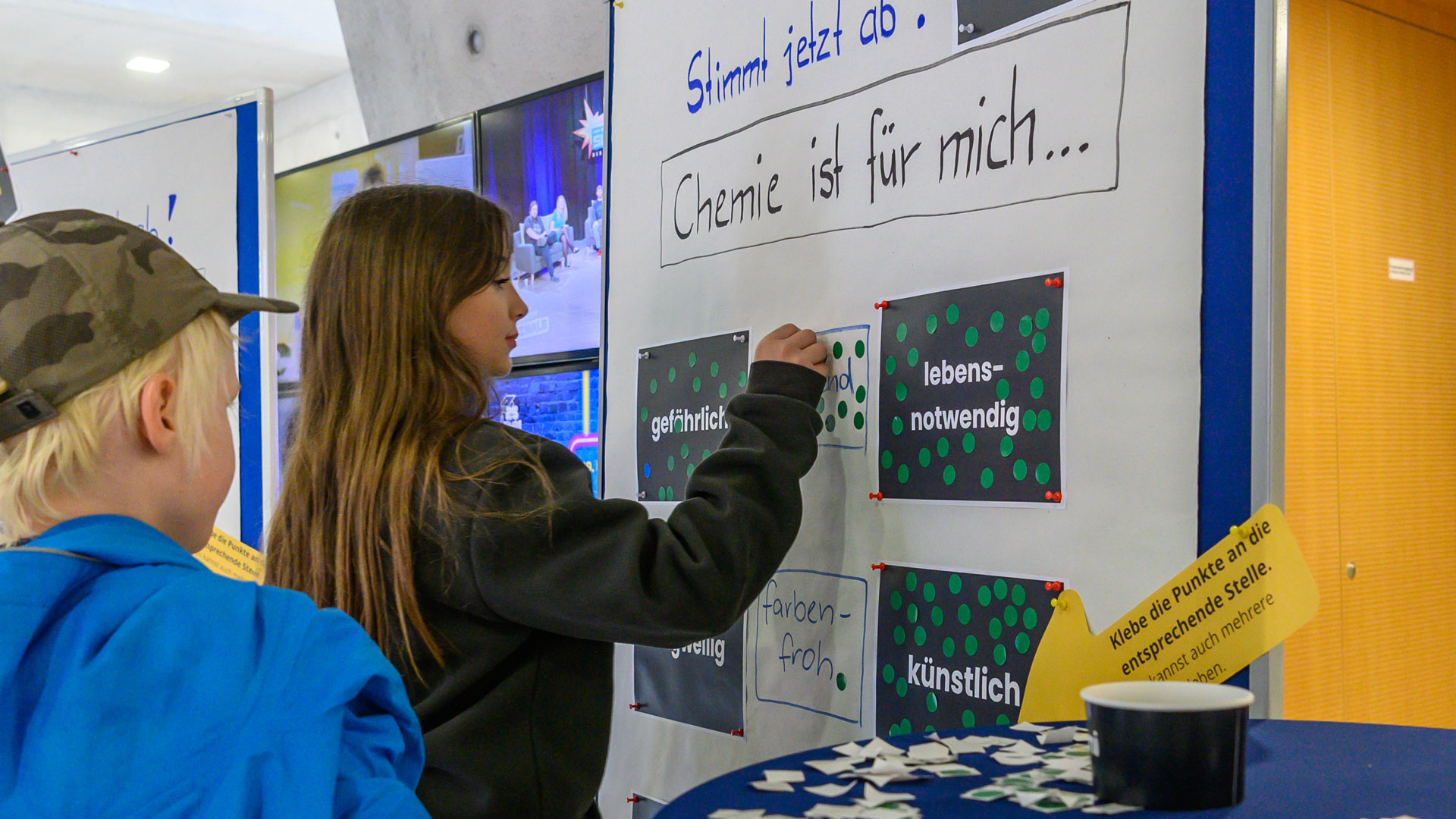
Preferred subject: Natural Sciences
A lecture featuring experiments was on the wish list of many Children’s University families. Children’s University organiser Robin Biebl was happy to fulfil this wish and said afterwards: “With today’s Summer Children’s University, we wanted to spark enthusiasm for this fascinating natural science. Our two lecturers succeeded in doing just that. This and other STEM topics can certainly also be conveyed excellently in formats for older pupils, such as our ‘Speed Bachelor’.”
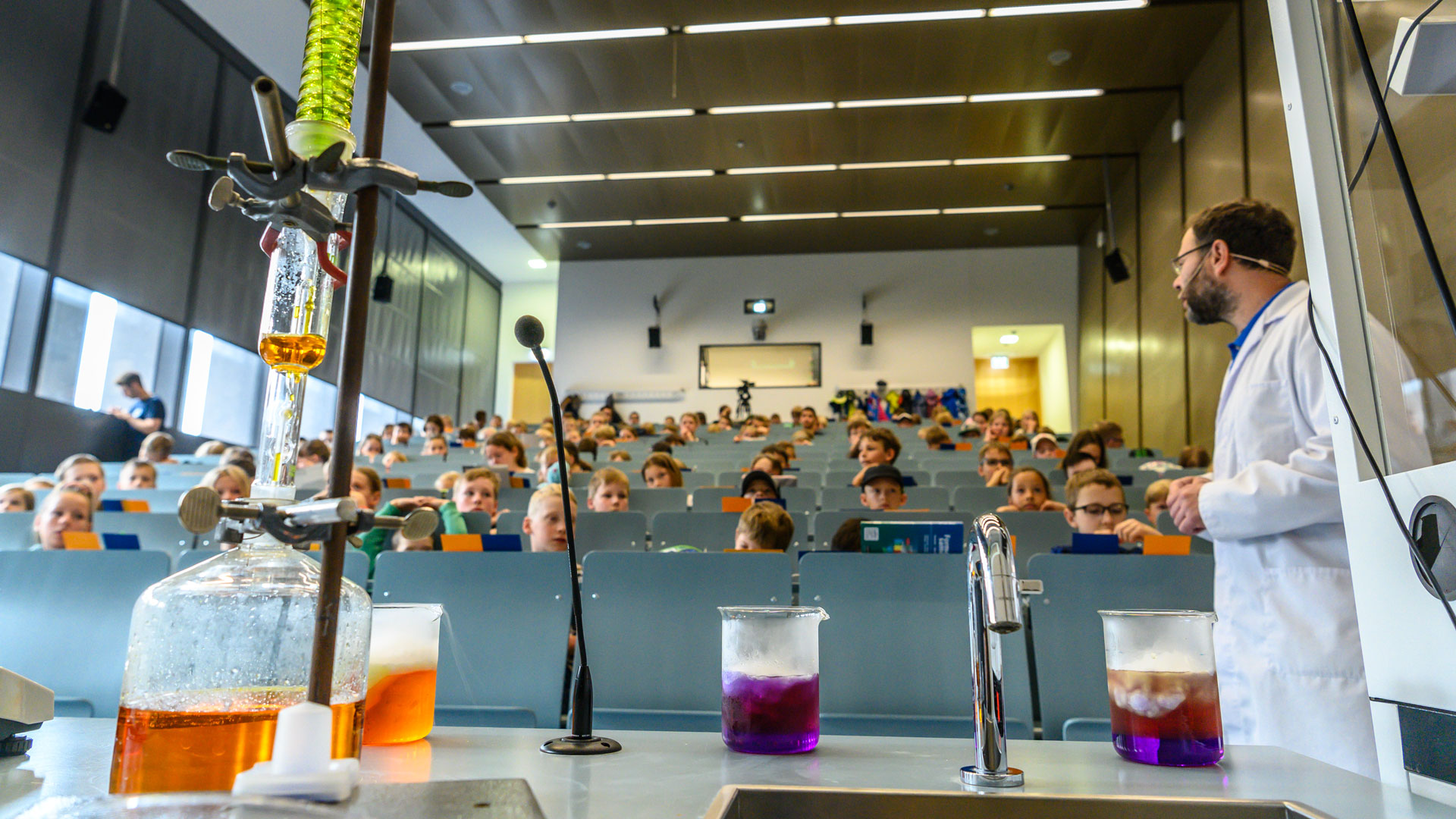
Following the Children’s University’s summer break, the programme resumes on 14 September with the topic: ‘Smart vehicles – how do self-driving cars work?’.
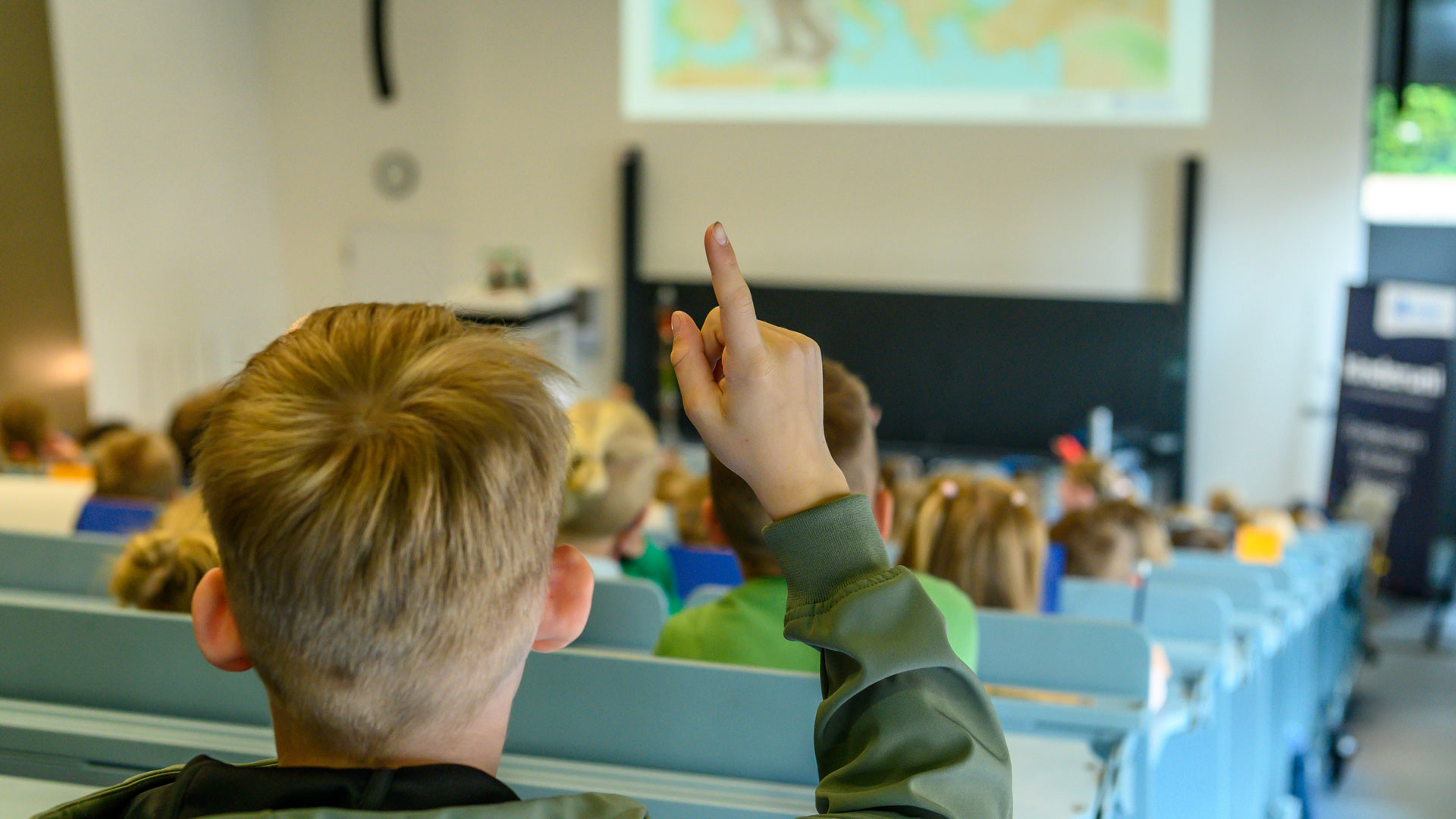
You can find all the information about the Children’s University at Mittweida University of Applied Sciences and the link to sign up for the newsletter on the Children’s University page or on Instagram.