This page was translated automatically using artificial intelligence (DeepL). The German version is binding. More information about automatic translation
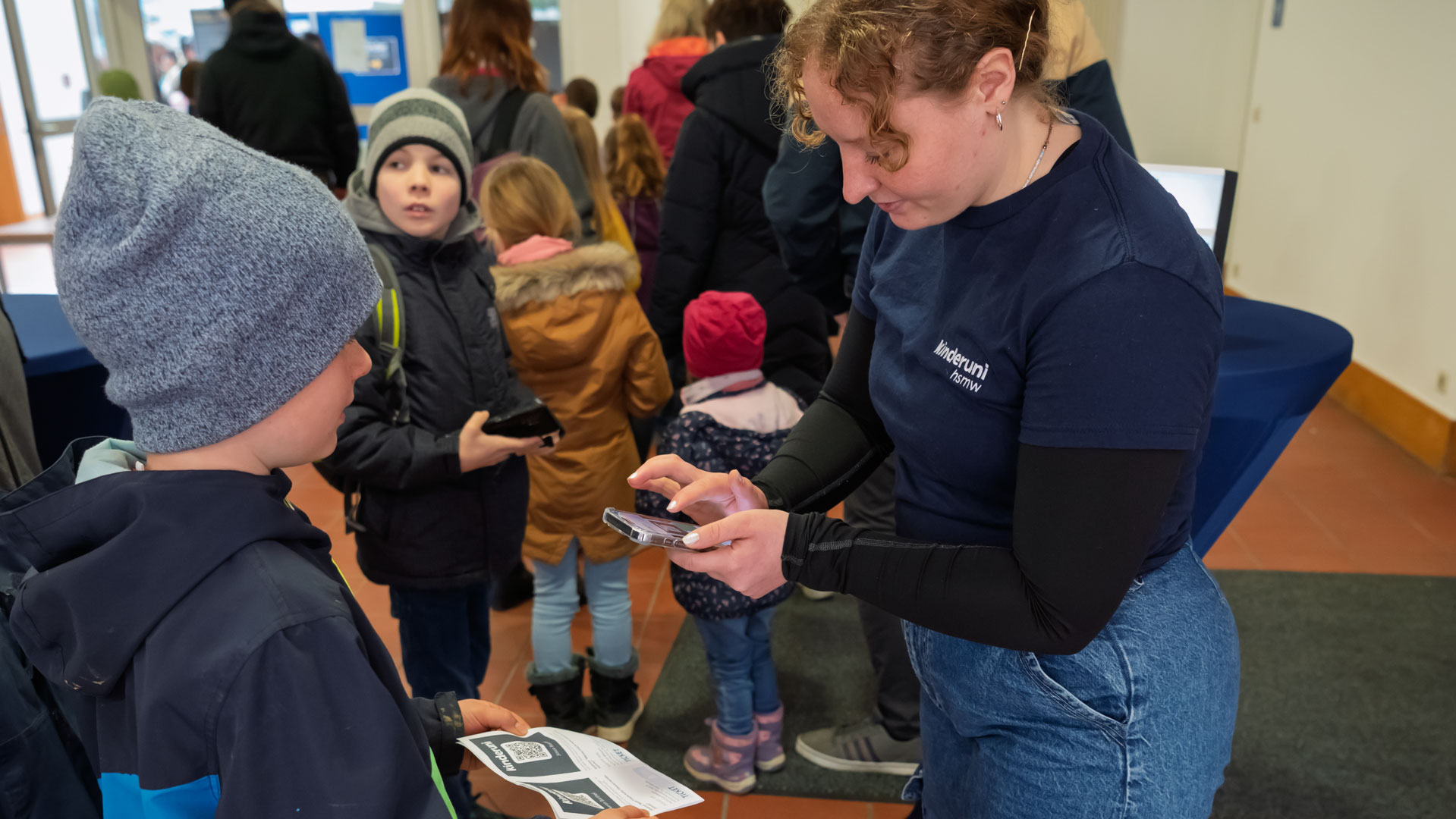
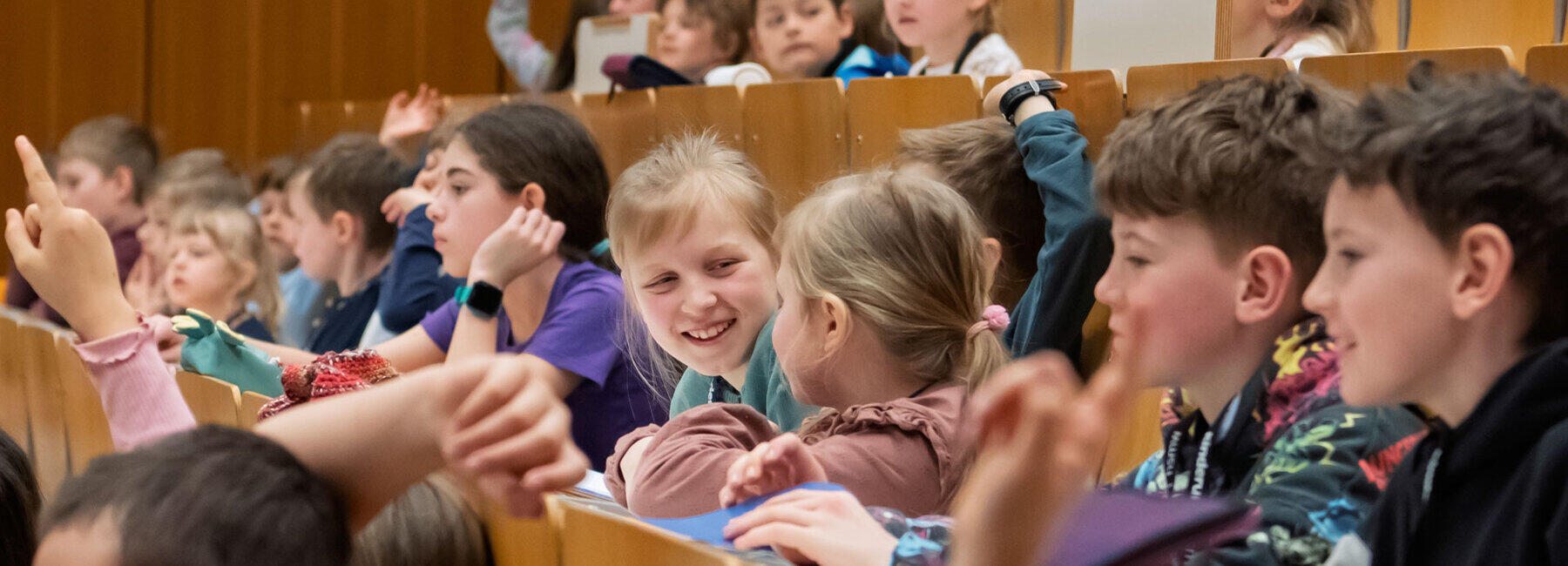
The Mittweida University of Applied Sciences (HSMW) Children’s University kicked off the new academic year on 29 March with a clever lecture: ‘Why frogs (can’t) become film stars’. The large lecture theatre in the Gerhard Neumann Building was transformed into a film set, providing plenty of hands-on ‘aha’ moments. And the Children’s University frog also played a key role.
Children’s University lecturer Benjamin Härtwig from the Faculty Media Sciences at HSMW took his audience of around 430 people – in the children’s lecture theatre and the neighbouring parents’ lecture theatre – behind the scenes of films such as Harry Potter, Spider-Man and others. The film heroes flew through the air on broomsticks, did somersaults over skyscrapers or drove through impressive landscapes. It soon became clear that special effects had been used. The secret behind it all: the green screen.
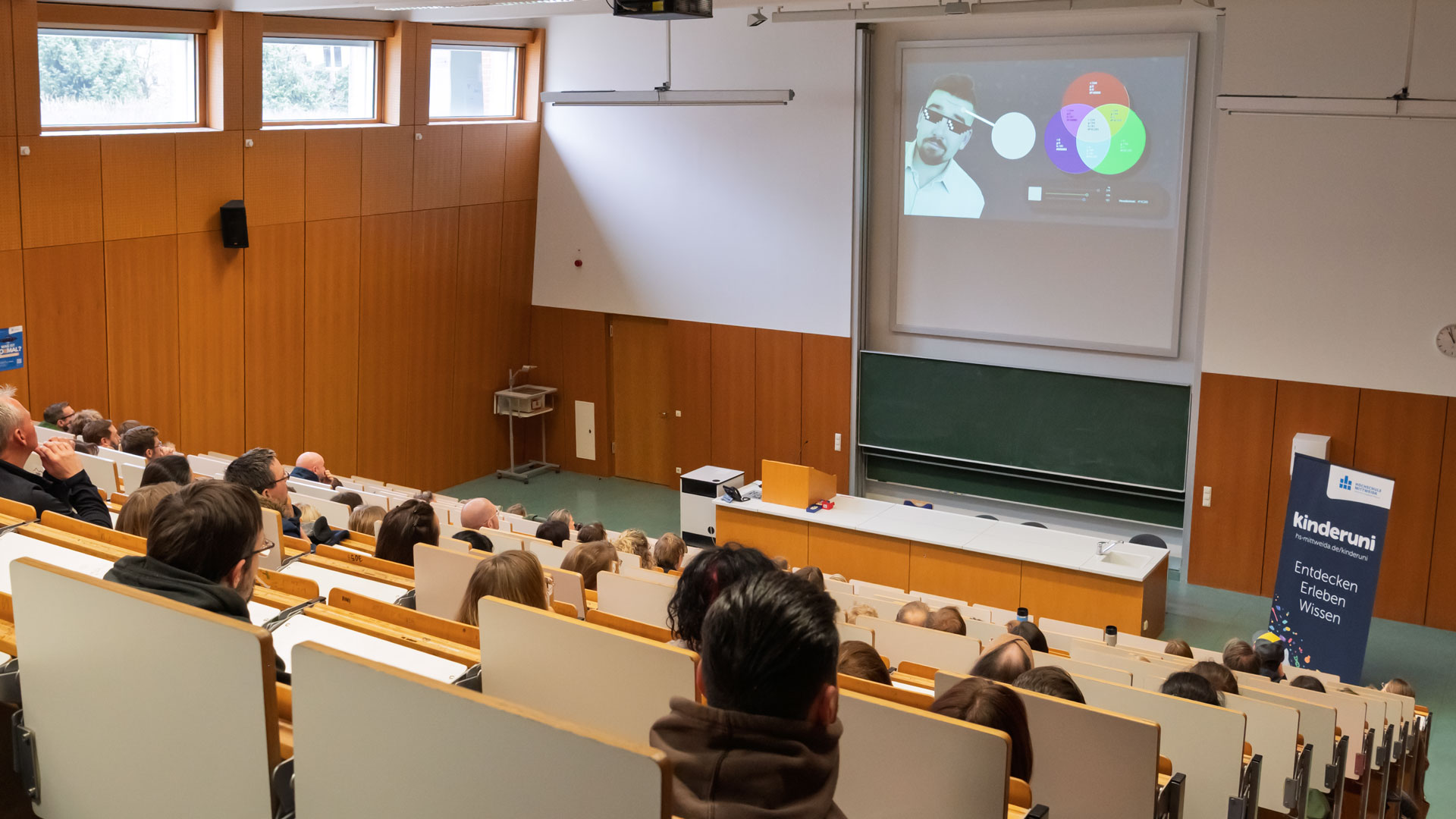
After a brief detour into the basics of image sizes, pixels and colours, the question arose as to why green screens are so important for film productions and how they work. Computers can recognise this colour with great precision and replace it with a different environment or scene – so anything that is green disappears. The interesting thing is that, in theory, this works with any colour. However, green was chosen because people very rarely wear green clothes or have green eyes. In the finished film, it then looks as though the actors are in the most exciting places and possess special powers.
This had to be put to the test: a green screen in the lecture theatre allowed the brave souls to fly through the air, dive beneath the water or visit Treasure Island. But what about green characters, such as the Hulk or even the Aha Frog, the Children’s University’s mascot? The answer is simple: for them, a blue screen is simply used. Whether blue or green: film effects are constantly evolving, and so Benjamin Härtwig’s ‘senior’ media students are now also filming scenes in their new Virtual Production studio at the HSMW in front of a huge LED wall that can display any background in high resolution. Artificial intelligence is also playing an increasingly important role in film and television production.
Robin Biebl, organiser of the Children’s University, bridges the gap between the scientific perspective and that of the audience: “Our family-friendly ‘Kinderuni’ programme continues to grow, and I’m delighted about that. Particularly at the moment, when one development follows another in rapid succession, it’s important to communicate the science behind them in a way that’s easy to understand. In this regard, engaging with people beyond the university campus is of central importance.”
New: the cheat sheet for sustainable knowledge
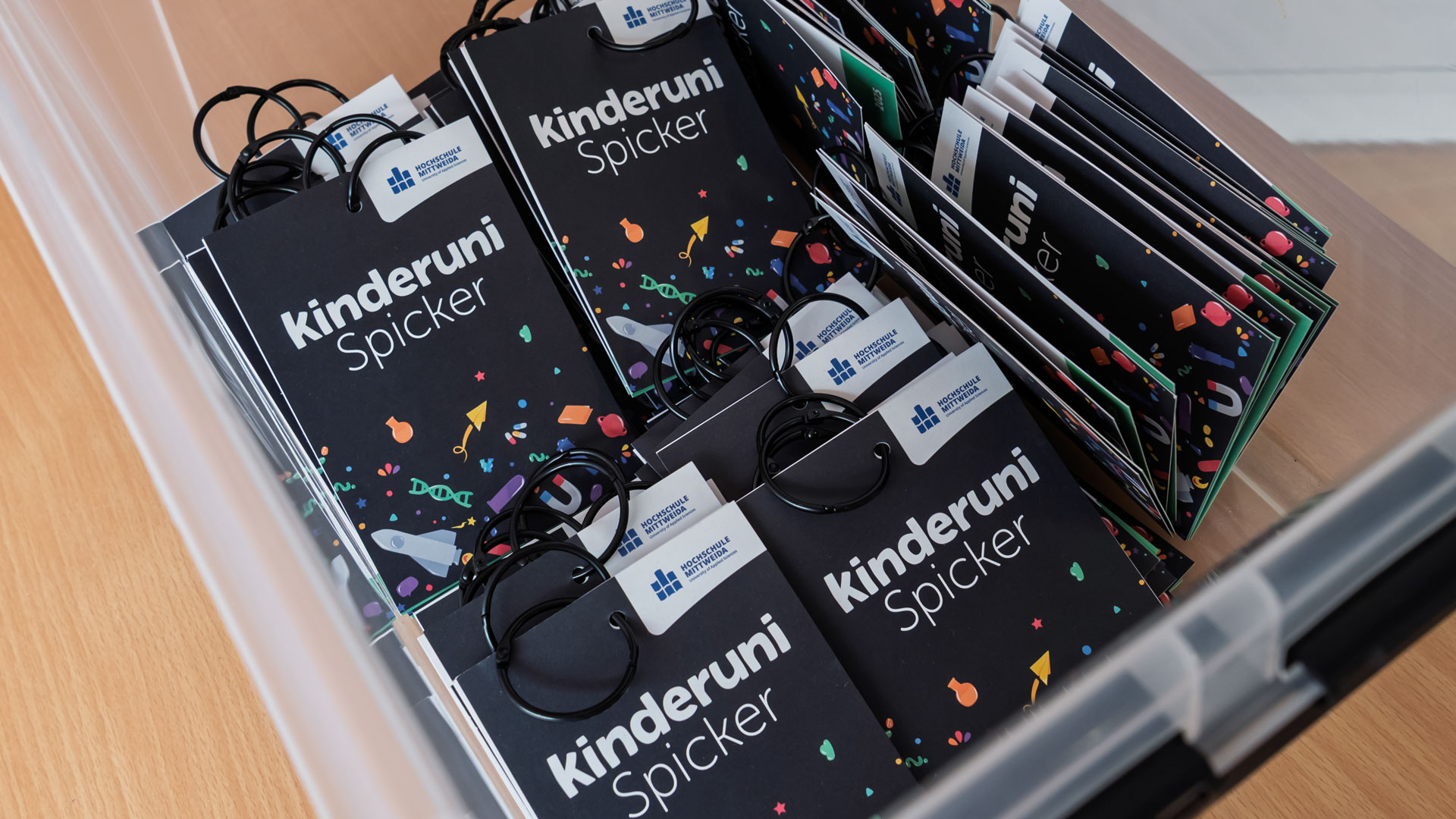
This year, all children attending the lectures will receive the Children’s University pocket guide. It is a collectable knowledge card that summarises each topic in a child-friendly way – clearly explained and with plenty of examples. “The knowledge cards can be bound together with a ring to form a fan, so our kids always have their knowledge to hand,” says Robin Biebl.
The full programme for 2025 can be found on the HSMW Children’s University website. Anyone interested can also sign up for the newsletter there. And if you follow the Children’s University on Instagram, you won’t miss any news.
Curious about the next lecture? On 17 May, the police will be coming to the lecture theatre and bringing along a dog with a keen sense of smell.
Text: Robin Biebl
Photos: Helmut Hammer