This page was translated automatically using artificial intelligence (DeepL). The German version is binding. More information about automatic translation
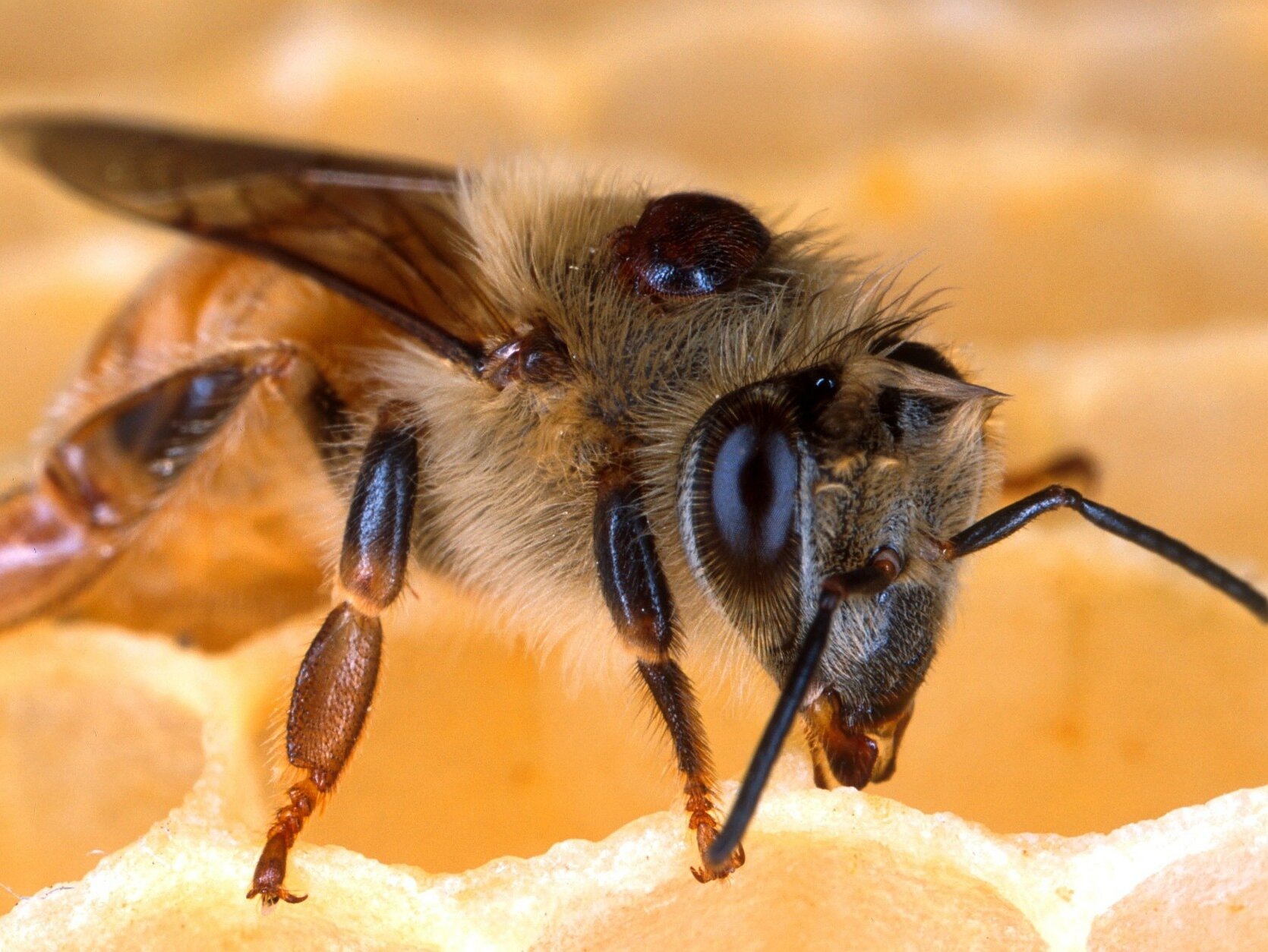
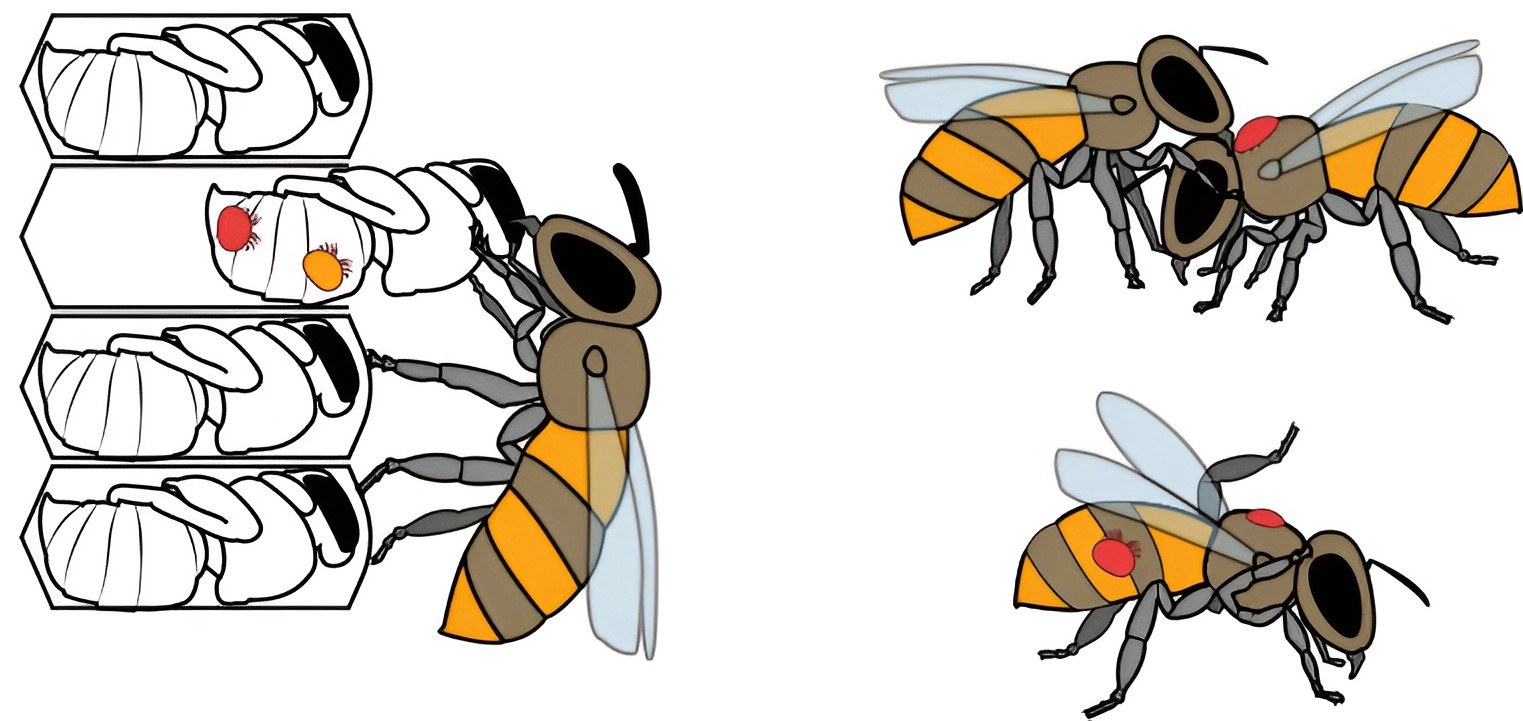
Honeybees play a vital role in agriculture and ecosystems, as their pollination services make a significant contribution to the conservation of biodiversity and to ensuring agricultural yields. Many fruit, vegetable and oilseed crops are wholly or partly dependent on pollination by insects¹. At the same time, infestation by the Varroa mite (see Figure 1) poses one of the greatest challenges to the western honeybee (Apis mellifera)². The mite feeds on both bee brood and adult bees, thereby transmitting viruses, such as the wing deformation virus, which further weaken the colony. An untreated infestation often leads to the collapse and death of the colony³. The mite has already developed resistance to some chemical control agents, such as amitraz; moreover, residues may remain in bee products³–⁶. For these reasons, it is desirable for honey bees to regulate mite infestation independently through selective behaviours (see Figure 2), as has already been observed in Asian honey bee populations⁷.
Various studies show that varroa resistance traits are associated with genetic variants7,10,11. However, the subspecies of Apis mellifera differ genetically, meaning that differences in resistance-associated variants may also occur. The prior identification of the respective subspecies is therefore essential for the use of resistance markers11. The Buckfast bee, which is popular amongst beekeepers, presents a particular challenge in this regard. This breed is a combination of different subspecies, which makes precise classification difficult12.
The aim of the project is to develop a method that will enable the genetic origin – and thus the subspecies combination – of Buckfast bees to be unambiguously identified, in order to further advance the breeding of varroa-resistant colonies.
To this end, whole-genome sequencing data from selected Buckfast bees are being analysed. The raw data are processed using bioinformatics, compared with the Amel_HAv3.1 reference genome and examined for genetic variants. By comparing the data with reference SNP panels, the first markers relevant to ancestry have already been identified and used for a preliminary classification. The results to date allow for an initial classification of the Buckfast samples examined. However, due to too many missing data points, these results are only of limited reliability.
As the project progresses, additional sequence data from various subspecies of Apis mellifera will be incorporated into the analysis. This will be followed by population genetic analyses of structure and admixture. These analyses will be used to characterise the Buckfast samples in greater genetic detail and to determine more precisely the proportions of their ancestry derived from different subspecies.
Bibliography
(1) State Office for the Environment, Agriculture and Geology. The Honeybee – Farm Animals in Saxony.
(2) Mukogawa, B.; Nieh, J. C. The Varroa Paradox: Infestation Levels and Hygienic Behaviour in Feral Scutellata-Hybrid and Managed Apis mellifera ligustica Honey Bees. Sci. Rep. 2024, 14 (1), 1148. doi.org/10.1038/s41598-023-51071-7.
(3) Rosenkranz, P.; Aumeier, P.; Ziegelmann, B. Biology and Control of Varroa destructor. J. Invertebr. Pathol. 2010, 103, pp. S96–S119. doi.org/10.1016/j.jip.2009.07.016.
(4) Jack, C. J.; Ellis, J. D. Integrated Pest Management Control of Varroa destructor (Acari: Varroidae), the Most Damaging Pest of Apis mellifera L. (Hymenoptera: Apidae) Colonies. J. Insect Sci. 2021, 21
(5), 6. doi.org/10.1093/jisesa/ieab058. (5) Warner, S.; Pokhrel, L. R.; Akula, S. M.; Ubah, C. S.; Richards, S. L.; Jensen, H.; Kearney, G. D. A scoping review on the effects of the Varroa mite (Varroa destructor) on global honey bee decline. Sci. Total Environ. 2024, 906, 167492. doi.org/10.1016/j.scitotenv.2023.167492.
(6) Unknown. Varroa mites ‘Bee Aware’. beeaware.org.au/archive-pest/varroa-mites/ (accessed 7 December 2025).
(7) Kaskinova, M. D.; Gaifullina, L. R.; Saltykova, E. S.; Poskryakov, A. V.; Nikolenko, A. G. Genetic Markers for the Resistance of Honey Bees to Varroa destructor. Vavilov J. Genet. Breed. 2020, 24 (8), 853–860. doi.org/10.18699/VJ20.683.
(8) Foster, L. J.; Tsvetkov, N.; McAfee, A. Mechanisms of pathogen and pesticide resistance in honey bees. Physiology 2024, 39 (4), 193–207. doi.org/10.1152/physiol.00033.2023.
(9) Bees for Life. Cause No. 2: Bee diseases and parasites. bees4life.org/de/bienensterben/6-gruende-fuer-das-bienensterben/bienenkrankheiten-und-parasiten.
(10) Gebremedhn, H.; Lefebre, R.; Chemurot, M.; Amakpe, F.; Amssalu, B.; Smet, L. D.; de Graaf, D. C. Occurrence and Allele Frequencies of Genetic Variants Associated with Varroa Drone Brood Resistance (DBR) in African Apis mellifera Subspecies. J. Invertebr. Pathol. 2025, 209, 108276. doi.org/10.1016/j.jip.2025.108276.
(11) Lefebre, R.; De Smet, L.; Tehel, A.; Paxton, R. J.; Bossuyt, E.; Verbeke, W.; van Dooremalen, C.; Ulgezen, Z. N.; van den Bosch, T.; Schaafsma, F.; Valkenburg, D.-J.; Dall’Olio, R.; Alaux, C.; Dezmirean, D. S.; Giurgiu, A. I.; Capela, N.; Simões, S.; Sousa, J. P.; Bencsik, M.; McVeigh, A.; Ramsey, M. T.; Ahmad, S.; Kumar, T.; Schäfer, M. O.; Beaurepaire, A. L.; Moro, A.; Flener, C. J.; Matthijs, S.; de Graaf, D. C. Allele frequencies of genetic variants associated with Varroa drone brood resistance (DBR) in Apis mellifera subspecies across the European continent. Insects 2024, 15 (6), 419. doi.org/10.3390/insects15060419.
(12) Okuyama, H.; Hill, J.; Martin, S. J.; Takahashi, J. The Complete Mitochondrial Genome of a Buckfast Bee, Apis mellifera (Insecta: Hymenoptera: Apidae) in Northern Ireland. Mitochondrial DNA Part B 2018, 3 (1), 338–339. doi.org/10.1080/23802359.2018.1450660.
About the person
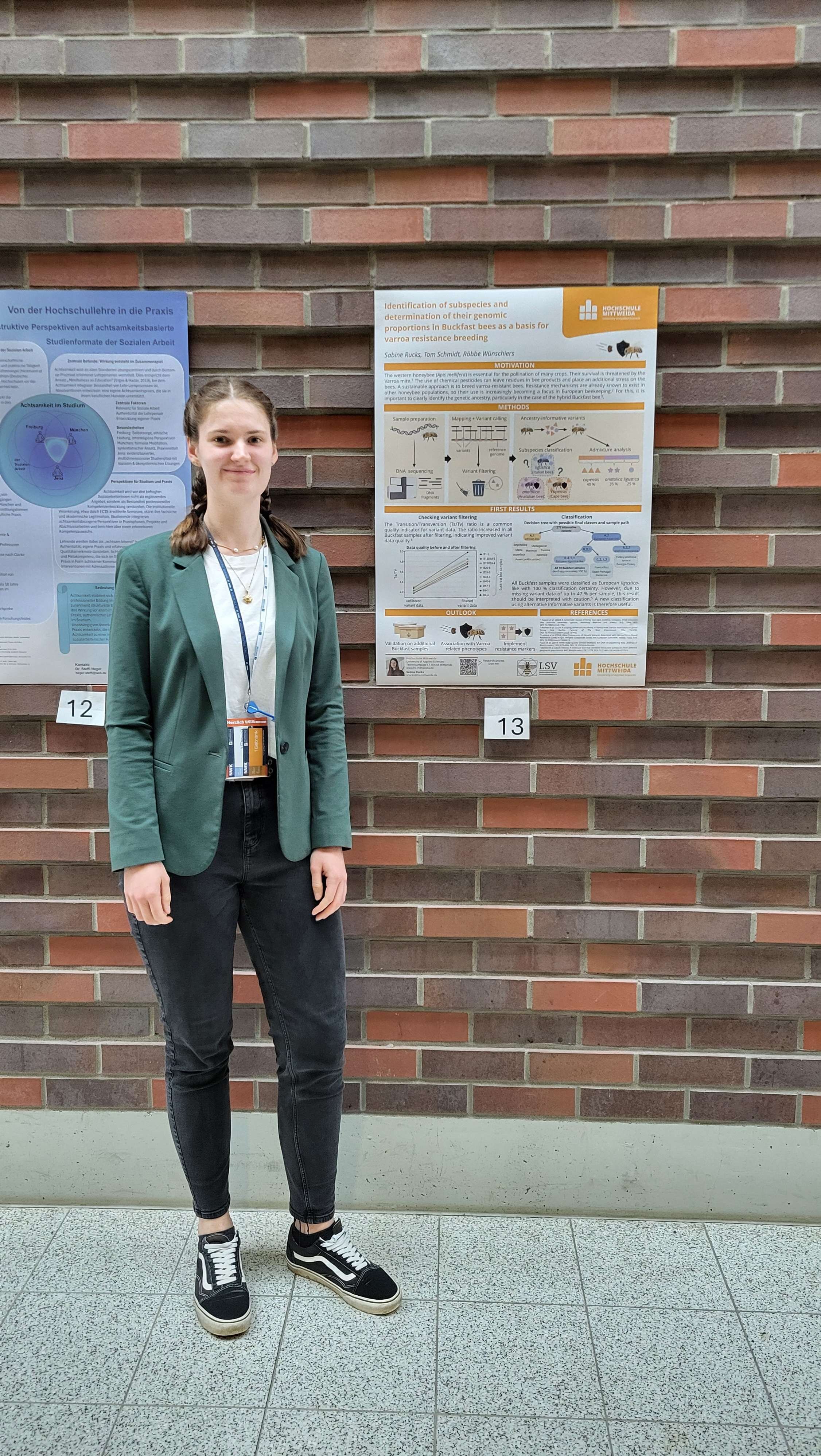
Sabine Rucks has been studying at Mittweida University of Applied Sciences since 2021. She initially completed a Bachelor’s degree in Biotechnology before starting a Master’s degree in Genomic Biotechnology in 2024. Since March 2024, she has been working in the research group led by Prof. Dr Röbbe Wünschiers at the Faculty Applied Computer Sciences and Biosciences, where she is researching the genome of Buckfast honeybees. She first gained an introduction to the subject through her Bachelor’s thesis; she subsequently worked as a research assistant and is now continuing her research as part of her Master’s thesis. She presented her research topic on a poster at the 2026 Early-Career Researchers’ Conference at Schmalkalden University of Applied Sciences.