This page was translated automatically using artificial intelligence (DeepL). The German version is binding. More information about automatic translation
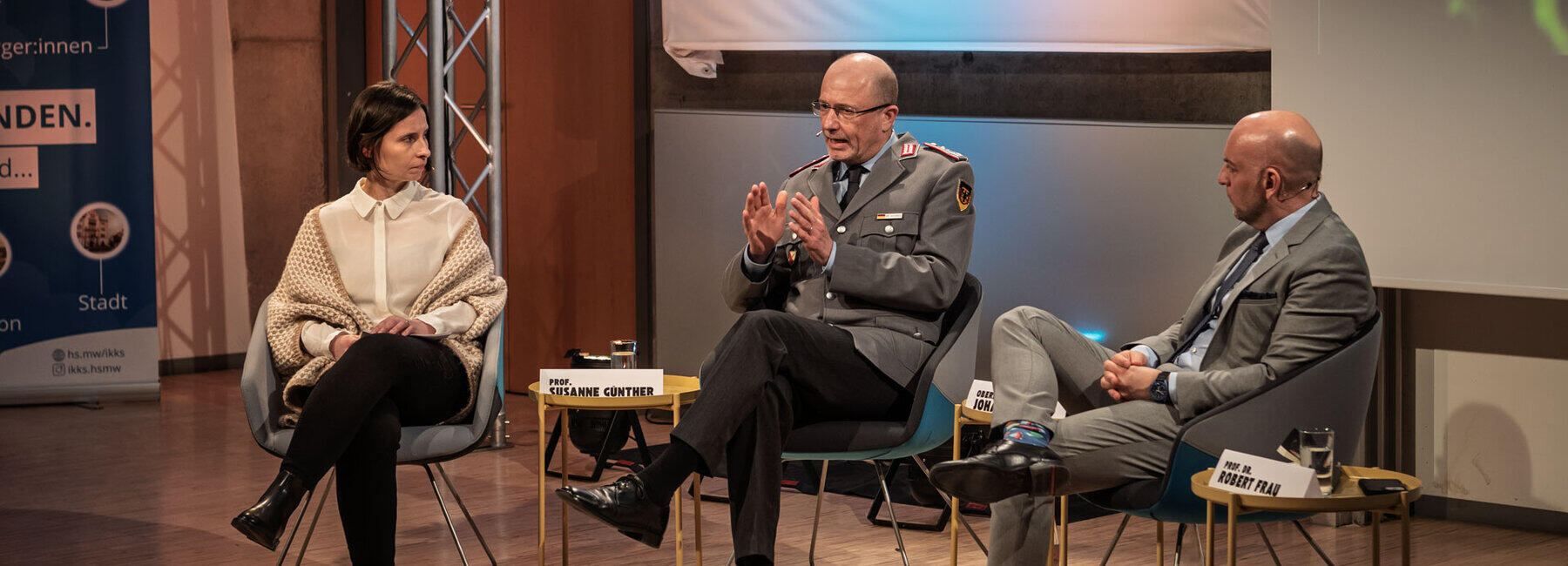
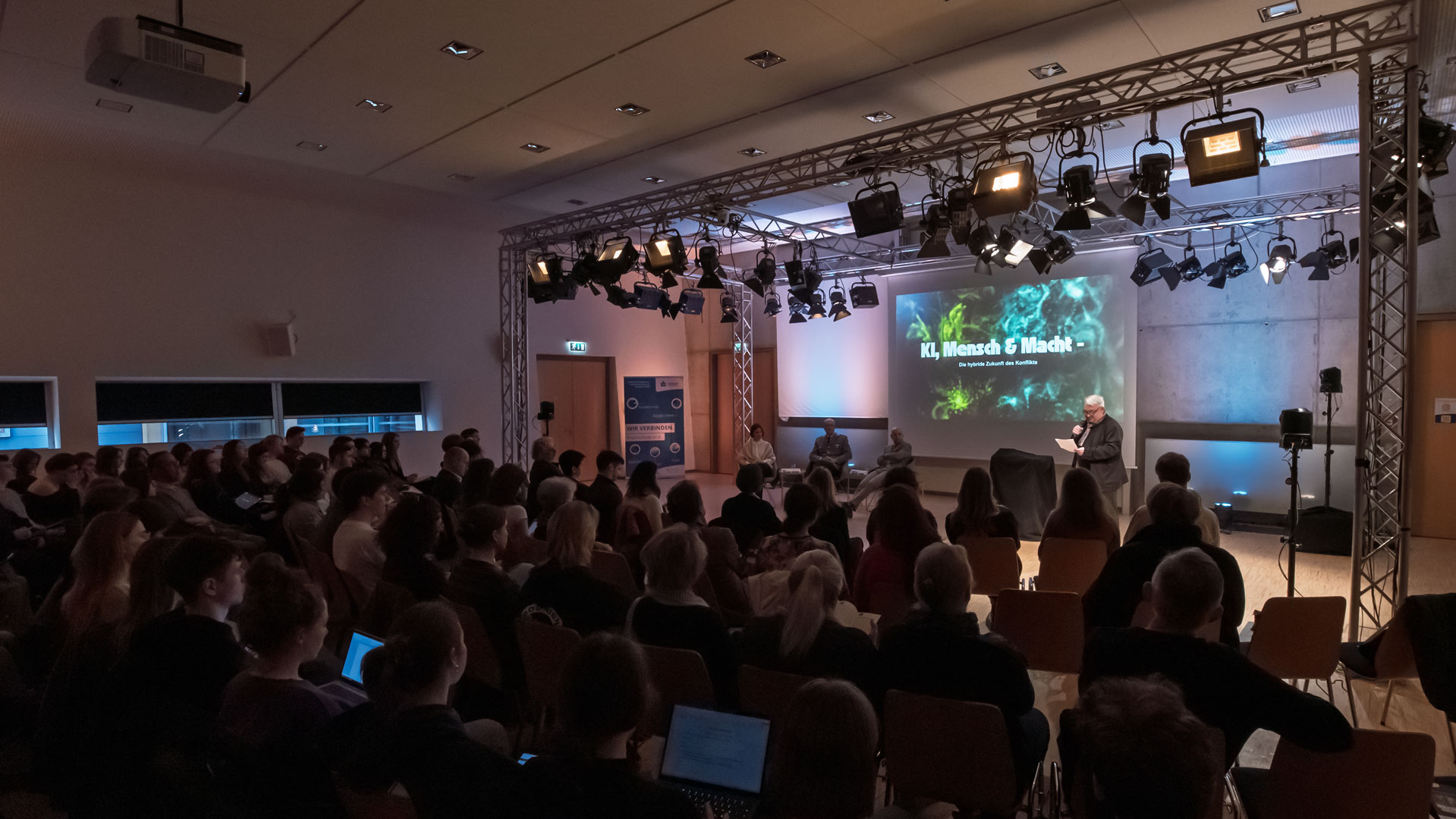
To kick off the ‘Controversial Dialogue (Dialog Kontrovers)’ discussion series, around 130 attendees gathered in Studio B on the Mittweida University of Applied Sciences campus on 17 March. The series, comprising seven events over the coming weeks, began with a topic that could hardly be more topical. Under the title ‘AI, Humans & Power – The Hybrid Future of Conflict’, experts examined key aspects of current developments in security policy. Particular focus was placed on contextualising current events within the constantly shifting landscape of hybrid conflicts.
Seven controversial issues – a search for guidance
This year’s ‘Controversial Dialogue (Dialog Kontrovers)’ series, ‘ZwischenWelten’, focuses on hybrid developments – that is, phenomena that straddle traditional categories such as analogue and digital, local and global, or civilian and military. Over the course of seven evenings, experts from academia and the professional world will come together to present their perspectives and discuss them with the audience. The aim of the series is to make complex interrelationships understandable, to provide guidance and to promote an open – and sometimes controversial – exchange of views.
To kick off the first evening, Professor Gunter Süß, Head of Studies at the Institute for Competence, Communication and Languages (IKKS) at Mittweida University of Applied Sciences, introduced the series. The IKKS organises the “Controversial Dialogue (Dialog Kontrovers)” series of events every two years, alternating with the “Public Lecture Series”. Süß presented the overarching theme: the concept of hybridity as an often elusive hybrid form. He briefly touched upon the etymology of the term, explaining that it was already used in antiquity to describe hybrid forms, whilst emphasising its ambiguity. This ambivalence is reflected in various academic approaches and runs like a common thread through the entire series.
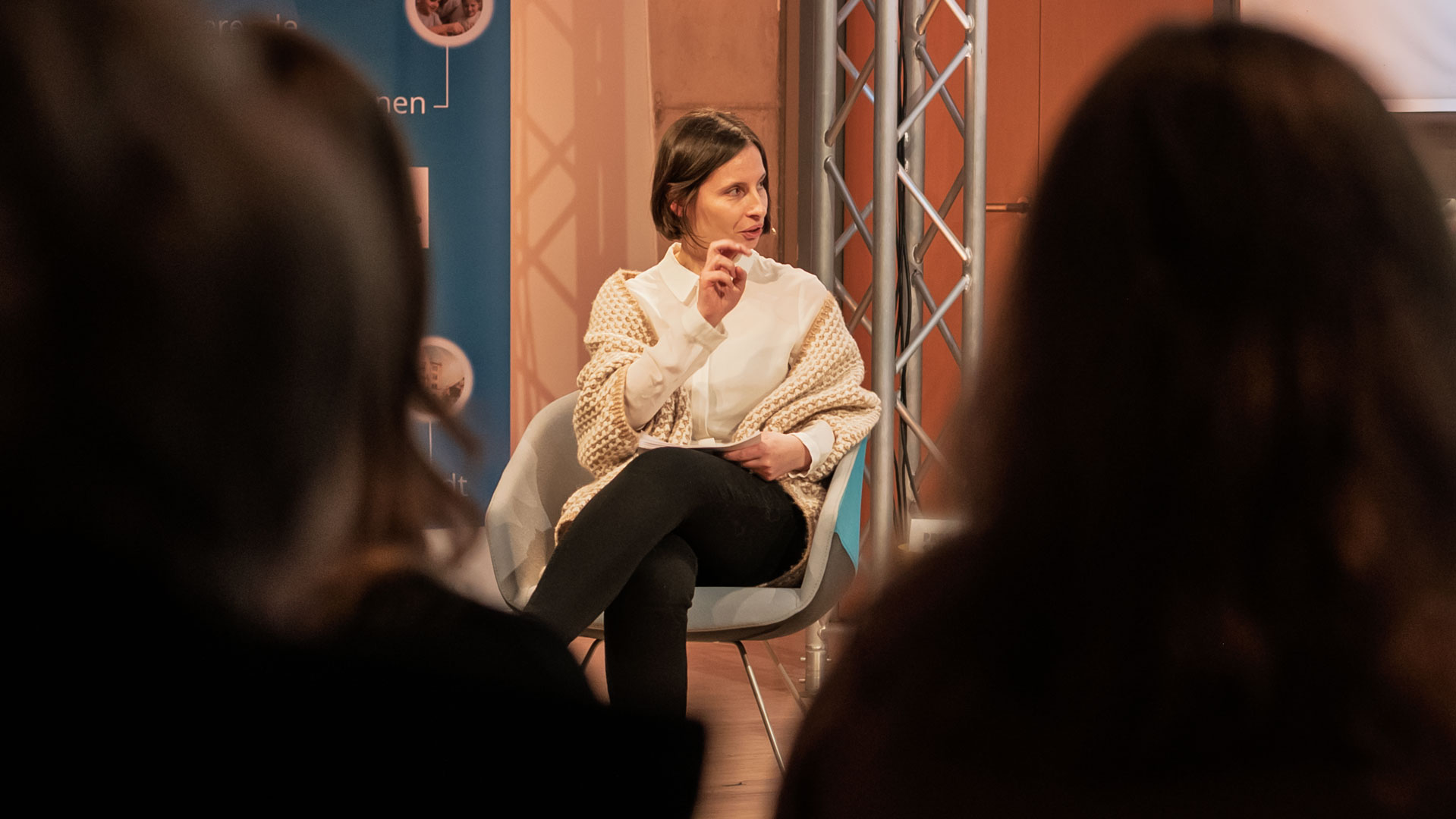
Professor Susanne Günther chaired the evening, introduced the topic and began by outlining the current global political situation. She pointed out that both the number and the nature of modern conflicts have changed significantly in recent years. Using recent examples, she moved on to the central question of the evening: to what extent can these developments be understood as forms of hybrid warfare or hybrid threats?
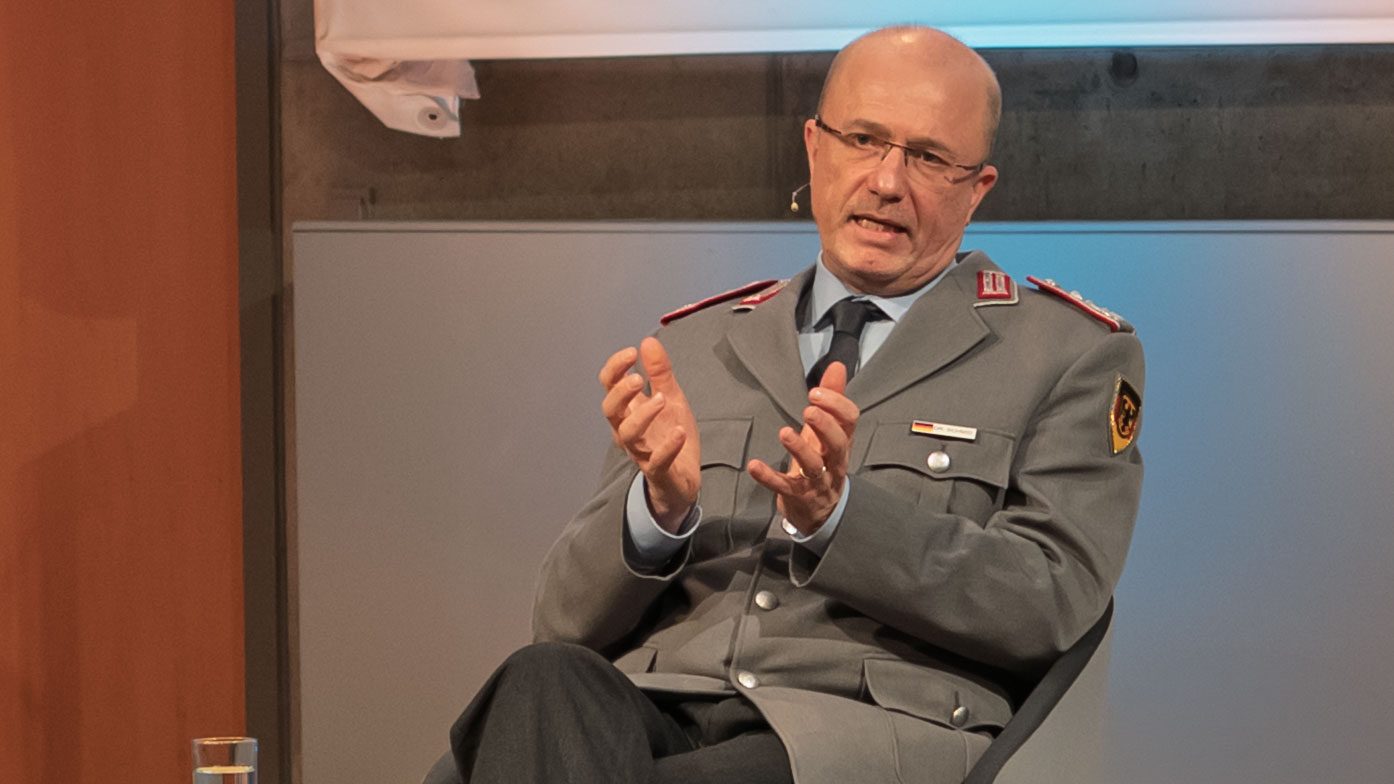
Colonel Dr Johann Schmid, project officer at the Bundeswehr Centre for Military History and Social Sciences (ZMSBw) specialising in hybrid warfare, provided a theoretical framework for the concept of hybrid warfare. Drawing on Carl von Clausewitz’s *On War* (1832), he described hybrid warfare as an approach that specifically targets the interfaces ‘between war and peace, the civilian and the military, truth and disinformation’. Societies are affected across the board, not only through armed force, but also through disinformation campaigns, attacks on critical infrastructure and the targeted manipulation of digital public spheres. This approach proved particularly instructive on an evening dedicated to analysing current conflicts.
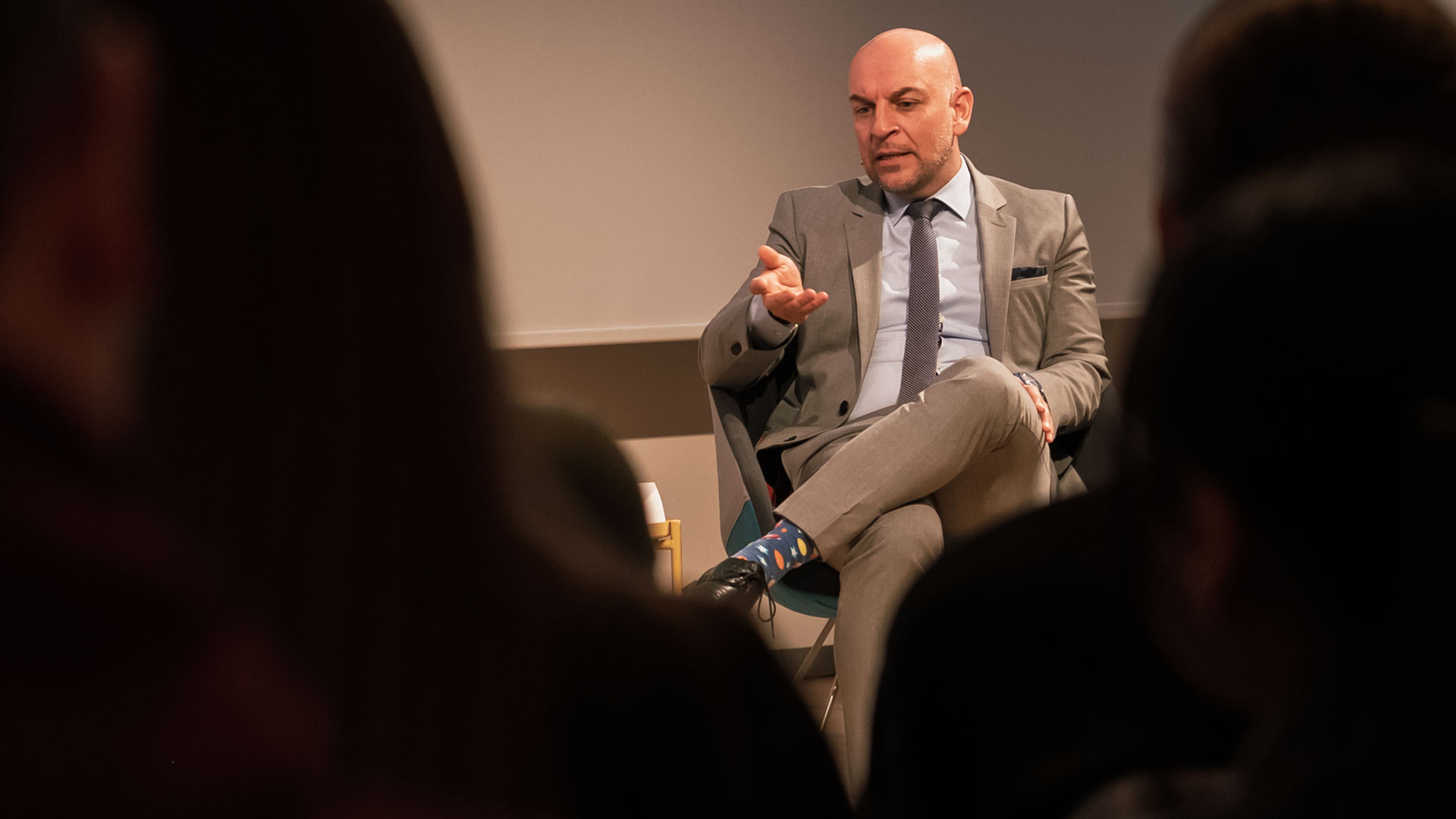
Robert Frau, Professor of Public Law at the TU Bergakademie Freiberg, whose research focuses on international law and violence, added the legal perspective. He emphasised that international humanitarian law does not determine questions of guilt, but rather assesses specific actions: “An attack on a civilian target is always unlawful. An attack on civilians is always a war crime.” The real challenge, he said, lay not in the legal norm itself, but in assessing the specific situation – and in ensuring that legal and moral issues are not conflated.
Questions from the audience centred on morality and moral judgement in conflict situations, but also on specific political implications – such as whether a society capable of defending itself might not also need to invest more heavily in the social sector. The discussion also touched on whether social media makes wars more emotional, because more people feel directly involved in the events of war. Schmid emphasised that military preparedness and social resilience are not mutually exclusive, but rather two sides of the same coin. Professor Frau disputed the assumption that public awareness has generally increased: emotionalisation is selective and can be controlled. Many conflicts receive little attention despite the enormous suffering they cause. The fact that such questions have no simple answers is also due to the varying scope of different disciplines: Robert Frau made it clear that legal and moral judgements are not equivalent, as international law can only address moral questions within the framework of its clearly defined limits.
It also became clear during the evening that hybrid conflicts blur existing boundaries between war and peace, internal and external, and military and civilian. The interdisciplinary perspective offered by security studies and international law highlighted how important it is to consider different viewpoints in order to make sense of what is happening. Professor Günther concluded by suggesting that hybrid conflicts could only be managed if humans became critical ‘curators’ of AI-supported tools, with the ability to recognise both opportunities and risks in equal measure.

On 31 March: Climate change in a hybrid world
The Controversial Dialogue will continue over six evenings until 9 June. It is aimed at both members of the university community and interested members of the public. The full programme can be found on the event page.
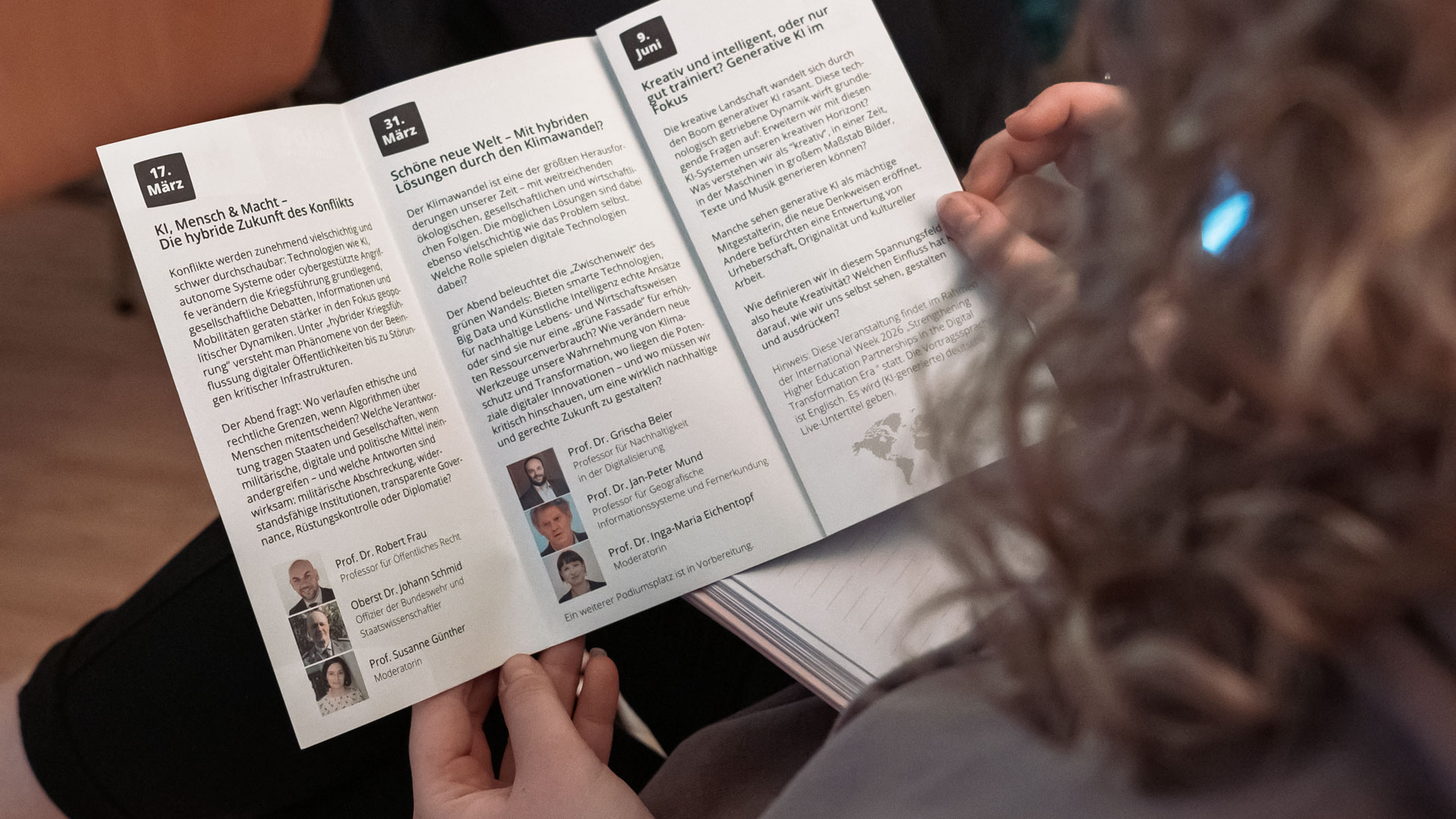
The role that digital technologies play in the fight against climate change is the topic of the next ‘Controversial Dialogue (Dialog Kontrovers)’ event on 31 March, entitled ‘Brave New World – Navigating climate change with hybrid solutions?’