This page was translated automatically using artificial intelligence (DeepL). The German version is binding. More information about automatic translation
The lecture period for the summer term is over. For students, this traditionally marks the start of a rather special kind of ‘review’ – namely, exams and coursework based on the material covered over the past few months. In contrast, most of those attending the 6th Public Lecture Series at Mittweida University of Applied Sciences are reflecting on the seven events without any obligation – yet the topicality, relevance and substance of the lectures, together with the expertise of the speakers, make it well worth their while.
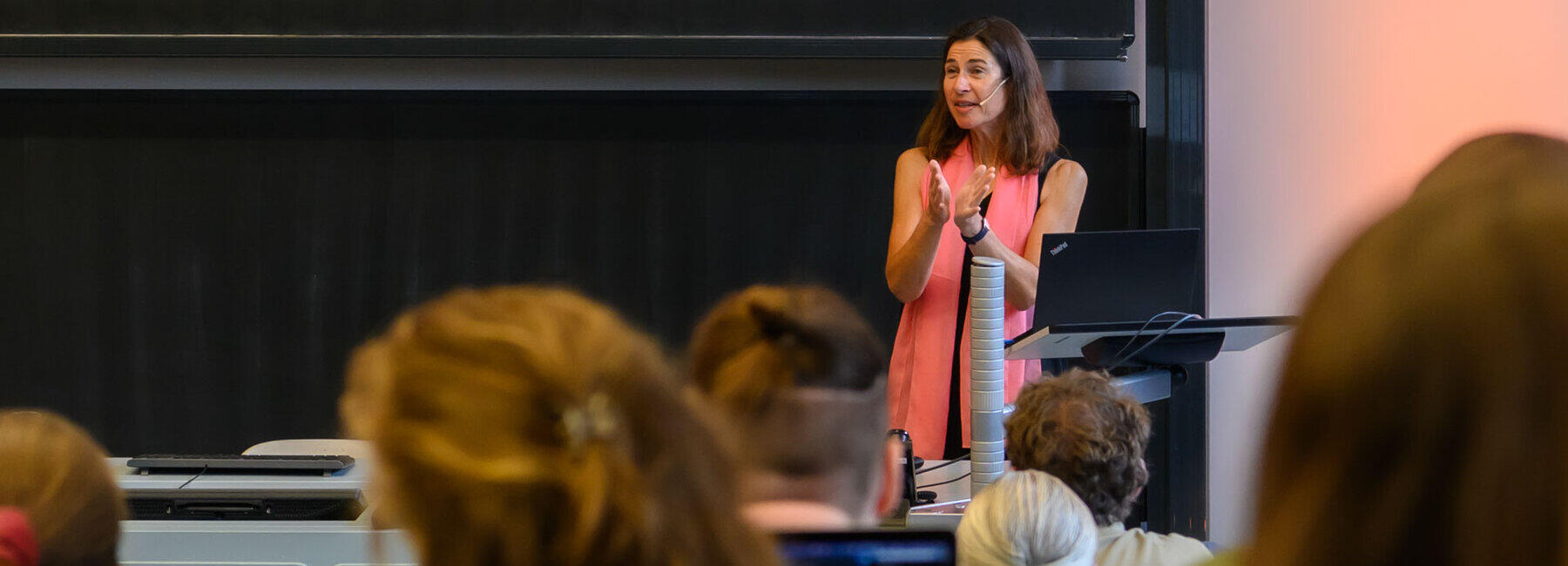
All the lectures, grouped under the common heading ‘Zeiten wenden!’ are now available to watch on the university’s YouTube channel, including the latest in the series by Dr Birgit Glorius, Professor of Human Geography at Chemnitz University of Technology and a member of the independent Expert Council on Integration and Migration.

“Living Together After Flight: Insights and Outlooks” was the title under which Glorius presented a wealth of findings from her empirical research on migration in Europe on 20 June.
Around one million displaced persons and refugees from 2015–16 and 2022 face the challenge of building a new life after fleeing their homes. Host municipalities and the local population play a decisive role in the course of their development following their flight. Glorius focuses in particular on smaller towns and their structural characteristics in relation to immigration and the reception of refugees – such as the compatibility of the rural or small-town labour market with the skills and abilities of immigrants and refugees, the responsiveness of immigration authorities and job centres in the multi-stage residence and work permit procedures, and, of course, the level of acceptance amongst the local population.
Glorius peppered her presentation with numerous anonymised quotes from those affected whom she had interviewed – from both ‘sides’, the immigrants and the local population. According to Glorius, the local population plays a crucial role in the process of settling in and integrating.
There is a link between positive experiences of interaction and tolerance of diversity: frequent contact reduces prejudice. In this regard, the greater social closeness found in smaller towns also offers opportunities for the integration process. Glorius therefore called on policymakers, amongst other things, to ensure the continuity of support structures and to view integration as a cross-cutting issue in local government policy. She argued that society has, amongst other things, a responsibility to establish a welcoming culture for newcomers and to create spaces and opportunities for people to meet.
Summer Term 2024: Battle of the Generations
The Institute for Competence, Communication and Languages (IKKS) at Mittweida University of Applied Sciences organises the Public Lecture Series every two years, alternating with the ‘Controversial Dialogue (Dialog Kontrovers)’ event. In the summer term of 2024, there will therefore once again be a series of panel discussions featuring experts – the theme on that occasion will be: ‘The Battle of the Generations’.