This page was translated automatically using artificial intelligence (DeepL). The German version is binding. More information about automatic translation
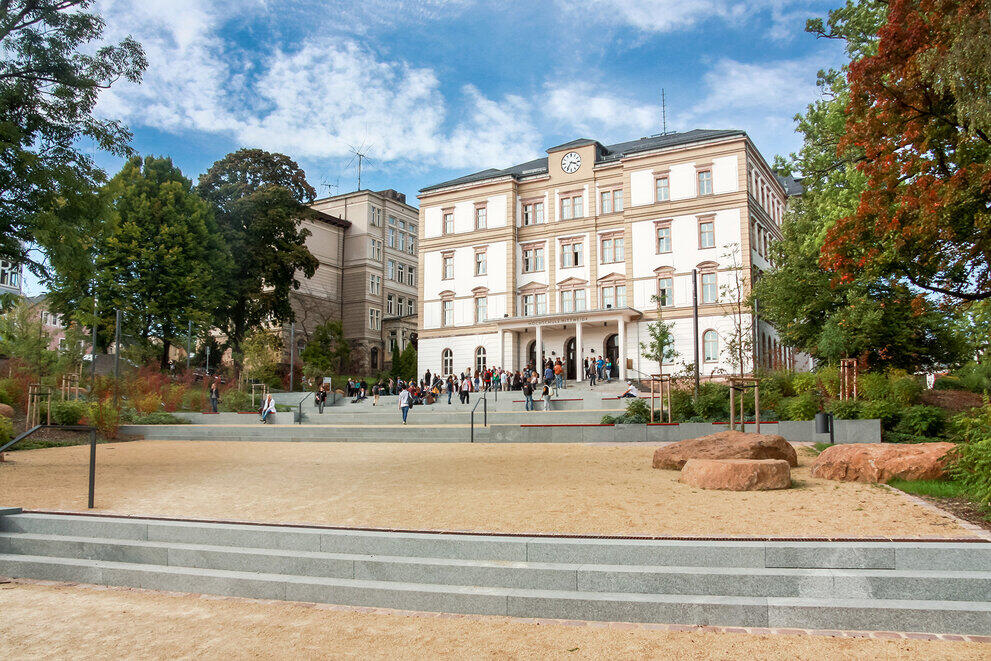
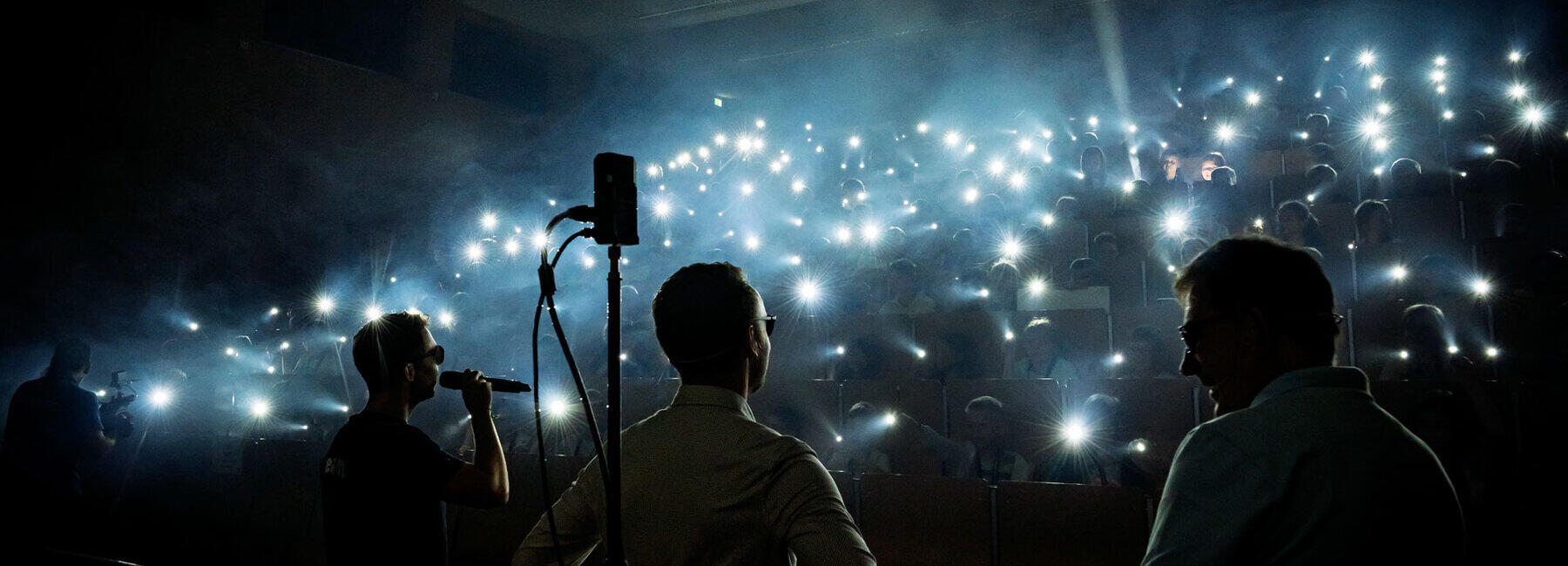
Armed with plenty of curiosity and torches, 230 children and, in the neighbouring lecture theatre, around 200 adults set out on 20 September for a very special morning of science, designed to introduce them to the fascinating world of physics in a vivid and accessible way. The one-hour lecture succeeded in doing just that – and it proved that a love of experimentation, team spirit and enthusiasm for research are very much at home in Mittweida.
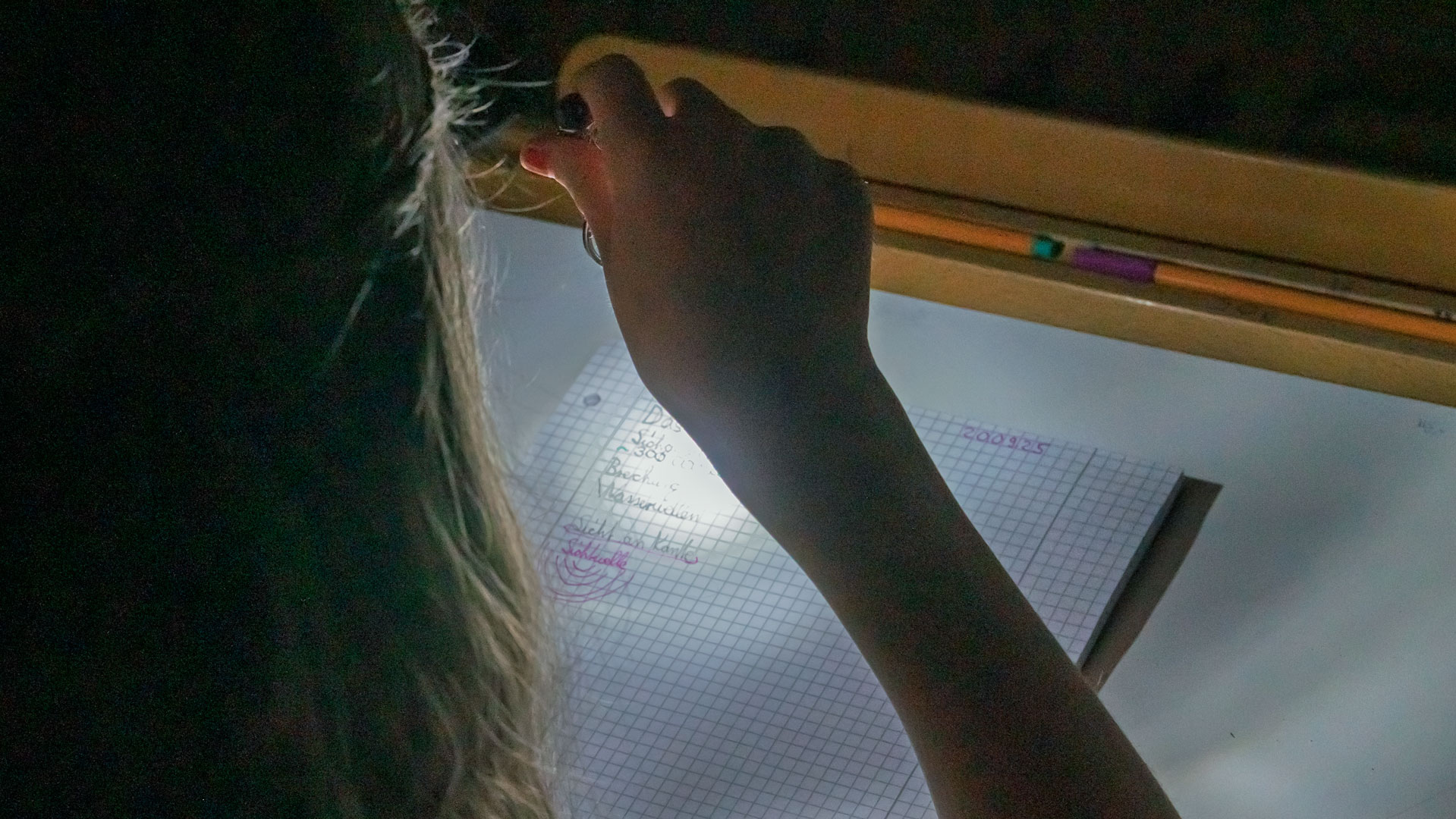
To kick things off, fog and a lightsaber duel between Professors Alexander Horn and Silvio Fuchs from the Laser Institute at Mittweida University of Applied Sciences (LHM) created a real Star Wars atmosphere in the dark lecture theatre. The two Children’s University lecturers immediately got the children involved: everyone had been given a small torch, which they used to conjure up light in the lecture theatre.
The young researchers eagerly threw themselves into speed races against laser beams, keen to find out just how fast light really is – and quickly realised that even the swiftest legs couldn’t keep up! After all, a laser beam travels almost 300,000 kilometres in just one second. It covers the nearly 384,000 kilometres from the Moon to Earth in just 1.27 seconds. In that time, no child – nor any professor – could sprint the few metres from one end of the lecture theatre to the other.
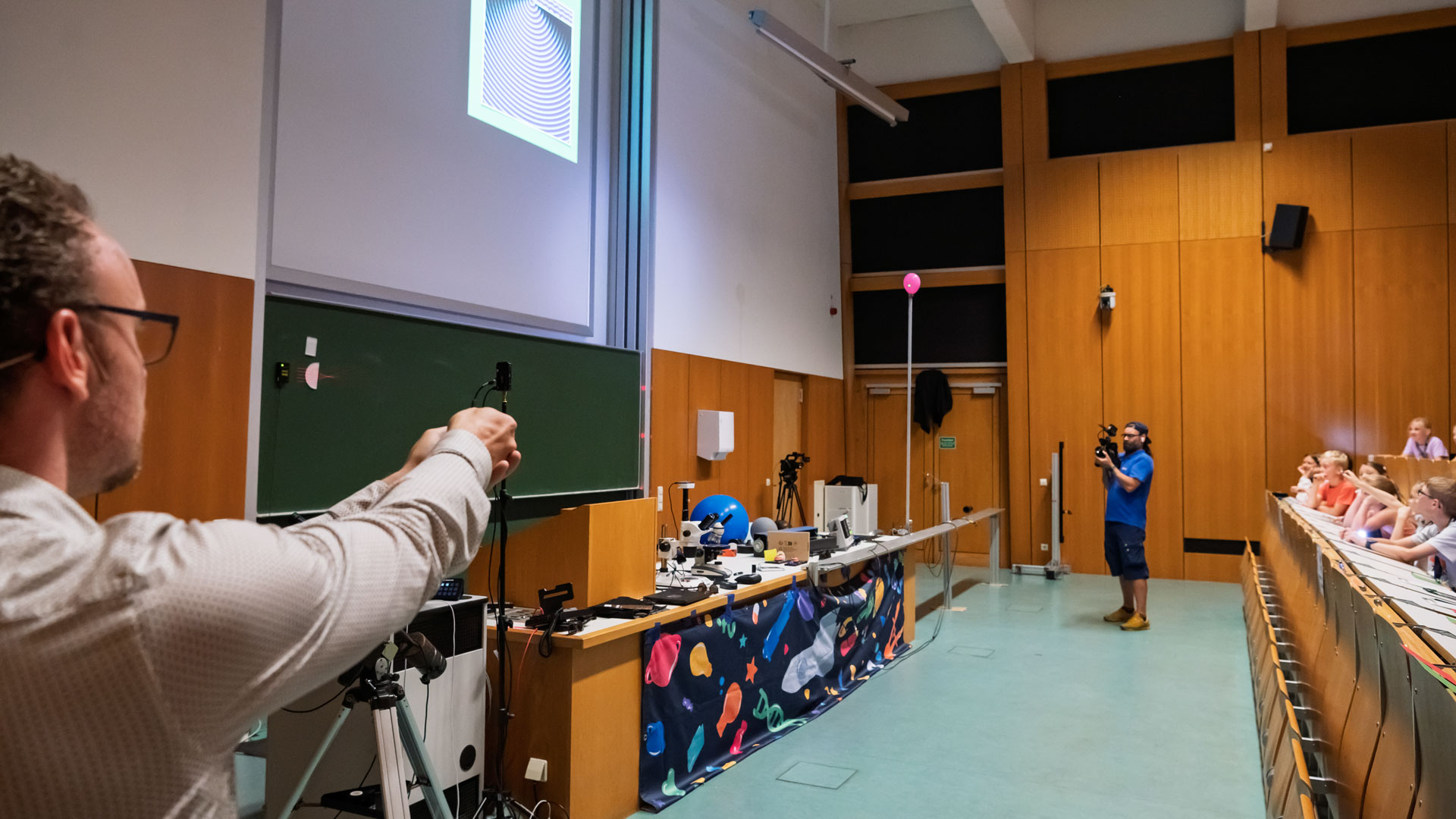
The focus was on interactive puzzles and hands-on activities: from quiz questions with answer cards to a large-scale laser game, in which some children acted as ‘living photons and mirrors’ to demonstrate the principle behind the laser to their fellow students.
Working as a team, the children ‘pooled’ their (torch) energy and tried to pop a balloon using a large lens – a demonstration of how light energy can be concentrated onto a single point. Ultimately, this was only achieved using a powerful laser, which highlighted the physical differences between ordinary light and concentrated laser light.
It quickly became clear to everyone that light has many other applications: under the microscope, the academic talents marvelled at the thousands-fold magnification of a fruit fly’s eye, whilst through the telescope they brought the distant planets of our solar system right up close.
Robin Biebl, organiser of the Children’s University, sums it up: “With this Children’s University, we’ve once again been able to show the children just how fascinating science and technology are. I hope we’ve inspired them to remain curious in the future and to make STEM subjects their own adventure.”
Fancy finding out more? Anyone interested can find the full programme and the collectable ‘knowledge card’ on the Children’s University website.
The ‘course catalogue’ for the Children’s University at Mittweida University of Applied Sciences also features social issues. For example, the next lecture on Saturday 29 November is entitled ‘Globalisation – What’s in it for me?’. Registration opens on 14 November.
Text: Robin Biebl
Photos: Helmut Hammer