This page was translated automatically using artificial intelligence (DeepL). The German version is binding. More information about automatic translation
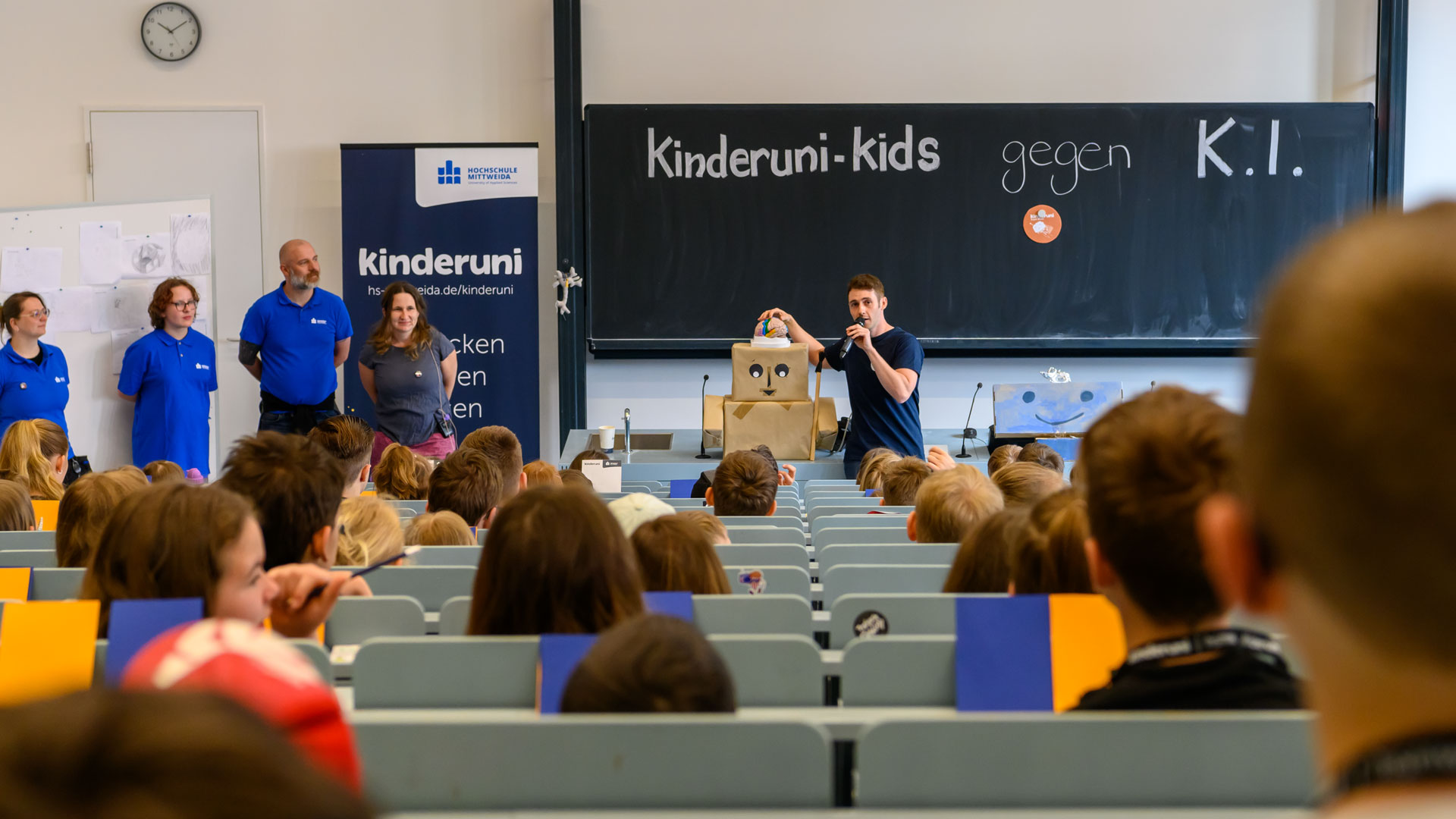
This Children’s University lecture captivated the adults just as much as the children. After all, when it comes to the controversial topic of ‘artificial intelligence’, even many a parent finds themselves at a loss for words. At the same time, there is a great deal of uncertainty as to whether AI is really as harmless as it seems, given that it is already all around us. It’s a good thing we have the natural intelligence of the Children’s University lecturers at Mittweida University of Applied Sciences: Dr Marika Kaden, a mathematician at the Faculty of Applied Computer Sciences and Biosciences, explained in a fascinating lecture on 4 May what AI is and how it works.
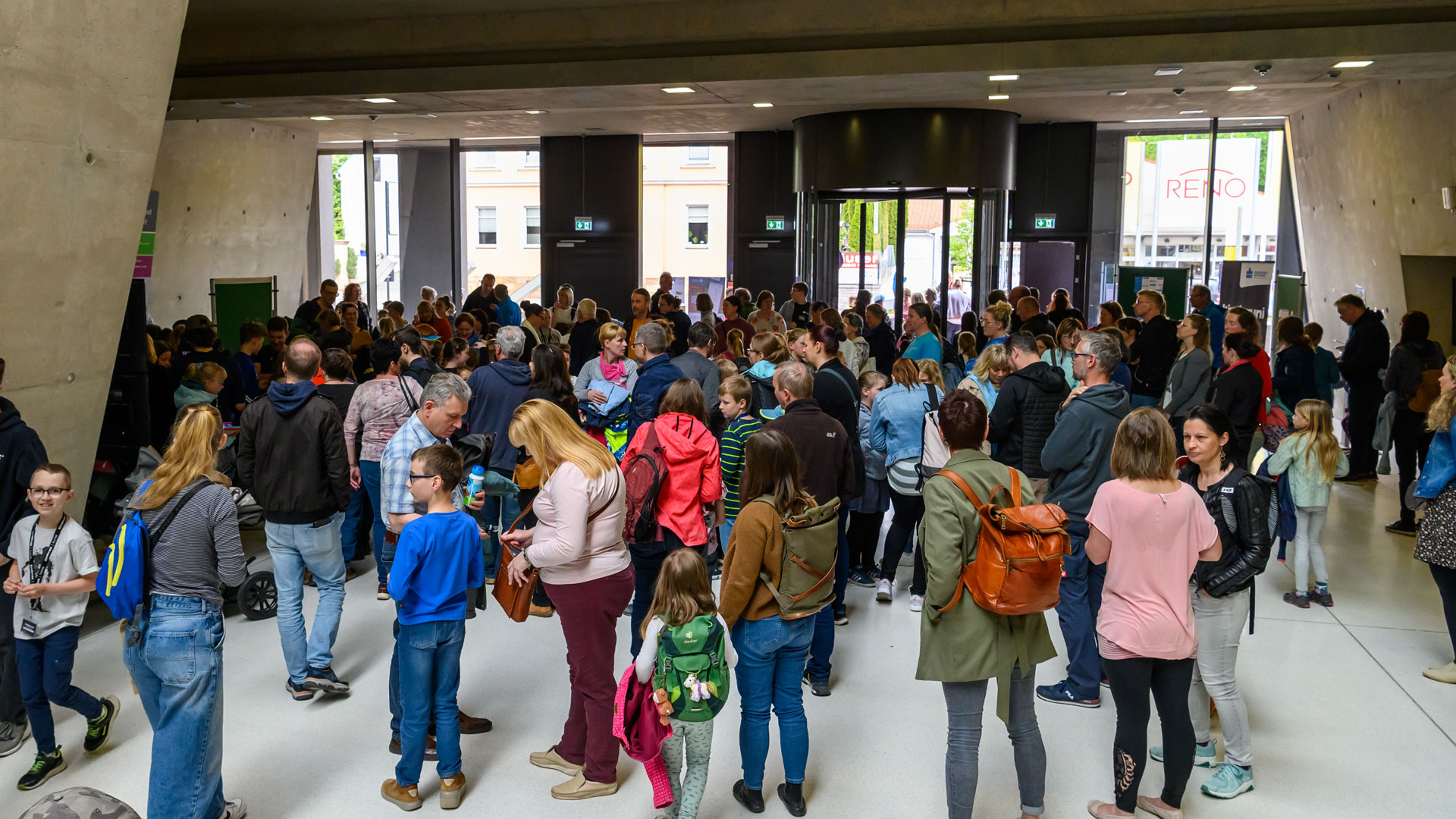
The question of who is smarter – the AI or the 180 or so children in the lecture theatre – was also settled that morning. Around 160 adults followed the lecture via a live stream in the neighbouring lecture theatres of the university’s Centre for Media and Social Work (ZMS).
Everyone learnt that, in general, AI means that a computer can mimic human intelligence. AI is described as ‘strong’ when it can do everything as well as, or even better than, a human. Weak AI, on the other hand, can only do this for a single task it is set. Through so-called machine learning, illustrated with many examples, the computer keeps getting better at this. It therefore works in much the same way as it does for humans: learning from experience and from mistakes.
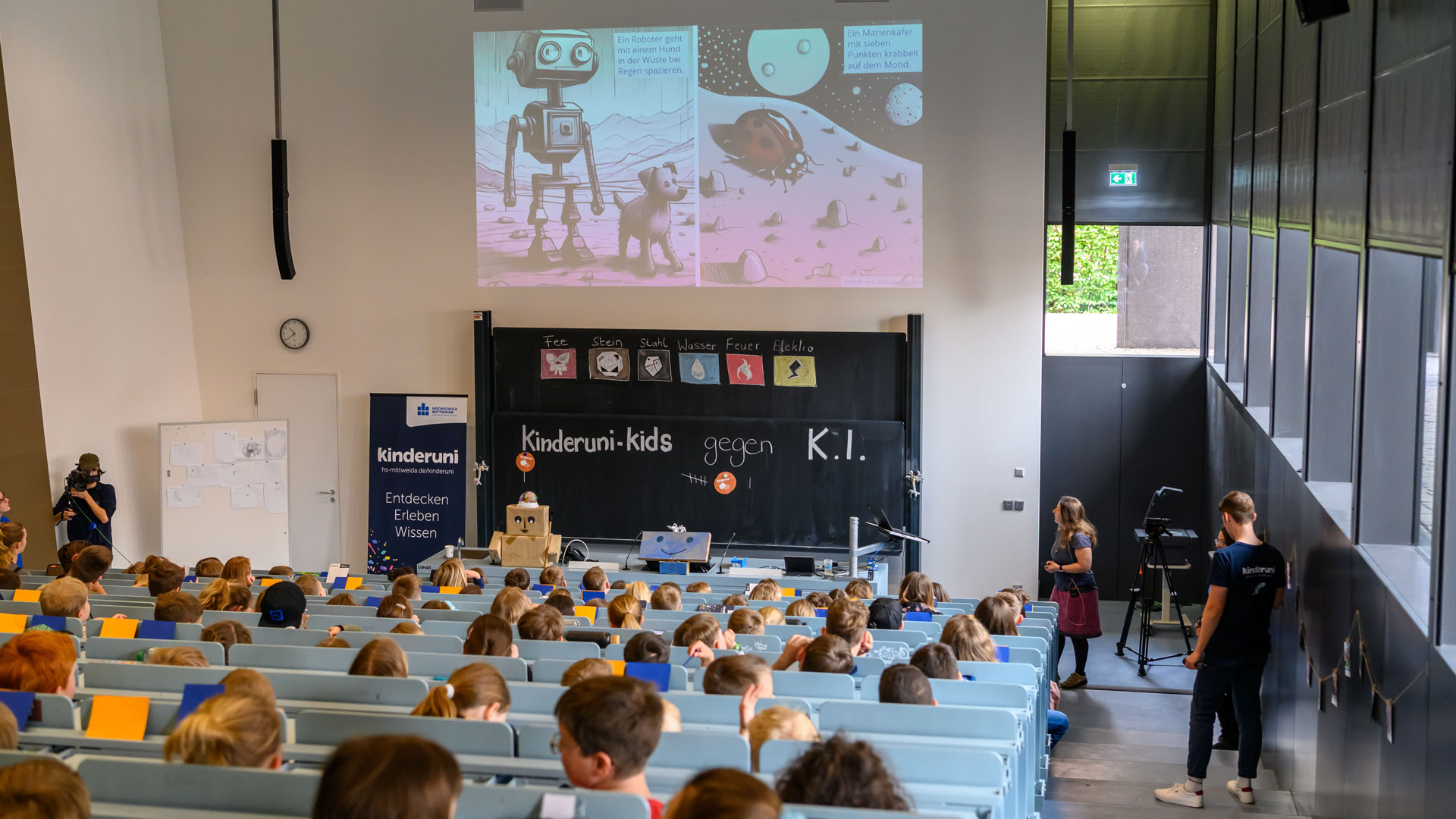
Who is cleverer: the children at Kinderuni or AI?
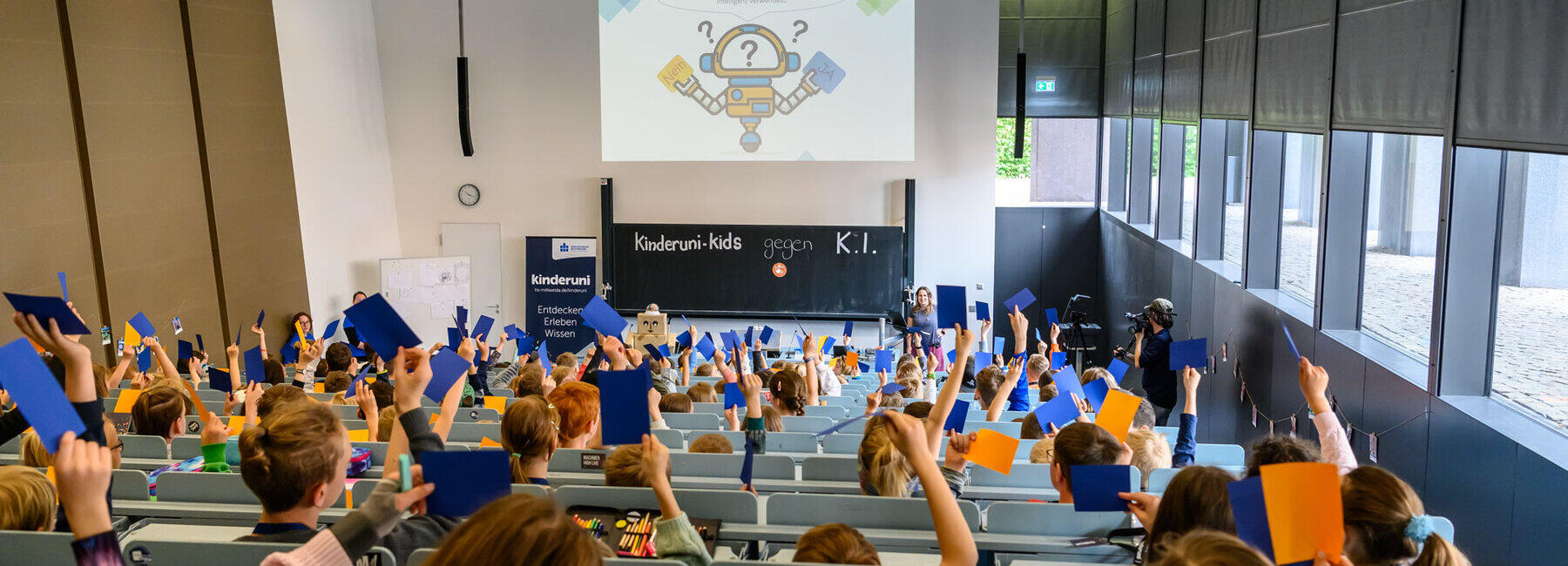
The children were able to take part time and again, either by voting with coloured cards or speaking directly into the microphone. The highlights were three ‘Kids’ University Kids vs AI’ challenges.
The children were smarter when it came to recognising Pokémon. When it came to drawing pictures based on prompts such as ‘A robot is walking a dog in the desert in the rain’, it was a draw between the children and what’s known as generative AI. Generative, because the AI creates something new by looking at lots of familiar things and learning from them.
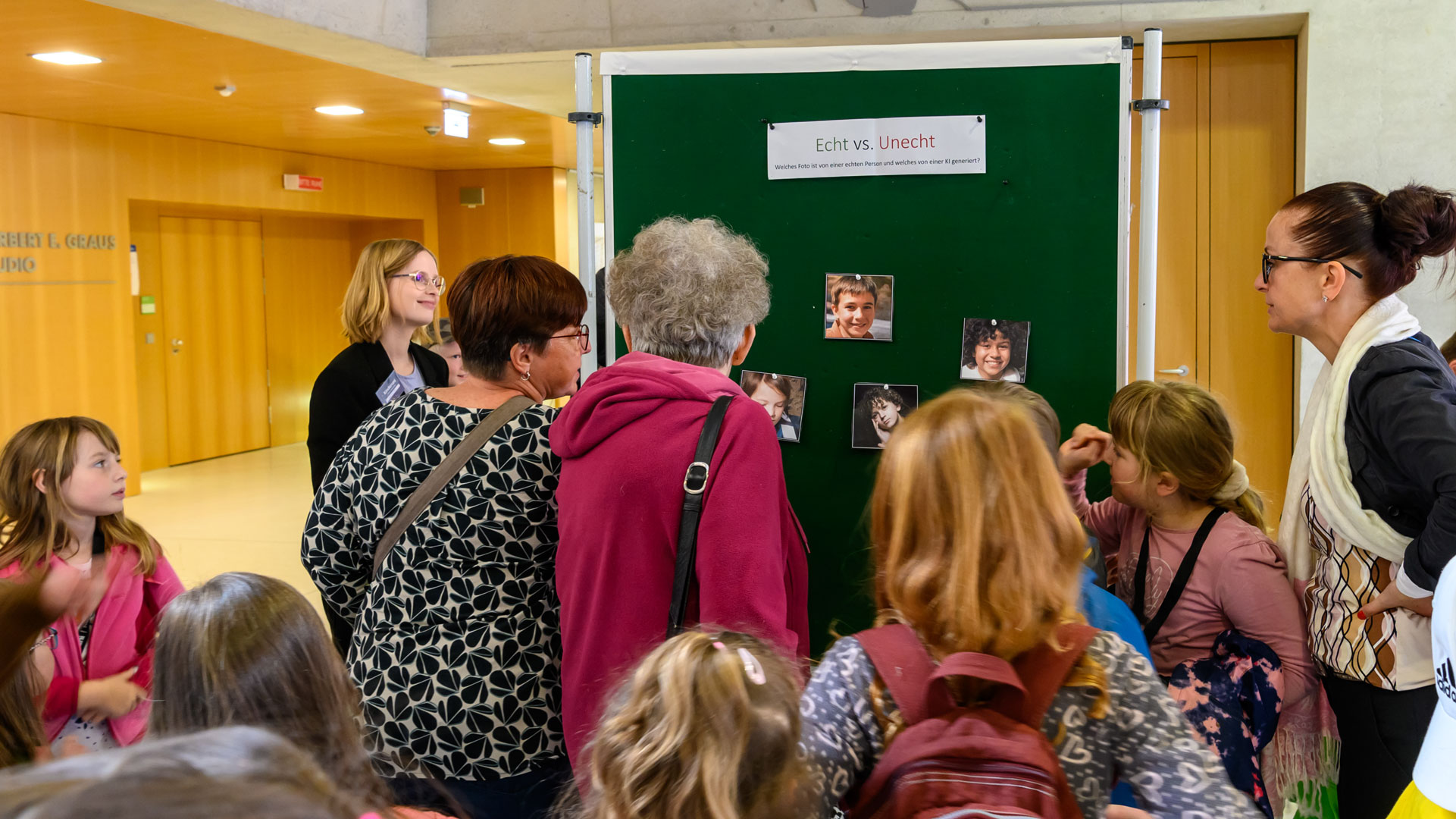
The best-known generative AI application, the language model ChatGPT, was the children’s opponent in the third challenge: “Who knows Mittweida best?” A point for the children, as the AI didn’t really know what attractions there are for children in Mittweida, but it did know of a castle in the middle of the university town...
This example of rather amusing misinformation, but also of artificially generated – yet entirely realistic – videos, images and audio clips, served as a reminder: to keep your own natural brain switched on when using AI and to critically question what you hear and see, so as not to fall for so-called deepfakes.
No joke: the Mini Kids’ University on 31 May
The following Children’s University lectures are guaranteed to be the real deal: The mini Children’s University session ‘Ketchup and Climate – Why Unwanted Surprises Don’t Just Happen at the Dinner Table’ lasts just 30 minutes and will take place twice during the Night of Sciences on 31 May: at 6.30 pm and 8.00 pm. It’s so short because there’s so much else for young and old alike to discover at the university that evening. No prior registration is required.
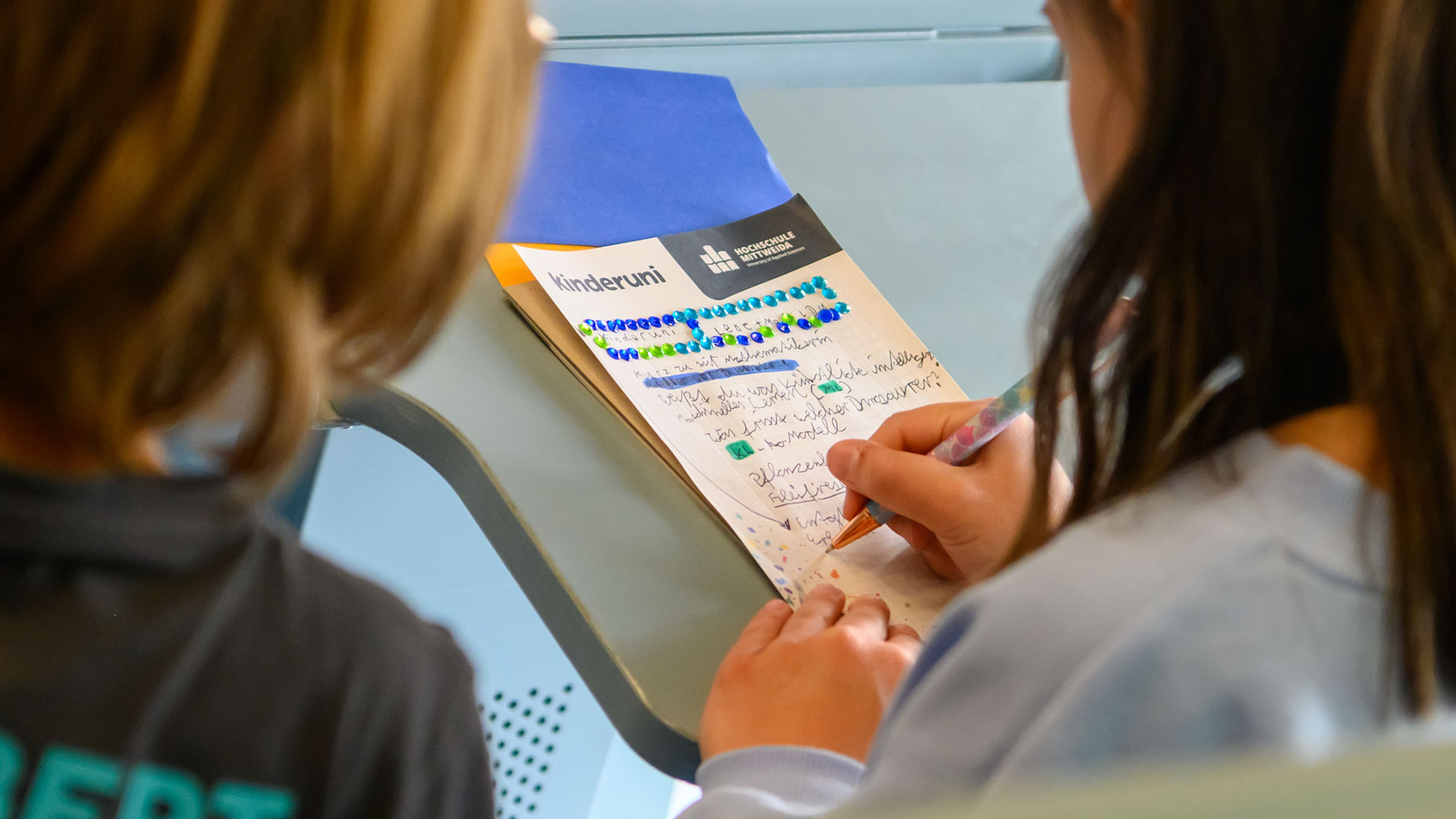
The Summer Children’s University continues on 15 June at 10 am with the topic ‘Everything without chemicals! – Is that even possible?’ Registration opens on 13 May.
All the information and the sign-up form for the Children’s University newsletter can be found on the Mittweida University of Applied Sciences Children’s University website.