This page was translated automatically using artificial intelligence (DeepL). The German version is binding. More information about automatic translation
A non-fiction book on the genetic engineering revolution
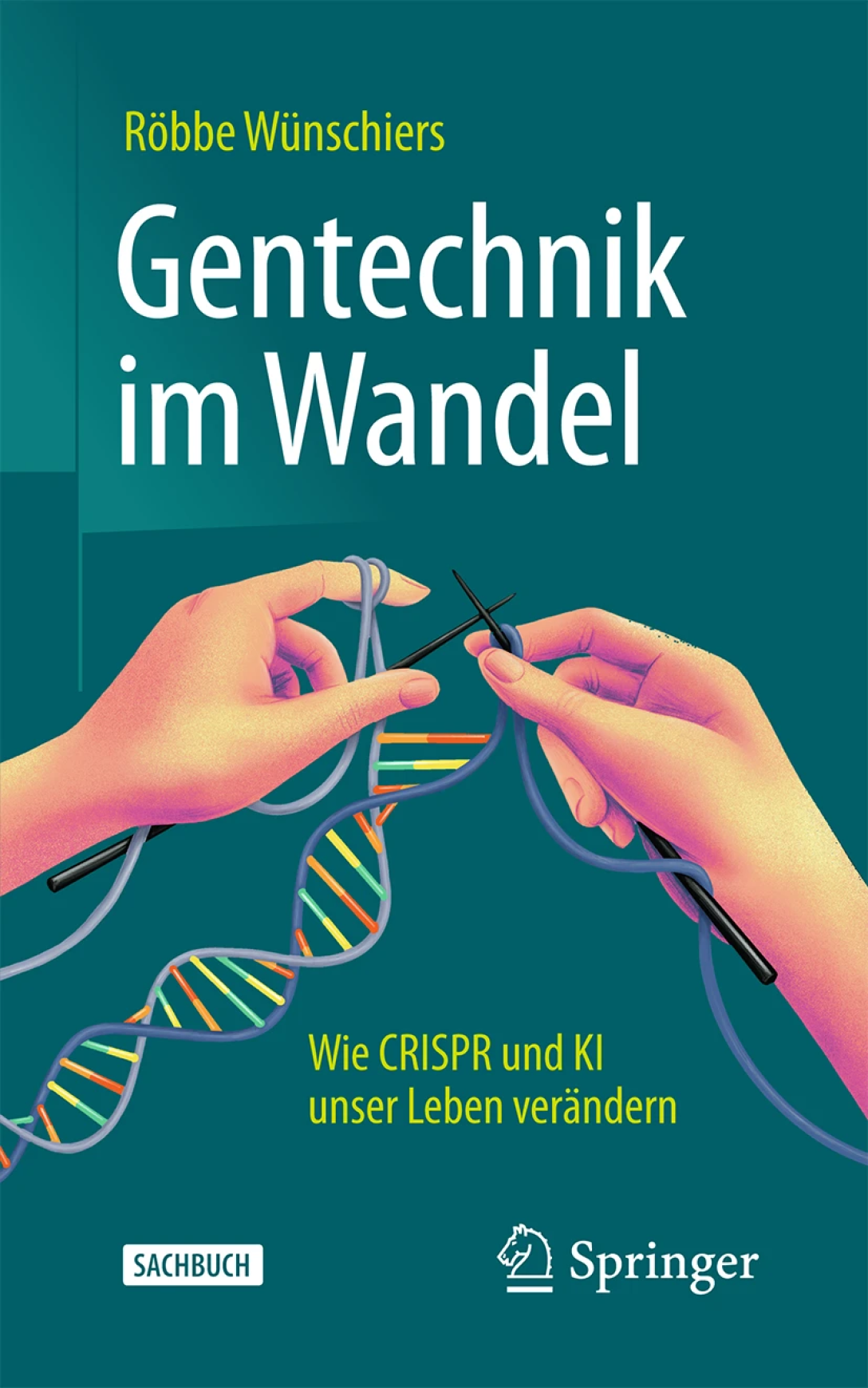
Have you had your genetic makeup analysed yet? It’s all the rage, and there’ll soon be a DIY kit for children and teenagers to do just that. Why? Because analysing our genetic makeup (i.e. DNA) is becoming increasingly simple and affordable. The primary aim is to understand how our genes affect diseases. But of course, other aspects are also of great interest: Do you have a predisposition to a particular condition? What is your life expectancy? Is there still a bit of Neanderthal or Denisovan DNA in you? Is there a good ‘chemistry’ between you and your partner? Does that sound absurd? No – such results are spat out by artificial intelligence algorithms that are fed huge amounts of data from tens of thousands of people. Such analyses have become indispensable in plant breeding; they are becoming increasingly established in animal breeding; and in the case of humans – the results are not yet being used for breeding purposes. Or are they? Diagnostic testing of unborn babies is taking place at an ever-earlier stage of pregnancy. This is due to the rise in assisted reproduction in fertility clinics. Whilst amniocentesis still poses a risk to both mother and child, pre-implantation genetic diagnosis in the test tube is risk-free – but it leads to selection: unfavourable combinations of genetic traits can be ‘discarded’. This seems sensible in cases where serious illnesses are anticipated. But who decides what constitutes a serious illness? And what if the genetic defect can be corrected? For several years now, a tool for doing just that has been available in the form of the CRISPR/Cas molecular gene-editing system. This is sparking debate.
In his clearly and accessibly written non-fiction book, Professor Röbbe Wünschiers explains the current state of genetic engineering. He addresses readers with no prior knowledge and invites them to engage in an open dialogue on this ambivalent topic. Form your own opinion on the fascinating yet also daunting possibilities of genetic engineering, a field that is developing at a rapid pace.
Join the discussion or find out more at generation-genschere.de
Computational Biology
Do you remember the EHEC outbreak in the summer of 2011? A time when nobody wanted to eat salad sprouts any more and there was no cucumber salad in canteens and cafeterias? EHEC (enterohaemorrhagic Escherichia coli) and HUS (haemolytic uraemic syndrome) were on everyone’s lips until autumn 2011. In total, 855 cases of HUS and 2,987 cases of acute gastroenteritis were reported in 2011; 18 EHEC patients and 35 HUS patients died. Just a few weeks after the first cases were reported, the genome of the causative pathogen – the O104:H4 variant of the intestinal bacterium Escherichia coli – was analysed, and diagnostic methods were developed. This pandemic is a prime example of the capabilities of Biotechnology, particularly the interplay between experimental and computational biology: the pathogens were isolated, enriched and sequenced using experimental methods, and their genetic material was subsequently analysed by computer. Students on the Bachelor’s programme in Biotechnology/Bioinformatics and the Master’s programme in Molecular Biology/Bioinformatics could have taken part in the search for the pathogens, as both programmes teach the integration of experimental and computational biology.
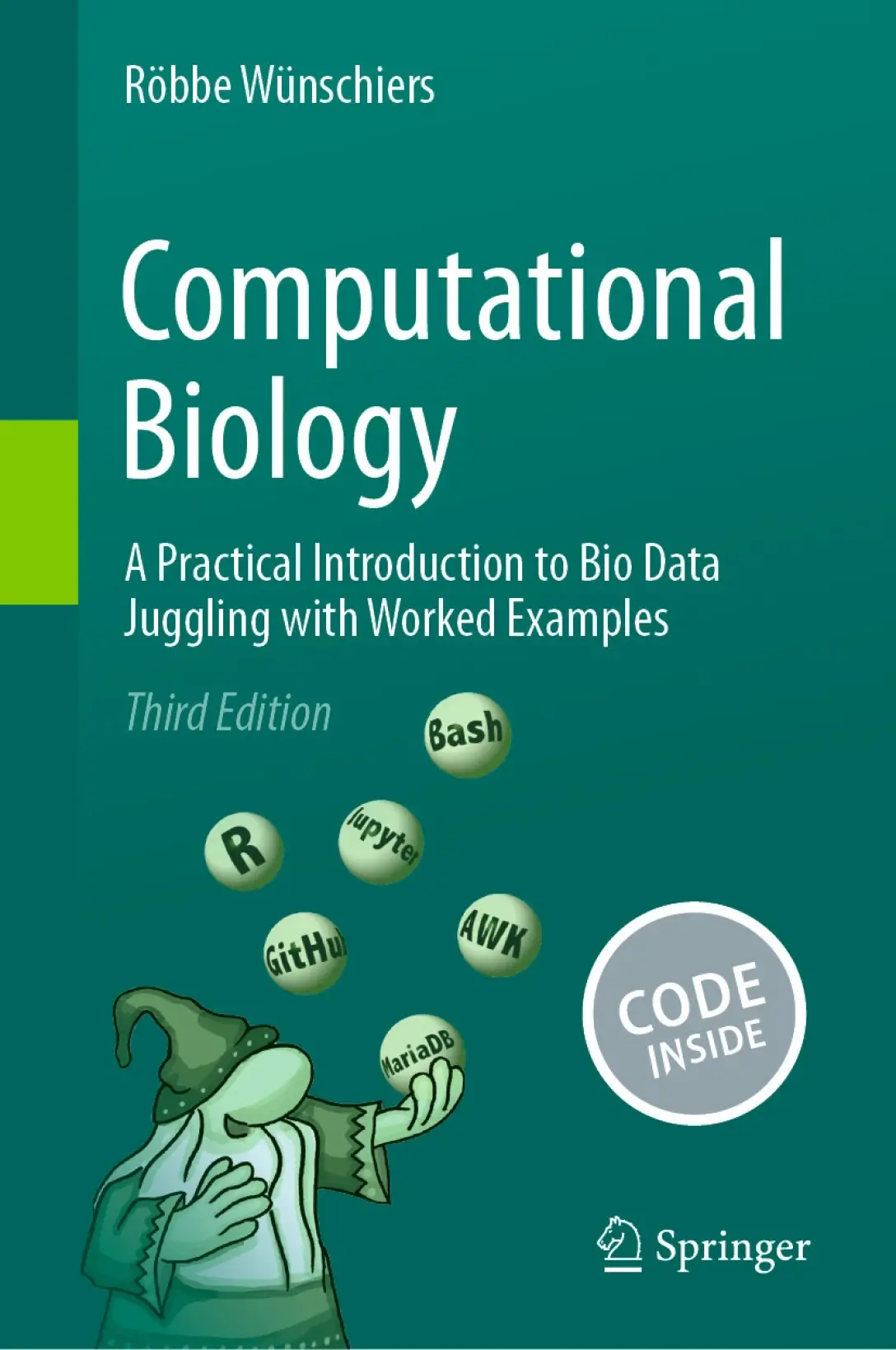
In February 2013, the second edition of the textbook *Computational Biology* by Professor Röbbe Wünschiers (Biotechnology Research Group, Mittweida University of Applied Sciences) was published by Springer – and one chapter is devoted to the 2011 pandemic. The book is primarily aimed at all life scientists who wish to learn how to handle, analyse and visualise large volumes of data. In addition to an introduction to Linux and programming with AWK and Perl, the book also covers the MySQL database system and the data analysis and visualisation software R. Finally, detailed case studies demonstrate how computers can assist in the analysis of biological data.
In the foreword, Professor Diethard Tautz, Director of the Max Planck Institute for Evolutionary Biology, writes: “I am convinced that this book should be required reading for every molecular biologist. It will, of course, be particularly helpful for those dealing with genomics data, but even if genomics is not currently on your experimental agenda, handling large datasets and applying proper statistical methods is a fundamental skill that cannot be underestimated in our discipline today.”
One of the developers of the AWK programming language, Professor Alfred V. Aho of Columbia University in New York, remarks: “There are many things I liked about this book. First, the material on Unix/Linux is presented in a no-nonsense manner that would be familiar and appealing to any Unix/Linux programmer. It is clear that the author has fully embraced the powerful Unix/Linux building-block approach to problem-solving. Secondly, the book is written in a lively and engaging style. It is not a dry user manual. Finally, throughout the book the author urges the reader to write programmes as they read the material. This cannot be overemphasised – it is well known that the only way to learn how to programme effectively is by writing and running programmes.”
[Wünschiers (2013) Computational Biology – A Practical Introduction to BioData Processing and Analysis with Linux, MySQL, and R. Springer Verlag, ISBN 978-3-642-34748-1, 449 pp., 80 illustrations, 66 in colour]
The Principles and Applications of Genetic Engineering
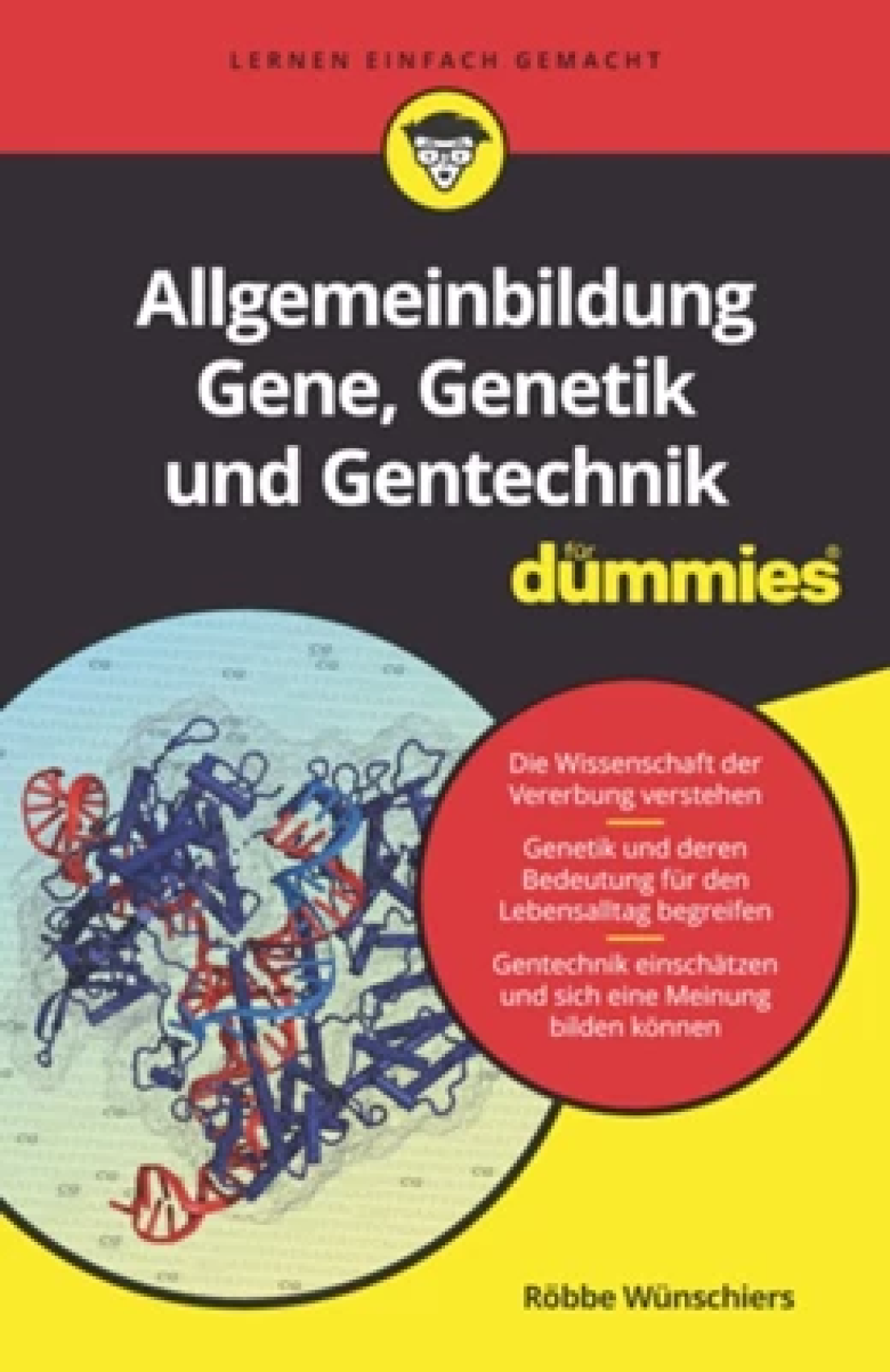
This ‘For Dummies’ book is not a typical specialist or non-fiction text, yet it is designed to introduce you to a specialist field. It requires little prior knowledge of biology – in fact, just the basics learnt at school. After a ‘refresher’ on the basics of genetics, Professor Wünschiers presents, amongst other things, the latest findings on heredity, methods of genetic engineering and theories on human evolution. All this is spiced up with anecdotes from the world of science and garnished with mnemonic phrases.
Fancy an example? Do you know which is the largest living cell you’ve probably ever seen? – Well? – The ostrich egg. Bird’s eggs are egg cells with a shell. An egg is therefore a giant cell. Most cells, on the other hand, are smaller than the width of a hair – and each contains 46 strands of DNA, the chromosomes, which, if laid end to end, would measure 210 centimetres. In a single body cell! The chromosomes of all the body cells in a human being would span the Earth’s orbit around the Sun eleven times.
An entire chapter is devoted to coronaviruses and COVID-19. And the ‘art in the book’ is provided by illustrations by the designer Kerstin Zentner.
What motivated Professor Wünschiers to write this book? “We have enormous problems to tackle. Anthropogenic climate change and the decline in biodiversity are just the tip of the iceberg. And as this is particularly about the biosphere, an understanding of biology is essential for identifying and solving these problems. Furthermore, evolution reveals many ‘techniques’ showing how the biosphere has developed over the past billions of years. Biological systems are masters of innovation. We must look closely and learn. And what do all living organisms have in common? Genes. It is this ‘functioning’ and analysis of this common foundation that I wish to convey. And I wish to do so to non-biologists, because I have observed that the most remarkable innovations arise at the interface between different sciences. And there is another point to consider. Never before have we been so exposed to topics in molecular genetics in our everyday lives: gene therapy, vaccination, prenatal diagnostics and genetic testing, stem cell therapy, and breeding. With my book, I aim to contribute to an informed discussion,” says Professor Wünschiers.
More information about the book is available here: https://awkologist.github.io/dummie/
Join the discussion: Genetic engineering
Genetic engineering. Few other applications of Biotechnology polarise opinion quite as much as genetic engineering. Why? The fact is that hardly any washing products, processed foods or medicines are – or indeed can be – produced without the use of genetic engineering. On one side of the coin, many critics are tacit users of the technology. On the other side, there are fears regarding genetically modified food, the destruction of the biosphere by genetically modified organisms, and concerns about capitalist exploitation by industry. The announcement in November 2018 that this technology had been applied to human embryos – which subsequently gave birth to twins – recently led to genetic engineering once again making its way into the arts and culture sections, raising the recurring questions: how far are we allowed, willing or supposed to go? Science alone cannot provide the answers to these questions. However, several recent studies indicate that the general public is not well-informed on the subject of genetic engineering. To give everyone the opportunity to join the discussion, Professor Röbbe Wünschiers has published a short booklet on genetic engineering. In it, he explores the background and future prospects of the field without assuming any prior scientific knowledge.
Further information is available at gene-genome-gesellschaft.de
Biotechnology Mittweida: Pro-Darwin
The engineers at the Technical College and Mittweida University of Applied Sciences have already designed many an ingenious creation. In their lectures, seminars and practical sessions, biotechnology students learn about a wide variety of clever biological systems – systems whose designer one would very much like to invite to give a lecture. But does he exist? The intelligent designer of cells and organisms as we see them today? The Intelligent Designer? Although Darwin laid the scientific foundations for understanding how organisms evolve, creationists believe in a single intelligent designer. Particularly in the USA, they are exerting unexpected influence to embed their beliefs in school curricula.
In Germany, the teaching of evolution is not given its rightful place in the curricula. We are still too paralysed by the misunderstanding – and consequently the misuse – of the theory of evolution during the Third Reich (eugenics) and in the GDR (Lysenkoism as neo-Lamarckism). And where there is a void, there is room for false teachings.
The Volkswagen Foundation therefore launched the ‘Evolutionary Biology’ funding initiative in 2005. One result is the recently published book *Evolutionary Biology* (Spektrum Akademischer Verlag, ISBN 978-3-8274-2785-4). The editors adopted an innovative approach: pairs of authors, comprising evolutionary biologists/geneticists and biology teachers, describe topics in modern evolutionary research in a manner that is both research-based and pedagogically tailored. Dr Röbbe Wünschiers, Professor of Biochemistry and Molecular Biology at Mittweida University of Applied Sciences, together with schoolteacher Annuschka Fenner, describes in the chapter ‘From Lucy’s Bones to the Neanderthal Genome’, describes the influence of molecular Genomic Biotechnology on our understanding of human evolution.
Modern Biotechnology, too, is based on the principles of mutation and selection described by Darwin. Thus, the now-famous statement by the evolutionary biologist Dobzhansky also applies to Biotechnology: “Nothing in biology makes sense except in the light of evolution.”
Handling Big Data Effectively for Life Scientists
There are bioinformaticians who develop bioinformatic methods. By contrast, the vast majority of life scientists – such as biotechnologists or biologists – use bioinformatic methods. Our students learn during their degree that digital data processing is becoming increasingly important for biotechnologists too.
Professor Röbbe Wünschiers is a biologist, and in his research, the application of bioinformatics methods is just as important as using a pipette. However, whilst using a pipette can be learnt quite quickly, bioinformatics methods are not so straightforward to master. You need a basic understanding of how to handle data on a computer. And in the life sciences, data is generated in vast quantities.
Professor Röbbe Wünschiers’ textbook *Wiley Crash Course in Bioinformatics for Users* deals with data handling and the application of bioinformatics methods to biological datasets. In it, he draws on his 20 years of experience in research and teaching. The subtitle “Making Sense of Massive Data Sets” sums up the book’s aim very well. In it, Röbbe Wünschiers explains how sequence, structural and other data can be processed on Linux. Linux, like Apple’s MacOSX, is based on the Unix operating system and is the most popular development platform for bioinformaticians. Linux, like all the software featured in the book, is free of charge. The practical section of the book therefore begins with instructions on how to install Linux as a virtual machine on Windows or macOS, and how Linux tools such as Sed or the simple programming language AWK can assist with data analysis. Other topics include the MariaDB/MySQL database system, the R programming environment for statistical computing and data visualisation, the typesetting language LaTeX, and setting up your own web server.
The main part of the book illustrates the application of what has been learnt using five biological examples from forensic microbiology and sequence data analysis. For example, it explores questions such as how the pathogen responsible for the Spanish flu differs from today’s influenza virus, how metabolic processes in a biogas plant can be analysed and represented as
a metabolic map, and how single-nucleotide polymorphisms (SNPs) can be analysed by sequencing the Ebola genome.
All the necessary files, as well as all the illustrations from the book and further information, can be found on the website datenmassen.de
Biochemical Pathways – Prof. Dr R. Wünschier is a co-author of a standard reference work
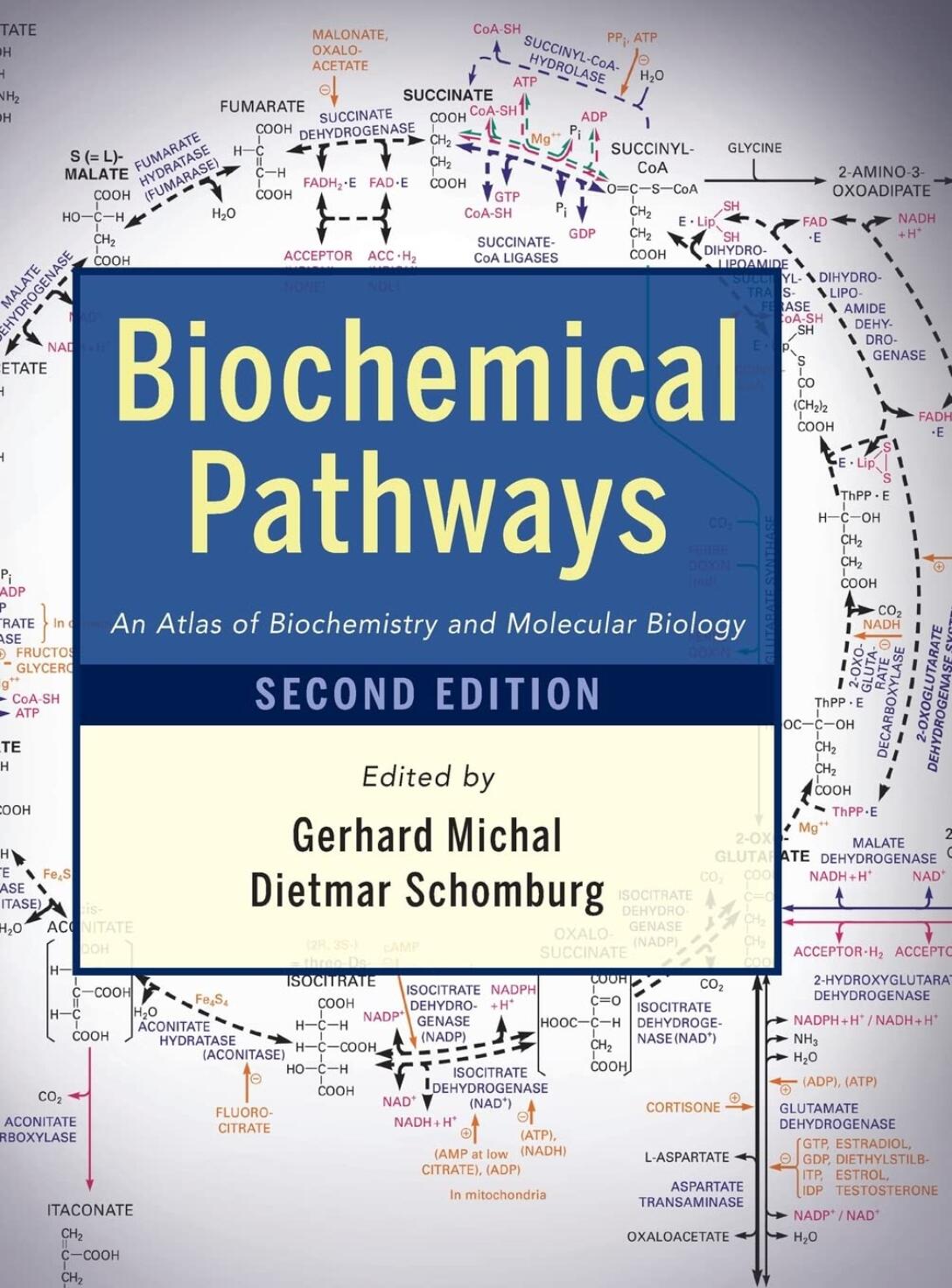
The vast number of metabolic reactions taking place within a single cell is both daunting and fascinating. Substance A is converted into product C by enzyme X in the presence of substance B; B was previously formed by enzyme Y and … And so it goes on and on. It is no easy task to represent all these reactions graphically. In the 1940s, the biochemist D.E. Nicholson produced the first comprehensive overview of the enzymatic reactions previously described by Embden, Meyerhof, Parnass and Cori: glycolysis. He was inspired by H.C. Beck’s map of the London Underground stations from 1933. In 1968, the German biochemist Gerhard Michal produced a wall poster of all metabolic reactions, well known in specialist circles, which was first distributed by Boehringer Mannheim and later by Roche Diagnostics. Updated versions were published up until 2005 (including a book he edited in 1999). In September 2012, the second edition of this standard work of biochemistry was published, edited by Dr G. Michal and Prof. Dr D. Schomburg: “Biochemical Pathways: An Atlas of Biochemistry and Molecular Biology”. Prof. Dr R. Wünschiers was involved in this mammoth project, revising seven chapters. And what did the time and effort he invested teach him? Metabolism, in all its complexity, remains a nightmare – yet the fascination it holds outweighs the difficulty.